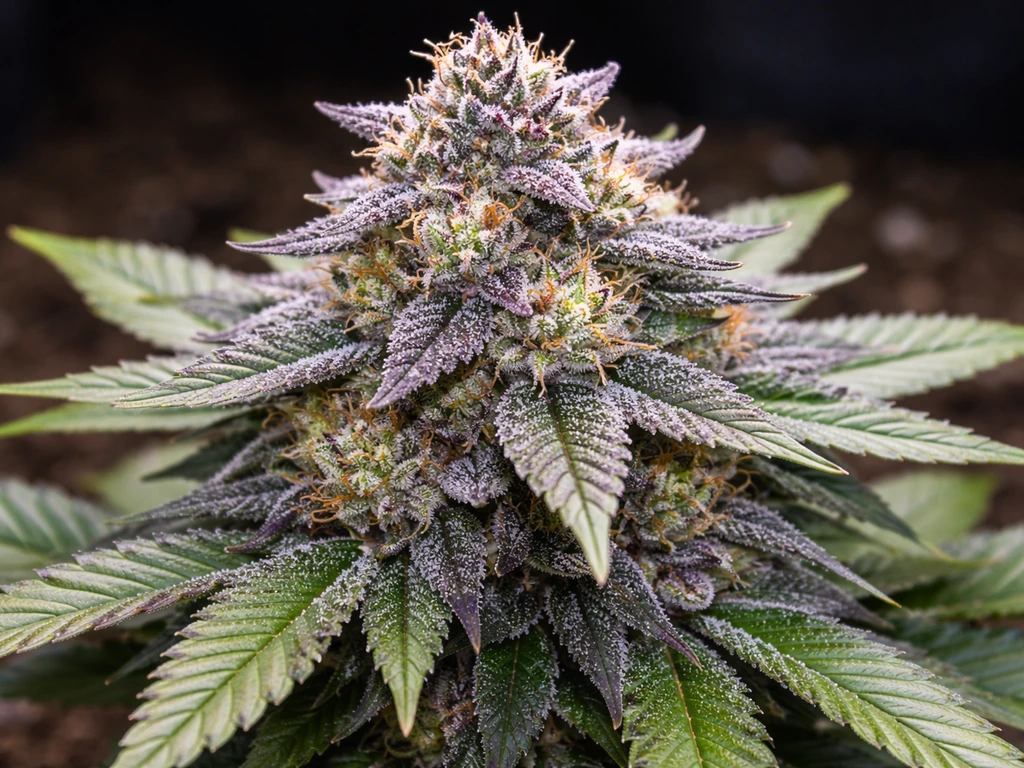
Godfather OG is a heavy-hitting indica-dominant strain that finishes in 8–9 weeks of flowering indoors, yields around 400–500 g/m² under good conditions, and grows with a classic OG structure: thick stems, dense nodes, and buds that pack on weight fast in the last two weeks of flower. It is not the easiest strain for a first-time grower because those dense buds are genuinely vulnerable to botrytis if humidity creeps up, but it is absolutely doable at home if you stay on top of your environment and do a bit of training in veg. Follow the steps below and you will have a repeatable grow from seed or clone to a cured jar of earthy, spicy, grape-and-fuel-scented flower.
How to Grow Godfather OG Strain Step by Step Guide

Marcus Holbrook
7 Jul 2026
Is Godfather OG a good fit for you?
Before you drop money on seeds or clones, it helps to know what you are actually getting into. Godfather OG is a photoperiod strain, meaning it flowers on a light schedule change rather than automatically. That gives you full control over when flowering starts, which is useful if you want to fill a space or correct plant structure before committing to flower. The strain leans heavily indica, so plants stay relatively compact compared to a sativa-dominant strain like Sour Diesel, but they still stretch noticeably when you flip to 12/12, sometimes up to double their veg height. Plan for that.
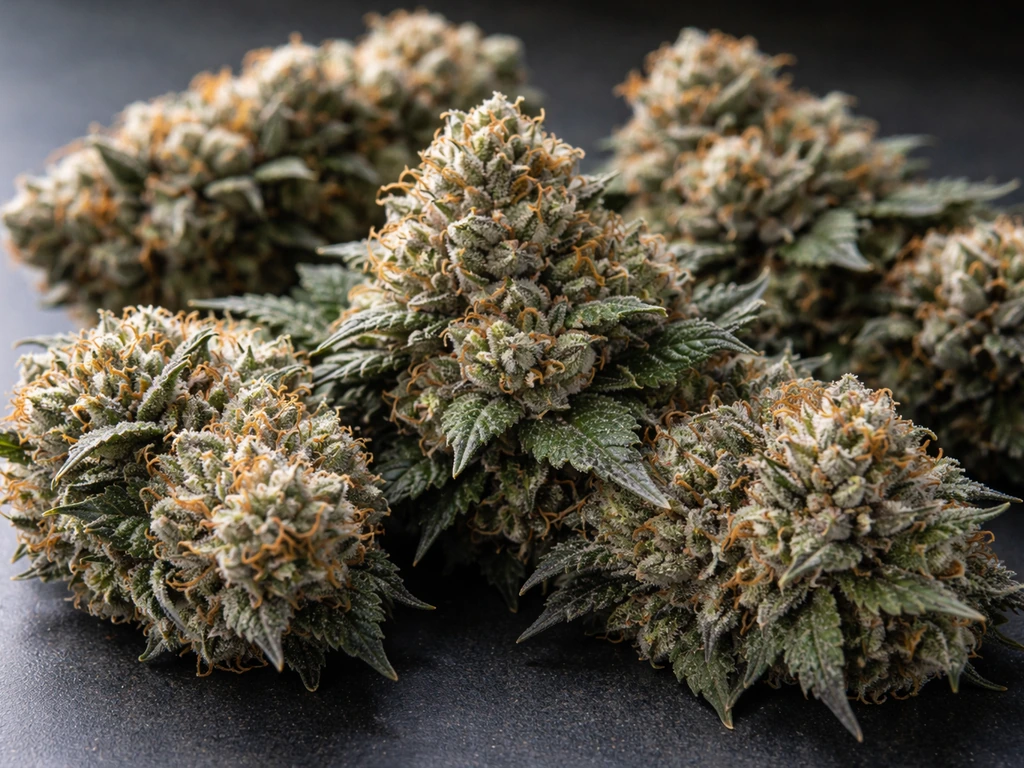
The terpene profile is dominated by myrcene, limonene, and beta-caryophyllene, which translates to a deep earthy and musky base with spicy, citrus, and sometimes grape or berry notes depending on phenotype. If that sounds like what you are after, great. The one real challenge Godfather OG presents is bud density. The colas get thick and tight, which is exactly what you want for yield, but it also means airflow inside the canopy matters more here than with an airy sativa. If you have struggled with mold on dense strains before, read the humidity sections carefully. If this is your first grow, that is fine too. Just follow the environment targets and you will be in good shape.
- Flowering time: 8–9 weeks (indoor photoperiod)
- Typical indoor yield: 400–500 g/m² under optimized conditions
- Structure: compact to medium height, thick branching, very dense buds
- Difficulty: intermediate (manageable for beginners who monitor humidity)
- Key terpenes: myrcene, limonene, beta-caryophyllene, plus traces of pinene and linalool
- Flavor: earthy, spicy, fuel, with sweet grape and pine undertones
Setting up your grow: indoor vs outdoor
Godfather OG performs well indoors and outdoors, but indoor gives you the most control over the variables that matter most for this strain, especially humidity in late flower. If you are choosing, indoor is the safer bet for your first run with it.
Indoor setup
For lighting, a quality LED or HPS in the 600–1000W range (or equivalent PPFD output) is plenty for a 1–2 plant home grow. Aim for around 400–600 PPFD during veg and 600–900 PPFD during flower at canopy level. Temperature targets are 72–82°F (22–28°C) during lights-on and no lower than 65°F during lights-off. Keep the lights-on and lights-off temperature difference under about 10°F to avoid excess condensation on leaves and buds.
Humidity is where Godfather OG demands your attention. In veg, 50–70% RH is fine. Once you flip to flower, start dialing it down. Early flower (weeks 1–4): target 50–60% RH and a VPD of roughly 0.9–1.1 kPa. Mid to late flower (weeks 5 through harvest): pull RH down to 40–50% and push VPD toward 1.1–1.3 kPa. At 75°F, hitting a VPD of around 1.2 kPa means keeping RH at or below about 48%. If you have a decent dehumidifier and a clip-on hygrometer inside the tent, you can hit these numbers without much fuss.
Airflow is non-negotiable. Run an oscillating fan inside the tent so air moves through the canopy, not just over the top of it. A proper exhaust fan with carbon filter for odor control (Godfather OG is pungent) and intake for fresh CO2-rich air rounds out the setup. Aim for a complete air exchange every 1–3 minutes.
Outdoor setup
Outdoors, Godfather OG does well in warm, dry climates. It will naturally transition to flower as days shorten in late summer. The biggest outdoor risk is rain and high humidity in the final weeks of flower. If you are in a humid climate, consider a greenhouse or light dep setup so you can control the late-flower environment. Plant after your last frost date in a spot that gets at least 6–8 hours of direct sun. Amend soil with perlite (20–30%) for drainage and work in compost for a strong base. Harvest typically falls in late September to early October in the Northern Hemisphere.
| Variable | Veg Target | Early Flower (Weeks 1–4) | Late Flower (Weeks 5–Harvest) |
|---|---|---|---|
| Temperature (lights-on) | 72–82°F (22–28°C) | 72–82°F (22–28°C) | 68–80°F (20–27°C) |
| Relative Humidity | 50–70% | 50–60% | 40–50% |
| VPD Target | 0.8–1.0 kPa | 0.9–1.1 kPa | 1.1–1.3 kPa |
| Light Schedule | 18/6 | 12/12 | 12/12 |
| Airflow | Gentle canopy movement | Active canopy movement | Strong canopy penetration |
Germination and starting from seed or clone
Starting from seed
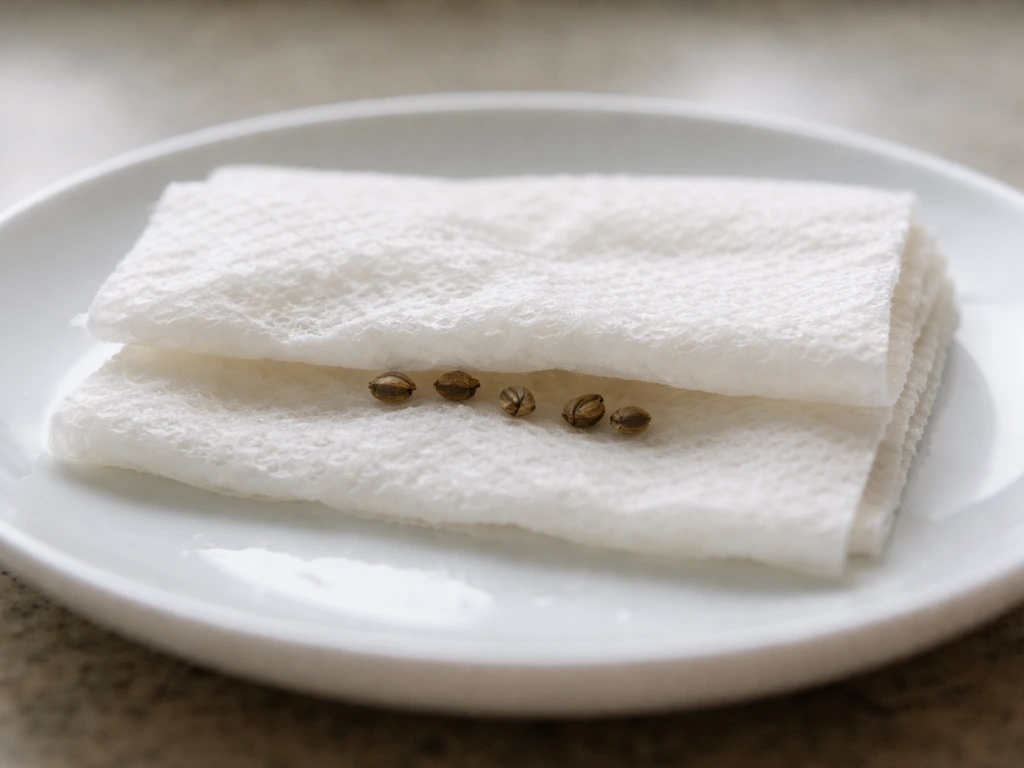
The paper towel method works reliably. Wet two paper towels (not dripping, just damp), place your Godfather OG seeds between them, fold them over, and set the whole thing on a plate. Invert a second plate on top to create a dark, slightly humid dome. Keep it somewhere warm, ideally 70–85°F (21–29°C). Most seeds crack and show a taproot within 24–72 hours. Once the taproot is about 0.25–0.5 inches long, it is ready to plant. Bury it taproot-down about 0.5 inches deep in a small starter cup or 1-gallon pot filled with lightly moistened medium. Do not overwater at this stage. One small water around the edge of the seedling is enough for the first few days.
Common germination failures almost always come down to temperature or moisture. Too cold (below 65°F) and seeds stall or rot. Too wet and the same thing happens. If your paper towels are dripping, wring them out. If your room is cool, a seed heating mat set to around 75–78°F solves the problem instantly.
Starting from clone
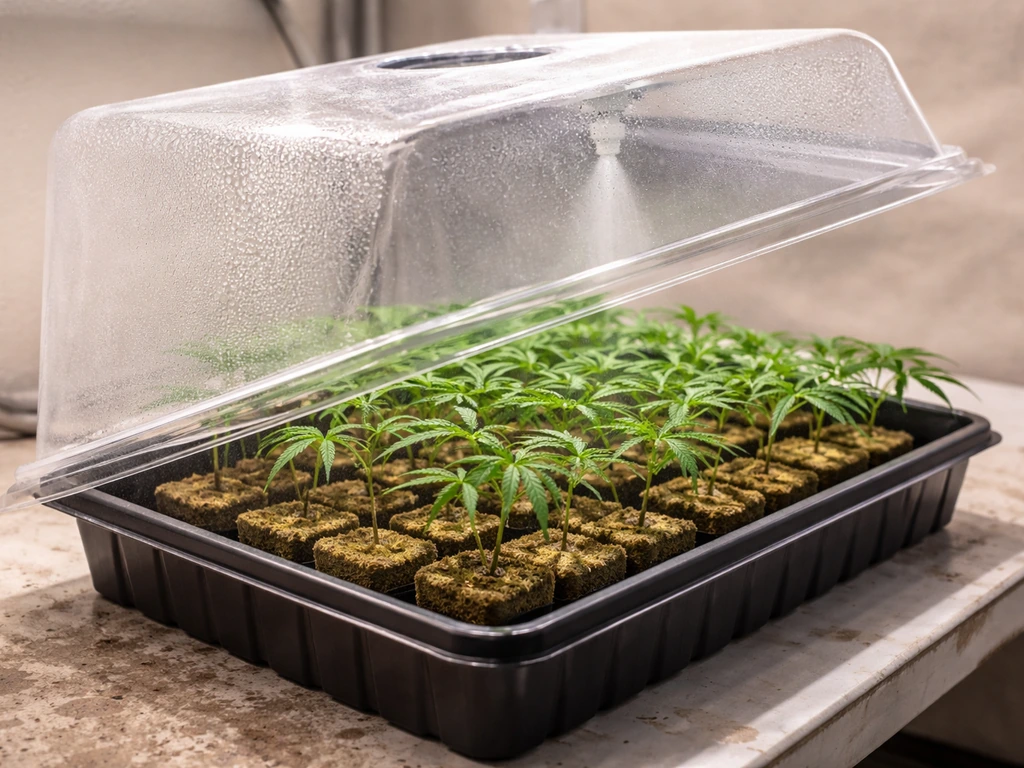
If you are working with a Godfather OG clone, rooting success depends almost entirely on temperature and humidity. Keep air temperature at 75–80°F and, if you are using a rooting cube or tray, try to keep the root-zone medium at 75–78°F (a seedling heat mat under the tray handles this). Maintain humidity inside a dome at 75–85% RH for the first 5–7 days, then gradually open vents over the following week to harden the clone off. Light should be gentle, under 250 PPFD, during rooting. Most Godfather OG clones root in 7–14 days.
The most common reasons clones fail to root: temperature below 70°F, humidity dropping under 60% RH, light intensity too high, or a rooting medium that is too wet and compact (which suffocates the developing roots). If your clones are wilting and not recovering after a week, check all four of those before anything else.
Vegetative growth: training, light, and nutrients
Veg is where you build the structure that determines your yield. Godfather OG's OG genetics give it a strong apical dominance, meaning it wants to grow one tall main cola. Left untrained, you get a Christmas tree shape with a big top bud and smaller popcorn buds below. Training spreads that energy across multiple colas and is absolutely worth the 10 minutes it takes each session.
Training timeline
- Weeks 1–3: Let the seedling establish. No training, just make sure it has light, water, and warmth.
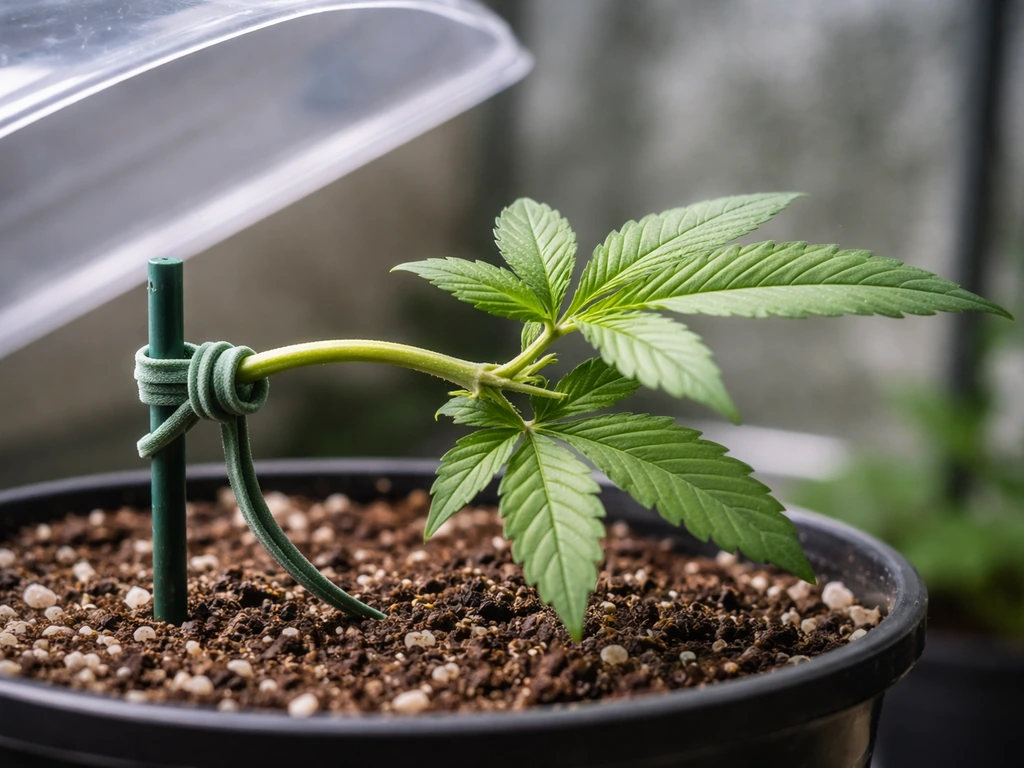
- Around week 3–4 (5th node): Start low-stress training (LST). Gently bend the main stem sideways and tie it down with soft plant ties or pipe cleaners anchored to the pot rim. This exposes lower bud sites to light without cutting the plant.
- Week 4–5 (6th node just appeared): Top the plant by cutting just above the 5th or 6th node. This creates two main colas from the top and triggers vigorous branching below. This is the right time because the new 6th node is still small, recovery is fast.
- Weeks 5–8: Continue LST on new branches as they grow. Fan them out like spokes on a wheel to create an even canopy. This is called manifolding or just ongoing LST and it is the best thing you can do for Godfather OG yield.
- After day 21–25 of flower: Stop active training. Switch focus to bud support (yo-yo trellis or bamboo stakes for heavy colas) and defoliation of any large fan leaves blocking airflow deep in the canopy.
Light schedule in veg
Run 18 hours of light and 6 hours of darkness during veg (18/6). This keeps photoperiod plants in vegetative growth indefinitely until you choose to flip. Keep your light at the manufacturer-recommended height and check PPFD with a meter if you have one. Seedlings and young plants want less intensity (200–400 PPFD), while established veg plants handle 400–600 PPFD without issue.
Nutrients in veg
Godfather OG in veg wants nitrogen-forward feeding. Use a standard cannabis veg nutrient formula and start at about half the label dose, working up only if the plant shows signs of deficiency (pale lower leaves are the first flag for nitrogen). Always pH your water and nutrient solution before feeding: soil growers target pH 6.0–7.0, coco coir growers target 5.5–6.5. Getting pH wrong is the single most common reason plants look sick when nutrients are actually fine, because roots simply cannot absorb certain minerals outside their optimal pH range. Aim for about 10% runoff each watering to prevent salt buildup.
Flowering Godfather OG: the flip, the stretch, and feeding
Triggering flower
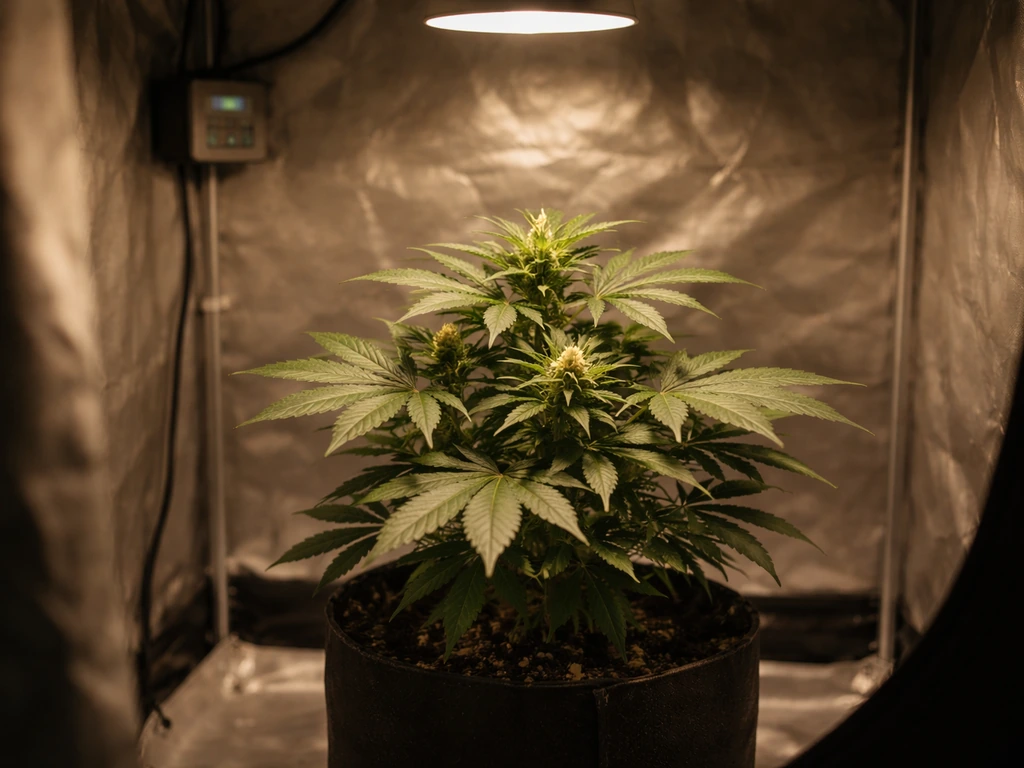
When your plants are roughly half the final height you want (because of the stretch coming), flip your timer to 12 hours light and 12 hours of uninterrupted darkness. That darkness period is critical. Any light leak during the dark hours can stress the plant and slow flowering. Check your tent or room for light leaks before you flip. Within 1–2 weeks you will see white pistils forming at node sites, confirming flowering has started.
Managing the stretch
Godfather OG, like most OG-lineage strains, stretches roughly 1.5–2x its height in the first 2–3 weeks of flower. If your plant is 18 inches tall when you flip, plan for it to reach 27–36 inches by week 3 of flower. If you are in a 5-foot tent, flip when plants are around 20–24 inches. Use your LST work from veg to keep the canopy even and pull any fast-growing tops sideways during the first two weeks of stretch. After week 3, the plant locks in its structure and you stop active training.
Feeding during flower
Switch to a bloom-focused nutrient formula when you flip. The general principle is less nitrogen and more phosphorus and potassium as flower develops. In weeks 1–3 of flower, a mild transition formula works well. From week 4 onward, run full bloom nutrients. In the final two weeks before harvest, many growers flush or use plain pH-adjusted water to clear residual salts and improve the final smoke. One important note: do not add nitrogen late in flower. It can actually delay ripening and rough up the taste. If you see potassium deficiency signs (brown leaf edges) in late flower, address that specifically, but resist the urge to throw a high-nitrogen veg nutrient at a late-flower plant.
Troubleshooting common problems and reading harvest readiness
Nutrient issues
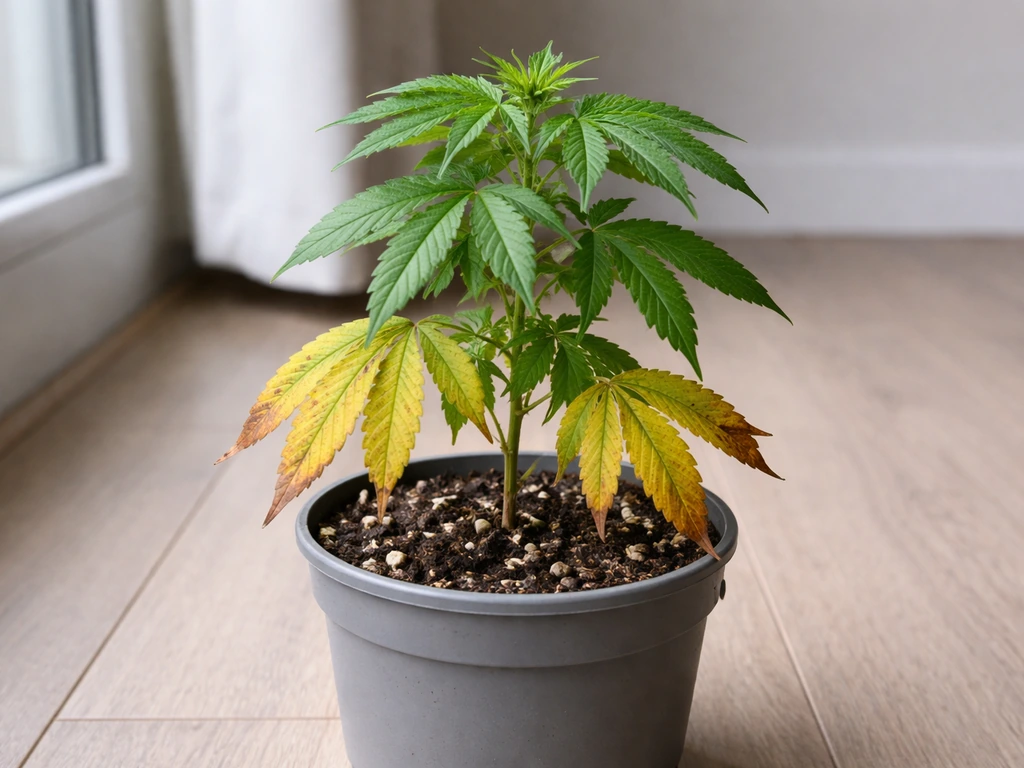
Nitrogen deficiency shows as yellowing that starts on the oldest lower leaves and works upward. Some yellowing in late flower is completely normal and even desirable. If it is happening in early veg or the first half of flower, check your pH first (wrong pH locks out nutrients even when they are present in the solution), then consider increasing nitrogen slightly. Nutrient toxicity looks like dark, almost clawing leaves with burnt tips. If you see that, flush with plain pH-adjusted water for a feeding cycle and dial back your dose.
Pests
Spider mites, fungus gnats, and aphids are the most common indoor home-grow pests. Spider mites leave tiny stippling on leaves and fine webbing under them. Fungus gnats (the larvae, not the adults) damage roots when soil stays too wet. Prevent gnats by allowing the top inch of soil to dry between waterings. For spider mites, neem oil or insecticidal soap work well in veg; avoid spraying anything on buds in flower. Yellow sticky traps near the base of plants catch and monitor for both.
Botrytis (bud rot): the main threat for Godfather OG
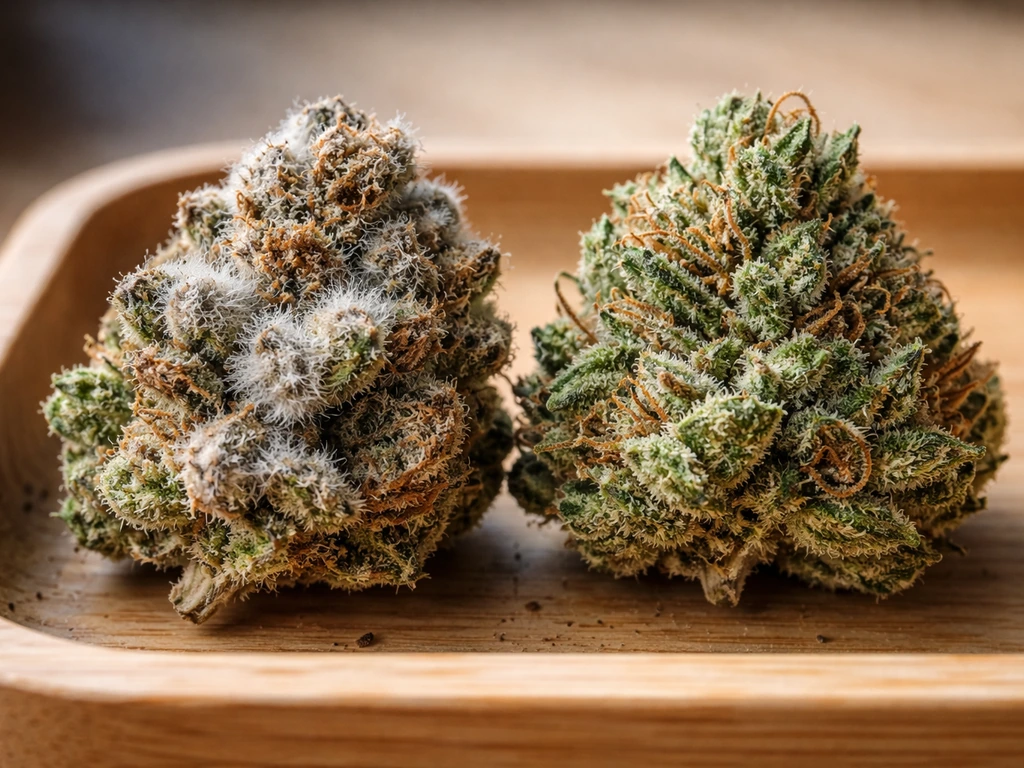
This is the one issue that specifically stalks dense OG strains. Botrytis (gray mold) starts inside thick buds where moisture gets trapped and air does not circulate. By the time you see the gray fuzzy mold on the outside, it has already been developing inside for days.
Prevention is everything here: keep late-flower RH at 40–50%, run your oscillating fan so air moves through the canopy not just over it, and do a defoliation pass around week 3–4 of flower to open up dense bud sites. GrowVPD Pro notes that when RH stays too high, water can condense inside dense buds and contribute to botrytis, so holding late-flower RH around that range helps reduce the risk keep late-flower RH at 40–50%.
If you are specifically chasing Sour Diesel character, the training, environment control, and late-flower humidity steps below are the same foundation you will use when you learn how to grow Sour Diesel. If you do find a botrytis spot, cut it out immediately with clean scissors, bag it before it can spread spores, and do not touch healthy buds with the same gloves. Drop humidity immediately after any outbreak.
Knowing when Godfather OG is ready to harvest
The 8–9 week flowering time is a starting point, not a harvest date. The most reliable method is reading trichomes under a jeweler's loupe (30–60x) or a digital microscope. Trichomes go through three stages: clear (immature, harvest too early and potency suffers), milky or cloudy (peak THC), and amber (THC degrading to CBN, more sedative effect). A practical harvest target for Godfather OG, which is already a relaxing indica, is roughly 70% milky/cloudy trichomes and 30% amber. That ratio gives you the full potency of this strain with the heavy, couch-lock character it is known for. If you want a slightly more energetic effect, harvest closer to 90% milky and 10% amber.
Drying, curing, and getting the best out of what you grew
A lot of growers nail the grow and then rush the dry and cure, which is genuinely heartbreaking because those last two steps have an enormous impact on aroma, smoothness, and potency. Godfather OG's terpene profile, that earthy, spicy, grape-and-fuel complexity, develops and stabilizes during a proper cure. If you want the best way to grow grand daddy purple, focus on consistent humidity control, good airflow, and a careful late-flower nutrition and curing routine. Do not skip this part.
Drying
After harvest, hang whole branches or individual buds upside down in a dark room. Target 60–68°F (15–20°C) and 55–65% RH with gentle indirect airflow (a fan pointing at a wall, not directly at the buds). Do not use a dehumidifier blasting directly at the drying rack; you want a slow, even dry. The drying phase takes 7–14 days. The test for done: small stems snap cleanly rather than bending. If they still bend and feel moist, give it more time. Drying too fast (under 60% RH with high heat) ruins terpenes. Drying too slow (above 65% RH) invites mold.
Curing
Once the stems snap, trim your buds (if you did not wet trim at harvest) and place them in wide-mouth glass mason jars, filling each jar about 75% full. Seal the jars and store them in a cool, dark place. For the first two weeks, open (burp) each jar once or twice a day for about 15 minutes to release moisture and exchange air. After that, burping every few days is enough.
Target 58–62% RH inside the jars; a small two-way humidity pack (like a Boveda 62) placed inside each jar makes this almost automatic. The minimum cure for Godfather OG is 2 weeks, but 4–6 weeks is where the full earthy, spicy, and grape notes really come through. If you are looking for a broader, step-by-step guide, our guide on how to grow charlotte's web can help you plan the grow from start to harvest.
At 8 weeks of cure, you will notice a meaningful difference compared to week two.
If you open a jar and smell ammonia instead of cannabis terpenes, the buds went in too wet. Spread them out to dry for another day or two, then re-jar. Ammonia smell means bacterial activity, which is fixable early but ruins the batch if ignored.
Your next steps right now
- Source feminized Godfather OG seeds or a verified clone from a reputable supplier (make sure growing cannabis is legal where you are and comply with your local plant limits).
- Set up your environment first: get your tent, fan, dehumidifier, and hygrometer running and dialed in before your plants arrive.
- Germinate or root your clone using the temperature and humidity targets above.
- Follow the veg training timeline starting at the 5th node for LST and topping at the 6th.
- Flip to 12/12 when plants are at half your target final height, then transition to bloom nutrients.
- Monitor trichomes starting around week 7 of flower and harvest at roughly 70% milky, 30% amber.
- Dry at 60–68°F, 55–65% RH for 7–14 days, then cure in sealed glass jars at 58–62% RH for at least 4 weeks.
Godfather OG rewards growers who pay attention to their environment and do not rush. It is a more satisfying grow than lighter, airier strains precisely because the payoff, dense, resinous, incredibly aromatic buds, is so tangible when you do it right. If you enjoy growing heavy indica-dominant genetics, you might also find value in exploring how cultivators approach similar plants like Granddaddy Purple or OG-leaning hybrids in the Cookies family, both of which share some of the same training and late-flower humidity considerations as Godfather OG.
FAQ
How strict does the 12/12 dark period need to be for Godfather OG?
In veg, keep lights on 18/6, then switch to 12/12 only when the plant is at the size you want to start flowering. If you accidentally interrupt the 12-hour dark window (for example, a door opens and bright light hits the tent), flowering can stall or become uneven, so fix the root cause with blackout material and consistent room routine.
Can I grow Godfather OG in a small pot the whole time, or should I up-pot?
Yes, you can start in a smaller container, but Godfather OG benefits from a gradual root expansion. A common approach is a small seedling cup for the first week or two, then up-pot once roots fill the current container, so you avoid long periods of wet medium that can trigger fungus gnat issues.
What is the safest way to do defoliation for a dense strain like Godfather OG?
If you see bud sites staying tight and “shadowy” inside the canopy, do targeted thinning rather than heavy defoliation. Remove only leaves blocking direct airflow around week 3 to 4, and avoid stripping too aggressively because stress can slow bud formation in a dense cultivar.
How do I know my airflow is actually reaching the middle of the canopy?
For this strain, aim for a stable airflow pattern where leaves in the middle of the canopy move, not just the top. A practical check is to place your hand near different bud levels, you should feel gentle movement at multiple heights, and you should not have stagnant pockets right under thick colas.
What should I adjust first if I cannot keep late-flower RH in the 40 to 50% range?
If your humidity targets are hard to hit, prioritize temperature and RH stability in late flower. Run the dehumidifier to maintain the tent setpoint rather than turning it on and off, and consider adding a slightly larger exhaust rate during lights on to prevent humidity spikes before lights-out.
How can I tell if I am feeding too much nitrogen after the flip?
Watch for overdosing nitrogen in early flower and again in mid flower. If leaves look dark green with clawing or burnt tips, pause the feed and use a light, properly pH-adjusted solution for one cycle, then reduce nutrient strength so the plant can transition without delaying ripening.
What is the most common pH-related mistake that shows up later in the grow?
Measure pH of your actual runoff or nutrient solution, not just the source water. If the plant looks fine when you feed but declines a few days later, check for salt buildup, confirm runoff is around your expected range, and consider reducing concentration or increasing runoff frequency.
Do I really need a dehumidifier for Godfather OG, or can fans alone work?
Budget for a humidity management tool even if you have fans, because dense buds are where botrytis develops. If you are consistently above 50% RH in mid to late flower, mold risk rises quickly, so treat dehumidification, airflow, and precise RH targets as part of the grow plan, not optional add-ons.
What should I do if my cured buds smell like ammonia?
If you have an ammonia smell after curing, it usually means the buds were too wet at jarring. Fix it by taking the buds back out, spreading them for a short re-dry (just long enough to remove excess surface moisture), then re-jar and re-target the jar RH range.
What happens if I harvest Godfather OG a week early?
Yes, harvesting too early can leave more clear trichomes and a less developed effect. If you miss your window, you can still harvest based on trichome stage, but be aware that a batch harvested early will typically have a sharper, less smooth profile and less pronounced terpene depth.
How do I troubleshoot signs that might be light burn versus nutrient problems?
Light stress shows differently than nutrient issues, look for leaf canoeing, bleached spots, or clawing that lines up with the light intensity increase. Reduce canopy PPFD, keep the photoperiod stable, and give 2 to 3 days for recovery before changing nutrient schedules.
Next Article
How to Grow Cookies Cannabis: Step-by-Step Beginner Guide
Step-by-step guide to grow cannabis Cookies indoors or outdoors, with environment, feeding, troubleshooting, harvest and