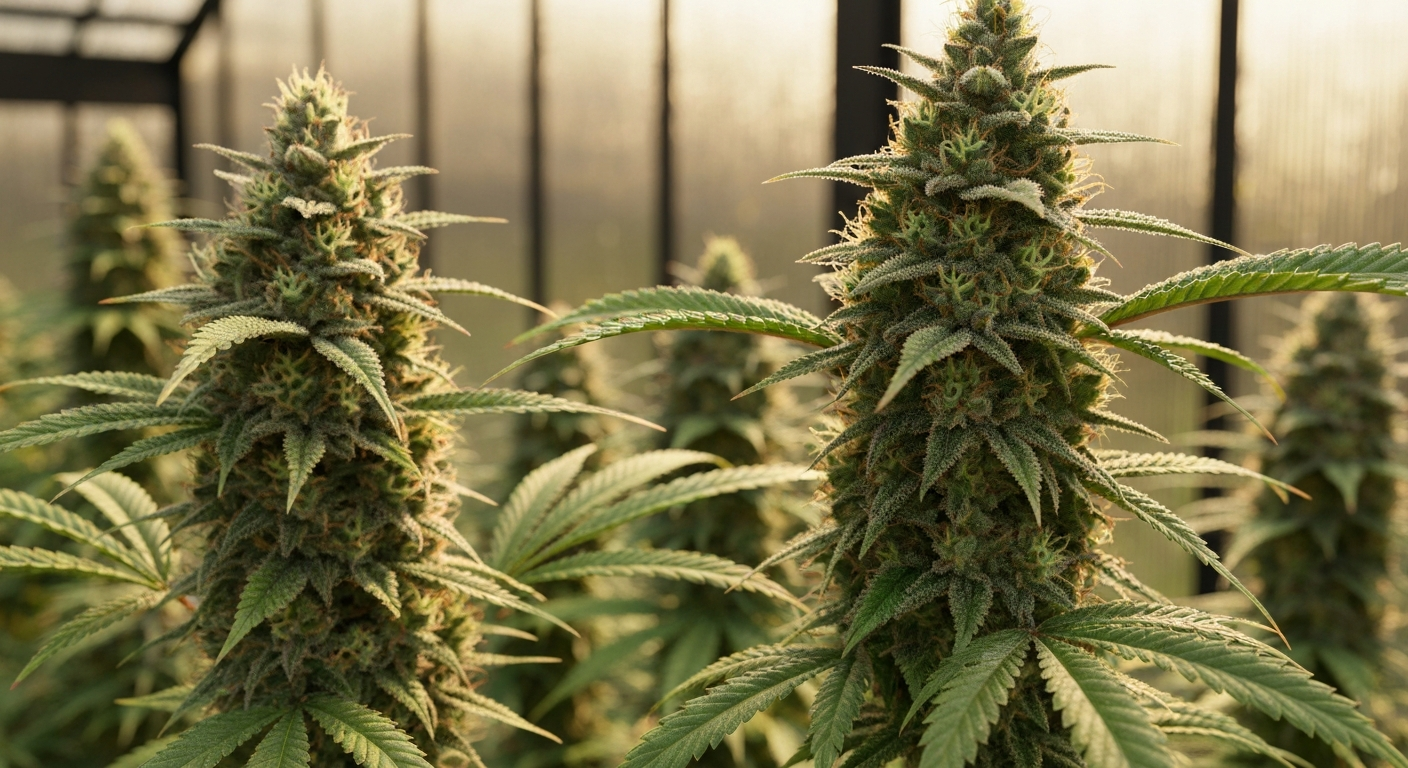
The best way to grow Grand Daddy Purple is to keep it simple, stay consistent with your environment, and give the plant's indica-dominant genetics the conditions they were built for: moderate temperatures, controlled humidity, a generous root zone, and a feeding schedule that shifts toward phosphorus and potassium as flowering begins. Get those fundamentals right and GDP rewards you with dense, resinous buds that, with a deliberate cool-down in late flower, can show the deep purple hues the strain is famous for.
Best Way to Grow Grand Daddy Purple: Complete Guide

Marcus Holbrook
29 Jul 2026
Who This Guide Is For
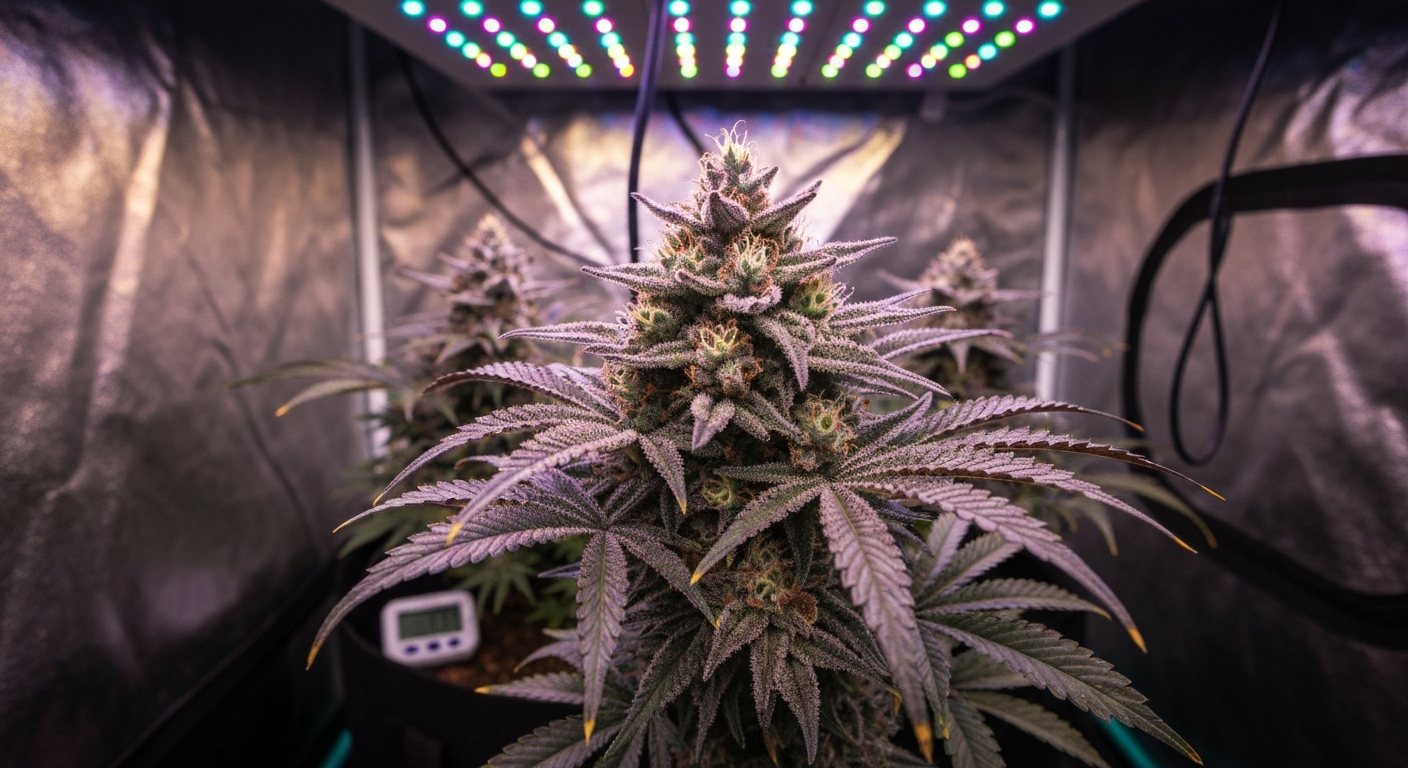
This is a complete, stage-by-stage walkthrough written specifically for home growers, whether you are setting up your first tent or adding GDP to an existing rotation. You will find exact environmental targets, feeding ranges, training techniques suited to GDP's stocky indica structure, and honest troubleshooting for the problems that actually show up with this strain: bud rot, purple-color chasing trade-offs, and occasional stretch during the flip to flower. By the end you will have everything you need to take a GDP seed or clone from start to cured jar.
Strain Profile and Genetics
Grand Daddy Purple was created by Bay Area breeder Ken Estes in the early 2000s, with the strain entering wider circulation through seed and clone in the mid-2000s. The cross is Purple Urkle (carrying Mendocino and broader purple-cannabis lineage) bred with Big Bud, an Amsterdam-origin cultivar known for heavy yields and compact structure. The result is an indica-dominant hybrid commonly described by breeders as sitting around 70–80% indica in growth habit and effect profile.
In terms of growth structure, expect a plant that stays relatively short and stocky, throws wide fan leaves, and builds dense, calyx-packed buds. Internode spacing is tighter than a sativa-leaning strain, which matters when you are planning canopy training. The aroma profile leans heavily into sweet grape and berry notes from the Purple Urkle side, with a backing of earthy musk from the Big Bud influence. Terpenes vary across batches and phenos, as any Certificate of Analysis will show, but myrcene, caryophyllene, and pinene are commonly prominent in published GDP COA data. Cannabinoid percentages vary just as widely from batch to batch, so rely on your specific seed source or lab testing your own harvest rather than assuming a fixed number.
The purple coloration GDP is known for is primarily driven by anthocyanin pigments. Research published in 2025 confirms that anthocyanin accumulation in cannabis inflorescences is strongly influenced by temperature, with colder conditions triggering more color. Importantly, the temperature that maximizes purple coloration is significantly colder than the optimum for inflorescence dry weight, meaning you can deliberately encourage purple at a small yield cost. More on that in the color tactics section below.
Legal Compliance and Safety Reminders
Before purchasing seeds, clones, or any growing equipment, check your local laws. Cannabis cultivation regulations vary enormously, even within the same country, and the rules governing plant counts, canopy area, and home possession differ by state, province, and municipality. Many jurisdictions that permit home growing impose strict limits (commonly two to six plants per household) and require plants to be kept out of public view. Some regions prohibit home cultivation entirely regardless of possession laws. Nothing in this guide is legal advice, and it is your responsibility to verify what is permitted where you live before you start. Grow responsibly, keep your grow space secure, and do not distribute your harvest in ways that conflict with local regulations.
Choosing a Grow Method: Indoor, Outdoor, or Hydroponic
GDP performs well across all three main grow methods, and none of them is objectively superior. The right choice depends on your space, budget, climate, and how much control you want over the outcome. Here is a practical breakdown.
| Method | Key Advantages for GDP | Key Challenges | Best For |
|---|---|---|---|
| Indoor (soil or coco) | Full environmental control; predictable 8–11 week flower; privacy; year-round growing | Electricity and equipment costs; heat and humidity management; odor control required | Beginners wanting consistent results; cold-climate growers |
| Outdoor (ground or large pots) | Lowest cost; natural sunlight provides ideal DLI; large root zone = larger plants | Dependent on climate; harvest tied to season (mid-October Northern Hemisphere); pest and mold exposure greater | Warm, dry-autumn climates; growers with private outdoor space |
| Hydroponic (DWC or coco/drain-to-waste) | Faster growth rates; precise nutrient delivery; scalable | Higher skill floor for pH/EC management; equipment cost; root-zone problems escalate quickly | Intermediate growers comfortable with daily monitoring; space-limited setups wanting faster turnaround |
My recommendation for a first-time GDP grow is a 3x3 or 4x4 indoor tent with coco coir or a quality peat-based soil and a mid-range LED fixture. You get the control you need to manage humidity (GDP is susceptible to bud rot), a predictable timeline, and the ability to dial in the late-flower temperature drop that encourages purple without risking an early frost wiping out your crop. If you are growing outdoors in a climate that stays warm well into October, outdoor in large fabric pots is a genuinely great option and produces impressive plants with very little input cost.
Planning Your Grow
Space and Timeline
GDP plants trained with low-stress techniques in a standard 3x3 tent will typically reach 60–100 cm at harvest. Untrained plants grown in large containers can stretch taller, especially in the first two weeks after flipping to 12/12. Plan for roughly 13–17 weeks from seed to harvest: 1 week germination, 2–3 weeks seedling, 4–6 weeks vegetative growth (adjustable to your space), 8–11 weeks flowering, and a final flush period of 1–2 weeks. After harvest, add 10–14 days for drying and at least 2–4 weeks of curing before peak quality. Total seed-to-cured-jar is realistically 18–23 weeks.
Realistic Yield Expectations
Indoor yields under a quality LED in a well-managed 3x3 tent range widely depending on plant count, training, and environmental precision. A beginner with two plants and basic LST can reasonably expect 1.5–3 oz per plant. Experienced growers running SCROG in a 4x4 with dialed-in conditions can push well beyond that. Outdoor plants in large containers with a full season regularly produce 3–8 oz per plant. Treat any number as a goal, not a guarantee, and your first grow is largely a learning run.
Prep Checklist Before You Start
- Confirm local legal plant count and cultivation rules
- Source seeds or clones from a reputable breeder or licensed dispensary
- Set up and test your grow space (tent, lights, fans, intake/exhaust) at least a week before plants arrive
- Purchase a reliable pH meter and EC/TDS meter and calibrate both
- Stock pH-up and pH-down solutions
- Select and purchase your substrate (soil, coco, or hydro setup)
- Choose a base nutrient line suited to your medium
- Have containers and saucers ready in the right sizes
- Install a thermometer/hygrometer with min/max memory inside the canopy
- Set up a grow journal or simple spreadsheet to track daily observations
Environment and Lighting Targets by Stage
Getting the environment right is the single highest-leverage thing you can do for GDP. The strain is forgiving within the correct ranges but punishes neglect with mold in late flower or lockout-driven deficiencies. Use the table below as your quick reference, and then read the notes under each stage for the reasoning behind the numbers. See Fluence Cannabis Cultivation Guide (stage environmental targets) for standard stage temperature and humidity windows used in commercial protocols.
| Stage | Temp (Day) | Temp (Night) | RH | Light Schedule | PPFD Target |
|---|---|---|---|---|---|
| Germination | 22–25°C (72–77°F) | 20–23°C | 70–80% | N/A or 18/6 seedling light | N/A |
| Seedling (days 1–14) | 20–24°C (68–75°F) | 18–22°C | 60–70% | 18/6 | 200–400 µmol·m⁻²·s⁻¹ |
| Vegetative | 20–26°C (68–79°F) | 18–22°C | 40–60% | 18/6 | 400–600 µmol·m⁻²·s⁻¹ |
| Early Flower (weeks 1–4) | 20–26°C (68–79°F) | 18–22°C | 40–50% | 12/12 | 600–900 µmol·m⁻²·s⁻¹ |
| Late Flower (weeks 5–harvest) | 20–24°C (68–75°F) | 15–18°C (color trigger) | 40–50% | 12/12 | 700–1000 µmol·m⁻²·s⁻¹ |
| Flush / Pre-harvest | 18–22°C | 14–17°C | 40–45% | 12/12 | 500–700 µmol·m⁻²·s⁻¹ |
A practical watts-per-square-foot rule of thumb for beginners: target around 30–50 actual LED watts per square foot for flowering. That gets you in the ballpark, but mapping PPFD with a meter or using your fixture's published PPFD map at your intended hanging height is more accurate. For a 3x3 tent, a fixture pulling 200–300 actual watts from the wall with a quality Samsung or similar LED diode array typically hits flowering PPFD targets at a reasonable hanging height. If you are running CO2 enrichment, PPFD can safely push toward and above 1000 µmol·m⁻²·s⁻¹; without CO2, stay under that ceiling to avoid light stress.
On VPD: rather than tracking temperature and humidity in isolation, experienced growers use vapor pressure deficit charts to confirm the two values are working together for good stomatal function. There are free VPD charts online calibrated to cannabis production. In flowering, a canopy VPD of roughly 1.0–1.5 kPa is a commonly cited target. If you are just starting out, focus on hitting the temperature and RH ranges in the table above and add VPD monitoring once you are comfortable with the basics.
Stage-by-Stage Timeline and Tasks
Germination (Days 1–5)
The paper-towel or direct-to-medium method both work reliably. For paper towel: place seeds between damp (not soaking) sheets on a plate, cover with another plate, and keep at 22–25°C. Seeds typically crack and show a taproot within 24–96 hours. Once the taproot is 0.5–1 cm long, transfer to your starter medium. For direct germination, plant seed 5–10 mm deep in pre-moistened coco or seedling soil, keep the surface moist but not waterlogged, and maintain warmth. Do not overwater at this stage; more germination failures come from too much water than too little.
Seedling Stage (Days 5–21)
Once the seedling breaks the surface and the first true fan leaves appear, keep light at 18 hours and PPFD low (200–400 µmol·m⁻²·s⁻¹). Young seedlings have minimal root surface area and over-watering is the most common beginner mistake here. Water in a small ring around the seedling, let the medium dry partially between waterings, and do not start nutrients until the plant has developed 3–4 nodes and the cotyledons begin to yellow naturally. RH at 60–70% prevents the seedling from desiccating before roots are established. Transplant from starter plug or small cup to a 1–2 gallon container once roots begin circling the bottom.
Vegetative Stage (Weeks 3–8 from Seed, Adjustable)
GDP's indica genetics mean it does not need a long vegetative period to fill a 3x3. Four to six weeks of veg from transplant is typically enough to build a plant that, once trained, will fill the space efficiently. Keep the 18/6 light schedule, ramp PPFD to 400–600 µmol·m⁻²·s⁻¹, and begin feeding at light doses (see the nutrient section). Top or begin LST early in veg when the plant has 4–5 nodes. GDP responds well to training and will bush out vigorously once the apical dominance is broken.
Flowering Stage (Weeks 1–11 Post-Flip)
Flip to 12/12 when the plant is roughly half the final height you want, because GDP will stretch 20–40% in the first two to three weeks of flower. Expect pistils to appear within 7–10 days of the flip. Weeks 1–3 are the stretch and early bud-site formation phase. Weeks 4–6 are rapid bud development, where feeding needs are at their highest. Weeks 7–9 are bulk and trichome ripening, where you begin tapering nitrogen and watching trichome color. Most GDP phenotypes finish in 8–9 weeks of flower, though some push to 10–11 weeks, especially in cooler conditions. Check trichomes under magnification (a jeweler's loupe or USB microscope) and harvest when you see mostly cloudy trichomes with the proportion of amber that matches your preference.
Flush and Pre-Harvest (Final 1–2 Weeks)
Whether or not to flush is a debated topic in the growing community. A practical middle ground for soil and coco growers: reduce or eliminate additional nutrients in the final 7–14 days and water with plain pH-adjusted water. This is not proven to dramatically affect final flavor in all substrates, but it does give you a clean finishing window and lets you monitor the plant's color and trichome development without the noise of deficiencies triggered by heavy late feeds. In hydro, a 5–7 day plain-water flush is common. In living soil, many growers skip the flush entirely since the soil's biology buffers inputs naturally.
Substrate and Container Recommendations
Soil Options
A quality peat-perlite mix with 20–30% perlite for drainage is the most beginner-friendly substrate for GDP. Pre-amended 'cannabis soils' from reputable brands often carry enough nutrition for the first 3–4 weeks without additional feeding, which reduces the chance of overfeeding young plants. GDP's roots are moderately aggressive and appreciate a well-aerated medium, so avoid dense potting mixes designed for outdoor ornamentals. If you are experimenting with living soil, GDP does well, but the reduced input control means you give up some ability to diagnose deficiencies clearly. Soil pH should be maintained at 6.3–6.8 for optimal nutrient availability.
Coco Coir
Coco coir buffered with calcium and magnesium is my preferred medium for GDP indoors. It drains fast, encourages strong root development, and gives you precise control over what the plant receives in every watering. Run pH at 5.8–6.2 in coco. Because coco has essentially zero cation exchange capacity, you need to feed at every watering (even at low EC early on) to prevent nutrient starvation. Start at an EC of around 0.8–1.0 mS/cm in seedling, ramp to 1.4–1.8 mS/cm in veg, and push toward 1.8–2.2 mS/cm in peak flower. Cal-Mag supplementation is essential in coco regardless of which base nutrient line you use.
Hydroponic (DWC and Recirculating)
GDP in deep water culture grows fast and produces impressive root masses if you can maintain reservoir temperatures below 21°C (to prevent root rot). EC targets in DWC run slightly higher than coco/soil references in some guides, but for beginners, staying at 1.2–2.0 mS/cm across the grow and adjusting based on plant response is safer than pushing limits. Follow your nutrient line's published schedule as a starting point and adjust based on what the plant shows you.
Container Sizes and Repotting
GDP has a vigorous root system and will become root-bound in undersized containers, which stalls growth and contributes to pH drift in coco. For a standard indoor run, start in a 1-gallon container for seedling, transplant to 3-gallon for veg, and finish in a 5-gallon (or 7-gallon fabric pot for larger plants). Fabric pots are strongly recommended because they air-prune roots, preventing the spiraling that happens in plastic containers and promoting a dense, fibrous root ball. Transplant when you can see roots emerging from drainage holes or when the rootball holds the shape of the container when tipped out. Always pre-moisten your new medium before transplanting and do not feed heavy for 2–3 days after to reduce transplant stress.
Nutrients and pH: Stage-by-Stage Feeding
A three-part or two-part base nutrient system (General Hydroponics Flora Series, Canna Coco, or similar) gives you enough flexibility to shift NPK ratios across growth stages without buying fifteen products. Follow the manufacturer's feeding chart as a starting template, then dial it up or down based on what your plant shows. See Penn State Extension, Industrial Hemp resources (fertility, soil testing guidance) for guidance recommending soil tests and local extension recommendations to set baseline fertility and tailor fertilizer programs Penn State Extension — Industrial Hemp resources (fertility, soil testing guidance). Yellowing between veins suggests a micronutrient issue or pH being out of range; overall pale green suggests nitrogen deficiency; dark green with clawing tips often means nitrogen toxicity or overwatering.
| Stage | N-P-K Emphasis | Target EC (mS/cm) | pH Range (Soil) | pH Range (Coco/Hydro) | Notes |
|---|---|---|---|---|---|
| Seedling | Minimal, balanced | 0.6–1.0 | 6.3–6.8 | 5.8–6.1 | Many soils need no feed for first 3 weeks |
| Early Veg | High N, moderate P/K | 1.0–1.4 | 6.3–6.8 | 5.8–6.2 | Introduce Cal-Mag in coco from day one |
| Late Veg | High N, building P/K | 1.4–1.8 | 6.3–6.8 | 5.8–6.2 | Top-dress or supplement silica if using soil |
| Early Flower (wks 1–3) | Transitioning: lower N, raise P/K | 1.6–2.0 | 6.3–6.8 | 5.8–6.2 | Reduce N gradually; begin bloom booster |
| Peak Flower (wks 4–7) | Low N, high P/K | 1.8–2.2 | 6.3–6.8 | 5.8–6.2 | Maximize P/K; monitor for Mg/Ca deficiency |
| Late Flower (wks 8–harvest) | Minimal N, tapering P/K | 1.2–1.6 | 6.3–6.8 | 5.8–6.2 | Begin reducing feed volume; watch plant color |
| Flush | Water only | < 0.5 | 6.3–6.5 | 5.8–6.0 | 7–14 days soil/coco; 5–7 days hydro |
One thing I learned the hard way: GDP can show signs of a magnesium deficiency in mid-flower even with good overall feeding, particularly in coco. Interveinal yellowing on older fan leaves mid-flower is almost always Mg. A small dose of Epsom salts (1 tsp per gallon) or a dedicated Cal-Mag supplement corrected at the right time stops it from progressing. Always check pH first before adding supplements, because a pH outside your target range will cause apparent deficiencies regardless of what is in the reservoir.
Training, Pruning, and Canopy Management
Low-Stress Training (LST)
LST is the most beginner-friendly technique and works extremely well with GDP's flexible, bushy structure. Start bending the main stem outward and downward when the plant has 4–5 nodes, securing with soft plant ties or pipe cleaners through holes in the container rim. As new growth emerges, train those branches outward too, building an even flat canopy. GDP's tendency to branch heavily means you will quickly end up with multiple bud sites at roughly the same height, which is exactly what you want for even light penetration.
Topping and FIMing
Topping (removing the main growing tip above the 4th or 5th node) is highly effective on GDP because the strain responds with two vigorous side branches that quickly become dominant colas. FIMing (pinching about 75% of the tip rather than a clean cut) is messier but can produce 3–4 new tops from a single node. Both techniques should be done in veg when the plant has at least 5–6 nodes and is growing vigorously. Avoid topping within the first two weeks of flipping to flower.
SCROG (Screen of Green)
A horizontal screen placed 30–40 cm above the pots works well for GDP in a small tent. As branches grow through the screen, tuck them back under and weave them outward to fill the net evenly. Once the screen is 70–80% full, flip to 12/12. SCROG maximizes your fixture's footprint and is particularly effective for a single GDP plant in a 3x3. The main downside: once the screen is populated, you cannot easily move the plant, which complicates mid-grow interventions like transplanting or treating root issues.
Defoliation and Lollipopping
GDP's dense canopy blocks light and airflow to lower bud sites, which can be a mold risk given the strain's susceptibility. Strategic defoliation in early flower (removing large fan leaves that block lower bud sites) and lollipopping (removing all growth on the bottom third of the plant that will never receive enough light to produce quality buds) both improve airflow and redirect energy upward. Do not defoliate aggressively within the first two weeks of the flip or in the final three weeks of flower. A moderate pass at weeks 2–3 of flower is typically enough.
How to Encourage Purple Coloration
GDP's purple color is genetic, meaning the anthocyanin potential is already in the plant. What you are doing with environmental manipulation is triggering that gene expression, not creating something that is not there. Cold nights in late flower are the primary lever. Research on cannabis anthocyanin confirms that cooler temperatures increase pigment accumulation significantly. In practical terms, dropping nighttime temperatures to 15–18°C during the last 3–4 weeks of flowering is the most reliable method. In an indoor tent, this means reducing or disabling your nighttime heating or allowing the HVAC to cool during the dark period.
The important caveat, supported by the same research, is that the temperature optimum for maximum purple color is much colder than the optimum for maximum yield. Dropping nights to, say, 12–13°C might produce stunning color but will slow bud development and reduce final weight. The 15–18°C nighttime range is a reasonable compromise: meaningful color enhancement without significant yield penalty. UV exposure has also been cited as a factor in anthocyanin production, and some growers use UVB supplementation in late flower for this reason. It is a secondary lever, not a primary one. Do not deprive your plants of phosphorus or manipulate pH chasing color; it causes more harm than good and the research does not support those tactics.
Harvest, Drying, Trimming, and Curing
Knowing When to Harvest
The most reliable harvest signal is trichome color under magnification. At peak ripeness for GDP, the majority of trichomes on the bud itself (not the sugar leaves, which ripen faster) should be milky white or cloudy, with a proportion of amber depending on your preference. A higher proportion of cloudy trichomes indicates earlier harvest; more amber indicates later. For GDP, most growers target around 10–20% amber on the calyxes for a balance of peak cannabinoid content and the body-heavy effect the strain is known for. Secondary indicators include pistil color (most white hairs have turned orange/brown), swollen calyxes, and the cessation of new pistil development.
Drying
A slow dry produces better results than a fast one. After harvest, hang whole branches or individually cut plants upside-down in a dark space with temperature at 18–21°C and RH at 50–60%. Airflow should be gentle and indirect (not blowing directly on buds). Drying takes 7–14 days depending on bud density and ambient conditions. GDP buds are dense and slow to dry fully at their core, which is exactly where bud rot can begin if RH climbs too high during drying. Check daily for any soft or damp spots. Buds are ready for trimming when small stems snap cleanly rather than bending.
Trimming and Curing
Trim sugar leaves to your preference (wet trimming immediately after harvest or dry trimming after drying are both valid approaches). After trimming, place buds loosely in wide-mouth mason jars or similar airtight containers, filling to about 70–75% capacity. For the first two weeks, open jars for 15–20 minutes once or twice daily to release moisture and exchange air, a process called burping. If jars smell like ammonia when opened, the buds are still too wet; leave the lid off for a few hours before resealing. After two weeks of daily burping, reduce to every few days. Minimum recommended cure is 2–4 weeks; 6–8 weeks produces noticeably smoother, more developed flavor. GDP particularly benefits from a longer cure, as the terpene complexity deepens considerably after 4 weeks.
Common Problems and How to Fix Them
Bud Rot (Botrytis cinerea)
GDP's dense buds make it one of the more bud-rot-susceptible cultivars, and I say this from personal experience losing part of a late-flower crop to grey mold. Prevention is everything: keep RH below 50% in flower, ensure good airflow through the canopy, defoliate to open up dense bud sites, and check buds daily in the final three weeks. If you find a grey, powdery or brown mushy patch inside a bud, remove the entire cola immediately, sterilize your scissors, and check surrounding plants. Bud rot spreads rapidly through spores in still air. There is no treatment for affected tissue; disposal is the only option. Lower your RH immediately and increase air circulation.
Nutrient Deficiencies
The most common deficiency with GDP is magnesium, showing as interveinal yellowing on mid-canopy fan leaves in weeks 4–6 of flower. Before adding any supplement, verify your pH is within range, because a pH of 7.2 in soil will lock out Mg regardless of what is in the feed. Once pH is confirmed correct, supplement with Cal-Mag or Epsom salts. Nitrogen deficiency (overall pale yellowing from lower leaves upward) in late flower is normal and expected; in veg or early flower it means your nitrogen input is too low. Calcium deficiency shows as brown spots or tip curl on new growth, and in coco is almost always caused by insufficient Cal-Mag.
Stretch and Height Management
GDP can surprise growers with its first-week-of-flower stretch, particularly from certain phenotypes or if plants are underfed in veg. If you are approaching your tent's light clearance limit, lower the light to maintain the PPFD target at canopy, use LST to bend tall colas outward, and in extreme cases, supercrop (bend the stem until the inner tissue cracks slightly, then tape it) to reduce height. Reducing the 12/12 flip trigger slightly later in veg (when plants are smaller) is the best preventative measure.
Hermaphroditism
GDP grown from quality genetics is not particularly prone to hermaphroditism, but any cannabis plant can develop male pollen sacs under chronic stress: heat above 30°C for extended periods, light leaks during the dark cycle, erratic day/night temperatures, or severe root stress. Inspect plants weekly in flower, particularly at nodes where branches meet the stem. A single banana (elongated yellow pollen sac without a calyx) can pollinate your entire crop and fill the harvest with seeds. Remove hermaphroditic plants from the grow space if the issue is widespread; for isolated nanners in late flower, carefully remove with tweezers and stabilize whatever stress triggered the response.
Spider Mites, Fungus Gnats, and Other Pests
Spider mites appear as stippling on leaf surfaces with fine webbing on undersides; treat with neem oil or insecticidal soap in veg (avoid spraying buds in flower). Fungus gnats lay eggs in moist topsoil; let the medium surface dry between waterings to disrupt their lifecycle and use yellow sticky traps to monitor populations. Thrips leave silver streaking on leaves; spinosad-based sprays are effective in veg. For all pests, early detection through regular inspection (including the undersides of leaves) is far more effective than reactive treatment.
GDP Compared to Similar Indica-Dominant Strains
If you are building a home garden rotation, GDP pairs well alongside other classic strains that suit beginner and intermediate growers. Godfather OG shares the heavy indica growth structure and similar flowering timelines, making it a logical companion grow for anyone who enjoys GDP's profile. Cookies-family strains are slightly more sativa-leaning in habit with different terpene profiles, and can be a good contrast for variety in your lineup. For strain-specific setup and training tips, see the guide on how to grow cookies for practical advice tailored to Cookies-family phenotypes. GDP is also meaningfully different from strains like Sour Diesel, which is significantly more sativa-dominant, has longer flowering times, and demands different environmental conditions overall. Charlotte's Web, developed for CBD rather than THC profiles, has a very different cannabinoid target but a somewhat similar manageable growth structure for beginners. For specific guidance on CBD-focused varieties and their different needs, see a dedicated guide on how to grow Charlotte's Web.
Quick Reference: GDP Grow at a Glance
| Parameter | Value / Range |
|---|---|
| Genetics | Purple Urkle x Big Bud (Ken Estes) |
| Growth type | 70–80% indica dominant |
| Indoor flowering time | 8–11 weeks (most phenos 8–9 weeks) |
| Outdoor harvest (N. Hemisphere) | Mid-October |
| Germination temp | 22–25°C |
| Veg temp / RH | 20–26°C / 40–60% |
| Flower temp / RH | 20–26°C day, 15–18°C night (late flower) / 40–50% |
| Recommended container | 5–7 gallon fabric pot for finish |
| Soil pH target | 6.3–6.8 |
| Coco/hydro pH target | 5.8–6.2 |
| Flower EC range | 1.8–2.2 mS/cm peak |
| Drying conditions | 18–21°C, 50–60% RH, 7–14 days |
| Minimum cure time | 2–4 weeks (6–8 weeks preferred) |
FAQ
What is Grand Daddy Purple (GDP) and what are its genetics and typical characteristics?
Grand Daddy Purple (GDP) is an indica‑leaning cannabis cultivar originally bred by Ken Estes as a cross of Purple Urkle and Big Bud. It is commonly described as ~70–80% indica in breeder references. Expect compact, bushy plants with broad leaves, dense buds, and purple coloration potential in many phenotypes. Flowering time is typically reported around 8–11 weeks indoors, with outdoor harvest often in mid‑October in temperate Northern Hemisphere climates. Individual cannabinoid and terpene levels vary by seedline and harvest; rely on batch COAs for product‑level lab data.
Indoor vs outdoor vs hydroponic — which method is best for a beginner growing GDP and what are the pros/cons?
Indoor (recommended for beginners who need control): Pros — precise control of light, temperature, humidity, and privacy; easier to force purple coloration and avoid pests. Cons — higher upfront cost for lights/ventilation and energy use. Outdoor: Pros — low cost, natural sun for strong yields, simpler setup. Cons — exposure to pests, variable weather, slower or later harvest dates and legal visibility. Hydroponic (DWC/ebb‑flow/coco): Pros — fast growth, high potential yields, precise nutrient control. Cons — steeper learning curve, greater risk of rapid failures (pH/ec swings), equipment maintenance. For beginners: start indoor in soil or coco with a simple tent, then progress to hydro or outdoor when confident.
What are exact stage‑by‑stage environmental targets (temperature, RH, light schedule, PPFD/DLI) from seed/clone to harvest?
Germination: Temp 20–25°C, RH 70–80%, dark or low diffuse light. Seedling/clone (first 1–3 weeks): Temp 20–24°C, RH 60–70%, 18–24 h light, PPFD ~100–250 µmol·m⁻²·s⁻¹ (DLI ≈4–8). Vegetative (3–8+ weeks, depending on target size): Temp 20–26°C, RH 40–60%, 18–24 h light (commonly 18/6), PPFD ~400–600 µmol·m⁻²·s⁻¹ (DLI ≈25–40). Flowering (switch to 12/12 for photoperiod plants): Daytime canopy temp 20–26°C, night canopy temp ideally 15–20°C (a modest 3–6°C drop helps resin/flowering), RH 40–50% (lower to 35–45% late flower), photoperiod 12 h dark/12 h light, PPFD target 600–900 µmol·m⁻²·s⁻¹ for flowering canopy (DLI ≈35–50 mol·m⁻²·day⁻¹). Note: higher PPFD often requires CO₂ supplementation and better HVAC. Use VPD charts to refine temp/RH for stomatal function and mold prevention.
What substrates and container sizes are recommended for GDP for soil, coco and hydro setups?
Soil (organic potting mix or living soil): Use an airy, well‑draining mix with perlite and compost. Container sizes: seedlings 1–3 L, veg 5–20 L (3–7 gal common), final pots 11–30 L (3–8 gal) for larger plants. Coco: Use buffered coco coir with perlite for drainage; containers similar to soil. Hydro (DWC/recirc): Net pots 3–6” with 10–30+ L reservoirs depending on system; ensure reliable oxygenation. For tent grows where space is limited, 7–15 L (2–4 gal) pots balance root volume and manageability. Use sturdy fabric pots to promote air pruning and root health.
What pH and EC/PPM ranges should I target for soil, coco and hydro across veg vs flowering?
Soil: pH 6.3–6.8; target EC ≈0.8–1.2 mS/cm (≈400–600 ppm on 500 scale) during veg, rising moderately in late flower as needed. Coco: pH 5.8–6.2; EC ≈1.0–1.6 mS/cm (≈500–800 ppm) in veg, 1.2–2.0 mS/cm (≈600–1,000 ppm) early–mid flower. Hydro (DWC/ebb‑flow): pH 5.5–6.2; EC ≈1.0–2.2 mS/cm depending on system and stage — beginners commonly run 1.2–1.8 mS/cm in veg and 1.4–2.2 mS/cm in flower. Always monitor runoff and reservoir EC/pH frequently and adjust slowly; follow product feed charts from reputable manufacturers.
What nutrient schedules and feeding tips should beginners follow for veg vs flowering?
Use reputable manufacturer feed charts (Canna, General Hydroponics, Advanced Nutrients) and start at 50–75% of recommended strength for your medium when learning. Veg: higher nitrogen ratio; feed every watering based on medium retention (soil less frequent, coco regular feed‑flush). Flowering: increase phosphorus and potassium, reduce nitrogen progressively after week 1–2 of flower. Flush lightly before harvest (1–2 week mild flush is optional) according to your medium and nutrient line. Monitor plant response and EC; if leaves show burn, reduce strength; if slow growth, slightly increase. Keep pH stable within ranges for your medium to avoid lockouts.
Next Article
How to Grow Charlotte's Web: Complete CBD Hemp Guide, Indoor & Outdoor
Complete beginner's guide: how to grow Charlotte's Web, legal tips, step‑by‑step indoor/outdoor/hydroponic cultivation.