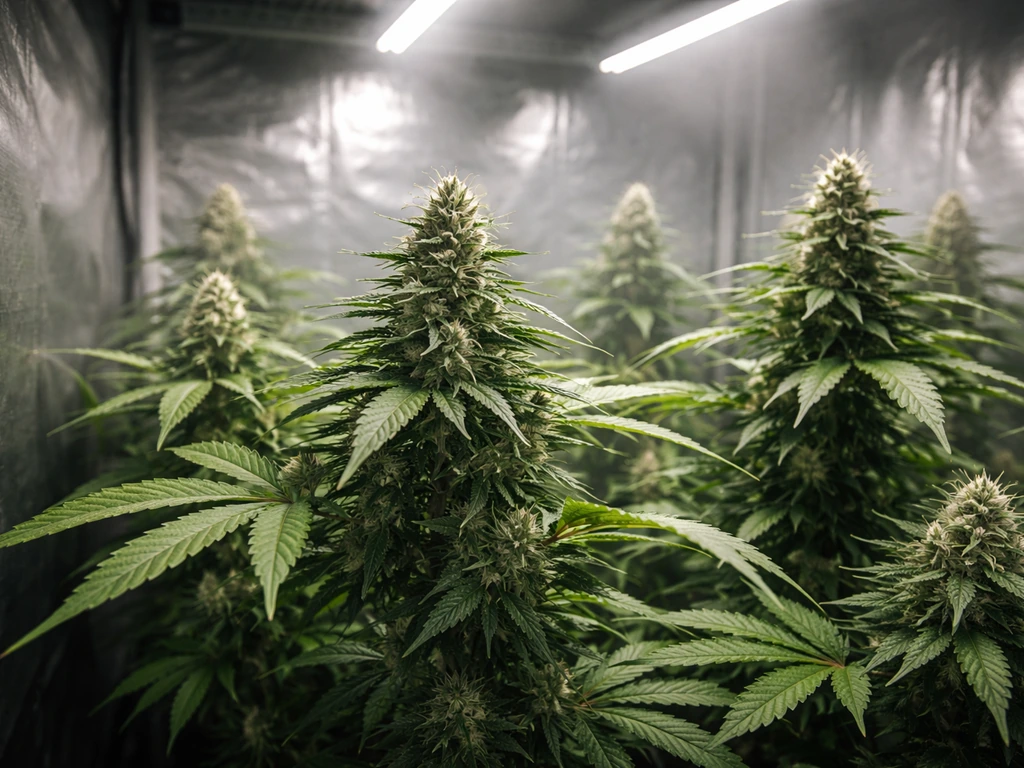
Growing cannabis Cookies strains at home is very doable for a beginner, but the lineage has a few quirks that trip people up if they go in blind. The most common version you'll encounter is blank" rel="noopener noreferrer">Girl Scout Cookies (GSC), a cross of Durban Poison and OG Kush that flowers in roughly 63 to 70 days and leans hybrid with a strong trichome finish. Pick the right phenotype, nail your environment, feed it consistently, and you can pull dense, aromatic buds in about four to five months from seed to cure. If you're curious about a more sativa-leaning, Diesel-style result instead, check out how to grow sour diesel for a different flowering vibe and feeding priorities.
How to Grow Cookies Cannabis: Step-by-Step Beginner Guide

Marcus Holbrook
3 Jul 2026
First, let's clear something up: what 'Cookies' actually means here
If you landed on this page wondering whether it's about baking, it's not. This site is entirely focused on home cannabis cultivation, so 'Cookies' here refers to the cannabis strain family, not the food. Wikipedia’s Girl Scout Cookies disambiguation also clarifies that “Girl Scout Cookies” can refer to an unrelated food topic, which is why cannabis growers should disambiguate the term blank" rel="noopener noreferrer">the cannabis strain family, not the food. That said, even inside the cannabis world 'Cookies' is a broad umbrella. You'll find Girl Scout Cookies (GSC), its phenotypes like Thin Mint and Forum Cut, and dozens of crosses carrying the Cookies name (Gelato, Wedding Cake, Animal Cookies, and more). For this guide, we're focusing on the core GSC lineage and how to grow it well at home. Always check your local laws before starting any cannabis grow, as home cultivation regulations vary widely by country, state, and municipality. For a beginner-friendly walkthrough that covers everything from setup through harvest, see the related guide how to grow charlotte's web.
Pick your Cookies variety and plan your timeline

The first real decision is which Cookies expression you're growing. Historically, GSC circulated as clone-only material, but today you can find feminized and autoflowering seeds from reputable breeders that carry stable Cookies genetics. If you're a beginner, feminized photoperiod seeds are the most forgiving starting point: you control when flowering begins, giving you time to correct mistakes in veg. Autoflowering Cookies seeds are faster (roughly 70 to 80 days seed to harvest) but less forgiving because the clock starts ticking regardless of plant health.
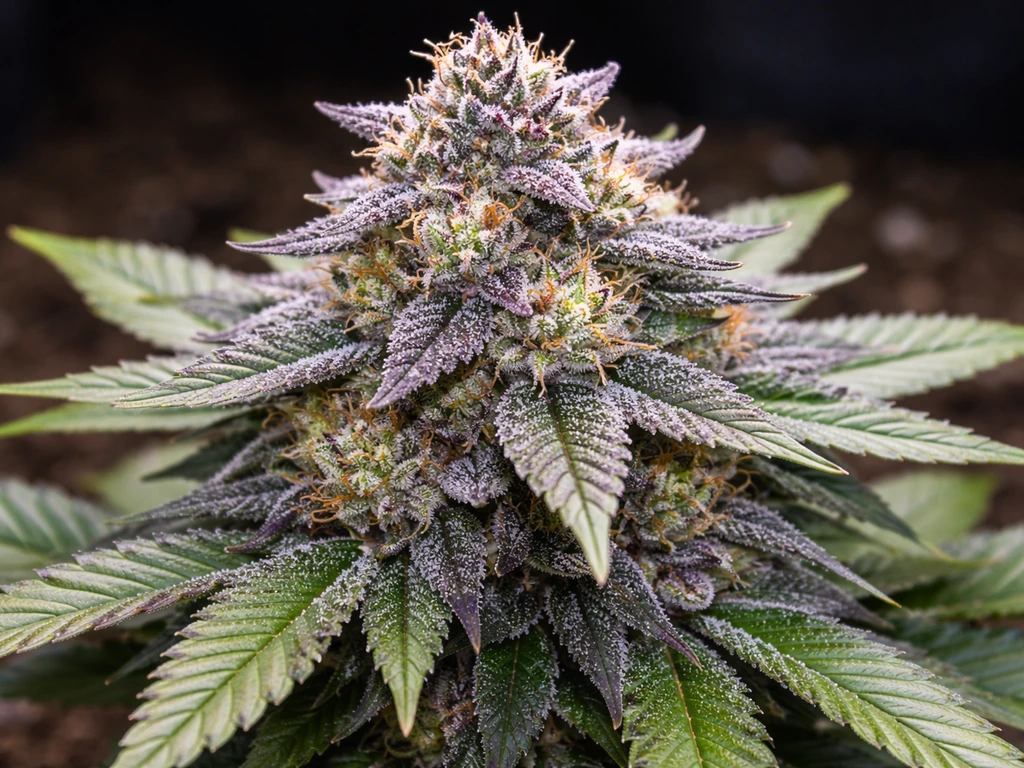
There are three main phenotypes you're likely to encounter in clone form or stabilized seed lines. Thin Mint runs more indica-leaning and tends to finish on the longer end. Forum Cut is the most balanced hybrid expression with classic pastry aromas and a faster finish around 8 to 9 weeks of flower. Platinum Cookies pushes extreme trichome density with a heavier body effect and slightly longer finish. For a first grow, Forum Cut is the most beginner-friendly because of its predictable structure and flowering speed.
| Phenotype | Lean | Flower Time | Best For |
|---|---|---|---|
| Forum Cut | Balanced hybrid | 8–9 weeks | Beginners, classic GSC profile |
| Thin Mint | Indica-leaning | 9–10 weeks | Growers wanting heavier relaxation |
| Platinum Cookies | Indica-dominant | 9–10 weeks | Trichome/resin chasers, experienced growers |
For timeline planning: if you're starting from seed indoors today (July 2026), expect roughly 1 to 2 weeks germination and early seedling, 4 to 6 weeks vegetative, 9 to 10 weeks flowering, plus 1 to 2 weeks flush and harvest, then 2 to 4 weeks minimum curing. That puts you at harvest around late October and a cured product ready in November. Outdoor growers in the Northern Hemisphere starting now will naturally trigger flowering as days shorten in late August, targeting an outdoor harvest in October.
Set up your growing space before the seeds go in
Indoor setup
A 4x4-foot grow tent is the standard starting point for one to four Cookies plants and gives you enough room to manage the stretch this strain can throw. You'll need a quality LED or HPS light (more on that below), a ventilation system with a carbon filter for odor control (Cookies is notoriously pungent), an oscillating fan for airflow, a thermometer/hygrometer combo, and a pH/EC meter. Don't skip the pH meter: Cookies, like most OG-lineage strains, is sensitive to pH swings, and that's the single most common reason beginner grows stall out.
For growing medium, coco coir mixed with 30% perlite gives you fast drainage and excellent root oxygenation, which suits Cookies genetics well. Pro-mix or a quality cannabis-specific potting soil also works great for beginners who want a more buffered, forgiving medium. Avoid heavy, water-retentive soils because Cookies roots do not like sitting wet.
Outdoor setup
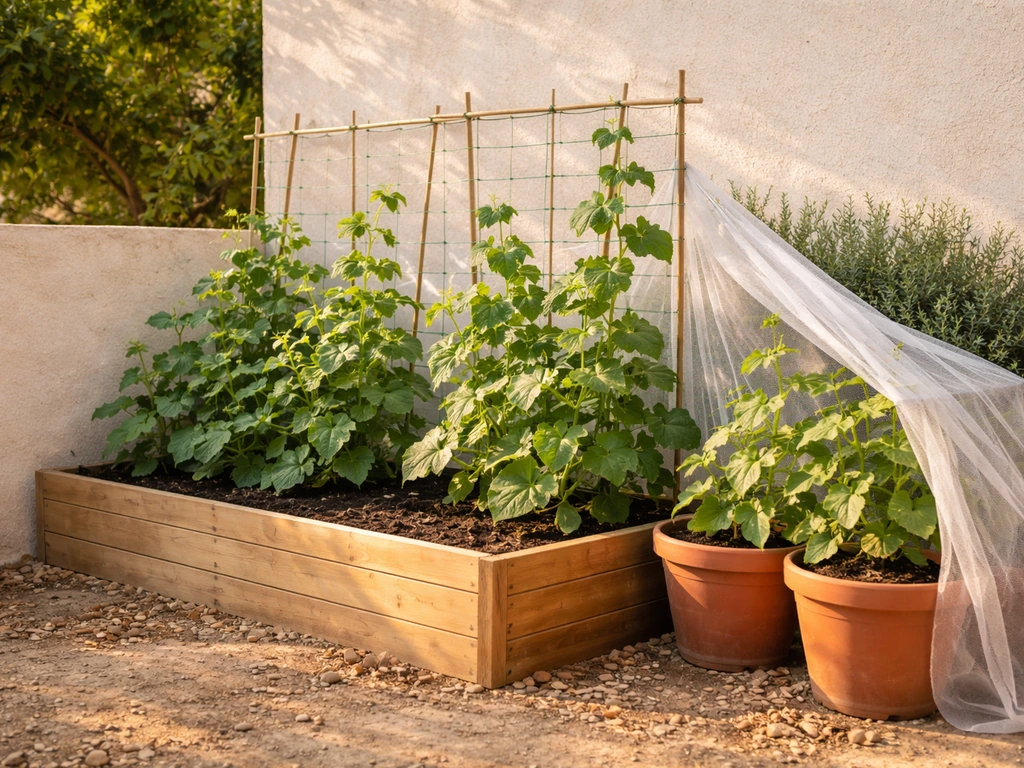
Cookies thrives outdoors in a warm, Mediterranean-style climate with long hot summers. If you're in a colder or wetter region, be aware that Cookies can be susceptible to mold and bud rot late in flower because of its dense bud structure. If you like, you can also compare this to growing an OG-style strain outdoors, since similar dense bud habits mean you still need to manage moisture, airflow, and bud-rot risk closely. A greenhouse or polytunnel dramatically reduces that risk. Plant in large fabric pots (15 to 25 gallons) or directly in the ground in well-draining, amended soil with a pH between 6.0 and 7.0. Outdoor plants started now in July will have a solid vegetative period before natural day length triggers flowering.
Environmental targets at a glance
| Growth Stage | Temperature (Day) | Humidity (RH) | Notes |
|---|---|---|---|
| Seedling (weeks 1–2) | 70–77°F (21–25°C) | 65–70% | Keep humidity high, light gentle |
| Vegetative (weeks 3–8) | 72–82°F (22–28°C) | 50–70% | Higher temps OK with good airflow |
| Early flower (weeks 1–4) | 68–79°F (20–26°C) | 40–50% | Start dropping RH |
| Late flower (weeks 5–harvest) | 64–75°F (18–24°C) | 35–45% | Low RH critical to prevent mold |
Seedling to veg to flower: a step-by-step workflow
Germination and seedling (days 1–14)
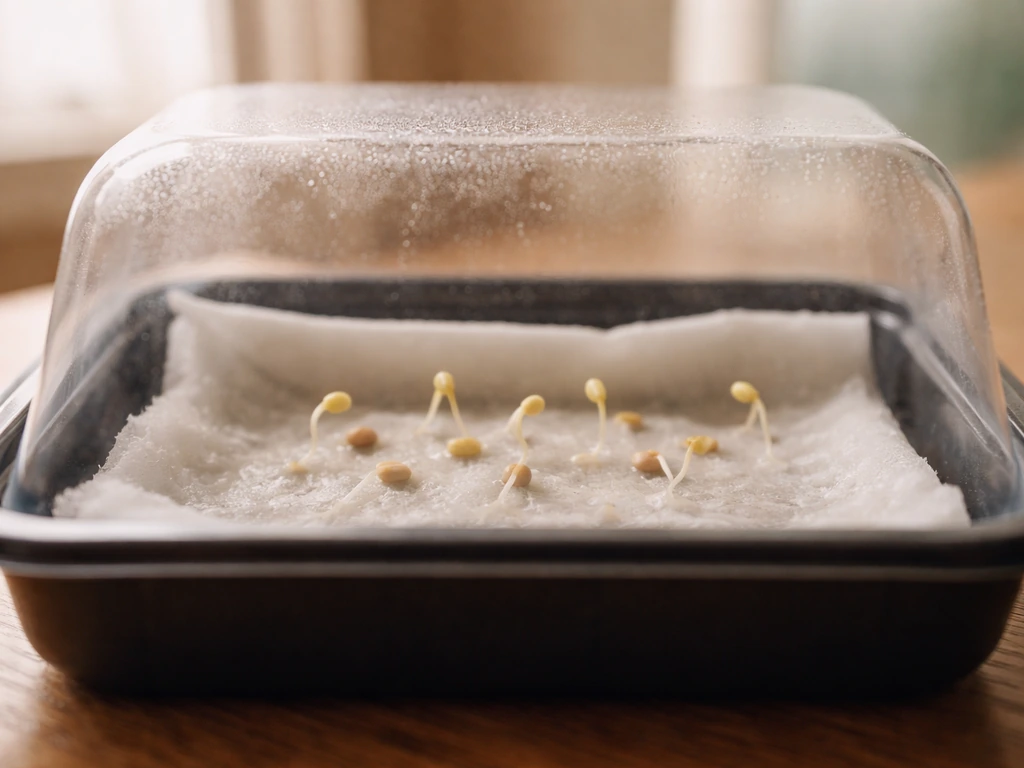
Germinate seeds using the paper towel method or directly in small starter plugs (Rapid Rooters or Jiffy pellets work well). Keep the germination environment at around 75°F with high humidity. Once the taproot is 0.5 to 1 cm, plant it 0.5 inches deep, taproot facing down. Seedlings don't need nutrients for the first 10 to 14 days if you're in a pre-amended medium. If using coco, introduce a very diluted seedling nutrient solution (EC around 0.4 to 0.6) from day 5 onward. Water in small amounts around the seedling, not directly on it, to encourage roots to reach outward.
Vegetative stage (weeks 2–7)
Indoors, run an 18/6 light schedule (18 hours on, 6 off) throughout veg. Cookies plants in veg respond well to low-stress training (LST): gently tie down main branches to open up the canopy and encourage lateral growth. This pays dividends in flower because Cookies tends to develop one dominant main cola without training. I'd strongly recommend topping the plant once at node 4 or 5 to split the canopy and keep it manageable in a tent. Let the plant recover for 5 to 7 days after topping before continuing LST. By week 5 to 6, you should have a wide, flat canopy ready for the flip.
Flipping to flower (week 7 onward)
Switch your light timer to 12/12 (12 hours on, 12 off) to trigger flowering in photoperiod plants. Expect a stretch of 50 to 100% in height during the first two to three weeks of flower (the 'transition stretch'). Adjust your light height accordingly and continue gentle LST during this stretch. Once pistils are clearly forming and the stretch slows (around week 3 of flower), the plant has committed to flowering. From there, it's mostly about dialing in environment and nutrients. Forum Cut will finish around 8 to 9 weeks of flower; Thin Mint and Platinum push closer to 9 to 10.
Light, temperature, humidity, and airflow: the details that matter
For indoor lighting, a full-spectrum LED in the 600 to 800 watt equivalent range (around 30 to 40 watts of true draw per square foot) is ideal for Cookies. HPS also works well and some growers swear by it for terpene development in late flower. During veg, keep lights 18 to 24 inches above the canopy (adjust based on your light's manufacturer recommendation). In flower, you can push closer to 12 to 18 inches if your temperatures stay in range. Watch for light stress: if leaf tips are tacoing upward or you see bleaching on top buds, raise the light.
Airflow is non-negotiable with Cookies, especially in flower. The dense bud structure that makes this strain so desirable also makes it a mold magnet if air stagnates around the buds. Run an oscillating fan on the canopy continuously, and size your inline fan and carbon filter to exchange your tent's air every 1 to 3 minutes. A general rule: if you can feel a gentle breeze on every bud site, you're in good shape. Your carbon filter will earn its cost: Cookies in late flower smells intensely of sweetness and fuel, and it will fill a room within minutes without filtration.
Temperature and humidity management is most critical in the final three weeks of flower. Dropping nighttime temps to around 64 to 68°F can actually boost terpene and anthocyanin expression in Cookies, sometimes producing purple hues in the Forum and Thin Mint cuts. Keep relative humidity below 45% in late flower to prevent botrytis (bud rot). If you're in a humid climate, a small dehumidifier inside or adjacent to your tent is worth every penny.
Feeding your Cookies plants: what to use and when
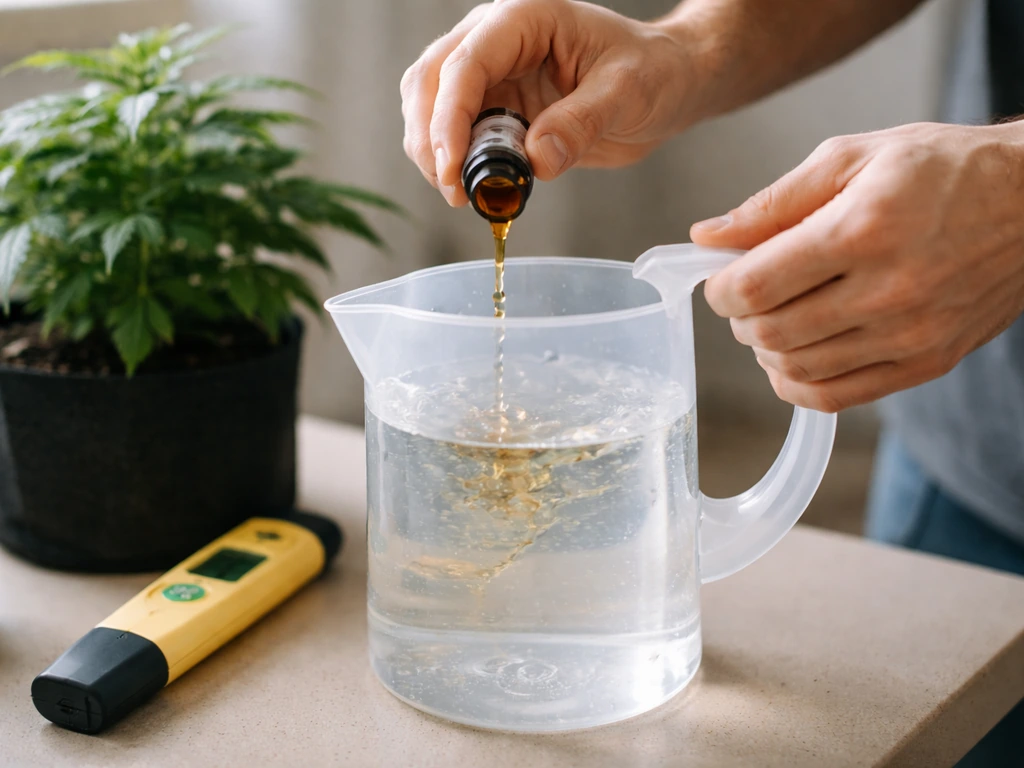
Cookies is considered a moderate to heavy feeder, but it's also sensitive to overfeeding, especially nitrogen in late flower. The most common beginner mistake I see (and made myself) is pushing too much nitrogen through flower, which results in slow ripening, poor terpene development, and harsh smoke. The goal is a clean, staged ramp-up in veg and a controlled drawdown heading into harvest.
- Seedling to week 2 veg: minimal to no added nutrients if using pre-amended soil; in coco, a light seedling formula at EC 0.4–0.6
- Mid veg (weeks 3–6): full veg formula with higher nitrogen; EC 1.2–1.8; pH target 6.0–6.5 (soil) or 5.8–6.2 (coco/hydro)
- Transition to flower (weeks 1–3 of flower): reduce N, increase phosphorus and potassium; EC 1.6–2.0
- Peak flower (weeks 4–7): low nitrogen, high P/K bloom formula; EC 1.8–2.2; add a terpene or carbohydrate supplement if desired
- Final 2 weeks (flush): plain pH-adjusted water only to clear residual salts; EC drops to near zero
Always water to slight runoff (10 to 20%) in soil or coco to prevent salt buildup, and check runoff EC and pH regularly. If your runoff pH is drifting above 7.0 or below 5.5, you'll start seeing nutrient lockout regardless of what's in your feed water. Cal-Mag deficiency is particularly common with Cookies in coco or soft water situations, so include a cal-mag supplement from seedling through week 6 of flower. Feed every watering in coco; in soil, water plain between feeds roughly every other watering cycle.
Troubleshooting common problems and knowing when to harvest
Common issues and what to do
| Problem | Likely Cause | Fix |
|---|---|---|
| Yellowing lower leaves mid-veg | Nitrogen deficiency or pH lockout | Check runoff pH first; adjust feed if pH is fine |
| Clawing/dark green leaves in flower | Nitrogen toxicity | Cut N immediately, flush lightly, switch to bloom-only formula |
| Slow or stunted growth in veg | Overwatering or root-bound plant | Let medium dry out more between waterings; transplant if rootbound |
| White powdery mildew on leaves | High humidity + poor airflow | Remove affected leaves, treat with potassium bicarbonate spray, improve airflow |
| Bud rot (gray mold on buds) | Humidity above 50% in late flower | Remove affected tissue immediately; drop RH below 45%; increase airflow |
| Spider mites (tiny dots, webbing) | Hot dry conditions | Introduce predatory mites or use insecticidal soap; improve airflow |
| Stretchy pale growth in flower | Light too far or intensity too low | Lower light or increase wattage; ensure 12/12 schedule is truly dark |
Harvest timing: how to know you're actually ready
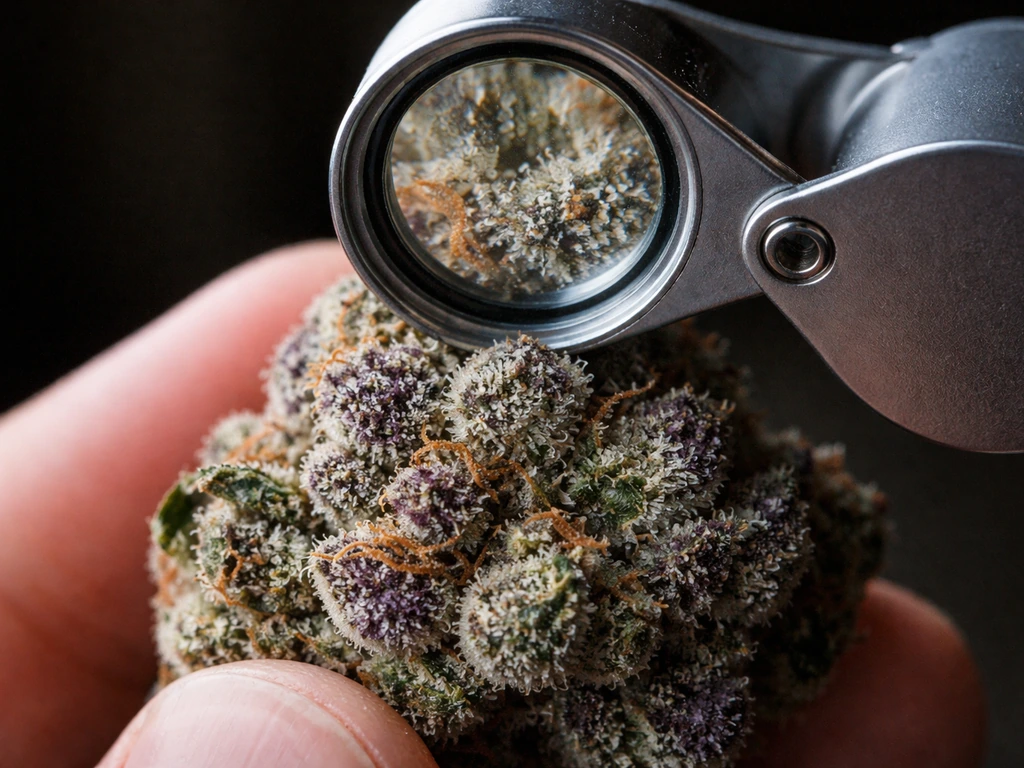
The most reliable harvest indicator is trichome color, checked with a jeweler's loupe (30x minimum) or a digital microscope. Clear trichomes mean the plant isn't ready. Milky/cloudy trichomes indicate peak THC potential. Amber trichomes signal THC degrading to CBN, which increases sedative, body-heavy effects. For Cookies, most growers target roughly 10 to 20% amber mixed with mostly milky trichomes for the classic balanced high the strain is known for. If you want more of a heady, cerebral effect, harvest on the earlier side when trichomes are mostly milky with minimal amber.
Secondary harvest indicators to watch alongside trichomes: pistils should be 70 to 90% orange/red and curled inward; fan leaves will start yellowing and dying off naturally (this is normal, not a deficiency at week 8 or 9 of flower); and the calyxes will swell noticeably in the final week. Don't rely on breeder-stated flowering times alone. Treat those numbers as a minimum, not a guarantee, and let the trichomes make the final call.
Harvest, drying, curing, and storing your Cookies
On harvest day, cut the plant at the base or branch by branch if you're doing a staggered harvest (lower buds often need another 5 to 7 days). Wet trim (remove large fan leaves immediately) or dry trim (leave sugar leaves on during drying): both work, but dry trimming tends to preserve more terpenes and gives a slower, more even dry. Hang branches upside down in a dark room at 60 to 65°F and 55 to 60% relative humidity. Drying too fast at high temps is the single biggest quality killer I see from new growers. Aim for a 10 to 14 day dry, until small stems snap rather than bend.
Once buds are dry, trim if you haven't already, and place them in wide-mouth mason jars filled to about 75% capacity. For the first two weeks of cure, open the jars for 15 to 30 minutes once or twice a day (this is called 'burping') to release moisture and allow fresh air in. If you smell ammonia when you open a jar, the buds are too wet: leave the lids off for a few hours. Boveda or Integra Boost humidity packs at 62% RH inside your jars make this process much more forgiving. After two weeks of active burping, drop to once a week. A four to eight week cure transforms Cookies from good to exceptional, deepening the sweet, earthy, pastry-like terpene profile the strain is famous for.
For storage, keep cured jars in a cool, dark place away from temperature swings. UV light and heat are the primary degraders of cannabinoids and terpenes. Properly cured and stored Cookies can remain at peak quality for six months to a year. Vacuum-sealed jars extend that even further. Avoid storing in plastic bags long-term: they create static that strips trichomes and degrade terpenes faster than glass.
A few final notes before you get started
Cookies is a genuinely rewarding strain to grow once you've done it once, but it does reward attention. The pH sensitivity, the mold risk in late flower, and the tendency to run long are the main places beginners get tripped up. Get a good pH meter, keep airflow strong, and resist the urge to harvest early. If you're interested in exploring other high-reward strains with their own growth quirks, strains like Sour Diesel, Granddaddy Purple, and Godfather OG each have distinct environmental demands and timelines worth understanding alongside Cookies, especially if you're planning a multi-strain grow space. Granddaddy Purple has its own best practices for lighting, timing, and humidity, and it helps to plan those early if you want deep color and smooth buds. But take Cookies one grow at a time first. Get that first run under your belt and you'll have a solid foundation for everything else.
FAQ
Is “how to grow cookies” the same as growing Girl Scout Cookies cannabis, or are there other “Cookies” strains?
In this context, “Cookies” refers to cannabis genetics, not the food. The most common beginner target is the Girl Scout Cookies lineage (often sold as GSC), but you can also see separate crosses and phenotype names that include “Cookies” in their branding, which can vary in stretch, flowering speed, and nutrient needs. If you want the most predictable guide match, pick a stable GSC phenotype and confirm whether you are buying photoperiod or autoflower seeds.
How do I choose between feminized photoperiod seeds and autoflowering Cookies for my first run?
Choose feminized photoperiod if you want flexibility to correct early mistakes, because you control when flowering starts (you can stay longer in veg to build structure). Choose autoflower if you want speed and a shorter total timeline, but plan for stricter conditions early since the plant will flower on schedule even if the environment is not perfect.
What’s the best way to prevent pH and nutrient lockout if I’m not sure my runoff readings are reliable?
Start by calibrating your pH/EC meter and using the same measurement method each watering. For coco especially, check both input and runoff pH/EC, then correct the next feed rather than chasing numbers mid-week. If runoff pH stays drifting above 7.0 or below 5.5 repeatedly, assume there is a systemic issue (water pH, buffering capacity, or salt buildup) and flush and reset rather than only changing nutrient concentration.
Do I really need cal-mag in Cookies, and when should I start it?
If you’re using coco or soft water, cal-mag is commonly needed because deficiencies show up early as slow growth, yellowing between veins, or weak vigor. A practical approach is to begin from the seedling stage through roughly week 6 of flower, then taper later so you avoid excessive buildup, especially if your runoff EC is rising unexpectedly.
How can I tell whether my issue is too much nitrogen versus a pH problem?
Too much nitrogen in flower often shows as lush, dark growth that ripens slowly, with delayed fading and muted terpene development. pH problems more often produce inconsistent leaf symptoms and nutrient lockout indicators, where the plant looks “stuck” despite regular feeding. The decision aid is to check runoff pH and EC trend first, then look at how symptoms change after a pH-corrected feed rather than guessing based on leaf color alone.
What should I do if my Cookies stretch looks excessive during the first 2 to 3 weeks of flower?
First, confirm your light schedule is correct and that light intensity is not too low. Then rely on canopy management rather than major interventions later, such as continuing gentle LST while the transition stretch is still active. If height is still a problem near week 3 of flower, plan for a lower final plant height next time by starting veg slightly shorter and training earlier.
How do I reduce bud rot risk in dense Cookies buds, especially if my humidity runs high?
Aim for RH below 45% in late flower and prioritize direct airflow that reaches inside the canopy. Use an oscillating fan plus proper inline fan sizing so air exchanges frequently, and avoid overwatering late in flower since damp media can raise local humidity around buds. If you live in a wetter area, a greenhouse or polytunnel plus consistent ventilation typically reduces risk more than any single product.
What’s a safe humidity and temperature target right before and during the last three weeks?
For the final window, keep nighttime temps in the mid to high 60s Fahrenheit for terpene and color expression, while pushing RH down below 45% to prevent botrytis. If you cannot reliably hit RH, budget for a small dehumidifier and position it to control tent air, not just room air.
How do I know when to harvest if breeder flowering time doesn’t match my plant?
Use trichomes as the final decision tool. Check with 30x minimum magnification, look for mostly milky/cloudy with a portion turning amber (many growers aim around 10 to 20% amber), and cross-check secondary cues like pistils shifting to mostly orange or red and curling inward. If trichomes are still clear, assume flowering is not truly complete even if the calendar says it should be.
If I’m unsure about drying methods, what’s the biggest mistake to avoid?
The biggest quality killer is drying too fast by using high temperatures or low humidity. Keep the drying room around 60 to 65°F and 55 to 60% RH, dry until small stems snap, then move into curing jars. If buds are crisp too early and harshness increases, you likely dried too aggressively.
My jars smell like ammonia during burping, does that mean the cure is ruined?
Ammonia odor usually means the buds are still too wet during early curing. Don’t intensify burping immediately by hours-long lid removal, instead extend ventilation in controlled steps (a few hours at a time) and allow the moisture content to stabilize before re-sealing. If odor changes to a normal sweet or earthy profile as you continue adjusting, you can often recover the cure.
How long can I store cured Cookies and what storage setup is safest?
For best quality, store jars in a cool, dark location away from temperature swings because heat and UV light degrade cannabinoids and terpenes. Glass jars kept properly filled and sealed are safer for long-term storage than plastic bags. If you want extended peak freshness, vacuum sealing is an option, but keep jars fully cured before you seal tightly.
Next Article
How to Grow Sour Diesel: Indoor and Outdoor Guide
Step-by-step indoor and outdoor guide to grow Sour Diesel, with light, climate, feeding, training, harvest, and mold pre