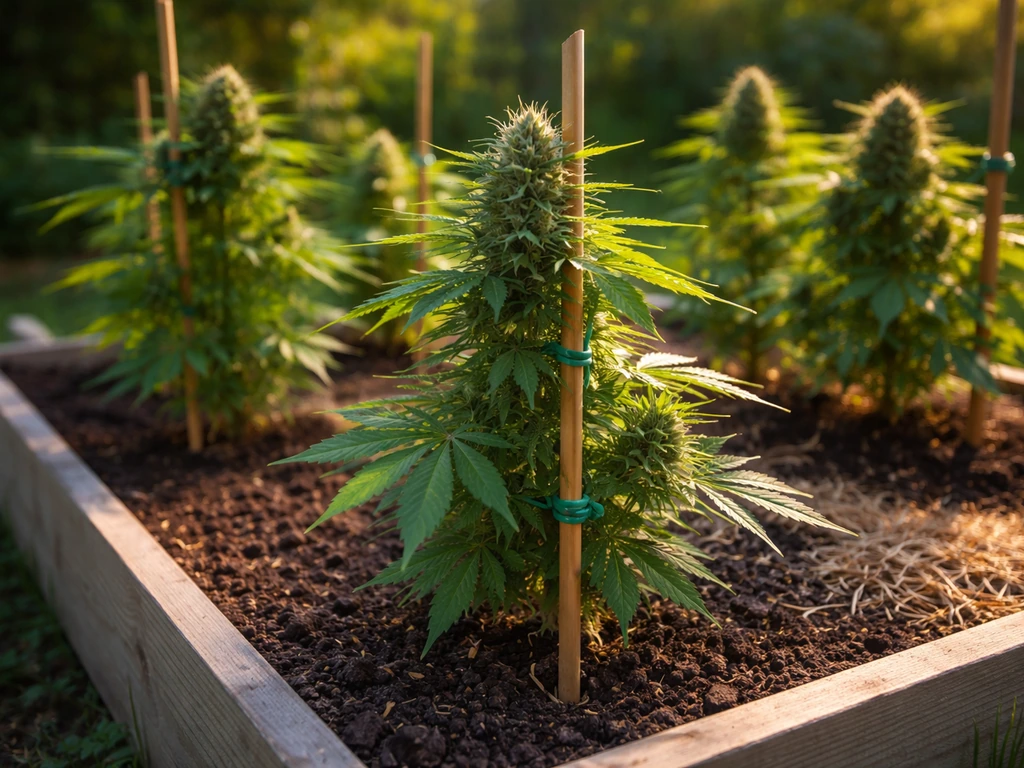
Yes, you can absolutely grow photoperiod cannabis outdoors, and when you get the timing right, it can produce yields that dwarf anything you'd pull off indoors. The key is understanding that photoperiod plants flower based on night length, not a calendar date. Mother Nature handles the trigger for you once days start getting shorter after the summer solstice.
How to Grow Photoperiod Outdoors: Beginner Step by Step
Marcus Holbrook
6 Jun 2026
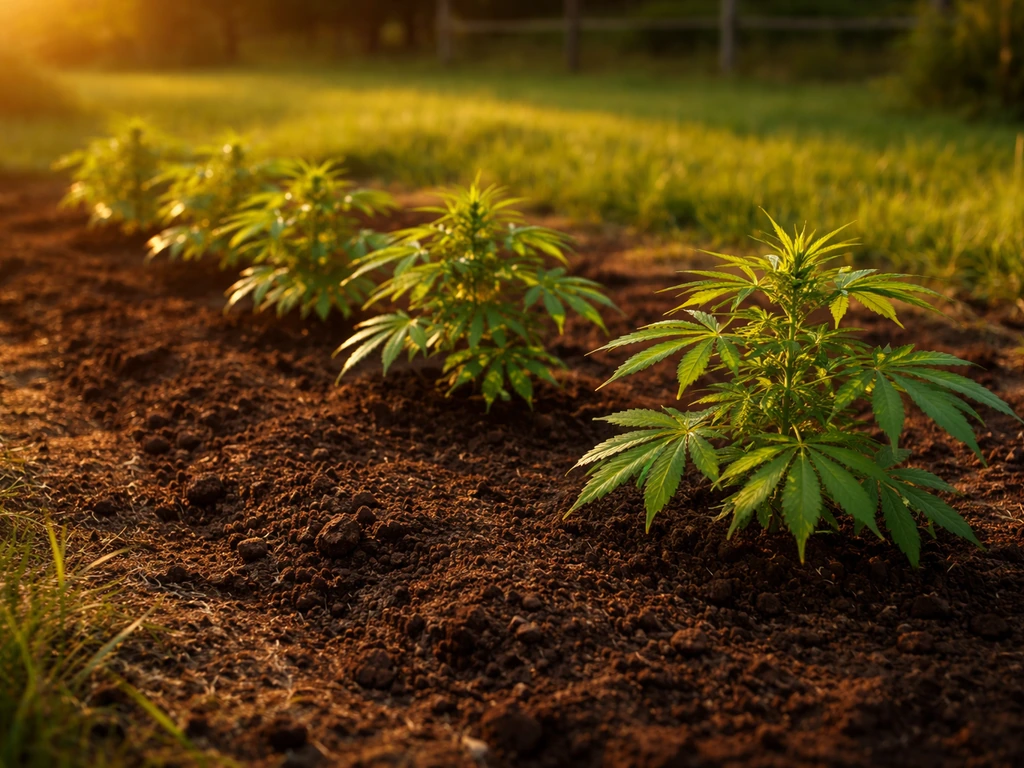
Your job is to pick the right genetics for your climate, start at the right time so the plant finishes before your local weather turns cold and wet, and make sure no stray light pollution is interrupting your plant's dark hours. Get those three things right, and outdoor photoperiod growing is surprisingly straightforward. If you want the best way to grow pot outdoors, start by dialing in timing, genetics, and light planning so flowering hits at the right moment.
What 'photoperiod' actually means for outdoor cannabis
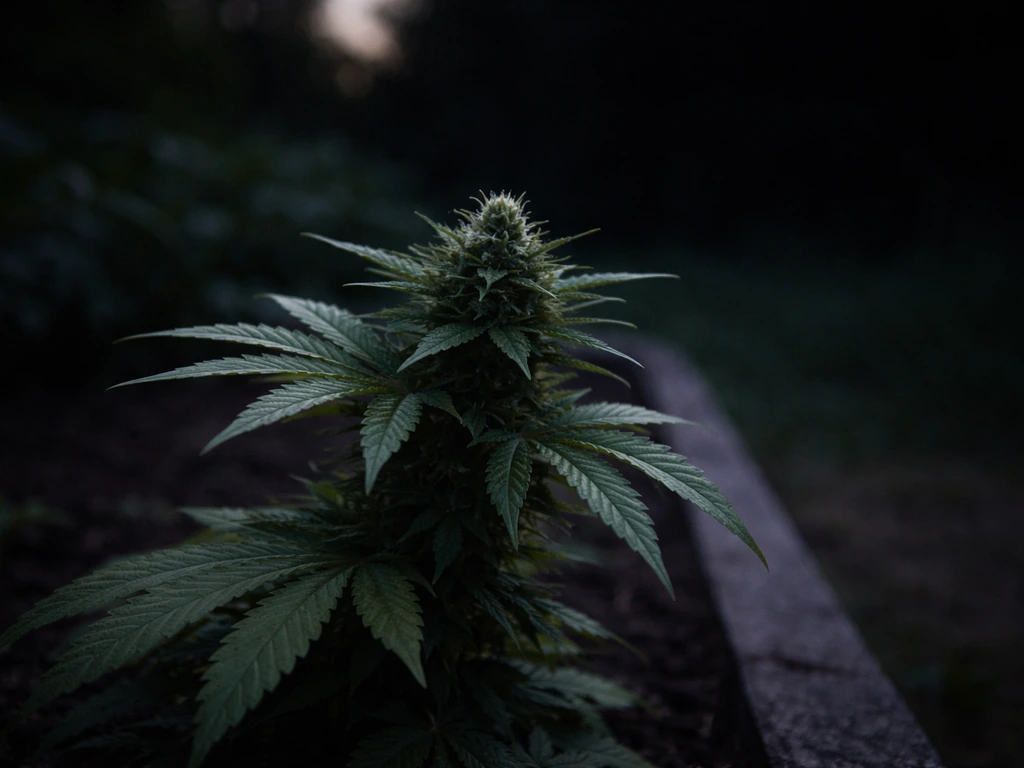
Cannabis is a short-day plant. That means it doesn't flower based on how old it is. It flowers based on how long the nights are. More precisely, it needs an uninterrupted dark period of roughly 12 hours before it receives the hormonal signal to stop growing and start producing buds. During the long days of summer, your plant just keeps putting on vegetative growth. As the days shorten after the summer solstice and nights stretch closer to 12 hours, the plant shifts into flowering mode almost automatically.
This is the fundamental difference between photoperiod and autoflowering strains. blank" rel="noopener noreferrer">Autoflowers (day-neutral varieties) switch from veg to flower based on age, usually around 3 to 4 weeks, regardless of how much light they get. Photoperiod plants wait for the seasonal cue. That makes autoflowers more forgiving for beginners in some ways, but photoperiod genetics tend to offer bigger yields, more strain variety, and more control over the final plant size, which is why a lot of experienced outdoor growers prefer them.
One thing that catches new growers off guard: the dark period has to be completely uninterrupted. Even a brief burst of light in the middle of the night, from a streetlight, a porch light, or a passing car, can disrupt the flowering hormone signal. This is one of the real practical challenges of growing photoperiod strains outdoors, and it's worth thinking about before you choose your site.
Choose the right photoperiod strain for your climate
Not every photoperiod strain is suited for every climate, and getting this wrong is probably the most common mistake outdoor growers make. A heavy sativa that takes 12 to 14 weeks to finish flowering has no business being grown outdoors in a climate where hard frosts arrive in October. The plant will still be putting out white pistils when the first freeze kills it.
Here's the general breakdown: indica-dominant strains typically finish flowering in around 7 to 8 weeks, while sativa-dominant strains often need 8 to 9 weeks or more. Some sativas, particularly equatorial landrace types, can push well past 12 weeks. For most temperate climates in the Northern Hemisphere, you're working with a harvest window that closes somewhere between late September and mid-October before cold and wet weather takes over. That puts indica-dominant and indica-leaning hybrid strains in the sweet spot for most outdoor growers.
Also keep in mind that some cultivars are more sensitive to photoperiod than others. Research from MDPI found that certain genotypes may not initiate flowering until day length drops well below 13 to 14 hours, while others are more flexible. When you're shopping for seeds, look for strain descriptions that mention 'suitable for outdoor cultivation,' a specific harvest month for your region, and mold resistance if you're in a climate with wet autumns.
| Strain Type | Typical Flower Time | Best For | Mold Risk |
|---|---|---|---|
| Indica-dominant | 7–8 weeks | Short seasons, cooler climates | Generally lower |
| Indica/Sativa hybrid | 8–9 weeks | Most temperate regions | Moderate |
| Sativa-dominant | 9–12+ weeks | Long seasons, warm climates | Higher (late harvest) |
| Equatorial sativa | 12–16 weeks | Tropical/subtropical only | High in wet climates |
If you're growing outdoors in Florida or another subtropical region, you have more flexibility with longer-flowering strains. If you're in the Pacific Northwest, the upper Midwest, or northern Europe, stick with faster-finishing genetics and prioritize mold resistance. I've learned this the hard way watching a gorgeous sativa get wiped out by Botrytis in late September.
Timing your grow: when to start so flowering hits at the right moment
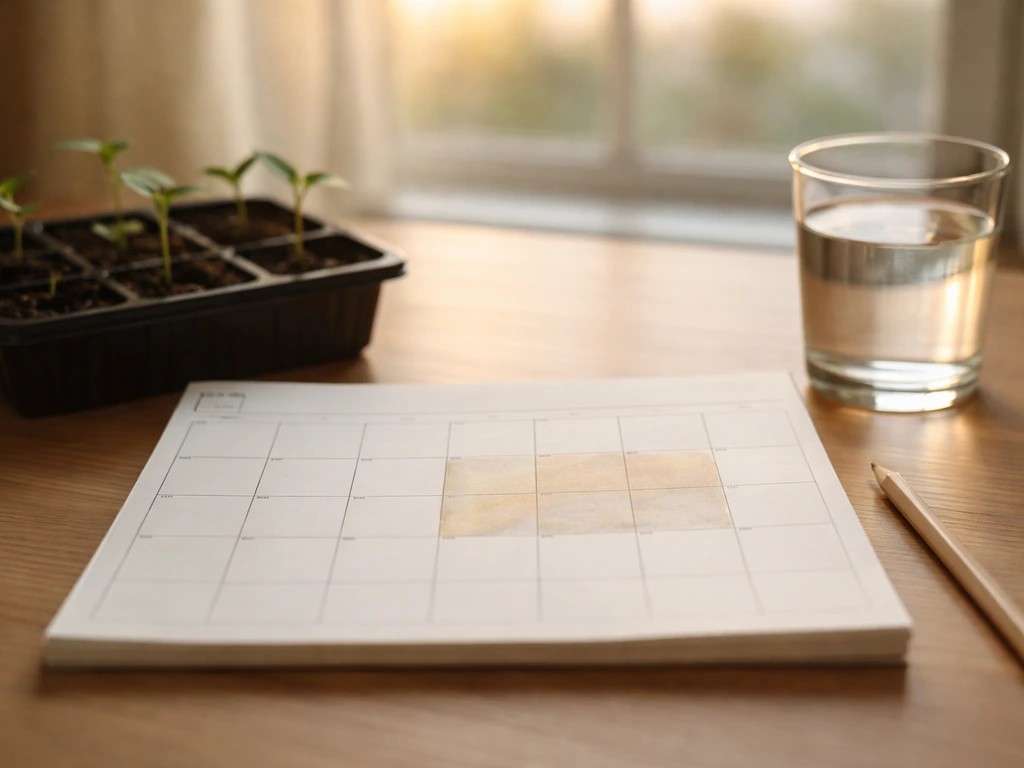
Timing is everything with outdoor photoperiod grows. The goal is to plan your germination and veg period so that when your local day length naturally drops toward 12 hours (triggering flowering), you've already built a big, healthy plant that has enough time to finish before your local weather turns against you.
In the Northern Hemisphere, the summer solstice falls around June 21, and that's the longest day of the year. After that, nights gradually get longer. By late July to early August at most mid-latitudes, nights are long enough to trigger flowering in most photoperiod strains. Count backward from your expected first frost date by the number of weeks your strain takes to flower, and that tells you the latest date your plant should be entering flower. Then count back further by your planned veg period (usually 8 to 12 weeks for a large outdoor plant) to land on your germination date.
For most growers in temperate Northern Hemisphere locations, germinating indoors in late March to mid-April, transplanting outside after last frost (often mid-May), and letting the plant veg through the summer works well. Flowering kicks off naturally in late July to early August, and an 8-week strain is done by late September or early October. That's the sweet spot.
- Find your average first frost date (search '[your city] first frost date').
- Subtract your strain's flowering time in weeks from that date to find the latest safe start-of-flower date.
- Subtract your planned veg period (8–12 weeks) from that to find your transplant-outside date.
- Subtract 1 to 2 weeks for the germination and seedling stage to find when to start seeds indoors.
- Adjust if your transplant date falls before last frost, and start seeds later or plan to harden off gradually.
One useful option if you want to control veg time more precisely: start plants indoors under 18 hours of light, then move them outside after last frost. Because the outdoor day length is still long in spring, the plant won't flower prematurely and you get a head start on building structure before the season really gets going.
Outdoor light planning: sun hours, shade, and light pollution
Photoperiod cannabis outdoors needs as much direct sun as possible during the vegetative stage, ideally 8 or more hours of direct sunlight per day. More sun means faster growth, more side branching, and ultimately bigger yields. Partial shade is survivable but it noticeably slows development and can lead to stretchy, weak plants.
When scouting your site, watch how the sun moves across the space throughout the day, not just at noon. Trees, fences, and buildings that don't seem problematic at midday can cast long shadows in the early morning or late afternoon and rob your plants of hours of usable light. Do this at least once before committing to a location.
Light pollution is a more serious issue during the flowering stage. Street lights, security lights, porch lights, and even bright windows can interrupt your plant's dark period if the garden is exposed to them. Even a few minutes of direct light exposure during the 12-hour dark window can send conflicting signals and delay or disrupt flowering. If your grow spot is near artificial light sources, you have a few options: choose a more sheltered location, use natural screening like hedges or fencing, or be prepared to use temporary blackout covers during the early evening hours.
- Aim for at least 6 hours of direct sun minimum, 8+ hours for best results.
- Observe your site at different times of day before planting to map actual sun exposure.
- Avoid spots where trees or structures cast shade during morning or afternoon hours.
- Check for nearby artificial light sources (streetlights, porch lights, security lighting) that could reach the plant after dark.
- Reflective surfaces like white walls or fences nearby can help bounce extra light toward the canopy during veg.
- Wind protection matters, but don't block light to achieve it; use lattice, open fencing, or positioning rather than solid barriers.
If you're in an urban environment and light pollution genuinely can't be avoided, some growers use portable blackout tarps or covers placed over the plants each evening around sunset and removed in the morning. It's extra work, but it gives you complete control over the dark period and can even be used to force early flowering if needed. Just make sure the cover doesn't trap heat or restrict airflow, because that creates a perfect environment for mold.
Setting up your outdoor grow for success
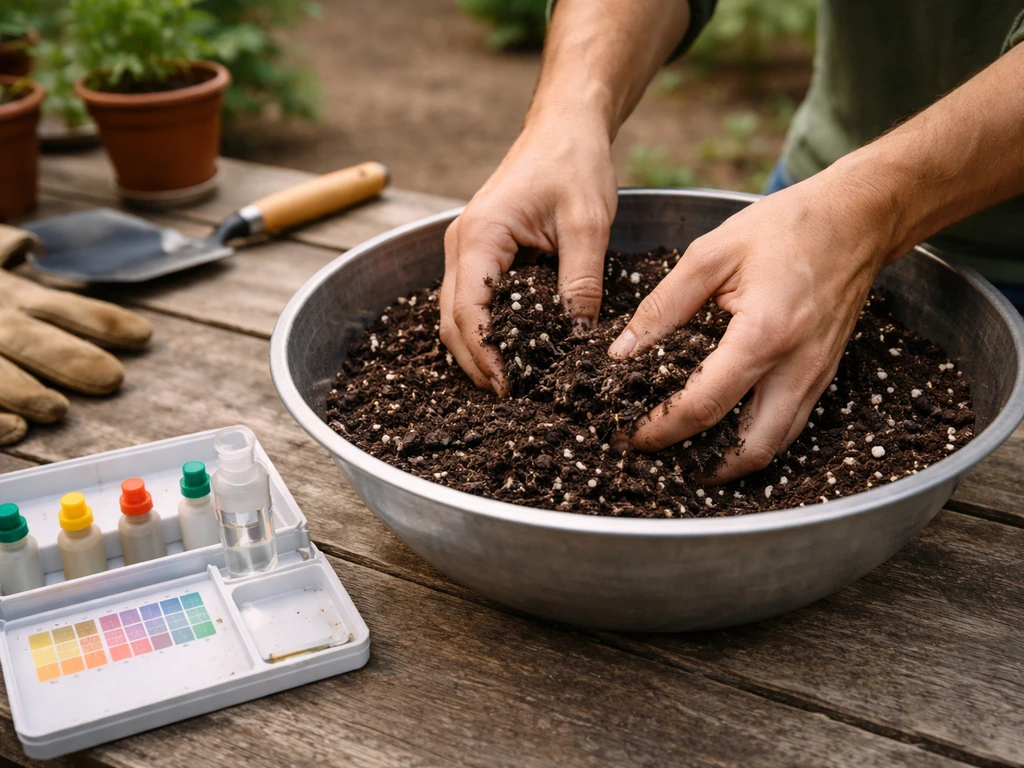
Soil and nutrients
Outdoor cannabis does well in rich, well-draining soil with a slightly acidic to neutral pH, ideally between 6.0 and 7.0. If you're planting directly in the ground, amend existing soil with compost, perlite, and a quality organic fertilizer before planting. Heavy clay soils hold too much water and suffocate roots; sandy soils drain too fast and can't hold nutrients. Either way, amending with compost goes a long way. For containers, use a premium cannabis-specific or general-purpose potting mix (not garden soil) that includes perlite for drainage.
Containers vs. in-ground planting
Both work well outdoors, but they have different tradeoffs. In-ground plants can grow much larger because roots have unlimited room, but you're locked into that spot and can't adjust for weather, light, or privacy issues. Containers give you flexibility: you can move plants to chase sun, bring them under cover during heavy rain, or reposition if a light pollution problem shows up. The downside is that containers dry out faster and require more frequent watering, and they cap root (and plant) size unless you go large. For most photoperiod outdoor grows, containers between 15 and 25 gallons are a practical minimum for achieving full-size plants.
Whatever container you choose, drainage is non-negotiable. Multiple holes in the bottom of the pot, plus a base that keeps the container elevated so drainage water doesn't pool back up underneath, are both essential. Root rot from waterlogged soil is one of the most common and preventable problems in outdoor container grows.
Managing rain, humidity, and wind
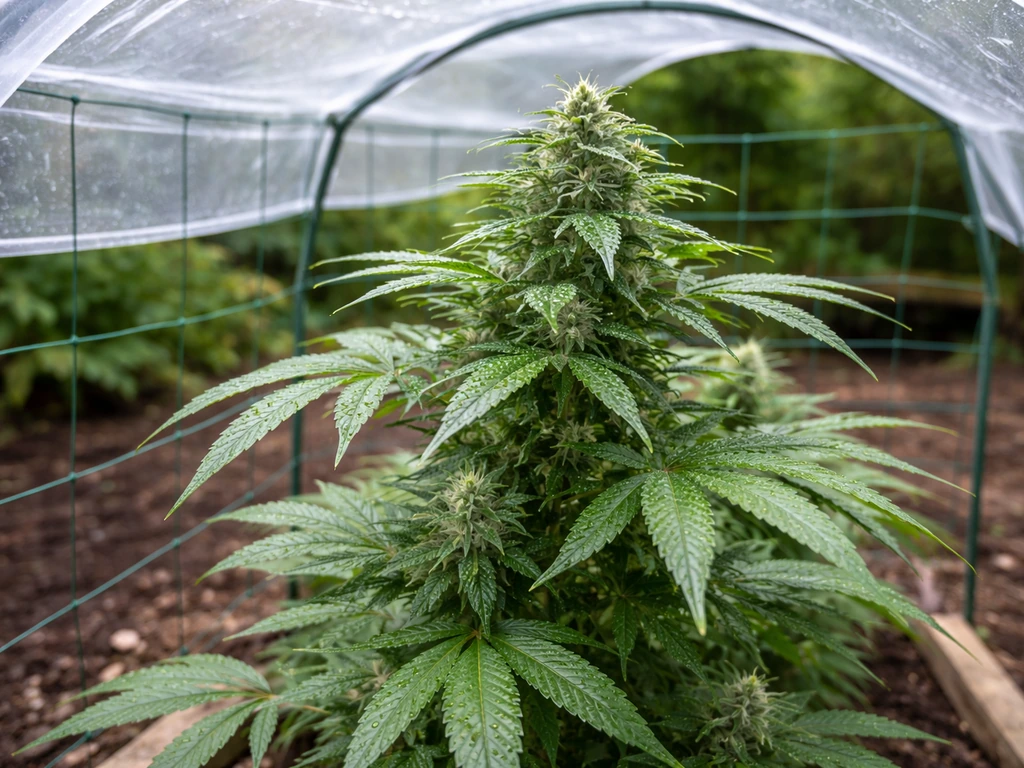
Outdoor growing means dealing with weather you can't control. During flowering, high humidity combined with wet foliage and poor airflow creates ideal conditions for powdery mildew (which thrives in the 60 to 80°F range with high relative humidity) and Botrytis gray mold (which becomes a serious threat during wet periods at bud maturation). Water your plants in the morning so foliage has time to dry before nightfall. Make sure plants aren't packed too closely together and that there's reasonable airflow through the canopy. If rain is forecast during late flower, consider positioning container plants under a roof overhang or light shelter that keeps the worst of it off the buds while still allowing airflow.
Wind can physically damage plants, especially large outdoor photoperiods that develop heavy branches. Light wind is actually beneficial because it strengthens stems and improves airflow. Strong wind is destructive. Use open-weave windbreaks or strategic placement near existing structures to buffer the worst gusts without blocking your light.
Flowering transition: what to expect and when to worry
Once nights extend to around 12 hours of darkness, most photoperiod strains will begin showing pre-flowers within a week or two. You'll notice the vegetative growth slowing, new pistils (white hairs) appearing at bud sites, and the plant starting to fill out in those locations rather than continuing to put on new leaf sets. This is normal and exciting. The plant is doing exactly what it's supposed to do.
If by mid-August your plant still hasn't shown any signs of flowering and you're at a latitude where nights should be long enough, consider a few things. First, is there a light pollution source interrupting the dark period? Even modest light exposure can stall flowering. Second, some genotypes are genuinely less sensitive to short-day cues and need nights longer than 12 hours before they respond. A strain that requires 13 or 14 hours of darkness to trigger flowering will naturally start a few weeks later in the season than one that responds at 12 hours.
If you're certain light pollution is the problem and you can't relocate, the manual blackout cover approach mentioned earlier is your best fix. Place the cover over the plant consistently at the same time each evening (typically around 6 PM) and remove it the following morning (around 6 AM). After a week or two of consistent 12-hour dark periods, flowering should initiate. Once it's underway and the season has naturally progressed past the trigger point, you can usually stop using the covers.
Re-vegging is one of the more frustrating things that can happen during outdoor flowering. It occurs when a plant that has already started flowering suddenly gets light during its dark period, causing it to revert toward vegetative growth. You'll see strange leaf shapes, single-blade leaves emerging from bud sites, and general confusion in the canopy. If this happens, identify and eliminate the light source, maintain consistent darkness, and give the plant a few weeks to recover and resume flowering. It will lose time, but it usually does recover.
Troubleshooting common photoperiod outdoor problems
| Problem | Likely Cause | What to Do |
|---|---|---|
| Plant won't flower by late August | Light pollution interrupting dark period, or late-flowering genetics | Check for artificial light sources at night, use blackout covers if needed |
| Re-vegging during flower | Light leak or stray artificial light hitting plant after dark | Find and block the light source immediately, maintain consistent darkness |
| Excessive stretching in early flower | Insufficient light intensity during veg, or sudden transition to shorter days | Maximize sun exposure, choose site with full-day direct sun |
| Hermaphrodite development | Stress from light interruptions, heat stress, or genetic predisposition | Maintain consistent environment, remove pollen sacs promptly, consider more stable genetics next run |
| Powdery mildew on leaves | High humidity, poor airflow, temps 60–80°F | Improve airflow, water in the morning, use organic fungicide preventatively in late summer |
| Botrytis/gray mold in buds | Wet weather during bud maturation, dense canopy, poor drainage | Harvest earlier if mold spreads rapidly, improve drainage, thin canopy, shelter from rain |
| Yellowing leaves mid-flower | Normal nitrogen drawdown in flower, or nutrient lockout from pH drift | Check soil pH (target 6.0–7.0), switch to lower-nitrogen bloom nutrients |
| Slow growth during veg | Inadequate direct sunlight, poor soil drainage, or underwatering | Relocate to sunnier spot, improve soil, water when top inch of soil is dry |
Hermaphroditism deserves a specific mention because it's often misdiagnosed as a genetic problem when it's actually a stress response. Photoperiod cannabis that experiences repeated light interruptions during flowering, extreme heat, physical damage, or other stressors can develop male pollen sacs alongside female flowers. If you spot these (they look like small banana-shaped or round sacs among the pistils), remove them carefully with tweezers before they open. Reduce any obvious stressors. If the plant was grown from bag seed or an unknown clone rather than reputable feminized or regular seed stock, the risk of hermaphroditism is higher to begin with.
What to do this week to get started
If today is early June, you're right in the window to get a photoperiod outdoor grow going for this season, but you need to move with some urgency. Here's exactly what to do over the next few days.
- Check your local laws first. Home cultivation rules vary widely by state, province, and country. Many jurisdictions have plant count limits, privacy/security requirements (some mandate fencing at specific heights or screening from public view), and storage rules. Verify what's legal in your area before you buy a single seed.
- Look up your average first frost date and count backward to confirm your strain options. If you're germinating today in early June, you likely have time for an indica-dominant or hybrid strain with a 7 to 9 week flower time before fall weather arrives in most temperate regions.
- Choose a strain suited to your climate: faster finishing for short or cool seasons, mold-resistant genetics if your late summer and fall tend to be humid and wet.
- Scout your grow site today. Walk it at different times of day to check sun exposure. Look for artificial light sources that could reach the plants after dark. Confirm privacy and any security requirements under your local rules.
- Gather your supplies: quality potting mix, 15 to 25 gallon containers with drainage holes, organic nutrients (a veg-stage formula and a bloom formula), pH meter, and a watering can or hose with a gentle spray setting.
- Germinate seeds now (paper towel or straight into a small seedling pot) and keep them under 18 hours of light indoors until they're ready to harden off and move outside, which typically takes 2 to 3 weeks from germination.
- Harden off seedlings before full outdoor exposure: put them outside for a few hours a day in a sheltered spot for about a week before leaving them out full time.
- Once outside, monitor your site for light pollution at night. Step outside after dark and look at the plant from the light source's perspective. If you can see the plant lit up, so can its hormones.
Growing photoperiod cannabis outdoors is genuinely rewarding, and it connects you to the plant's natural rhythm in a way that indoor growing doesn't quite replicate. The biggest variables you're working with, which are strain choice, site selection, and timing, are all things you can plan in advance. Get those right, stay on top of moisture and airflow as flowering progresses, and you'll be in great shape come harvest time.
If you're just getting started with outdoor cannabis in general and want broader context on the whole process from seed to harvest, the full step-by-step outdoor growing guides on this site cover everything from germination through harvest in more depth. If you want the seed-start details specifically, follow this guide on how to grow weed outdoors from seed to plan germination, timing, and early care. If you're looking for the full process, including choosing strains, timing, and harvest steps, see this guide on how to grow weed outdoors. The photoperiod-specific concerns covered here fit into that larger picture, and understanding both levels gives you the best foundation for a successful grow.
FAQ
How do I choose a photoperiod strain if I do not know my exact first frost date yet?
Start with a strain that explicitly matches your expected harvest window (late Sep to mid Oct in many temperate regions). If you are unsure, prioritize the shortest flowering time that still suits your desired plant size, because finishing late flower in cool, wet weather increases mold risk.
What if my nights are not exactly 12 hours when flowering begins?
The 12 hour target is practical, not a strict deadline. If your nights are still slightly longer than 12 hours, flowering may be delayed even without light leaks. Use local sunrise and sunset data to estimate when nights likely approach your strain’s darkness sensitivity, then count back from your latest safe harvest date.
Can I experiment with light timing before my plant fully enters flowering?
For most growers, you should treat the dark period as non-negotiable once flowering starts. In early transition (right as pre-flowers appear), avoid any new light sources at the garden and do not test covers unless you can keep darkness consistent afterward.
Do blackout tarps work in hot weather, and what can go wrong?
Yes, but only if it does not introduce mid-night illumination. The key is the cover material and placement, it needs to block light completely while still allowing airflow and preventing heat buildup that can stress plants and raise hermaphroditism or mold risk.
What is the best way to handle heavy rain during late flowering?
Container plants should be positioned for maximum sun during veg, but you also need to protect flowers from prolonged rain. A common approach is full sun outdoors for veg, then during late flower use a light shelter or overhang to keep foliage and buds from staying wet while maintaining ventilation.
If my plant is not showing pre-flowers, what should I troubleshoot first besides light pollution?
If a plant shows no pre-flowers by mid-August at your latitude, first rule out light interruption, then check your strain’s known darkness sensitivity (some require longer nights). Also verify you are not underfeeding or pot bound, because very weak plants can look stalled even if the photoperiod cue is working.
How long does it usually take a photoperiod plant to recover after re-vegging?
Yes, re-vegging usually costs time but not always a total loss. After you eliminate the light source and restore consistent dark periods, expect the plant to re-stabilize over 2 to 4 weeks, and avoid major pruning during that recovery window.
If I see signs of hermaphroditism, should I remove the whole plant or only the sacs?
Pollen sacs can appear from stress, but herm issues are not always obvious at first. Remove only the sacs you can confidently identify, then focus on removing stressors (heat spikes, repeated light interruptions, physical damage) because new sacs can form later if conditions continue.
Is it safe to move containers during flowering if I need to chase sun?
If you move plants to chase sun, do not relocate them in a way that changes their dark exposure. A relocation that places the plant closer to a porch light or bright window can trigger delayed or inconsistent flowering even if the move seemed beneficial during the day.
What is the best daily watering schedule to reduce mildew risk outdoors?
Do morning watering and avoid wetting buds when possible. If you must water later, do it early enough that leaves can dry before nightfall, and improve airflow with spacing and careful leaf management rather than packing plants tightly together.
How do I protect large outdoor plants from wind without blocking light and airflow?
Use open-weave windbreaks rather than solid walls that can funnel gusts or block airflow too much. The goal is to reduce destructive gusts while keeping light exposure and ventilation, especially during flowering when damp conditions amplify mold problems.
What container practices help prevent stress from uneven watering outdoors?
If your containers dry out fast, increase container size within your constraints (15 to 25 gallons is a practical minimum) and use a consistent watering routine. Large swings between very dry and very wet conditions can stress plants and complicate flowering stability.
Next Article
Best Way to Grow Pot Outdoors: Seed to Harvest Guide
Step-by-step outdoor cannabis guide: legal checks, site and strain choice, soil and nutrients, training, harvest, curing