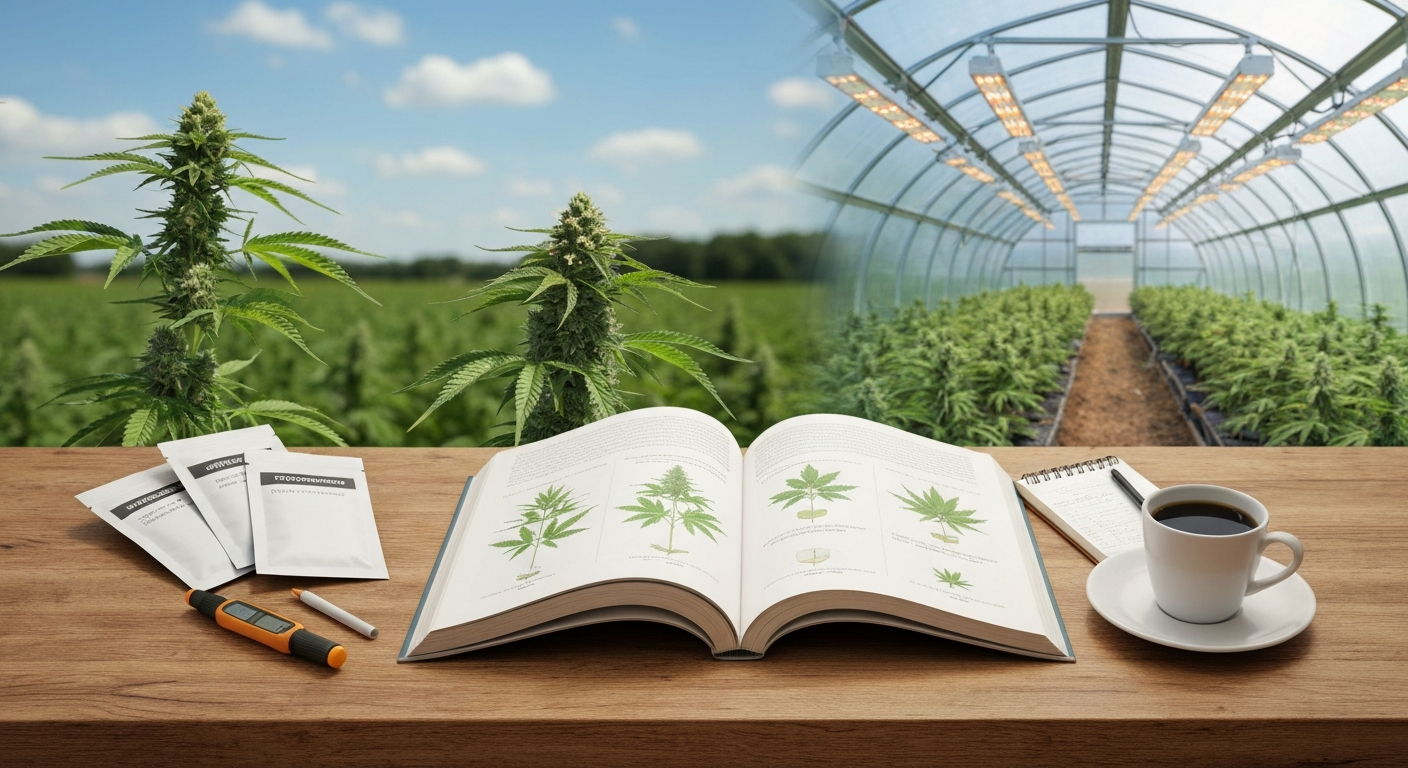
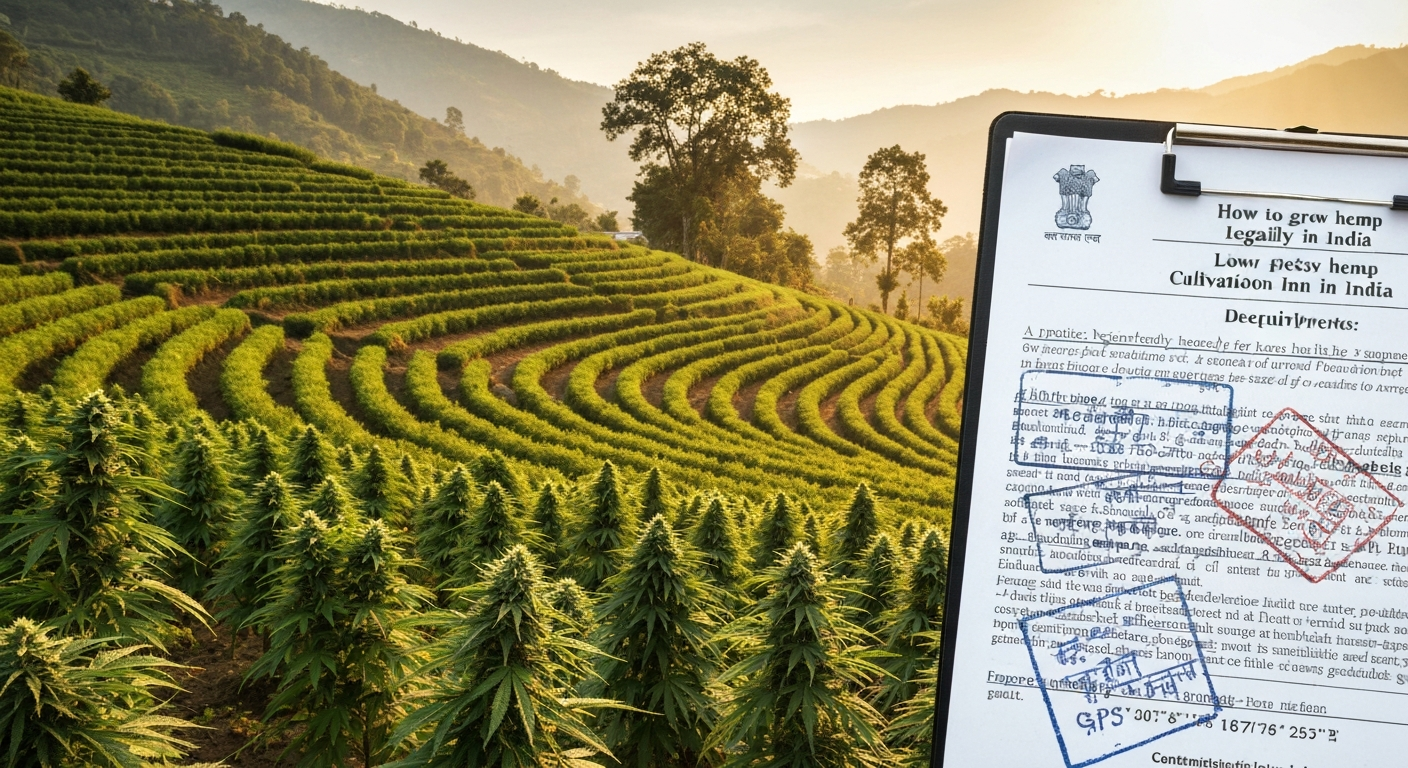
You can legally grow hemp in India, but only if you hold the correct state-level licence before a single seed goes in the ground. The NDPS Act 1985 makes unlicensed cannabis cultivation a serious criminal offence, yet Section 14 of the same Act allows both central and state governments to permit hemp cultivation for industrial fibre, seed, or horticultural purposes under strictly controlled conditions. Right now the clearest active licensing pathways are in Uttarakhand and Uttar Pradesh, with other states slowly following. This guide walks you through every legal checkpoint, then takes you through the practical side: sourcing certified seed, picking a variety, choosing your grow method, and managing the crop from planting to harvest and beyond.
How to Grow Hemp Legally in India: Permits, Seeds & Cultivation Guide
Who this guide is for and how to use it
Whether you are a smallholder farmer in the Uttarakhand hills, a research student working with a CSIR institution, or a home grower trying to understand whether a personal licence is even possible, this guide is written for you. I have structured it so that a complete beginner can follow the legal steps without getting lost in bureaucratic language, while experienced cultivators can jump straight to the agronomy sections. One thing I want to be direct about from the start: no cultivation tips matter if your legal status is not clean. So the legal section comes first and it is not optional reading.
Is it legal to grow hemp in India? The quick answer
Hemp is a variety of Cannabis sativa with very low Δ9-THC content, but Indian law does not automatically exempt it from the NDPS Act 1985 just because of its THC level. The Act defines 'cannabis' broadly and makes cultivation without a government authorisation punishable with significant prison time. The saving clause is Section 14, which lets governments licence cultivation 'for industrial purposes only of obtaining fibre or seed or for horticultural purposes.' In practice, a handful of states have written actual rules around this. Uttarakhand issued pilot licensing orders from December 2016 onward. Uttar Pradesh formalised the UP Excise (Research Oriented Cultivation of Hemp) Rules 2018, which cover licensed cultivation by CSIR and Ministry-recognised research institutions with a ₹5,000 licence fee and a 0.3% Δ9-THC action threshold: if a harvested crop tests above that level, the rules require destruction of the batch. FSSAI's November 2021 Gazette notification added hemp seed and hemp seed products to Indian food product standards, setting limits of Total THC ≤ 5 mg/kg for hemp seed and hemp seed flour and ≤ 10 mg/kg for hemp seed oil. That notification matters enormously if your end goal is selling hemp food products. The bottom line: growing hemp without a state-issued licence is illegal everywhere in India. If your state has no active licensing scheme, you cannot legally plant hemp at this time, full stop.
Legal checkpoints before you plant
I cannot stress this enough: follow these steps in order. Skipping ahead and buying seed before your licence is approved is a mistake that could cost you everything. Here is the step-by-step path based on current frameworks in states that have active rules.
- Confirm your state has an active hemp licensing scheme: As of mid-2026, Uttarakhand and Uttar Pradesh have the most developed frameworks. Contact your State Excise Department or Agriculture Department and ask directly whether industrial hemp cultivation licences are being issued for your district.
- Check your eligibility category: UP Rules 2018 restrict licensed cultivation to CSIR-affiliated or Ministry-recognised research institutions. Uttarakhand has used district-level DM licensing for supervised pilot plots. Individual private farmers may need to apply through or in partnership with a recognised institution. Confirm which category applies to you.
- Obtain a certified copy of the applicable State Rules or Government Order: Do not rely on summaries. Request the official PDF of the state rules from the State Excise Commissioner's office so you know the exact application forms, fee schedule, and conditions.
- Prepare your land documentation: You will need proof of land ownership or a registered lease, precise GPS coordinates or a site plan of the cultivation area, and in some states a police clearance ('good character' certificate) for each named applicant.
- Arrange secure storage before you apply: State rules typically require you to demonstrate you have lockable, secure storage with surveillance (vault/CCTV in UP Rules) for harvested crop before a licence is granted. Do not leave this to the last minute.
- Submit the prescribed application form with all attachments: In UP, Form ID-27 (cultivation licence) and Form ID-14(C) are the prescribed formats. Pay the applicable fee (₹5,000 under UP 2018 rules). Attach land documents, site plan, institution affiliation proof, storage arrangements, and character certificates.
- Obtain written licence approval before ordering seed: Do not purchase, import, or sow seed until you hold the physical licence document. Keep a certified copy with you on-site at all times.
- Identify your state-designated or NABL-accredited THC testing laboratory: Uttarakhand state orders nominated Centre for Aromatic Plants (Selaqui, Dehradun) and CSIR-NBRI (Lucknow) as technical testing bodies. Confirm which lab your state specifies for pre-harvest and harvest THC testing, and contact them early to understand their sample submission procedure and chain-of-custody requirements.
- Register with FSSAI if your end use is food or food-grade oil: If you plan to sell hemp seed or hemp seed oil as food products, you need an FSSAI licence appropriate to your business scale, and your products must meet the November 2021 Gazette THC standards before sale.
- Keep your licence current and note renewal dates: State licences have fixed validity periods. Lapses in licence coverage during an active growing season can invalidate your compliance position.
Government contacts and authoritative regulations
One thing that trips up new applicants is chasing unofficial summaries instead of going directly to the source documents. The following are the authoritative references you need to gather and keep on file.
| Authority / Document | What it covers | Where to access |
|---|---|---|
| NDPS Act 1985 (Sections 2, 8, 14) | Central statutory definition of cannabis; prohibition on cultivation; exception for industrial/horticultural use under licence | India Code portal (indiacode.nic.in) — official consolidated text |
| Narcotics Control Bureau (NCB), Ministry of Home Affairs | Central nodal enforcement authority; coordination with state agencies; enforcement actions | NCB official website (narcoticsindia.nic.in) |
| UP Excise (Research Oriented Cultivation of Hemp) Rules 2018 | State application forms (ID-27, ID-14(C)), licence fee (₹5,000), storage requirements, 0.3% THC action threshold | UP Excise Commissioner's office; UP Government Gazette |
| Uttarakhand State Excise Dept / District Magistrate offices | Pilot hemp cultivation orders from Dec 2016 onward; DM-level licensing; nodal lab nominations | State Excise Dept, Dehradun; district administration offices |
| Centre for Aromatic Plants, Selaqui, Dehradun | State-nominated technical testing body for Δ9-THC in Uttarakhand pilot programme | CAP official website; contact via Uttarakhand Excise Dept |
| CSIR-NBRI, Lucknow | State-nominated technical testing body; also conducts hemp research relevant to agronomy and seed work | NBRI official website (nbri.res.in) |
| NABL (National Accreditation Board for Testing & Calibration Laboratories) | Accreditation body for ISO/IEC 17025 testing labs; searchable directory of NABL-accredited labs with HPLC/GC-MS cannabinoid testing scope | NABL official site (nabl.gov.in) — lab search portal |
| FSSAI — Food Products Standards and Food Additives (Fifth Amendment) Gazette, 15 Nov 2021 | THC limits for hemp seed (≤ 5 mg/kg), hemp seed flour (≤ 5 mg/kg), hemp seed oil (≤ 10 mg/kg); labelling standards | FSSAI official site (fssai.gov.in) — Gazette notifications section |
| Plant Quarantine Order 2003 / NBPGR / DPPQS | Import permits and post-entry quarantine for viable hemp seed imported from abroad | DPPQS portal (ppqs.gov.in); NBPGR, Pusa, New Delhi |
| IARI / ICAR research publications | Published hemp agronomy and seed storage research relevant to Indian conditions | IARI publication database (iari.res.in) |
When you contact any of these bodies, request the most current version of any rules or orders, because the hemp regulatory landscape in India is actively evolving. A state order from 2018 may have been amended or supplemented since then.
Compliance checklist: what to document and retain
State inspectors can visit your plot at any point. The following checklist covers everything you should have on file from pre-plant through to sale or disposal. I recommend keeping physical and digital copies, with the physical set stored in your secure on-site storage facility.
Pre-plant records
- Signed, current state cultivation licence (certified copy on-site)
- Land ownership documents or registered lease agreement
- GPS coordinates and site map of cultivation area (match exactly what is stated in your licence)
- Police clearance / good character certificates for all named licence holders
- Seed purchase invoices and seed supplier certification documents showing variety name and origin
- Seed THC test certificate from a NABL-accredited or state-specified laboratory (if available from supplier)
- NBPGR import permit and phytosanitary certificate if seed was imported
- Secure storage facility documentation (lease/ownership, CCTV installation receipts, lock inventory)
- FSSAI licence or registration (if food-grade end use)
During-crop records
- Planting date register with variety, plot reference, area sown (hectares/square metres), and seed lot number
- Dated field observation log: growth stage, any pest or disease observations, inputs applied (fertiliser type, quantity, date)
- Any pre-harvest THC sampling records: sample collection date, sample ID, chain-of-custody form signed by authorised lab personnel
- Irrigation and nutrient records if state or licence conditions require it
- Photographs with date/GPS metadata at key growth stages (optional but highly useful for disputes)
Harvest and post-harvest records
- Harvest date, quantity harvested (weight of fresh and dried material), plot reference
- Official post-harvest THC test certificate from state-specified or NABL-accredited lab (Δ9-THC result against 0.3% threshold)
- Destruction records if any batch tests above 0.3% THC (signed by licence holder and, where required, a state official)
- Storage register: daily or weekly inventory of crop in secure storage (date, quantity in/out, destination)
- Sale invoices or transfer records if crop is sold or transferred to a processor
- Buyer's licence or FSSAI registration copy (retain for your own compliance file)
- Annual return or licence renewal documents as required by state rules
Sourcing compliant low-THC seed in India
This is one of the most practically challenging parts of getting started. India does not yet have a large domestic certified hemp seed market, which means your sourcing options are limited and require extra due diligence.
Domestic sources
CSIR institutions, particularly CSIR-NBRI and CSIR-IHBT (Institute of Himalayan Bioresource Technology, Palampur), have conducted hemp breeding and trial work in India. If you are a research institution or are applying under an institutional licence, contact these bodies directly about accessing experimental lines or certified seed lots from their ongoing programmes. ICAR institutions have also begun publishing hemp seed research, and their seed storage and agronomy work is worth tracking on the IARI publications database. Always ask the supplier for a certificate of analysis showing Δ9-THC content (preferably HPLC or GC-MS method, NABL-accredited lab) and the variety name and parentage.
Importing seed from abroad
If you need to import seed from established hemp breeding programmes (Europe, Canada, or elsewhere), you must comply with the Plant Quarantine (Regulation of Import into India) Order 2003. This means obtaining an import permit from the Directorate of Plant Protection, Quarantine and Storage (DPPQS) before the seed ships, ensuring the exporting country provides a valid phytosanitary certificate, and clearing post-entry quarantine through NBPGR (National Bureau of Plant Genetic Resources, Pusa, New Delhi). NBPGR maintains germplasm accessions and oversees post-entry quarantine for cannabis family materials. This process takes time, so plan at least three to six months ahead of your intended planting date.
Supplier due diligence checklist
- Request a certificate of analysis (CoA) for every seed lot: it should show variety name, harvest year, germination rate, and Δ9-THC content with the testing method (HPLC-DAD/UV or GC-MS) and lab accreditation number
- Verify the testing lab's NABL accreditation status and that cannabinoid testing is within their declared scope on the NABL directory
- Confirm the variety is registered or listed in the supplier's country of origin (EU catalogue, Health Canada variety list, etc.) and check whether it has published THC data from multiple growing seasons
- Ask whether the seed is feminised (important for CBD/seed production objectives) or dioecious open-pollinated (common for fibre crops)
- Retain all supplier communications, invoices, and CoAs in your compliance file
Choosing a hemp variety by end-use
Hemp is not one crop, it is three fairly different crops depending on what you want to do with it, and variety choice is the biggest single decision after licensing. Getting this wrong early costs you an entire growing season.
| End-use objective | Variety type | Key traits to select for | Common trade-offs |
|---|---|---|---|
| Long fibre (textiles, rope, construction) | Tall, monoecious or dioecious fibre types (e.g., Uso 31, Futura 75, Felina) | Height >2.5 m; low branching; low seed yield; high bast fibre content; day-length sensitive (short-day flowering) | Requires retting infrastructure; harvest window is tight; mechanised harvesting better at scale |
| Seed / food (hemp hearts, oil, flour) | Semi-dwarf to mid-tall seed types (e.g., USO 14, Finola) | High seed set; tolerance to warm/humid conditions; lower height for easier harvest; stable low THC across environments | Branchy plants compete less well at high density; birds/rodents can cause losses at seed fill |
| Bedding material (hemp hurds/shiv) | Dual-purpose or fibre types with high woody core proportion | Thick woody core (hurds); moderate height; good disease resistance | Similar to fibre; needs decortication equipment to separate bast from core |
| CBD/cannabinoid (food supplement or research) | Low-THC/high-CBD chemotypes, preferably feminised | High CBD:THC ratio (>20:1); consistent low Δ9-THC (<0.3% dry weight); feminised seed to avoid males triggering seedy flowers | Highest regulatory scrutiny; pre-harvest THC testing is essential; may require FSSAI registration for food products; CBD market in India is still legally developing |
A practical note on Indian agro-climates: most certified fibre and seed varieties were bred for temperate northern latitudes (Europe, Canada) with long summer days. In India, shorter photoperiods and higher temperatures can push plants into early flowering before they reach full vegetative development. Peer-reviewed agronomy research (including the MDPI Agronomy 2023 review) consistently flags this as the central adaptation challenge for India. A comprehensive review, 'Hemp Agronomy: Current Advances, Questions, Challenges, and Opportunities', Agronomy (MDPI), 2023, summarises photoperiod sensitivity, planting‑density trade‑offs, and the need to adapt northern‑latitude data to tropical/sub‑tropical Indian agro‑climates 'Hemp Agronomy: Current Advances, Questions, Challenges, and Opportunities' — Agronomy (MDPI), 2023. I have seen growers underestimate this and end up with stunted plants that flower at knee height. The solution is to either choose varieties known to be less photoperiod-sensitive, shift your planting window, or use greenhouse light supplementation to extend the day. For greenhouse growing in India specifically, the techniques covered later in this guide become genuinely useful for variety adaptation.
If your goal is hemp bedding material (hurds for animal bedding or construction fill), the variety and agronomic requirements overlap significantly with fibre crops. Dual-purpose or fibre-type varieties with a thick woody core are the right starting point for that objective.
Choosing your grow method: outdoor, greenhouse, indoor, or hydroponic
Each grow method has real advantages and real constraints in the Indian context. My honest view is that for fibre and seed crops, outdoor cultivation at any meaningful scale is the only economically sensible approach, and the regulatory framework is built around field cultivation. For small-scale research plots, CBD chemotype trials, or off-season cultivation, greenhouse and controlled-environment options open up. Purely indoor and hydroponic hemp setups are genuinely viable for research and education but come with high operating costs that make commercial fibre production impractical at small scale. Here is how the options compare.
| Method | Best suited to | Pros | Cons | Indian context notes |
|---|---|---|---|---|
| Outdoor field | Fibre, seed, bedding at any meaningful scale | Lowest cost per unit area; no artificial lighting or climate control; scales well with mechanisation | Weather-dependent; photoperiod triggers early flowering in tropical zones; pest/disease pressure from monsoon humidity; less control over THC drift | Main method used in Uttarakhand and UP pilot schemes; October-November planting in Himalayan foothills; monsoon timing is critical |
| Greenhouse | Research plots, CBD chemotype trials, off-season or higher-altitude growing | Light supplementation allows photoperiod management; temperature and humidity moderated; better crop monitoring; extends growing season | Capital cost of structure; running costs for heating/ventilation; requires electricity reliability | Particularly useful in hill districts where frost extends the off-season; CAP Selaqui and CSIR-IHBT trials use protected cultivation |
| Indoor (controlled environment) | Small research batches, genetic preservation, breeding work | Full environmental control (light spectrum, temperature 20-25°C, humidity 50-60% RH); year-round growing; best for CBD chemotype research | High energy cost; not practical for fibre scale; regulatory scrutiny may be higher for indoor setups; ventilation and fire safety requirements | Suited to licensed institutional laboratories or dedicated research rooms; not viable for commercial fibre/seed at this stage |
| Hydroponic | Research, small-scale CBD/seed work, institutional trials | Faster growth cycles; precise nutrient delivery; no soil-borne pathogens; water-efficient once established | High setup and maintenance cost; requires reliable electricity and water quality management; more technical knowledge needed | Feasible in urban research settings; a strong option for institutions wanting to run controlled genetic trials without outdoor land constraints |
For most growers reading this in India right now, outdoor field cultivation with a greenhouse option for photoperiod management is the most practical and legally straightforward path. The sections that follow cover cultivation protocols across all these methods, so pick up the relevant parts for your setup.
Planning your grow: site selection and environment targets
Outdoor site criteria
Hemp is a moderately demanding crop. It does not tolerate waterlogged soil, and the Himalayan foothills (Uttarakhand, Himachal Pradesh) offer the most naturally suited conditions in India: well-drained loamy soils, cooler temperatures during critical vegetative growth, and less intense monsoon flooding than the Indo-Gangetic plain. For outdoor plots, target the following:
- Soil pH 6.0 to 7.0 (hemp is sensitive to acidic conditions below pH 5.5; test and amend with agricultural lime if needed)
- Well-drained loam or sandy loam; avoid heavy clay or areas with standing water after rain
- Full sun: hemp needs 6 or more hours of direct sunlight per day during vegetative growth
- Access to reliable, clean irrigation water; avoid plots downstream of industrial or agricultural chemical runoff
- Adequate buffer distance from roads and public access (check your state licence conditions for minimum buffer requirements)
- Confirmed within your licensed plot coordinates — do not plant outside the GPS area stated on your licence
Environmental targets for controlled and greenhouse growing
| Growth stage | Temperature (°C) | Relative humidity (%) | Light (hours/day or DLI) | Notes |
|---|---|---|---|---|
| Germination | 18 to 25 | 70 to 80 | 16h light (if indoor/greenhouse) | Keep soil consistently moist but not saturated; 3 to 7 days to emergence |
| Seedling (weeks 1-3) | 20 to 25 | 60 to 70 | 16 to 18h (indoor/greenhouse) | Reduce humidity as seedlings develop to prevent damping-off |
| Vegetative growth | 21 to 28 | 50 to 65 | 16h+ to suppress flowering; full sun outdoor | Hemp is a short-day plant; days <13h trigger flowering; use supplemental lighting to extend in greenhouse |
| Pre-flower / transition | 20 to 26 | 45 to 60 | Natural day-length or 12h to trigger | Pre-harvest THC sampling window; test early to give time for lab results before harvest |
| Harvest (fibre/seed) | Ambient outdoor | Target <60% at drying facility | N/A | Harvest fibre at early flower; seed types at seed maturity (80-90% of seeds ripe) |
Planting calendar for Indian growing regions
India has enormous climate variation. The following calendar is adapted to the most active hemp cultivation regions based on available Indian trial data and the agronomy literature. These are starting points, not fixed rules, your microclimate and variety will shift these windows.
| Region / Zone | Recommended sowing window | Expected harvest window | Key timing note |
|---|---|---|---|
| Uttarakhand / Himachal Pradesh hills (1,000 to 2,500 m elevation) | March to April (spring sowing) | August to October | Avoid frost; photoperiod shortens after June solstice, so spring sowing gives maximum vegetative growth before flower trigger |
| Uttarakhand / UP plains and foothills | October to November (Rabi/winter sowing) | February to March | Cooler, drier winter conditions reduce fungal pressure; lower monsoon humidity during harvest |
| Greenhouse / indoor (any region) | Year-round with photoperiod management | 60 to 120 days from sowing depending on variety and objective | Maintain 16-18h light cycle in veg; switch to 12h to trigger flowering on schedule |
| Hydroponic (controlled environment) | Year-round | 60 to 100 days from transplant for seed/CBD; fibre not practical | Nutrient solution management is more important than seasonality here |
Planting density and seed rates
Density is one of the biggest levers you have over the final crop. It is also one of the things I see beginners get badly wrong, usually by copying northern-latitude data without adjusting. Hemp planted too densely in warm Indian conditions with vigorous tropical growth can create a dense canopy that locks in humidity and invites fungal disease. The guidance below draws on published trial data and agronomy reviews.
| End-use objective | Row spacing | Plant spacing in row | Target plant density | Seed rate (kg/ha approximate) |
|---|---|---|---|---|
| Long fibre (tall, unbranched) | 15 to 20 cm rows | 3 to 5 cm | 150 to 250 plants/m² | 30 to 45 kg/ha |
| Seed production | 40 to 75 cm rows | 10 to 20 cm | 30 to 60 plants/m² | 10 to 20 kg/ha |
| Dual-purpose (fibre + seed) | 25 to 40 cm rows | 5 to 10 cm | 60 to 100 plants/m² | 20 to 30 kg/ha |
| CBD / cannabinoid research (greenhouse/indoor) | 60 to 90 cm rows | 45 to 60 cm | 1 to 4 plants/m² | Transplants from seedling trays preferred |
Soil preparation, nutrients, and a sample schedule
Hemp is a heavy feeder, particularly for nitrogen during the vegetative phase. But more is not always better, excess nitrogen late in the season pushes lush leafy growth at the expense of fibre quality and can actually increase the risk of THC accumulation in some studies. Here is a practical approach to soil prep and feeding.
Soil preparation
- Test soil pH and adjust to 6.0-7.0 before planting; lime application 4 to 6 weeks before sowing gives time for pH to stabilise
- Incorporate well-composted organic matter (farmyard manure or compost at 10 to 15 tonnes/ha) during tillage to improve soil structure and water retention
- Tillage depth of 20 to 30 cm produces a fine seedbed; hemp seed germinates best with good seed-to-soil contact
- Soil phosphorus and potassium levels should be at medium to high; conduct a full NPK and micronutrient test if possible before first application
Sample nutrient schedule (field-scale outdoor crop)
| Timing | Nutrient input | Rate (approximate) | Notes |
|---|---|---|---|
| Pre-plant (basal) | Nitrogen (N) | 30 to 40 kg N/ha | Incorporate with tillage; FYM or urea |
| Pre-plant (basal) | Phosphorus (P2O5) | 40 to 60 kg/ha | Single super-phosphate or DAP; incorporate fully |
| Pre-plant (basal) | Potassium (K2O) | 30 to 40 kg/ha | Muriate of potash or SOP |
| 4 to 5 weeks after emergence (top-dress) | Nitrogen (N) | 40 to 60 kg N/ha | Urea or calcium ammonium nitrate; apply before rapid stem elongation |
| Early flower initiation (fibre/seed crops only) | Low or no nitrogen | — | Cease nitrogen top-dressing; potassium and micronutrients can continue at low rates |
| Throughout (foliar — optional) | Micronutrients (Zn, B, Mn) | Per label of chelated foliar product | Deficiencies show as interveinal chlorosis; confirm by leaf analysis before applying |
Hydroponic nutrient protocol (greenhouse or indoor)
For hydroponic hemp, the same broad nutritional logic applies but you have much finer control. Target an electrical conductivity (EC) of 0.8 to 1.2 mS/cm during seedling stage, rising to 1.8 to 2.4 mS/cm during peak vegetative growth, and dropping back to 1.4 to 1.8 mS/cm during flowering and seed fill. Maintain pH of the nutrient solution between 5.8 and 6.2. Check and adjust EC and pH twice daily in recirculating systems. Use a commercial cannabis or hemp-specific two-part or three-part mineral nutrient formula and follow the manufacturer's vegetative and bloom-stage ratios, reducing nitrogen sharply once flowering begins. Water temperature should be kept between 18 and 22°C to prevent root disease.
Managing growth: pruning, training, and flowering
For fibre crops at commercial density, pruning and training are not relevant, high density suppresses branching naturally and produces the long, straight unbranched stems you want. For CBD research plots, greenhouse, and indoor growing where you have individual plants with space, some canopy management makes sense.
- Topping (removing the apical tip) at week 3 to 4 of vegetative growth encourages lateral branching and increases flower and seed sites — useful for seed or CBD objectives, counterproductive for fibre
- Low-stress training (LST) by tying branches laterally improves light penetration in greenhouse/indoor setups; combined with a trellis net it supports heavy seed-laden branches
- Remove male plants promptly if you are running a feminised or CBD-type crop: male pollen triggers seed formation in females, which reduces resin/CBD content and adds regulatory risk if seed from uncertified crosses ends up in your crop
- Photoperiod switch to 12h light/dark triggers flowering in short-day varieties; in a greenhouse, use blackout cloth or automated lighting to achieve this transition reliably
Integrated pest management for Indian conditions
India's warm, humid conditions, especially during and after the monsoon, create significant pest and disease pressure. Hemp has some natural pest resistance from its terpene content, but it is not immune. I have seen entire research plots destroyed by fungal disease when drainage and canopy airflow were not managed. Here is a practical IPM approach.
Common pests and diseases in Indian hemp plots
| Problem | Signs | Prevention / management |
|---|---|---|
| Grey mould (Botrytis cinerea) | Grey fuzzy growth on stems, flowers, or stored material; brown lesions | Increase airflow; reduce humidity below 60% RH; remove and destroy affected tissue immediately; avoid overhead irrigation |
| Powdery mildew | White powdery coating on leaves, typically late season | Good airflow; avoid overcrowding; neem oil or potassium bicarbonate spray at early sign; sulphur-based fungicide (check for residue limits for food-grade crop) |
| Hemp leaf spot / Septoria | Brown spots with yellow halo on lower leaves | Crop rotation; remove infected leaves; avoid wetting foliage |
| Root rot (Pythium, Fusarium) | Wilting despite adequate water; brown, slimy roots; damping-off in seedlings | Excellent drainage is the primary prevention; trichoderma-based biocontrol agents can be used as soil amendments; avoid overwatering |
| Aphids and spider mites | Stippling on leaves; sticky honeydew; webbing (mites) | Neem oil spray; introduce predatory insects if greenhouse; insecticidal soap; strong water jets to dislodge |
| Caterpillars / cutworms | Stem damage at soil level; chewed leaves | Bacillus thuringiensis (Bt) spray; collar protection for seedlings; inspect at night |
| Birds and rodents | Seed losses at grain fill and post-harvest | Bird-scaring devices; covered storage; hardware cloth around seed drying areas |
A note on chemical inputs: any pesticide or fungicide applied to a hemp crop intended for food use must be registered for use on hemp (or cannabis family crops) in India and must leave residues within FSSAI and Codex Alimentarius limits. This is an area where I would urge extreme caution and consultation with an agricultural extension officer before applying any synthetic pesticide. Organic and biological controls (neem, Bt, trichoderma, potassium bicarbonate) are safer choices for growers aiming at food-grade product.
Harvest timing and techniques
When to harvest by end-use
- Fibre crops: harvest at early to full male flower shed (before seed development); stems should be fully elongated and fibre content is at its peak. For bast fibre quality, harvest a few days after male flower sheds pollen.
- Seed crops: harvest when 70 to 80% of seeds on the plant have reached full maturity (dark, hard seed). Do not wait for 100% maturity — the first seeds to ripen will shatter and be lost.
- Dual-purpose (fibre + seed): harvest at 50 to 70% seed maturity as a compromise; both fibre and seed quality will be somewhat lower than optimised single-use harvests.
- CBD/cannabinoid research: harvest when trichome density is at peak on bracts; HPLC testing of a small sample flower just before harvest is the most reliable indicator; watch that your pre-harvest test confirms Δ9-THC remains under 0.3% before you proceed.
Pre-harvest THC testing: your most important compliance step
This step is non-negotiable. Contact your state-designated testing lab (Centre for Aromatic Plants in Uttarakhand, CSIR-NBRI in UP, or your state's nominated lab) at least 3 to 4 weeks before your intended harvest date to arrange sample collection. The lab's staff or an authorised official will typically need to collect the sample under chain-of-custody conditions to make the result legally valid. Do not harvest until you have the written result in hand and it confirms Δ9-THC at or below 0.3%. If the result comes back above 0.3%, your state licence conditions will require crop destruction, follow the destruction procedure exactly and document it thoroughly.
Drying and basic processing
Drying
Freshly harvested hemp contains 70 to 80% moisture. You need to bring this down to 10 to 12% for fibre processing and 8 to 10% for seed storage. Poor drying is one of the most common and costly mistakes I see, and it is entirely preventable. Hang or rack dry in a well-ventilated, shaded area with air movement. Target ambient temperature of 20 to 30°C and relative humidity below 60%. Avoid direct sun drying, which degrades both fibre quality and cannabinoid content. Check moisture content with an inexpensive grain moisture meter before moving crop to storage.
Basic processing by end-use
- Fibre: after field retting (water retting produces higher quality but requires water management; dew retting on the field is easier), dried stalks are decorticated to separate bast fibre from the woody hurd core. Decortication equipment ranges from small hand-operated units to mechanical decorticators available through agricultural machinery suppliers.
- Hemp seed (food): seed is threshed from dried stalks using a combine or manual threshing followed by winnowing to remove debris. Seed for food must be cleaned, graded, and tested to FSSAI standards (Total THC ≤ 5 mg/kg) before sale as food.
- Hemp hurds (bedding): the woody core separated during decortication is dried further to below 15% moisture, screened to remove fine dust, and bagged. No further processing is required for bedding use.
- CBD extraction (research use only, confirm legal status with state authority): dried flower material from licensed CBD chemotype trials may be processed by solvent or CO2 extraction in an authorised laboratory setting. Do not attempt home extraction without explicit written authorisation in your licence conditions.
Selling or using your hemp crop lawfully
Even after a compliant harvest, the route to sale has its own requirements. Your licence will specify what you are authorised to do with the crop: use it on-farm, sell to a processor, donate to a research institution, or destroy it. Do not assume that a successful harvest automatically means you can sell freely. Check your licence conditions for any restrictions on buyers, processing steps, or prior approval needed for transfer. If you are selling hemp seed or hemp seed products as food, your products and their packaging must comply with FSSAI's November 2021 standards, including the prescribed THC limits and labelling requirements. Keep copies of all sale invoices and the buyer's licence or FSSAI registration number in your compliance file.
Troubleshooting common problems
| Symptom | Likely cause | Practical fix |
|---|---|---|
| Yellowing of lower leaves early in vegetative growth | Nitrogen deficiency, often combined with low pH limiting nutrient uptake | Test soil pH first; adjust to 6.0-7.0; apply nitrogen top-dressing if pH is already correct |
| Plants flowering at very short stature (knee height) | Photoperiod trigger from short days, especially in tropical zones | Shift sowing earlier in the season; use supplemental lighting in greenhouse to extend day length to 16+ hours during veg |
| Damping-off in seedlings | Pythium or Fusarium root rot, often from overwatering or poorly drained soil | Improve drainage immediately; reduce watering frequency; apply trichoderma-based biocontrol to soil at next sowing |
| Interveinal chlorosis on young leaves (green veins, yellow between) | Iron or manganese deficiency, usually from high pH | Test pH; if above 7.0, acidify with sulphur or acidic fertiliser; apply chelated iron or manganese as foliar spray |
| Sticky, sappy exudate on stems with distorted growth | Aphid infestation | Neem oil spray at 5mL/L with a drop of dish soap; repeat every 5 days for 3 applications; introduce ladybird beetles if in greenhouse |
| Pre-harvest THC test comes back above 0.3% | Variety instability under local conditions; heat or drought stress may increase THC; male cross-pollination in feminised plots | Follow state licence destruction protocol immediately; document everything; review variety and stress management before next season |
| Mould developing in stored dried crop | Moisture content too high at harvest; high ambient humidity in storage | Re-dry to below 10% moisture before returning to storage; add ventilation to storage facility; consider silica gel packs for small batches |
A note on related growing methods worth exploring
If you are seriously considering greenhouse cultivation for off-season growing or variety adaptation work in India, the techniques for managing temperature, humidity, and photoperiod in a greenhouse hemp setup deserve dedicated study. For a step-by-step greenhouse-specific tutorial, see how to grow hemp in greenhouse. Similarly, growers interested in the economics and scaling questions around hemp will find it valuable to understand the business and yield mathematics in depth. For detailed business planning and economics, see our guide on how to grow hemp for profit. And if you want to go deeper on soilless growing, a full hydroponic hemp protocol, covering system types, nutrient solution management, and root zone management, takes the basics covered here much further. For a step-by-step protocol on soilless systems, see our guide on how to grow hydroponic hemp which covers system types, nutrient schedules, and root-zone management. These are all areas where the principles in this guide connect directly to more detailed method-specific guidance.
Final thoughts on growing hemp legally in India
Growing hemp legally in India in 2026 is genuinely possible, but it requires a degree of regulatory homework that most agricultural crops do not. The law is real, the enforcement is real, and the licensing steps are not formalities you can skip. What I find encouraging is that the regulatory architecture is slowly maturing: FSSAI has published food standards, two states have written actual rules, testing infrastructure through NABL-accredited labs is improving, and CSIR and ICAR researchers are building India-specific agronomy data. If you go into this with your licensing sorted, your documentation tight, your seed certified, and your testing arranged in advance, you are in a genuinely strong position to produce a high-quality, compliant crop. See the how to grow hemp book for a practical step‑by‑step manual on cultivation, seed selection, and compliance. Start small, document everything, and treat the first season as a learning exercise rather than a commercial target. The learning curve is real, but so is the opportunity.
FAQ
Is it legal to grow hemp in India for home growers? What laws apply and who enforces them?
Growing hemp in India is tightly regulated. The Narcotic Drugs and Psychotropic Substances Act, 1985 (NDPS Act) governs cannabis and permits only licensed cultivation for specified industrial, research or horticultural purposes (see NDPS Act text). Central and State governments issue licences or notifications that allow cultivation under conditions (Section 14 and related provisions). Enforcement and coordination are led by the Narcotics Control Bureau (NCB) and State excise/police agencies. Before any planting, you must obtain the required state or central permissions; unlicensed cultivation risks criminal penalties. Authoritative sources: NDPS Act (https://www.indiacode.nic.in/bitstream/123456789/15315/1/the_narcotic_drugs_and_psychotropic_substances%2C_act%2C_1985.pdf) and NCB (https://narcoticsindia.nic.in/).
What are the clear legal checkpoints and permits I must complete before planting hemp on my property?
Key checkpoints (may vary by state): 1) Confirm state policy: verify whether your State permits licensed hemp cultivation or pilot projects (states like Uttarakhand and Uttar Pradesh have specific schemes). 2) Apply for and obtain the state/central licence or permission (forms and fees per state rules). 3) Provide proof of land ownership/lease, site coordinates/site plan and secure-storage plan. 4) Obtain background/character clearance or police verification if required. 5) If importing seed, obtain plant‑quarantine/NBPGR import permit and phytosanitary certificate. 6) Identify and commit to using NABL‑accredited or state‑nominated labs for THC testing at pre-harvest/harvest. 7) Maintain chain-of-custody, sampling and recordkeeping per licence. State examples and application requirements are in Uttarakhand/UP rules (see UP rules PDF). See UP rules: https://upload.indiacode.nic.in/showfile?actid=AC_UP_88_459_00001_00001_1597737627591&filename=the_uttar_pradesh_excise_%28research_oriented_cultivation_of_hemp_to_develop_medicinal_and_industrial_grade_plant_of_hemp%29_rules%2C_2018..pdf and state pilot summaries in the Law Library of Congress report: https://tile.loc.gov/storage-services/service/ll/llglrd/2022666115/2022666115.pdf.
How and where should I source compliant low‑THC hemp seed for India?
Compliant sourcing steps: 1) Use certified industrial hemp varieties with documented low Δ9‑THC (preferably strains used in Indian pilot programmes or verified by research institutes). 2) If purchasing within India, obtain seed from government/ICAR/State agricultural research stations, CSIR/IARI-linked suppliers or authorised seed companies that declare THC compliance. 3) For import, apply to the Directorate of Plant Protection/ NBPG R for import permits and follow post-entry quarantine rules (Plant Quarantine Order, 2003). 4) Keep provenance documents, phytosanitary certificates and variety descriptions; retain supplier declarations and lab test reports showing THC limits. Authoritative import/quarantine reference: Plant Quarantine Order: https://indiankanoon.org/doc/166301049/ and NBPGR/ICAR sources. NOTE: Avoid unverified online sellers; imported seed without proper permits risks seizure and legal action.
What THC threshold is used in Indian state schemes and testing? Which labs can test my crop?
Several Indian state pilot schemes (e.g., Uttarakhand, Uttar Pradesh) use a 0.3% Δ9‑THC (dry weight) action threshold: crops exceeding this must be destroyed under licence conditions. FSSAI sets THC limits for food products (see FSSAI Gazette notifications). Legally-relevant testing should be performed by NABL‑accredited laboratories or state‑nominated technical labs; NABL maintains a searchable directory of accredited labs and scopes. State orders often nominate specific nodal labs (e.g., Centre for Aromatic Plants, CSIR‑NBRI). References: state rules and Law Library summary (https://tile.loc.gov/.../2022666115.pdf), NABL (https://nabl-india.org/), FSSAI notifications (https://fssai.gov.in/notifications.php?pages=11).
What documentation and testing schedule is typically required during the season (pre‑plant to harvest)?
Typical documentation/testing workflow (adapt to your state licence): 1) Pre‑plant: keep licence/permission, land documents, seed provenance and import permits (if applicable). 2) Vegetative phase: keep daily/weekly cultivation logs (dates, inputs, irrigation). 3) Pre‑harvest sampling: licence or state rules usually require representative sampling at flowering/maturity for Δ9‑THC analysis (use state‑specified/NABL lab). 4) Harvest: retain chain‑of‑custody and final harvest test results. 5) Post‑harvest processing/sale: maintain product test certificates (THC/CBD/contaminants) per buyer or regulatory need (FSSAI limits if for food). 6) Retain CCTV/security logs and storage records if mandated. Use NABL labs and follow their sample‑collection/C-of-C procedures: https://nabl-india.org/faq/.
What are the high-level, step‑by‑step cultivation stages adapted for Indian conditions?
High-level steps: 1) Pre‑site checks and compliance: confirm licence, site plan, soil test and local approvals. 2) Variety selection & seed acquisition: choose low‑THC, regionally adapted cultivar. 3) Land preparation & soil amendments: plough, level, apply basal organic matter, correct pH (6.0–7.5). 4) Planting: follow recommended window for your agro‑climate (region-specific dates), sow seed or transplant seedlings at densities matched to end-use (fiber vs seed vs cannabinoids). 5) Vegetative care: irrigation, nutrient schedule (balanced NPK with micronutrients), pest scouting and IPM. 6) Flowering/monitoring: monitor for pre-harvest THC sampling per licence; adjust nutrition to avoid stress spikes. 7) Harvest: harvest at target maturity (use cultivar-appropriate indicators), submit samples to lab as required. 8) Drying/processing: follow sanitary drying and processing for end use; keep product samples and test certificates. For agronomic parameter references see the hemp agronomy review: https://www.mdpi.com/2073-4395/13/2/475 and Indian research at IARI/ICAR.
How to Grow Hemp Book: Beginner to Commercial & Hydroponic Guide
Best 'how to grow hemp' books: beginner guides, hydroponics, fiber/CBD, legal notes, checklists and schedules.