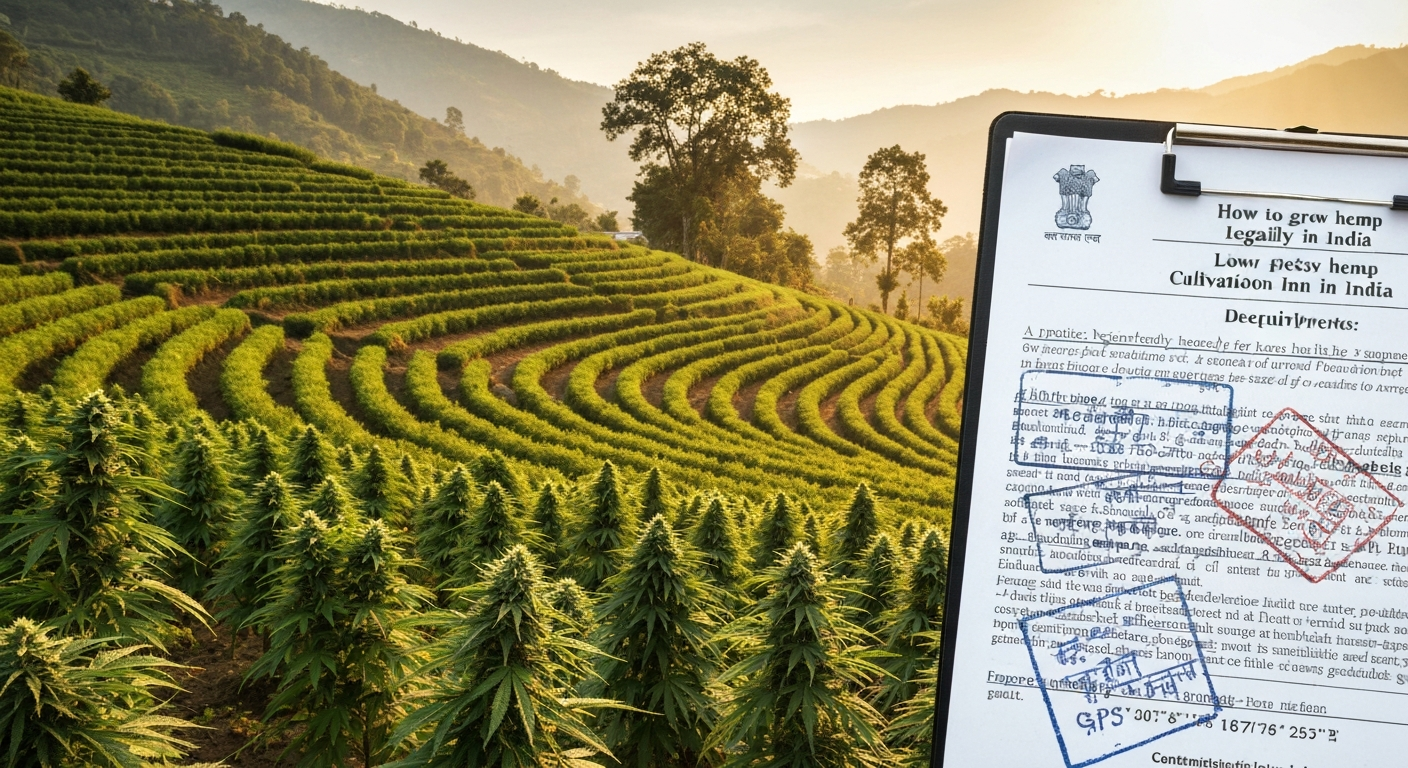
You can grow hemp for bedding at home or on a small plot by selecting a fiber or hurd-focused variety, planting at high density to maximize stem yield, harvesting before full seed maturity, and processing the dried stalks through decortication to separate the woody hurd core. That hurd, also called shive, is the finished bedding material: highly absorbent, low-dust, and genuinely useful for horses, poultry, small animals, and commercial applications. This guide walks you through every stage, from picking the right seed to bagging clean, dry product.
How to Grow Hemp for Bedding: Seed-to-Processing Guide
Marcus Holbrook
7 Aug 2026
What this guide covers and who it's for
This is a seed-to-bedding walkthrough written for home growers who want to grow hemp with a specific end product in mind: absorbent animal or commercial bedding made from hemp hurds. Whether you have a backyard plot, access to a greenhouse, or you're exploring hydroponic stem production, the principles here apply. I'll be upfront that this is a different goal from growing hemp for CBD or flower. Bedding-grade hemp is about bulk stem yield, fiber quality, and processing efficiency, not cannabinoid content. If you've grown cannabis before, some of the cultivation logic overlaps, but the variety choices, planting density, and harvest timing are entirely different.
Complete beginners are welcome here. I'll define terms as they come up and flag the steps where I personally made mistakes early on so you don't have to repeat them. Experienced cultivators can skim the basics and jump to the sections on processing and compliance, which tend to be the gaps even seasoned growers face when pivoting to industrial hemp.
Why hemp makes genuinely good bedding
Hemp bedding works because of the physical structure of the hurd itself. The woody core of a hemp stalk is highly porous and hygroscopic, meaning it pulls moisture in and holds it. Published materials research reports water uptake roughly two to five times the dry mass of hemp shives, with rapid saturation occurring within the first ten minutes of contact in immersion tests. That's not marketing copy; it's a measurable material property tied to the hurd's high cellulose content, which sits in the range of about 40 to 48%, alongside hemicellulose (21 to 27%) and lignin (17 to 27%). Peer‑reviewed analyses report hurd composition roughly 40–48% cellulose, 21–27% hemicellulose, and 17–27% lignin (Sustainable and alternative fiber production from industrial hemp hurds: bench and pilot scale assessment, Cellulose, 2026) Sustainable and alternative fiber production from industrial hemp hurds: bench and pilot scale assessment (Cellulose, 2026). Those numbers are chemically similar to hardwood, which is why hemp hurds are sometimes compared to wood shavings as bedding, though hemp typically outperforms on absorbency per unit weight.
For horses and poultry specifically, the practical advantages stack up quickly. Hemp bedding composts faster than wood shavings because the particle size and lignin-to-cellulose ratio supports microbial breakdown more readily. It also tends to produce less fine dust than straw after proper processing, which matters for respiratory health in enclosed stalls. Commercial bedding producers have recognised this, and small-scale growers supplying local stables or farm shops can find a ready market without needing industrial-scale output.
- Absorbs 2 to 5 times its dry weight in moisture, keeping bedding drier for longer
- Lower dust than straw when properly decorticated and screened
- Faster composting turnaround compared to wood shavings
- Naturally low in mold spores when dried and stored correctly below about 12 to 14% moisture
- Suitable for horses, poultry, small mammals, reptiles, and even commercial packaging fill
- Renewable crop with relatively low input costs per tonne of output
Legal and compliance checkpoints before you plant a single seed
This is where I'd ask you to pause, even if everything else in this article gets you excited. Hemp laws vary dramatically by country, state, and even county, and getting this wrong before you plant costs you the entire crop and potentially more. I'm not a lawyer, and nothing here is legal advice, but I can point you to the framework you need to research in your own jurisdiction.
United States
Under US federal law, hemp is defined as Cannabis sativa L. with a delta-9 THC concentration of no more than 0.3% on a dry weight basis. The USDA's Domestic Hemp Production Program final rule, which took effect on March 22, 2021, sets the framework for licensing, sampling and testing, recordkeeping, and disposal of non-compliant plants. USDA Agricultural Marketing Service, Establishment of a Domestic Hemp Production Program summarizes the final rule’s key provisions, including licensing, sampling and testing, remediation/disposal of non‑compliant plants, and requirements for labs used for regulatory THC measurement USDA Agricultural Marketing Service — Establishment of a Domestic Hemp Production Program. If your state has its own USDA-approved plan, you register with the state. If not, you register directly with the USDA. Either way, you need a licence before you grow, labs used for regulatory THC testing must meet program requirements, and plants that test above 0.3% are classified as marijuana and must be destroyed. Start at the USDA AMS website and your state department of agriculture before buying seed.
India
India's Narcotic Drugs and Psychotropic Substances Act of 1985 is the central law governing cannabis cultivation. It criminalises cultivation, production, transport, and sale of cannabis except where authorised for medical, scientific, or industrial purposes under state or central government permission. Uttarakhand became the first Indian state to issue a commercial pilot licence for industrial hemp in July 2018, a 1,000-hectare pilot authorisation granted to the Indian Industrial Hemp Association. Himachal Pradesh has also moved toward limited licensed cultivation. The situation is evolving, but as of mid-2026 there is no blanket right to grow hemp commercially across India. You need explicit state-level authorisation, and the process involves applying through the relevant excise or narcotics control authority. If you're growing in India or want to understand the regulatory path there in more depth, the topic of how to grow hemp legally in India covers this in detail.
European Union and UK
EU member states permit hemp cultivation from approved varieties listed in the EU Common Catalogue, with a THC threshold of 0.3% (raised from 0.2% as of recent regulatory updates). Growers must notify authorities and use certified seed from the approved variety list. In the UK post-Brexit, the Home Office issues licences for industrial hemp cultivation, also at a 0.2% THC threshold currently. Always check your national agriculture ministry for the current approved variety list and licensing portal.
A general compliance checklist
- Confirm hemp is legal to cultivate in your country, state, and municipality
- Identify the licensing authority (federal, state, or local) and apply before sourcing seed
- Purchase only certified seed from a licensed supplier to ensure THC compliance
- Understand THC testing schedules and keep all seed purchase documentation
- Know the remediation and disposal rules if a crop tests non-compliant
- Check whether selling processed bedding product requires any additional business registration
Choosing the right hemp type: fiber varieties vs hurd-focused varieties
Not all hemp varieties produce the same ratio of bast fiber to hurd. For bedding production, you want varieties that maximize total stem yield and hurd mass, since the hurd is typically 70 to 80% of the stem's mass by weight after decortication. Fiber-forward varieties produce long, fine bast fibers wrapped around a large hurd core, and both fractions have value: the bast goes to textile or industrial fiber markets, and the hurd becomes your bedding. Dual-purpose varieties are often the most practical choice for small-scale growers because you get income or utility from both fractions.
The distinction between fiber varieties and CBD or seed varieties is critical here. CBD-focused genetics are bred for cannabinoid production in flowers, not for stem yield or stalk quality. Seed or grain varieties like Finola are bred for seed oil and are typically shorter with lower straw yield. For bedding production you want tall, dense-stalked varieties with documented fiber and hurd output.
| Variety | Origin | Plant Height | Strength | Notes for Bedding |
|---|---|---|---|---|
| Futura 75 | France (EU) | Up to 3 m+ | High straw yield, good fiber/hurd ratio | Strong biomass performance in published trials; widely used in EU fiber production |
| Felina 32 | France (EU) | 1.5 to 2.5 m | Reliable, early maturing | Good dual-purpose option; manageable for smaller plots |
| Carmagnola | Italy (EU) | 2 to 3.5 m | Very high straw yields, thick stems | Excellent hurd mass per plant; needs longer season |
| USO-31 | Ukraine (EU-listed) | 2 to 2.5 m | Early, tolerant of cooler climates | Practical for northern growing regions |
| Finola | Finland | 0.8 to 1.2 m | Grain/seed variety, short season | Low straw yield; not recommended for bedding production |
Futura 75 comes up consistently in agronomic trials for straw performance, and USDA ARS hemp descriptor resources confirm that cultivar choice strongly affects straw height, stem thickness, and fiber-to-hurd ratio. Carmagnola is a beast for raw mass but needs a longer frost-free window. My recommendation for a first bedding crop is Felina 32 or USO-31 if you're in a cooler region, or Futura 75 if you have a full growing season and want maximum yield.
Seed selection and sourcing: what to look for
Seed quality directly affects germination rate, THC compliance, and final yield. For hemp grown for fiber and hurds, you want certified seed from a licensed supplier. Certified seed means the variety is registered, the genetics are stable, and the THC content has been verified to remain under the legal threshold when grown under normal conditions. This is non-negotiable if you're in a licensed jurisdiction, because planting uncertified or unknown genetics risks producing a crop that tests non-compliant and has to be destroyed.
- Buy from licensed, reputable seed suppliers who can provide variety certificates and documentation
- Check that the variety is approved on your country or state's permitted cultivar list
- Request germination rate data; commercial fiber seed should be above 85 to 90%
- Confirm seed is cleaned, free of debris, and stored under dry conditions (high-moisture seed loses viability quickly)
- For EU growers, verify the variety is listed in the EU Common Catalogue of Varieties
- For US growers, verify the variety is included in USDA or state-approved databases
- Avoid purchasing seed from unverified online marketplaces, especially for licensed commercial grows
Seed storage matters too. If you're buying in bulk for a larger plot, store seed in a cool, dry location at roughly 5 to 10°C and below 50% relative humidity. Properly stored hemp seed retains good germination rates for one to two years. I've had batches go patchy after a single summer in a warm shed, which is a frustrating and avoidable problem.
Site selection and systems: outdoor, greenhouse, and hydroponic
Hemp for bedding can be grown in all three main systems, but each has different practical trade-offs. Outdoor field production is the default for fiber hemp because the economics of large-volume bedding material favour low-cost, open-field cultivation. Greenhouse growing is practical for shorter seasons, higher control, or early establishment before transplanting out. Hydroponic hemp for stem production is a niche and more resource-intensive option, but it's viable for growers who want year-round production or who are constrained on outdoor space.
Hemp for fiber and hurds grows tall, often reaching two to three metres or more in good conditions. That height rules out most small indoor grow tents but works perfectly in an open field or a tall polytunnel greenhouse. If you're exploring hydroponic methods in more depth, growing hydroponic hemp is covered in its own detailed guide on this site.
| System | Best For | Main Advantage | Main Limitation | Typical Scale |
|---|---|---|---|---|
| Outdoor field | Bulk bedding production, cost efficiency | Lowest input cost per kg of straw | Weather-dependent, requires land | 0.1 ha upward |
| Greenhouse | Shorter climates, season extension, quality control | Controlled environment, earlier planting | Higher capital cost, limited headroom for tall varieties | Small plots to commercial tunnels |
| Hydroponic | Year-round stem production, urban or space-limited growers | Faster growth cycle, water efficiency | Higher complexity and cost, lower volume ceiling | Small-scale pilot |
Soil requirements for outdoor and greenhouse growing
Hemp is often described as forgiving, and it is to a degree, but it has genuine preferences. For maximum straw yield it wants a well-drained, loamy soil with a pH between 6.0 and 7.0. Waterlogged conditions are a real problem during germination and early growth: I've lost sections of stands to standing water after heavy rain on a compacted patch, and the plants simply don't recover. Raised beds or ridged rows help in areas prone to wet springs. Soil organic matter above 2 to 3% improves both water retention during dry spells and nutrient availability.
Outdoor growing: step-by-step field methods
Sample outdoor growing calendar (temperate northern hemisphere)
| Month | Stage | Key Actions |
|---|---|---|
| March to April | Pre-plant preparation | Soil test, till or no-till prepare, amend pH if needed, apply baseline phosphorus and potassium |
| Late April to May | Sowing | Direct seed when soil temp reaches 8 to 10°C; target 250 to 400 seeds/m² for fiber/hurd production |
| May to June | Germination and establishment | Ensure even moisture for first 2 to 3 weeks; thin if patches are extremely dense but avoid over-thinning |
| June to July | Rapid vegetative growth | Monitor nitrogen uptake, apply top-dress nitrogen at 6 to 8 weeks if needed; watch for nutrient deficiency signs |
| July to August | Flowering / pre-flower | Most straw yield builds in this window; maintain soil moisture; scout for pests and disease weekly |
| Late August to September | Harvest window | Harvest at early seed set (for max hurd yield) when lower leaves begin to yellow; cut stalks at 10 to 15 cm above ground |
| September to October | Retting (optional) and drying | Field-ret 2 to 4 weeks if using, or mechanical dry immediately after cut; target 10 to 15% moisture before decortication |
| October onward | Processing and storage | Decorticate, screen, and dry hurds to below 12 to 14% moisture; store ventilated in dry conditions |
Planting density and seeding
Planting density is one of the most important decisions for fiber hemp. Dense planting suppresses branching and pushes the plant to grow tall and straight, maximising stem length and making mechanical harvest cleaner. For fiber and hurd production, target around 250 to 400 seeds per square metre (roughly 25 to 40 kg/ha depending on seed size). Row spacing of 15 to 20 cm works well for drill-sown crops. Wider row spacing encourages branching and reduces stem quality for processing. Seeding depth should be 1 to 2 cm in prepared seedbeds; deeper placement delays emergence, especially in cooler soils.
Nutrient management
Hemp for straw yield is a heavy nitrogen user during its rapid vegetative phase. A general starting framework for an outdoor fiber crop is 80 to 120 kg N/ha, 40 to 60 kg P2O5/ha, and 60 to 100 kg K2O/ha, split between a pre-plant base and a top-dress at six to eight weeks after emergence. Always conduct a soil test first; over-applying nitrogen on already fertile soil can lead to lodging (plants falling over), which is catastrophic for mechanical harvest. Phosphorus matters most at establishment for root development, so front-load it. Potassium supports stem strength and disease resistance.
Watering and irrigation
Hemp is reasonably drought-tolerant once established, but the first four weeks after germination are the most sensitive window. Aim for consistent soil moisture (not saturation) during emergence and early vegetative growth. In dry climates, drip irrigation or overhead sprinklers timed to maintain soil moisture at 50 to 70% field capacity through the vegetative phase will substantially improve straw yield. Once the canopy closes (typically six to eight weeks in dense plantings), the crop shades the soil and moisture retention improves.
Pest and disease management outdoors
Hemp grown at high density for fiber is relatively pest-resistant, but it's not bulletproof. The main issues I've encountered and seen reported consistently are:
- Hemp flea beetles (Psylliodes attenuatus): small holes in young leaves; most damaging at seedling stage; manage with row covers at emergence or approved insecticides in severe cases
- Hemp borer (Grapholita delineana): larvae tunnel into stems, weakening stalks and reducing fiber quality; crop rotation is the best prevention
- Botrytis (grey mold): thrives in dense, humid canopies late in the season; maintain airflow where possible and avoid late-season excess nitrogen
- Fusarium root rot: common in waterlogged or poorly drained soils; prevention is better than cure, so prioritise drainage
- Powdery mildew: late-season issue in humid climates; rarely fatal to a stem crop but can affect hurd quality at harvest
Harvesting outdoors
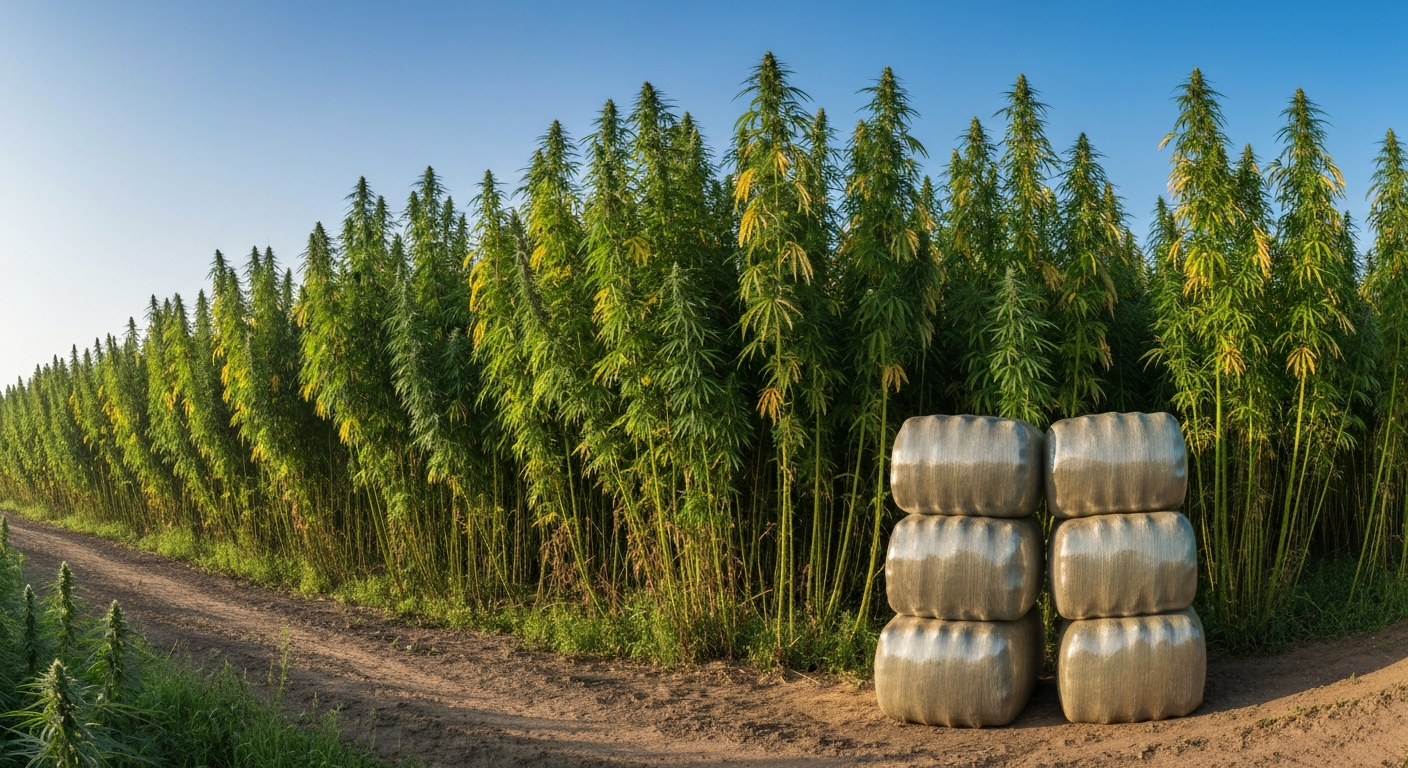
The harvest window for bedding-quality hurds is typically when plants reach early seed set, roughly 100 to 120 days from sowing depending on variety and latitude. At this point the lower leaves yellow and drop, the stems are fully lignified, and hurd mass is near its peak. Harvesting too early means stems are still soft and fibrous inside with less developed hurd; harvesting too late (full seed maturity) is fine for hurd quality but seeds can be lost and the canopy becomes more tangled. For small plots, a brush cutter or sickle-bar mower works. For larger plots, a modified forage harvester or purpose-built hemp harvester is the practical choice. Cut stalks about 10 to 15 cm above the soil surface, which leaves a root mass to help prevent soil erosion and supports the next season's rotation.
Greenhouse growing: step-by-step methods and climate control
A greenhouse extends your growing season and gives you control over temperature and humidity that an open field can't match. For fiber hemp, the main challenge in a greenhouse is headroom: tall varieties like Futura 75 or Carmagnola will push two to three metres, which means a polytunnel or glass greenhouse with a minimum internal height of three metres is necessary. Low tunnels simply won't work. The practical benefits of greenhouse growing are earlier planting (two to four weeks ahead of outdoor sowing in most temperate climates), better germination control, and protection from spring frosts.
Greenhouse setup checklist
- Minimum internal height of 3 metres for fiber varieties; taller is better
- Ventilation: roof vents and side openings essential to prevent humidity buildup above 70% RH, which promotes Botrytis
- Heating (optional but useful): maintain minimum night temperature of 8 to 10°C during early establishment
- Irrigation: drip lines or overhead misters on timers; avoid overwatering in enclosed conditions
- Light: natural light is sufficient for hemp; supplemental lighting is generally unnecessary and economically impractical for a stem crop
- Thermometer and hygrometer: basic monitoring is essential for climate management
- Ground preparation: prepare raised beds or deep containers with well-drained, pH-adjusted growing media
Climate targets inside the greenhouse
| Growth Stage | Temperature (Day) | Temperature (Night) | Relative Humidity |
|---|---|---|---|
| Germination (0 to 10 days) | 18 to 24°C | 12 to 16°C | 60 to 70% |
| Early vegetative (10 to 40 days) | 20 to 28°C | 12 to 18°C | 55 to 70% |
| Rapid vegetative (40 to 80 days) | 22 to 30°C | 14 to 20°C | 50 to 65% |
| Pre-flower and maturation | 20 to 28°C | 12 to 18°C | 45 to 60% |
Staging: direct sow vs transplant
For greenhouse fiber hemp you have two options: direct sow into prepared greenhouse beds at the same density as outdoor production (250 to 400 seeds/m²), or start transplants in small modules for two to three weeks and move them to the greenhouse beds or out to the field when conditions allow. Transplanting adds handling labour and can slow establishment slightly since hemp has a sensitive taproot, but it lets you germinate under ideal conditions and gives you a head start of two to three weeks on outdoor-sown crops. If you're transplanting out to a field later, harden plants off over seven to ten days by increasing ventilation and reducing watering before the move. For more detail on greenhouse-specific systems and staging, growing hemp in a greenhouse covers this environment in depth.
Greenhouse nutrient and watering protocols
Under greenhouse conditions, nutrient management is more precise because you're in a closed or semi-closed system. Use the same NPK framework as outdoor growing but reduce application rates by 10 to 15% initially and adjust based on plant response, since leaching is lower in raised greenhouse beds. Water to maintain even moisture without saturation; in enclosed conditions hemp roots are more susceptible to root rot from overwatering than they are outdoors. A simple soil moisture probe or the finger-test method works fine for small greenhouse beds. Water in the morning to allow foliage to dry before cooler night temperatures.
Greenhouse pest and disease troubleshooting
- Spider mites: more common in dry, warm greenhouse conditions; maintain humidity above 45% and introduce predatory mites (Phytoseiulus persimilis) as a biological control
- Fungus gnats: larvae damage roots in overwatered conditions; let the surface dry out between waterings and use sticky yellow traps for adult monitoring
- Botrytis (grey mold): the primary greenhouse disease risk in humid conditions; improve airflow, reduce humidity below 65% RH, and remove any infected plant material immediately
- Powdery mildew: appears as white patches on leaves in late vegetative stage; increase airflow and reduce leaf wetness; potassium bicarbonate spray is a low-impact treatment option
Processing hemp stalks into finished bedding
Retting and field drying
After cutting, stalks need to reach a moisture content of roughly 10 to 15% before mechanical decortication. Too wet and the equipment clogs; too dry and the bast fibers become brittle and break into dust rather than separating cleanly. The traditional way to reach this moisture range outdoors is field retting: cut stalks are left on the field in windrows for two to four weeks, turned once or twice for even drying and to allow microbial action to begin loosening the bast fiber from the hurd. Field retting works well in dry, breezy conditions but is a risk in wet autumns because over-retted or rain-soaked stalks degrade hurd quality. In a greenhouse or under cover, you can speed-dry cut stalks with passive ventilation in two to three weeks, or use forced-air driers for smaller batches.
Decortication: separating hurd from fiber
Decortication is the mechanical process of separating the woody hurd core from the outer bast fiber. At small scale, this is done with a decorticator machine, which uses roller, hammer-mill, or disc mechanisms to break the stalk and separate the fractions. Research from the Leibniz Institute for Agricultural Engineering shows that primary decortication followed by hammer-mill fractionation and sieving or air classification can produce cleaned shive fractions representing around 80 to 90% of output mass, with dust and short fibers removed by suction and screening. Small commercial decorticator units are available in capacities of roughly 100 to 300 kg per hour, which is practical for small-scale bedding production. Industrial lines scale to tonnes per hour.
Target hurd particle size for animal bedding is roughly 3 to 10 mm in length, similar to coarse wood shavings. Finer particles down to 2 to 3 mm are used in pelletized or compressed bedding formats. The specific particle size depends on your target market: horse bedding typically uses a coarser fraction, while poultry and small animal bedding tolerates finer material. Patent and processing literature specifies approximately one-eighth inch (3 mm) and similar ranges for litter and pellet feedstocks, achieved through hammer-mill sizing and downstream screening.
Dust control and conditioning
Dust is the main quality issue in processed hemp bedding. Excessive fine dust is irritating to animals and humans, and it indicates either over-processing or insufficient screening. After decortication, route the output through a vibrating screen or rotary trommel to remove particles below about 1 mm, and use a suction or cyclone dust extraction system inline with the hammer mill to capture airborne fines. The cleaned fraction should have a consistent particle size and minimal visible dust when poured. If you're bagging by hand, wear an appropriate dust mask (minimum FFP2 or N95) throughout processing; I skipped this on my first batch and regretted it within ten minutes.
Drying and storage for finished bedding
Finished hurds intended for bedding must be stored at below 12 to 14% moisture to prevent mold growth. This is not optional: hurds stored above this moisture threshold in enclosed bags or piles can develop Aspergillus and other mold species that make the bedding unsafe for animals. Dry processed hurds in a ventilated, covered space before bagging. Use a grain moisture meter (cheap and widely available) to check batches before storage. Bag into breathable woven polypropylene sacks rather than sealed plastic if the product is close to the moisture limit, to allow ongoing passive moisture exchange during storage.
Processing checklist
- Confirm stalk moisture is in the 10 to 15% range before feeding into the decorticator
- Run a small test batch first to calibrate screen and hammer-mill settings for your variety
- Collect and separate bast fiber from hurd output for separate use or sale
- Screen output to remove particles below 1 mm (dust fraction)
- Check finished hurd moisture with a moisture meter; target below 12 to 14%
- Dry in a ventilated space if moisture is above target before bagging
- Wear dust mask (FFP2 or N95) and eye protection throughout processing
- Store bagged product in a dry, ventilated building away from direct ground contact
Yield expectations and simple economics
Realistic straw yield for outdoor fiber hemp under good management in temperate climates is roughly 7 to 15 tonnes of dry straw per hectare, with optimised or irrigated trials sometimes reaching toward 20 t/ha. Since hurds represent roughly 70 to 80% of the stalk mass after decortication, a crop yielding 10 t/ha of dry straw translates to roughly 7 to 8 tonnes of hurds per hectare before screening. Dust and fiber losses during processing will reduce that further by 10 to 20%, landing you at around 5.5 to 7 tonnes of clean, finished bedding product per hectare under realistic conditions.
For a small home grower with 0.1 hectares (roughly 1,000 square metres), that means approximately 550 to 700 kg of finished bedding material from a single season, which is enough to supply a small number of horse stalls or a local market. Retail hemp bedding in the UK and Europe commonly sells at 10 to 20 Euros or pounds per 20-litre bag, which gives you a rough sense of the revenue potential at small scale. Growing for profit at a larger scale is a separate topic covered in detail in the guide to growing hemp for profit, which goes into market access, processing costs, and scaling considerations.
Further reading and resources
If you want to go deeper on any part of this process, a few specific resources are worth your time. On the cultivation science side, the USDA ARS Hemp Descriptors database is a solid free reference for variety characteristics. For processing, the Leibniz ATB institute has published accessible research on small-scale hemp decortication that translates directly to pilot-scale bedding production. The book topic of how to grow hemp is covered in its own guide on this site, which includes recommended titles that range from beginner-friendly introductions to agronomic research compilations. See the how to grow hemp book guide on this site for recommended titles and detailed cultivation techniques.
For hydroponic growers interested in year-round stem production, the hydroponic hemp guide on this site covers system design, nutrient solutions, and substrate choices in detail. And if you're in India or planning to grow there, the legal landscape is specific enough that the dedicated guide to growing hemp legally in India is the right starting point before anything else.
FAQ
Why is hemp a good choice for animal and commercial bedding?
Hemp hurds (shives) are porous, highly absorbent, and biodegradable. Lab and industry data show hurds can absorb ~2–5× their dry weight, dry quickly, resist compaction, and produce low dust if processed correctly. They also have neutral odor, high bulk for cushioning, and are a renewable byproduct of fiber/seed hemp production.
Which hemp varieties are best when your primary product is bedding (hurds)?
Choose fiber or dual‑purpose cultivars with high straw/stem biomass and coarse stalks (e.g., Futura 75, Felina 32, Carmagnola, Finola, or regionally recommended fiber lines). Look for varieties with high hurd:bast ratio in datasheets and breeding trials. Avoid high-THC or seed-only varieties if you need maximal hurd yield.
How do I select seed and ensure legal compliance before planting?
Buy certified seed from reputable suppliers and confirm variety registration/suitability for fiber. Verify local licensing and THC limits: in the U.S. hemp is defined as Cannabis sativa L. ≤0.3% Δ9‑THC and many jurisdictions require licensing, testing and recordkeeping (USDA rules). In India, cultivation requires state/central authorization under NDPS Act; some states run pilots (e.g., Uttarakhand). Always check your national/state rules and testing schedules and retain seed/seedlot documentation.
What are the basic outdoor, greenhouse and hydroponic approaches for growing hemp for bedding?
Outdoor: dense, single‑pass stands optimize straw yield—plant in full sun, well‑drained soils, recommended densities and row spacing depend on cultivar (higher density for taller, thinner stalks). Greenhouse: use beds or large pots to control season extension and start transplants early for longer vegetative growth. Hydroponic: typically used only for stalk biomass in controlled trials—use deep water culture or ebb/flow with strong support, high calcium/magnesium and moderate N for stem growth. For home growers, outdoor or tunnel/greenhouse production is the most economical for hurd production.
Soil, fertility and irrigation: what protocols maximize stem/hurd yield?
Soil: well‑drained loam with pH 6–7.5. Fertility: aim for balanced NPK with emphasis on N early for vegetative growth—typical ranges for fiber hemp trials: 80–160 kg N/ha depending on yield target; ensure adequate P and K per soil test. Micronutrients: monitor S, B, Ca, Mg. Irrigation: hemp tolerates moderate drought but irrigate during establishment and when stem expansion/biomass acceleration occurs. Conduct a soil test and follow a fertility plan to avoid nutrient lockups or excess vegetative lodging.
Planting and seasonal schedule (sample checklist and timeline for temperate climates)
Sample schedule (temperate, outdoor): 0–2 weeks: site prep, soil test, seed order. Week 0: sow or transplant when soil >8–10°C. Weeks 1–6: establishment—maintain moisture, weed control, monitor pests. Weeks 6–12+: rapid stem elongation—apply top‑dress N if needed, monitor lodging. Flowering: for fiber/hurd target, harvest typically at early flowering to full vegetative stage depending on desired hurd properties. Harvest window varies by cultivar; plan equipment and drying. Checklist: seed cert, soil test, irrigation setup, planting map, pest scouting logs, harvest crew/equipment, processing area.
Next Article
How to Grow Hemp Legally in India: Permits, Seeds & Cultivation Guide
How to grow hemp legally in India: step-by-step compliance, sourcing low-THC seed, and a practical cultivation calendar.