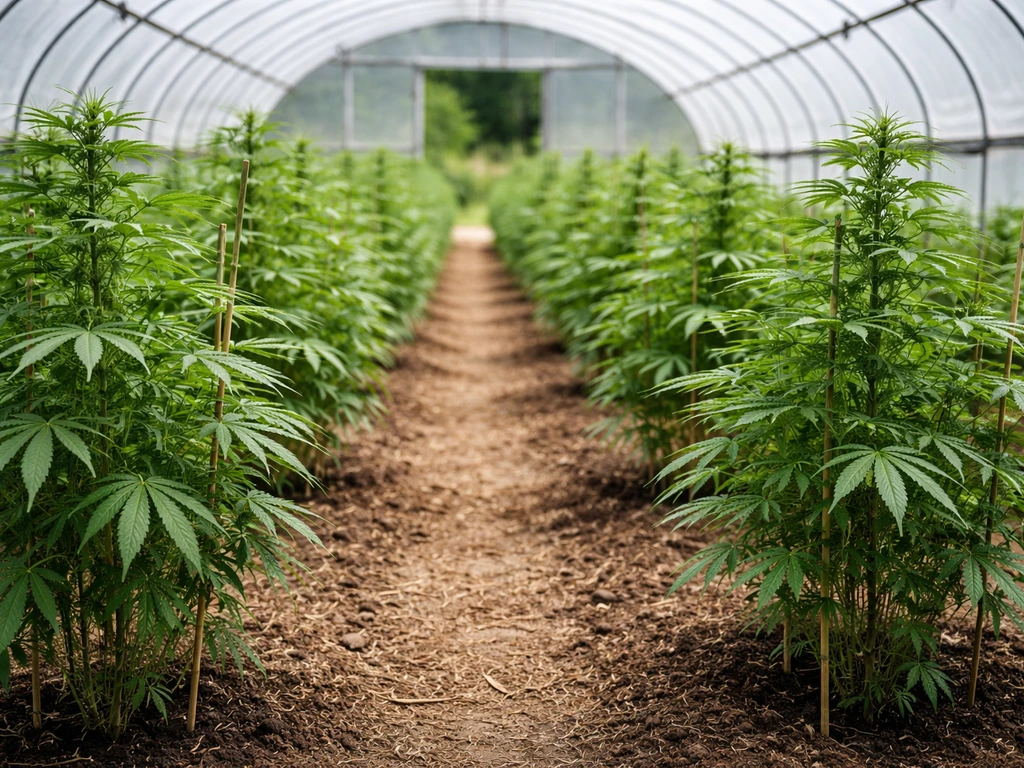
The best hemp-growing book for you depends entirely on what you want to grow and why. A beginner wanting a backyard CBD crop needs something completely different from a commercial fiber farmer or someone building a hydroponic setup in a spare room. This guide walks you through what to look for in a hemp book at every level, what core cultivation topics any decent manual should cover, and how to match a book's content to your actual goals, whether that's learning the basics, growing for profit, producing fiber or bedding, working in a greenhouse, or running a hydroponic system.
How to Grow Hemp Book: Beginner to Commercial & Hydroponic Guide

Marcus Holbrook
24 Jul 2026
Who this guide is for and what you'll get out of it
If you've searched 'how to grow hemp book,' you're probably in one of a few camps: you're brand new to cultivation and want a reliable manual to start from scratch; you already grow cannabis and want to branch into hemp for fiber, bedding, or cannabinoids; or you're thinking commercially and need a book that covers business planning alongside agronomy. This article covers all three. By the end, you'll know exactly which book features to prioritize for your goal, what chapters a quality hemp book must include, and how to avoid wasting money on a title that doesn't match your situation. You'll also get practical cultivation benchmarks, a sample nutrient table, a basic troubleshooting reference, and notes on legal compliance, including jurisdiction-specific considerations.
How to choose the right hemp-growing book
Before you buy anything, answer three questions: What am I growing hemp for (CBD, fiber, grain, bedding, or mixed use)? Where am I growing it (outdoor field, indoor tent, greenhouse, or hydroponic system)? And what's my experience level right now? Your answers determine which sections of a book you'll actually use. A 400-page field-crop manual is useless if you're setting up deep water culture in a basement, and a hydroponic nutrient guide won't help a farmer seeding 10 acres of fiber hemp. Beyond goal and method, check that any book you consider addresses local legal compliance explicitly. Hemp legality varies dramatically by country, state, and even county, and a good book acknowledges this rather than assuming one set of rules applies everywhere.
Here's a simple decision flow to narrow your choice. Start with your primary use case, then filter by growing environment, then check whether the book includes up-to-date regulatory guidance. In the US, the USDA Domestic Hemp Production Program rules finalized on January 19, 2021 and effective March 22, 2021 set the federal THC testing framework, and any book published before that date may have outdated compliance sections. For international readers, verify whether the book's legal chapter references your jurisdiction at all, or whether it's purely US or EU-focused.
| Your Primary Goal | Growing Environment | Key Book Sections to Prioritize |
|---|---|---|
| CBD/cannabinoid crop | Indoor or outdoor | Strain genetics, flowering management, harvest timing, post-harvest testing |
| Fiber or bast production | Outdoor field | Plant density, cultivar selection, retting/processing, harvest windows |
| Bedding material (hemp hurds) | Outdoor field | Stalk anatomy, hurd separation, moisture management, storage |
| Commercial/profit focus | Any | Business planning, yield estimates, cost/revenue analysis, permitting |
| Greenhouse production | Controlled environment | DLI/PPFD lighting, photoperiod blackout, climate control, propagation |
| Hydroponic production | Indoor controlled | System types (DWC/NFT), nutrient solution recipes, pH/EC management |
What every good hemp book should cover: the core cultivation checklist
Regardless of your specific goal, there's a foundation of knowledge that any hemp-growing manual worth its price should include. I've grown through gaps in my own reading list and learned the hard way which omissions cause real problems. Here's what to look for before you commit to a title.
Strain selection and seed sourcing
Hemp cultivars vary enormously. Photoperiod varieties flower in response to day length dropping below roughly 12 hours, while autoflowering (ruderalis-derived) genetics trigger flowering based on age regardless of light schedule. Comparative genomics research confirms these are distinct genetic pathways, and the practical difference for a grower is enormous: autoflowering hemp suits short seasons and indoor grows, while photoperiod cultivars are standard for large outdoor operations. For a recent synthesis of genetics, physiology and breeding in Cannabis sativa, see From fibers to flowering to metabolites: unlocking hemp potential (Journal of Experimental Botany, 2025) blank" rel="noopener noreferrer">For a recent synthesis of genetics, physiology and breeding in Cannabis sativa, see From fibers to flowering to metabolites: unlocking hemp potential (Journal of Experimental Botany, 2025).. blank" rel="noopener noreferrer">Comparative genomics of flowering behavior in Cannabis sativa (PMC) documents genetic differences between photoperiod and autoflowering pathways, supporting cultivar selection and flowering management. A good book should explain this clearly and help you match cultivar type to your climate and goals. It should also cover seed certification. In North America, the Association of Official Seed Certifying Agencies (AOSCA) manages the hemp Variety Review Board process and certified seed frameworks. Certified seed matters because unverified genetics are one of the fastest ways to produce a crop that tests above 0.3% THC and triggers a compliance problem.
Environmental controls: soil, climate, and light
Any solid cultivation chapter should give you specific targets, not vague ranges. For soil-grown hemp, look for guidance on pH (typically 6.0 to 7.0), organic matter targets, and drainage requirements. For greenhouse or indoor grows, look for Daily Light Integral (DLI) values and PPFD targets. Controlled-environment research on Cannabis sativa has shown supplemental LED lighting benefits crop growth up to around 700 micromoles per square meter per second (μmol·m−2·s−1), and books drawing on this kind of data are more useful than those offering generic 'more light is better' advice. Temperature and humidity targets matter too, particularly at specific growth stages.
Nutrient protocols and a sample feeding schedule
Nutrient management is where many first-time hemp growers go wrong. I over-fertilized my first crop and spent two weeks figuring out why the leaves were curling. A good book should separate vegetative and flowering nutrient demands, give target concentrations in practical units (mg/L or ppm), and explain the logic behind adjustments. For soilless and hydroponic production specifically, peer-reviewed research has quantified optimal nitrogen, phosphorus, and potassium solution targets for Cannabis sativa in flowering. Any book covering hydroponics should reference this kind of data or present its own tested protocols.
| Growth Stage | Nitrogen (N) Focus | Phosphorus (P) Focus | Potassium (K) Focus | EC Range (mS/cm) |
|---|---|---|---|---|
| Seedling (week 1-2) | Low | Moderate | Low | 0.8 – 1.2 |
| Vegetative (week 3-6) | High | Moderate | Moderate | 1.5 – 2.2 |
| Early flower (week 7-9) | Moderate | High | High | 1.8 – 2.5 |
| Late flower/ripening (week 10+) | Low | Low-Moderate | High | 1.2 – 1.8 |
| Flush (final 1-2 weeks, if applicable) | None | None | None | < 0.5 |
Pest and disease management (IPM)
A hemp book without a solid integrated pest management (IPM) section is a significant gap. Hemp is susceptible to fungal diseases including botrytis and powdery mildew, as well as arthropod pests and several viral pathogens. The UF/IFAS Field Guide to Hemp Diseases (PP379, updated November 2024) is one of the most current extension-level references available, covering identification and management options across fungal, viral, and arthropod categories. Look for a book that covers at minimum: early identification of common diseases and pests, cultural controls (spacing, airflow, humidity management), approved biological and chemical options, and resistance management principles.
Harvest, drying, and post-harvest processing
Harvest timing, drying conditions, and post-harvest handling are where a lot of quality is won or lost. For CBD/flower crops, Oregon State University Extension guidance recommends drying and curing hemp flowers at 18 to 21 degrees Celsius with 50 to 65 percent relative humidity, and targeting a water activity below 0.65 to prevent mold. A book covering cannabinoid hemp should give you these specific parameters. For post-harvest testing, any US-focused book should explain the USDA/AMS laboratory testing requirements, including that labs must use AOAC official methods (2018.10 and 2018.11) for total THC reporting using the post-decarboxylation correction. If you're growing for fiber or bedding, look for content on retting methods, hurd separation, and moisture targets for storage.
Troubleshooting common problems
| Problem | Likely Cause | First Steps |
|---|---|---|
| Yellowing lower leaves | Nitrogen deficiency or root zone pH too high | Check runoff pH (target 6.0–6.5 soil, 5.8–6.2 hydro); adjust feed |
| Brown leaf edges/tips | Nutrient burn or potassium excess | Flush medium, reduce EC, verify PPM targets by stage |
| Stretchy, weak stems | Insufficient light intensity or DLI too low | Raise PPFD, reduce light-to-canopy distance, check photoperiod |
| Slow or no flowering (photoperiod) | Light leak during dark period | Inspect enclosure for light leaks; verify 12h dark is uninterrupted |
| Crop testing above 0.3% THC | Wrong cultivar, late harvest, heat stress | Harvest earlier; use certified seed next cycle; review cultivar genetics |
| Powdery mildew on leaves | High humidity, low airflow | Reduce RH below 50%, increase airflow, apply sulfur or potassium bicarbonate |
| Damping off in seedlings | Overwatering, poor drainage, fungal pathogen | Reduce watering frequency, improve drainage, use clean growing medium |
| Root rot (hydroponics) | Pythium, warm reservoir temps | Lower reservoir to 18–20°C, add beneficial bacteria, check dissolved oxygen |
Choosing a book as a complete beginner
If you've never grown hemp or cannabis before, the book you pick needs to assume zero prior knowledge without being condescending. The biggest mistake beginners make is buying a book aimed at commercial growers, then giving up because the agronomic jargon is overwhelming before they even understand what a photoperiod cultivar is. I've been there. A beginner-focused hemp book should define every term the first time it's used and build concepts sequentially rather than assuming you'll skip around.
Must-have features for a beginner's hemp book
- A glossary of botanical, agronomic, and regulatory terms (autoflowering, photoperiod, THC, CBD, total THC, retting, DLI, EC, water activity)
- A step-by-step timeline from seed selection through harvest, with day-count or week-count markers at each stage
- Clear explanation of the difference between hemp and marijuana under law (0.3% THC threshold in the US) and what that means for cultivar choice
- Soil preparation and amendment basics: pH adjustment, organic matter, drainage, and a starter fertility plan
- Watering fundamentals: frequency, volume, runoff management, and how to recognize overwatering vs. underwatering
- A simple pest and disease identification section with photographs or detailed descriptions
- A harvest readiness checklist (trichome color, pistil color, days from flower onset)
- Basic drying and curing instructions with specific temperature and humidity targets
- A legal compliance reminder: where to check your state, provincial, or national licensing requirements before planting
- A 'common mistakes' section or troubleshooting appendix
Beyond the chapter checklist, look for books that include actual photographs of real plants at each growth stage. Descriptions of healthy versus deficient foliage are much easier to apply when you can see the difference. Diagrams of plant anatomy (identifying fan leaves, sugar leaves, bud sites, and root zones) are especially useful for complete novices who haven't spent time with Cannabis sativa in person. If the book you're considering has no images at all, treat that as a red flag for beginner suitability.
Choosing a book if you're growing hemp for profit
Growing hemp commercially adds a whole layer of planning, compliance, and financial modeling that pure cultivation guides skip entirely. See our guide on how to grow hemp for profit for step-by-step agronomy, business planning, and compliance guidance tailored to commercial growers. A book aimed at profit-oriented growers should treat the business side with the same rigor as the agronomy. The USDA National Agricultural Statistics Service publishes a National Hemp Report (most recently updated April 2026) tracking planted acres, production volumes, and market price indicators by use category. A good commercial hemp book will either incorporate NASS data or direct you to it for baseline planning.
What to prioritize in a commercial-focused hemp book
- Licensing and permitting walkthroughs for the US federal framework (USDA Domestic Hemp Production Program) and state-level programs, which vary significantly
- Sample enterprise budgets covering seed, inputs, equipment, labor, and expected gross revenue per acre by crop type (fiber, grain, CBD flower)
- Yield data by cultivar type and production system, ideally from university extension sources such as Penn State Extension's Industrial Hemp Production eGuide, which includes sample budgets and production risk summaries
- THC compliance protocols: testing timelines, acceptable variance, and what happens if a crop exceeds the 0.3% threshold
- Market and buyer identification: how to find processors, cooperatives, or direct buyers before you plant
- Post-harvest handling and storage requirements for maintaining product quality through to sale
- Basic crop insurance and risk management options
- A section on contract farming vs. independent sales and the pros/cons of each model
One thing I'd watch for: books that list hemp as a get-rich-quick opportunity without discussing input costs, market volatility, or the compliance burden are overselling the upside. The hemp market has gone through dramatic price corrections, especially for CBD biomass. A credible commercial guide will present realistic scenarios, not just optimistic ones. Penn State Extension's framework explicitly covers production risks alongside the profit potential, and any book worth your money should take a similarly balanced approach.
Choosing a book for hemp fiber and bedding production
Fiber and bedding hemp (where the woody hurd from the stalk core is the target product) is agronomically different from growing for CBD flower. Plant density is higher, typically 150 to 300 plants per square meter for fiber hemp, compared to much lower densities for cannabinoid crops. Harvest timing focuses on bast fiber maturity rather than trichome development. A book covering this niche should treat fiber and hurd anatomy as foundational knowledge, not an afterthought.
Technical and processing coverage to look for
- Stalk anatomy: the distinction between bast fibers (outer long fibers) and hurd/shiv (the woody inner core), and how each end use drives different agronomic decisions
- Cultivar selection for fiber vs. dual-purpose (fiber + grain) vs. hurd-dominant genetics
- Plant density and row spacing recommendations with yield tradeoff data
- Harvest timing indicators: how to read optimal fiber maturity (typically around early to full flower for bast, before seed set)
- Retting methods (field retting, water retting, dew retting) and how each affects final fiber quality
- Decortication basics: mechanical separation of bast from hurd and what equipment is involved
- Moisture management in post-harvest storage to prevent mold in bales
- Processing and quality specifications relevant to end markets (bedding, construction, textiles, paper)
Regional agronomic guidance matters more than many growers realize for fiber hemp. OMAFRA (Ontario Ministry of Agriculture, Food and Rural Affairs) produces hemp production guides with specific soil preparation, seeding date windows, plant density recommendations, and harvest timing tables for fiber, grain, and CBD crops that are directly applicable to similar temperate climates. A book that pulls from or aligns with this kind of regional extension data is more practically useful than one built purely on general principles. Industrial Crops and Products peer-reviewed literature also provides anatomy, density, and fiber quality tradeoff data that a thorough book should reflect.
Choosing a greenhouse-focused hemp book
Greenhouse hemp production sits between fully controlled indoor cultivation and open-field growing. You get more environmental control than a field but rely more on natural light than a sealed indoor room, which changes the economics and the management strategy significantly. A greenhouse-focused book should treat photoperiod management as a core chapter, not a footnote, because controlling day length is one of the most critical (and most frequently mismanaged) aspects of greenhouse hemp production. For practical, step-by-step guidance, consult a dedicated guide on how to grow hemp in greenhouse.
Environmental and design considerations a greenhouse hemp book should cover
- Blackout curtain systems for photoperiod manipulation: timing, coverage requirements, and common failure points
- Supplemental lighting design: PPFD and DLI targets by growth stage, LED vs. HPS tradeoffs, and placement relative to canopy height
- Ventilation and humidity management to prevent botrytis and powdery mildew in a partially enclosed environment
- Temperature management: day/night differentials, heat accumulation under glazing in summer, and heating in cooler months
- Mother plant and propagation protocols for vegetative cloning and transplanting schedules
- Water use efficiency (WUE) considerations, particularly relevant as supplemental LED research has documented measurable WUE improvements compared to unlit greenhouse controls
- Integrated pest management adapted for greenhouse environments, where beneficial insect programs are more practical than in open fields
- Structural and glazing considerations: light transmission percentages for glass vs. polycarbonate vs. polyfilm
Cornell Cooperative Extension's Harvest New York program has published Cannabis sativa production protocols for greenhouse propagation and mother plant management that are regionally tested and practically useful. A greenhouse hemp book that references or aligns with this level of applied research is a strong sign it's built on real production data rather than theory. If you plan to run a greenhouse operation, also look for a book with a section on scaling: managing multiple varieties, staggered production cycles, and the logistics of a continuous harvest schedule.
Choosing a hydroponic hemp book
Hydroponic hemp is a rewarding but technically demanding path. I made a lot of pH errors in my first deep water culture run, and I'd have avoided most of them with a book that was specific about solution management rather than just describing system types. A hydroponic hemp book needs to go beyond 'here's what DWC looks like' and give you actual nutrient solution targets, pH management protocols, and a real troubleshooting framework for soilless root zone problems. For step-by-step instructions and setup tips on how to grow hydroponic hemp, see this guide.
System types, recipes, and troubleshooting chapters to seek out
The most common hydroponic systems used for hemp and cannabis include Deep Water Culture (DWC), Nutrient Film Technique (NFT), ebb and flow (flood and drain), and coco coir media-based systems. Each has different oxygen delivery, root zone moisture dynamics, and failure modes. A good hydroponic hemp book should explain the practical differences and help you choose based on your space, budget, and experience level, rather than just presenting all options as equally simple.
| System Type | How It Works | Best For | Key Risk |
|---|---|---|---|
| Deep Water Culture (DWC) | Roots suspended in aerated nutrient solution continuously | Single-plant or small-scale setups; beginners with space | Root rot if dissolved oxygen drops or reservoir warms above 22°C |
| Nutrient Film Technique (NFT) | Thin film of nutrient solution flows over bare roots in channels | Efficient large-scale grows; vegetative/clonal propagation | Root zone dries out quickly during pump failures |
| Ebb and Flow (Flood and Drain) | Grow tray floods with solution on a timer, then drains | Versatile; works with multiple media types | Pump or timer failure causes drying or flooding |
| Coco Coir (media-based) | Inert coconut fiber medium irrigated with nutrient solution | Closest to soil feel; good for beginners transitioning from soil | Requires frequent irrigation and calcium/magnesium supplementation |
| Recirculating Deep Water Culture (RDWC) | Interconnected DWC buckets with central reservoir and recirculation | Multiple plants with consistent solution across units | More complex; leak risks; requires careful reservoir management |
On nutrient recipes, look for a hydroponic hemp book that gives solution concentrations in mg/L (milligrams per liter) or ppm (parts per million), not just product-label doses. Peer-reviewed research on soilless Cannabis sativa production in flowering has quantified optimal N, P, and K solution targets, and a book grounded in that data will give you more reliable starting points than one based purely on trial-and-error experience. pH management in hydroponics is non-negotiable: the optimal solution pH for hemp in most hydroponic systems is 5.8 to 6.2, and small deviations lock out specific nutrients regardless of how well-balanced your solution is.
The troubleshooting chapter in a hydroponic hemp book is arguably the most valuable section. Root zone problems like Pythium (root rot) develop fast in recirculating systems and can wipe out a crop within days. A good book will cover dissolved oxygen management, reservoir temperature control (keep it at 18 to 20 degrees Celsius), beneficial bacterial inoculants, and the early visual signs of root zone disease before it becomes catastrophic. It should also address nutrient deficiency diagnosis in a soilless context, where the absence of buffer from soil organic matter means imbalances show up faster and correct more quickly when addressed.
Legal compliance and jurisdiction-specific notes
Legal compliance is not a box to check before you start growing. It's an ongoing requirement that touches cultivar selection, testing timelines, record-keeping, and what you can do with the harvested crop. Any hemp book you use as a primary guide should make this clear from the first chapter, not bury it in an appendix. In the United States, the federal framework under the USDA Domestic Hemp Production Program (effective March 22, 2021) sets the THC testing requirements and outlines state and tribal plan requirements, but states have their own licensing systems that operate within this framework. What's allowed in one state may require additional permits or be restricted in another.
For growers in India: hemp cultivation in India is governed by the Narcotic Drugs and Psychotropic Substances (NDPS) Act, and regulations differ significantly by state. For practical, up-to-date guidance on permitting, licensing, and state-specific rules, see our guide on how to grow hemp legally in India. Some states (notably Uttarakhand and Himachal Pradesh) have established hemp cultivation programs, but national-level legalization frameworks are still evolving as of 2026. A book focused on US or EU cultivation will not cover Indian compliance requirements. If you're growing or planning to grow in India, look specifically for resources covering Indian hemp regulation in addition to any cultivation guide, and verify current state-level licensing requirements before proceeding.
For all readers, regardless of jurisdiction: no book, including this article, substitutes for checking your current local laws. Hemp regulations have changed rapidly over the past decade and continue to evolve. Before purchasing seed, securing land, or building any infrastructure, confirm your licensing and permitting requirements with your relevant agricultural authority.
Book formats and features worth paying for
Physical books, ebooks, and online course-style guides each have real trade-offs for a grower. A physical book is easy to use in a greenhouse or grow room without worrying about a screen getting damaged or a battery dying during a pest inspection. An ebook or digital guide is easier to search and update, and some digital guides are linked to companion resources, calculators, or community forums. University extension eGuides (like Penn State's Industrial Hemp Production eGuide) are free, regularly updated, and written by subject-matter experts, which makes them exceptionally good value even if they read more like technical references than beginner handbooks.
Features that add real value regardless of format
- Appendices with cultivar comparison tables, regional climate zones, and approved pesticide lists
- A seed-sourcing checklist covering certified variety status, THC test history, and germination rate guarantees
- Stage-by-stage photo documentation of healthy plant development
- Sample enterprise or crop budgets with cost line items broken out by production scale
- A nutrient and feeding schedule calendar you can adapt to your own timeline
- A harvest readiness checklist with trichome and pistil indicators
- A post-harvest protocol with specific drying, curing, and storage parameters
- A regulatory resource list (USDA, relevant state programs, AOSCA, international equivalents)
- A glossary of terms covering botany, chemistry, and regulation in one place
Putting your book knowledge into practice
The most common mistake I see new hemp growers make is reading extensively and then hesitating to start because the cultivation space doesn't feel perfect yet. A hemp book is most useful when you use it alongside a real grow, not instead of one. Pick the book most aligned with your goal from this guide, read the strain selection and environmental setup chapters first, and then start your grow. You'll find that the troubleshooting sections become much more meaningful once you have actual plants in front of you showing actual symptoms. The growing methods covered in a good hemp book, whether indoor, outdoor, greenhouse, or hydroponic, are all valid paths to a successful crop. The right one for you depends on your space, your budget, and what you want to do with the harvest.
FAQ
What primary regulatory sources must be consulted to ensure the guide’s legal accuracy (U.S. focus)?
Use federal rules and lab guidance: USDA’s Domestic Hemp Production Program pages (final rule, THC testing rules), USDA AMS Laboratory Testing Guidelines, and AOAC official cannabinoid methods (2018.10/2018.11) for testing and COA standards. Include state extension links for state-level permitting and sampling variances.
Which academic and peer‑reviewed research areas are essential for cultivation accuracy?
Cite recent plant‑science reviews on Cannabis genetics/physiology (e.g., JXB 2025 review), comparative genomics of flowering behavior, hydroponic nutrient optimization studies (Frontiers 2021), and greenhouse lighting/DLI trials (Frontiers 2024). These provide evidence-based guidance on strain genetics, photoperiod vs autoflower, nutrient targets, and light design.
What extension and applied‑agronomy sources should be included for practical protocols?
Incorporate university extension eGuides and fact sheets with regionally tested protocols: Penn State Industrial Hemp Production, Oregon State post‑harvest guidance, UF/IFAS disease guides, OMAFRA hemp production notes, Cornell/Harvest NY greenhouse resources, and NASS/USDA hemp reports for acreage and market context.
Which sources support seed sourcing, certification and cultivar selection guidance?
Reference AOSCA for certified seed procedures and variety review, USDA ARS agronomy/breeding project pages, and peer‑reviewed cultivar/flowering genetics literature. Also include extension notes on reliable suppliers, seed lot testing, and phytosanitary/certification best practices.
What lab and analytical references are needed for post‑harvest testing and quality control?
Use AOAC official methods for cannabinoid quantification, USDA/AMS lab testing guidelines (accreditation and total THC reporting), and extension post‑harvest protocols (drying, RH, water activity targets) from OSU and similar sources for handling, COAs, and compliance testing workflows.
What expert inputs should be sought to validate cultivation protocols and book recommendations?
Interview/consult with: university extension specialists (hemp/Cannabis), USDA ARS researchers, certified seed program managers (AOSCA/state seed labs), licensed commercial hemp growers (fiber/CBD), controlled‑environment/agronomy researchers, and accredited testing lab managers for method practicality and compliance nuances.
Next Article
How to Grow Hemp for Profit: Seed to Harvest Guide
Seed-to-harvest guide to grow hemp legally for profit with compliant cultivar choice, cultivation, testing, costs, and s