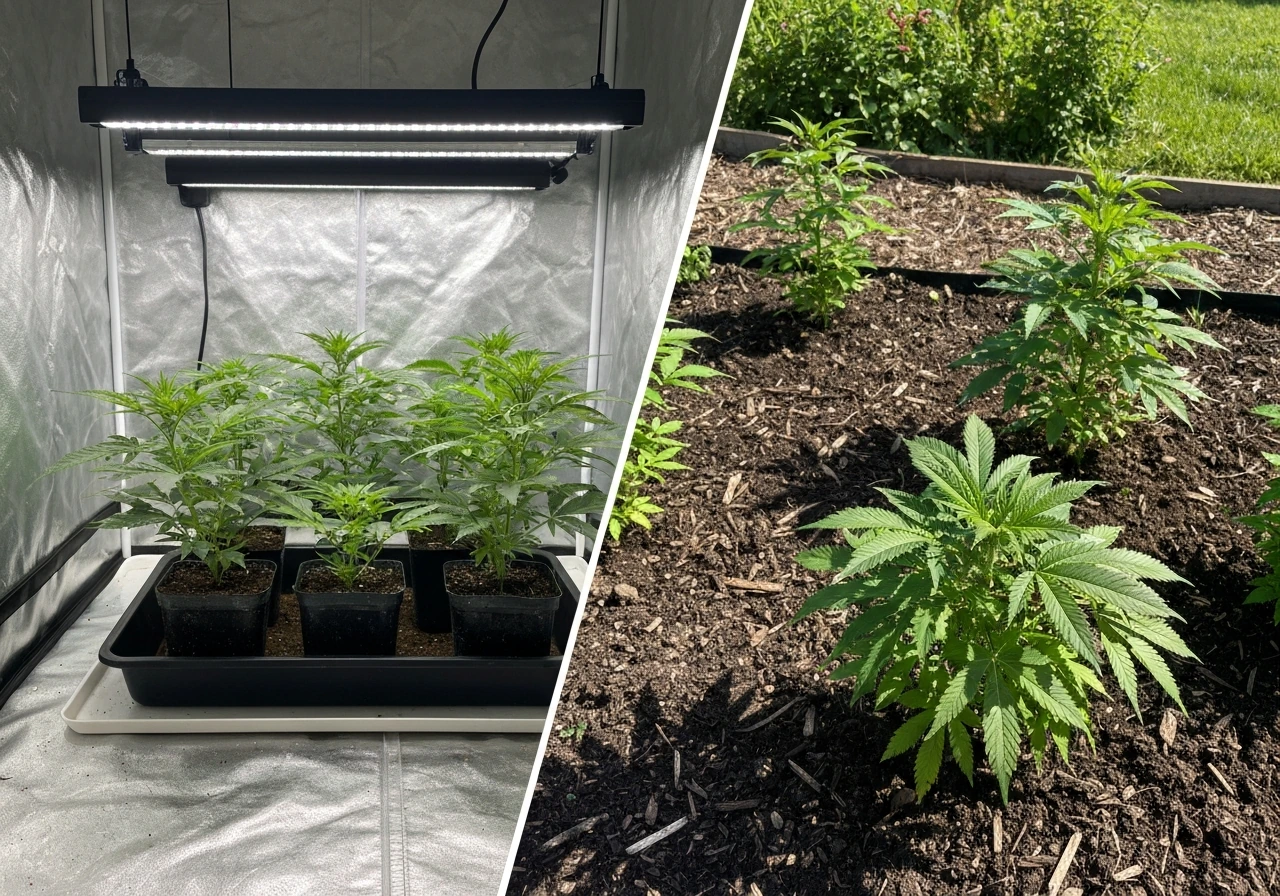
From seed to harvest, most cannabis plants take somewhere between 70 and 150 days depending on whether you're growing an autoflower or a photoperiod strain, how long you let them veg, and what conditions they're growing in. If you're starting from a rooted clone instead of seed, you can cut roughly 3–4 weeks off that number. The honest answer is there's no single number that works for every grow, but there is a reliable framework you can use to estimate your specific timeline today and then confirm it in real time using your plants themselves.
How Many Days to Grow Weed: Seed vs Clone Timelines

Marcus Holbrook
29 Jun 2026
The direct answer: days from seed or clone to harvest
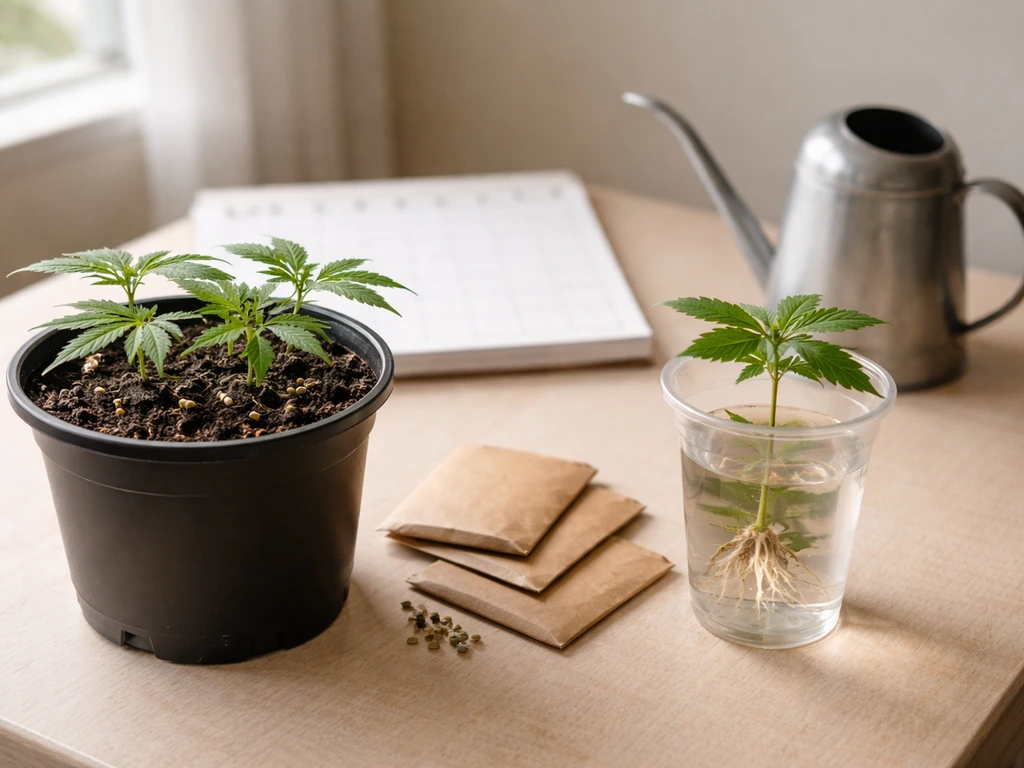
Here's what you can realistically plan around. Autoflowering strains run the fastest: most finish in 65–85 days from seed, with fast varieties hitting the window around day 60 and slower ones stretching to about 90 days. Photoperiod strains take longer because you control when they flower by changing your light schedule, which means the total days depend on how long you let them veg. A typical indoor photoperiod grow from seed runs 10–22 weeks (roughly 70–154 days), and most growers land somewhere in the middle of that range.
Starting from a clone changes things. Clones need 7–14 days to develop visible roots under good conditions, and once rooted they're already past the seedling stage. That means a photoperiod plant started from a rooted clone can reach harvest in as few as 10–14 weeks total, depending on your veg length and strain. If you're buying clones rather than growing from seed, you're getting a meaningful head start.
| Start Point | Strain Type | Typical Days to Harvest |
|---|---|---|
| Seed | Autoflower | 60–90 days |
| Seed | Photoperiod (short veg) | 70–105 days |
| Seed | Photoperiod (standard veg) | 105–154 days |
| Rooted Clone | Photoperiod (short veg) | 70–98 days |
| Rooted Clone | Photoperiod (standard veg) | 84–119 days |
Breaking down each growth stage
Cannabis doesn't just go from seed to harvest in one blur. There are distinct stages, each with its own typical length, and understanding them helps you know where you are and what's coming next.
Germination and seedling (days 1–14)
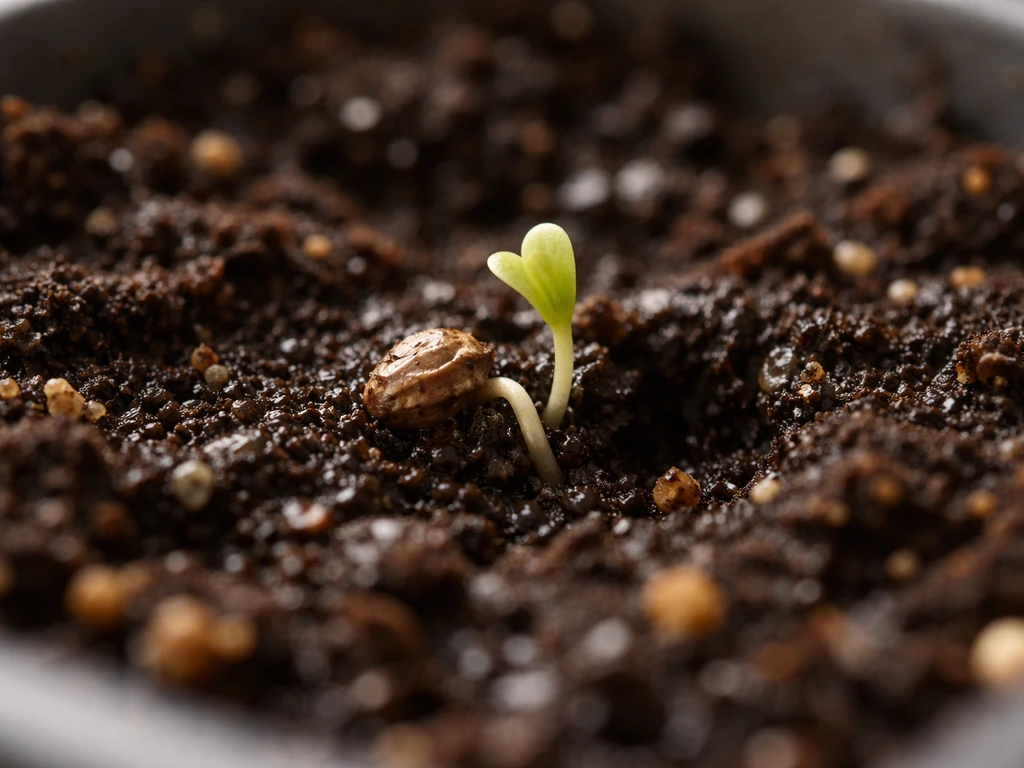
Germination usually takes 1–5 days once the seed is in a warm, moist environment. After the taproot emerges and the seedling breaks soil, you're in the seedling stage for roughly another 1–2 weeks. During this period the plant is establishing its first sets of leaves and root system. Keep temperatures around 70–77°F and humidity in the 65–70% range. VPD for seedlings should sit around 0.4–0.8 kPa, which basically means a warm, slightly humid environment where the plant isn't losing water faster than its tiny roots can supply it.
Vegetative stage (days 14 to flip)
This is where photoperiod and autoflower timelines diverge. Autoflowers don't need a light schedule change to flower: they transition based on age, usually starting the flowering process around weeks 3–4 from seed automatically. Photoperiod plants stay vegetative as long as you keep them under 18+ hours of light per day (indoors) or until days naturally shorten outdoors.
Indoor veg times vary from about 3 weeks to 15 weeks or more depending on how big you want the plant, your container size, and your training approach. Most home growers run 4–8 weeks of veg. The longer you veg, the bigger the plant and generally the bigger the yield, but it adds days to your total timeline. Target VPD in veg is roughly 0.
8–1. 2 kPa, with temperatures around 75–82°F and RH around 55–70%.
Flowering stage (from flip to harvest)
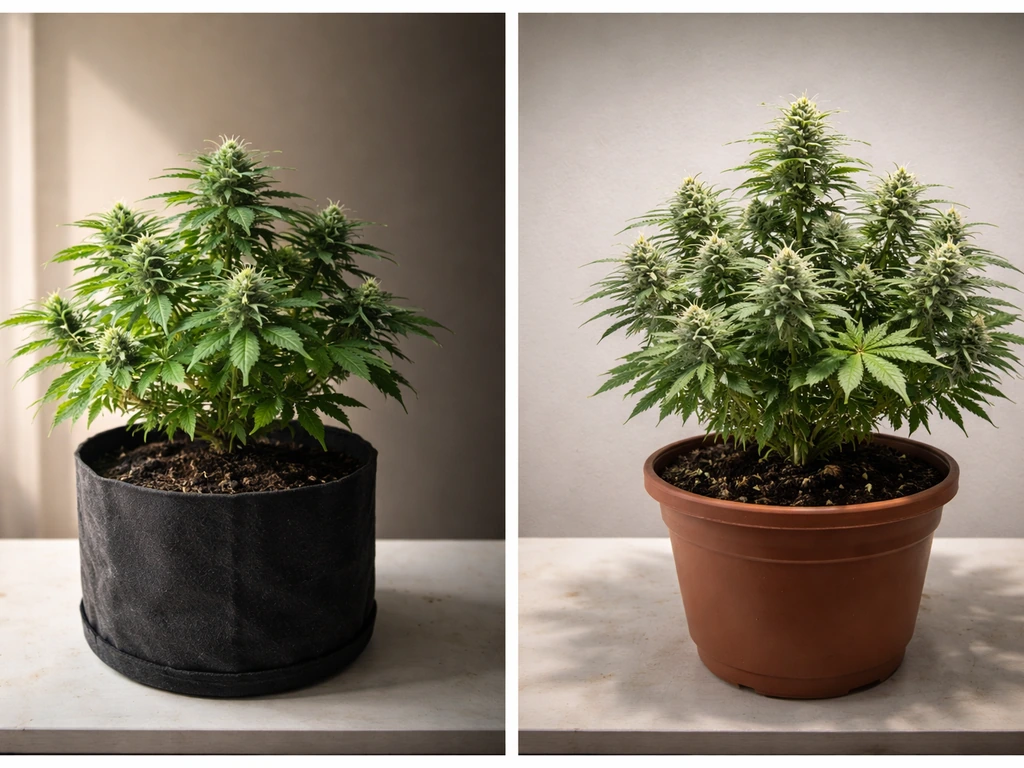
For photoperiod plants, flowering starts when you switch to a 12/12 light schedule (12 hours on, 12 hours of uninterrupted darkness). But the calendar flip date is not day one of flowering in any practical sense. There's a 10–14 day transition period where the plant stretches, shows pre-flowers, and shifts its energy toward bud production. Real bud development starts after that transition. From there, indica-leaning strains typically flower in 7–9 weeks, while sativa-leaning strains often run 10–12 weeks, and some equatorial sativas can push past 14 weeks. The general range you'll see cited is 8–11 weeks of flowering after the transition. For autoflowers, the flowering window is shorter: typically 5–7 weeks of active bud production.
What actually changes your timeline
Strain genetics and flowering length
Genetics is the single biggest variable. Seed breeders list a flowering time on their packaging, and while those numbers can be optimistic, they're your best starting point. A fast indica-dominant strain might genuinely finish in 49 days of flowering. A haze-heavy sativa might need 84 days or more. Always look up your specific strain's listed flowering time before planning your schedule.
Environment: light, temperature, and humidity
Plants under suboptimal conditions grow slower, plain and simple. Light intensity is huge: cannabis in veg and flower needs high daily light integrals (DLI) to develop quickly and produce well. If your grow light isn't delivering enough PPFD (photosynthetic photon flux density), plants move through their stages more slowly. Temperature stress, whether too hot or too cold, also slows development. Keeping your environment dialed in, especially VPD, temperature, and light intensity, is the most reliable way to hit the short end of your strain's flowering range.
Training techniques and container size
Training methods like topping, LST (low-stress training), or HST techniques slow growth temporarily because the plant diverts energy to recovery. This is normal and worth it for yield, but factor in an extra week or two if you're doing heavy topping or mainlining. Container size also matters: a plant in a 3-gallon pot will hit its limits and show signs of stress sooner than one in a 5 or 7-gallon pot, and root-bound plants in late veg can slow down noticeably.
Indoor, outdoor, and hydro: estimating days reliably
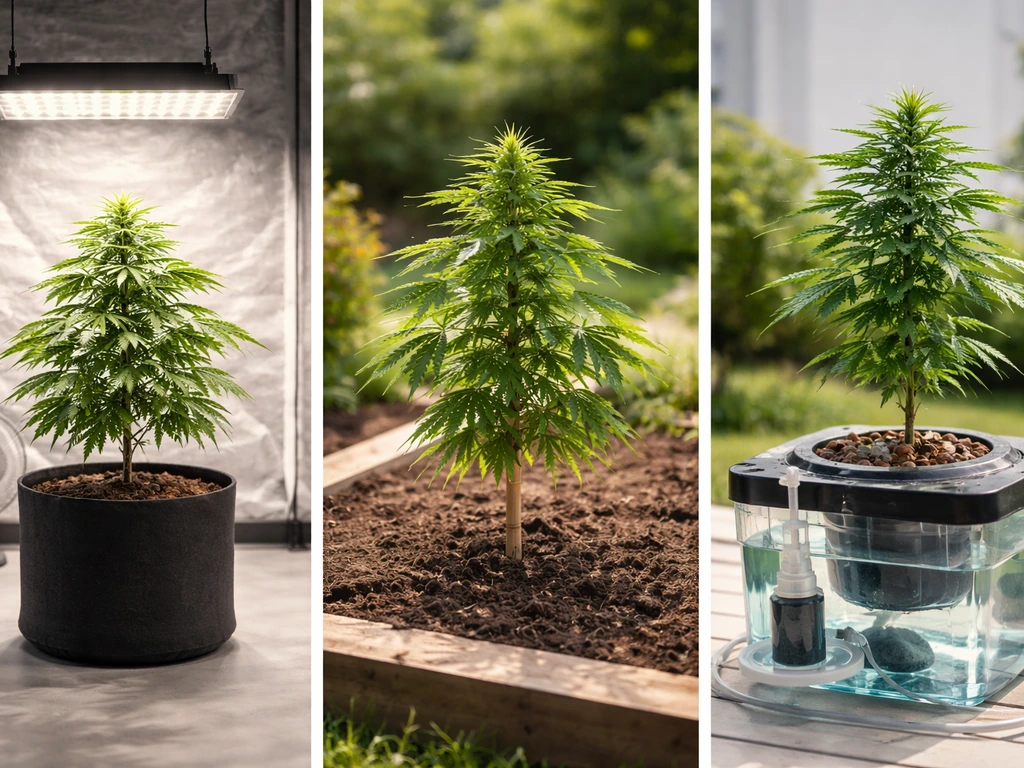
Indoor growing
Indoor growing gives you the most control and the most predictable timeline. You decide when flowering starts by flipping the light schedule. A typical photoperiod indoor grow looks like this: 2 weeks seedling, 4–8 weeks veg, 1–2 weeks transition, then 8–10 weeks flower, putting you in the range of 105–140 days from seed. Because you control every variable, hitting your target date is very achievable as long as your environment stays stable.
Outdoor growing
Outdoor photoperiod plants follow the sun. In the Northern Hemisphere, plants typically start flowering in late July or August as days naturally shorten after the summer solstice, and most finish harvest between late September and early November depending on the strain and your latitude. That means if you start seeds in late spring, you could be looking at 5–6 months from seed to harvest outdoors.
Autoflowers are more flexible outdoors because they flower on their internal clock rather than day length, making them useful for climates with short seasons or for getting multiple outdoor runs in a season. Always check local regulations before growing outdoors. California’s Department of Cannabis Control also spells out record-keeping and track-and-trace requirements for deliveries that affect operational planning for delivery reporting [local regulations before growing outdoors](https://cannabis. ca.
gov/licensees/cannaconnect-compliance-hub/new-record-keeping-track-and-trace-requirements-for-deliveries/). Some jurisdictions require plants to be screened from public view, have specific plant count limits, or have other compliance requirements that affect where and how you set up your grow.
Hydroponic growing
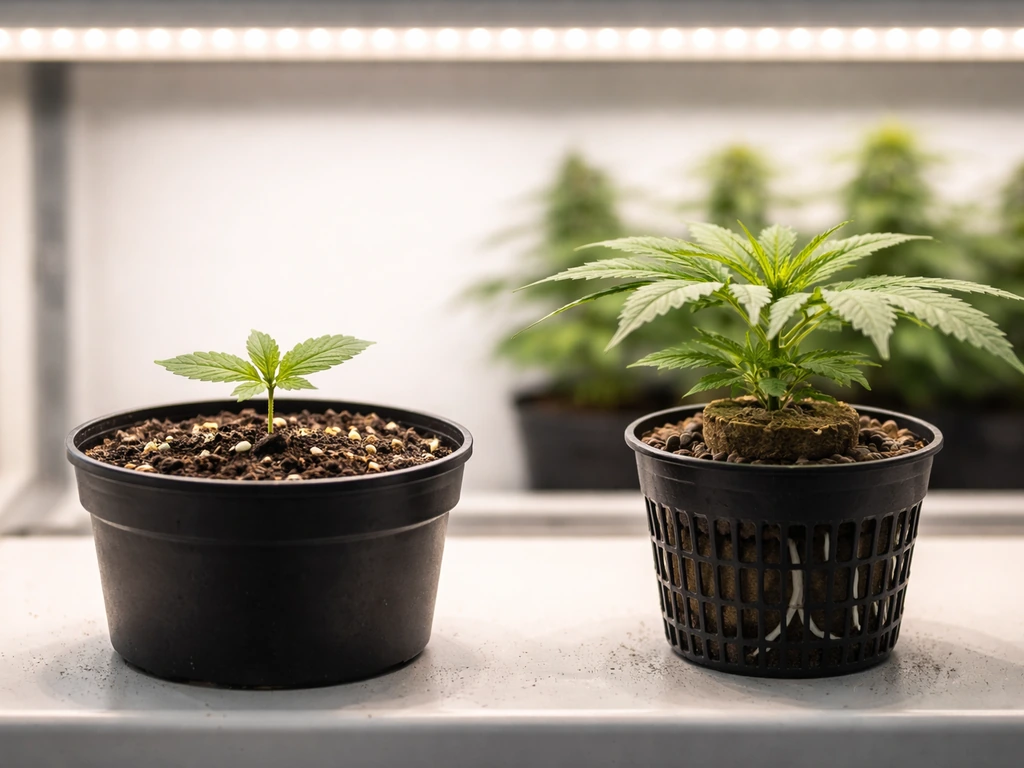
Hydro generally runs faster than soil because nutrients are delivered directly to the roots and the plants don't spend energy hunting for food. You can expect veg stages to move 20–30% faster in a well-run hydro system. A hydroponic autoflower could finish in as few as 60 days from seed. If you're aiming for a harvest around two months, hydroponic setups can be one of the few practical ways to approach that goal how to grow weed in 60 days. A photoperiod hydro plant with a 4-week veg might reach harvest in 90–100 days. The trade-off is that mistakes in hydro happen faster too, so environment and nutrient management need to be more precise.
How to tell your plant is actually ready to harvest
Calendar days are a guide, not a rule. I've had plants that the breeder said would finish in 8 weeks of flower that weren't ready until week 10, and I've had plants that were clearly mature a week before their listed finish date. The only way to know for sure is to look at the plant itself.
Trichome color: the most reliable indicator
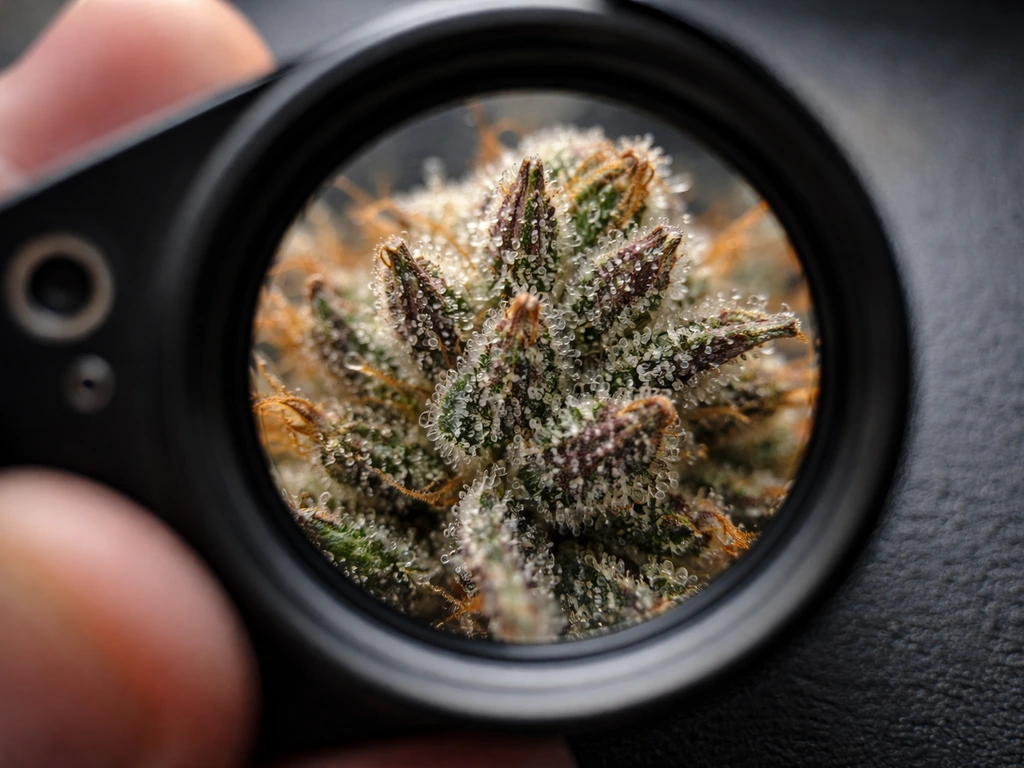
Trichomes are the tiny resin glands on your buds where cannabinoids and terpenes are concentrated. You'll need a jeweler's loupe (at least 30x) or a digital microscope to see them clearly. Trichomes move through three phases: clear (not ready), cloudy/milky (THC is at its peak, energetic effect), and amber (THC is degrading into CBN, more sedative effect). Most growers target harvest when roughly 80–90% of trichomes are cloudy/milky with just a few amber ones appearing, which is the sweet spot for potency and flavor. If you want a more sedative effect, wait until you see 15–20% amber. Check trichomes on the actual buds, not the sugar leaves, since those turn amber faster and will mislead you.
Pistil color as a supporting cue
Pistils are the hair-like structures on your buds. They start white and turn orange, red, or brown as the plant matures. A common rule of thumb is that 50–70% amber pistils suggest you're approaching the harvest window. This is a useful early warning sign that you should start checking trichomes, but pistils alone can mislead you. Environmental stress like heat or physical contact can turn pistils amber without the buds actually being ripe. Always confirm with trichomes before harvesting.
Other maturity signs to look for
- Calyxes (the small seed pods) swelling and stacking tightly on the bud
- Fan leaves yellowing and naturally dying back (the plant pulling resources inward)
- Buds becoming dense, heavy, and no longer producing new white pistils
- Strong, intense terpene smell reaching a peak
Common reasons grows run longer than expected
If you're past your expected harvest date and the plant isn't ready, one of these is usually the culprit.
Light schedule problems (photoperiod plants)
This is the most common delay I see people dealing with. Even a small light leak during the dark cycle, a timer malfunction, or an accidental few minutes of light exposure can interrupt the uninterrupted dark period that photoperiod plants need to stay in flower. The result is delayed flowering, re-vegetation (where the plant reverts to veg growth mid-flower), or hermaphroditism. If you flip to 12/12 and the plant isn't progressing into flower after 3 weeks, audit your dark period first. Check for light leaks with your phone camera in total darkness and verify your timer is actually running correctly.
Nutrient stress and deficiencies
Plants that are fighting through a nutrient deficiency, toxicity, or pH lockout are spending energy on survival rather than bud production. A calcium deficiency mid-flower, for example, can stall development noticeably. pH out of range (below 6.0 or above 7.0 in soil) locks out multiple nutrients at once. Check pH at the root zone, not just your feed solution, and address any visible deficiency signs early rather than hoping they'll resolve.
Pest and disease pressure
Spider mites, fungus gnats, root aphids, and fungal issues like powdery mildew or botrytis (bud rot) all slow development and can force an early harvest if left unchecked. Bud rot in particular can spread fast in late flower when humidity is high. Keep late-flower humidity below 50% and ideally closer to 40–45% with good airflow through the canopy.
Pollination (especially outdoors)
If a female plant gets pollinated by a male or hermaphrodite plant, she diverts energy to seed production instead of resin and bud development. Seeded buds take longer to mature, yield less usable product, and are generally less desirable. Outdoors, pollen from neighboring grows or wild hemp plants can travel significant distances. Inspect plants regularly and remove any male flowers immediately.
Slow clone rooting
If you're starting from clones and they're not rooting in 7–14 days, something is off. The most common causes are temperature (medium should be 75–78°F, air around 75–80°F), humidity too low (target 65–75% RH in the cloner), and medium that's too wet or too dry. New upright growth at the clone tip is one of the earliest signs that active rooting is happening. If you hit day 14 with no roots and no new growth, check all three environmental variables before assuming the clone is a loss.
Planning your grow schedule from day one
One of the most useful things you can do before you start a grow is build a simple timeline backward from your target harvest date. If you are aiming for a 3-month harvest, the key is compressing the timeline by dialing in environment, choosing a fast strain, and avoiding delays during veg and early flower how to grow weed in 3 months. Here's how I approach it for an indoor photoperiod grow from seed.
- Look up your strain's listed flowering time (e.g., 8 weeks). Add 2 weeks for the transition period after the 12/12 flip. That gives you 10 weeks from flip to harvest.
- Decide on your veg length. For a first grow or a smaller space, 4–5 weeks of veg after the seedling stage is reasonable. Longer veg means bigger plants and more yield but more days.
- Add 2 weeks for the seedling stage.
- Add those up: 2 weeks seedling + 5 weeks veg + 2 weeks transition + 8 weeks flower = 17 weeks (119 days) from seed to harvest.
- Set a flip date on your calendar. Count backward from your desired harvest window, and that tells you when to start germination.
- Once you're in flower, start checking trichomes weekly from week 6 onward. Don't assume the plant is done just because the calendar says so.
For autoflowers, the planning is simpler: germinate your seeds, keep them on an 18/6 or 20/4 light schedule throughout, and count forward 65–85 days. If you are figuring out how to grow weed in a greenhouse, you can still use the same day-count approach, but plan for greenhouse-specific temperature, humidity, and ventilation control 65–85 days. Check trichomes from day 55 onward.
If you're growing outdoors, your schedule is largely set by your local photoperiod. If you plan your budget around the full timeline, you can estimate how much to grow cannabis more accurately, including indoor power, grow supplies, and ongoing inputs. In most of the continental US, seeds started indoors in late March or April and transplanted outside after last frost will be ready to harvest in October.
Autoflowers planted in May can finish by July or August, leaving time for a second outdoor run before fall. Always know the regulations in your jurisdiction before growing outdoors. Plant count limits, visibility requirements, and [security rules vary significantly by state, province, or country, and they affect practical decisions like when and where you plant. ](https://www.
canada. ca/en/health-canada/services/drugs-medication/cannabis/laws-regulations/regulations-support-cannabis-act/guide-physical-security-measures/standard-cultivation-standard-processing-sale-medical-purposes-possession-cannabis. html)
The core habit to build is this: use the calendar to plan, but use the plant to decide. Breeders' flowering times are starting estimates. Trichome color is the real answer. Once you combine a solid day-count estimate with weekly trichome checks in late flower, you'll stop guessing and start harvesting at exactly the right moment every time.
FAQ
If my plant is already 150 days from seed, how can I tell whether it’s truly “ready” or just stalling?
Start by checking trichomes on the actual buds, not sugar leaves. If most trichomes are still clear and the buds have not fattened, you’re likely dealing with a slowdown (often light intensity, temperature/VPD, nutrient/pH issues, or stress). If trichomes are mostly cloudy/milky with some amber and the pistils have largely matured, the plant may simply be running long on that specific cycle, even if it already passed the typical range.
Does the “days to grow weed” count start at germination, when I see sprouts, or when I switch to 12/12?
Most growers count from the date the seed goes in the medium (germination). Germination is usually 1 to 5 days, then seedling is about 1 to 2 weeks. For photoperiod plants, flowering “age” is typically measured from the transition period after the 12/12 flip, not the calendar day you started 12/12. If you’re comparing your timeline to breeder info, align your count method first.
Can I speed up how many days it takes to grow weed by forcing it, like pushing more light or longer light hours?
You can improve speed within limits, but you cannot reliably “force” a photoperiod plant to flower faster without changing the light schedule to 12/12 and keeping it dark enough. In veg, raising light intensity can help growth, but overdriving heat or VPD can backfire and slow the plant. The safest approach is to stay inside the article’s temperature and VPD ranges and confirm with real-time indicators (bud set timing and trichome development).
What if I run an indoor photoperiod and the plant is already on week 2 or 3 of 12/12, but I see no pre-flowers yet?
First audit the dark period. Even minor light leaks or a timer that doesn’t fully maintain uninterrupted darkness can prevent proper flowering. If the dark cycle is correct, verify your environment is not stressing the plant (temperature stability and VPD in the target veg range during the early transition). Also, some strains show slower initial signaling, so confirm whether the plant is actually transitioning before assuming a problem.
How accurate are breeder flowering times, and what should I do if my plant finishes much later than the label?
Breeder numbers are starting estimates and can be optimistic. When a plant runs late, the decision point is not the week number, it’s maturity signals. Use trichomes to decide harvest timing, and also look for bud fattening progress. If development is stalled well past expectation, investigate the most common delay drivers first: light schedule/dark integrity, nutrient/pH lockout, temperature/VPD, and pests or diseases.
If I harvest based on pistils turning color, will I get the same results as harvesting by trichomes?
Usually no. Pistils can change color early due to stress or contact, and they can mislead harvest timing. Pistils are best as an early warning that you should begin trichome checks. For best potency and flavor control, harvest when trichomes match your target (mostly cloudy/milky with limited amber, or more amber if you want a more sedative effect).
Do clones really save 3 to 4 weeks, or does that depend on how well they root?
Clones typically give a head start because they bypass the seedling establishment stage, and they often need 7 to 14 days to develop visible roots. But the “saved time” only happens if rooting and early growth are smooth. If clones are stressed or not rooting by around day 14, the timeline can stretch and the advantage over seed can shrink.
What should I check first if my rooted clone is showing weak growth after it has rooted?
Confirm the roots are healthy and that the environment is in range, especially temperature and VPD for the current stage. Next, check for container and watering effects, since root-limited growth and inconsistent moisture can slow recovery. Finally, review nutrients and pH at the root zone, since lockouts can look like slow growth even when the plant appears “alive”.
Is there a meaningful difference in total grow days between soil and hydro beyond the veg speed?
Hydro often shortens growth because nutrients are immediately available and veg can move faster (often 20 to 30% faster in well-run systems). However, hydro mistakes (nutrient strength, pH swings, and root-zone conditions) can cause quicker setbacks than soil, which can erase time savings. If you’re chasing a tight target like a ~60-day finish, you must be consistent and monitor frequently.
How do I plan an outdoor harvest window if my local weather shifts early or late?
Treat the day-count as a flexible estimate and anchor your plan to when flowering naturally starts outdoors, which depends on day length in your latitude and your planting time. Build a contingency by planning for earlier trichome checks in case of early cold snaps or humidity spikes. If late-season conditions worsen (cool, humid weather), prioritize disease prevention and harvest readiness rather than sticking rigidly to a calendar date.
When should I start checking trichomes if I’m trying to hit a specific harvest date?
For planning accuracy, start trichome checks a bit before the “expected” window, then tighten the schedule as you approach it. The article notes checking from about day 55 onward for autoflowers as a practical start point. For photoperiods, begin checking during late flower once you’re within roughly the last third of the expected flowering duration, then harvest when the majority of trichomes match your desired amber percentage.
Next Article
How Many Weeks to Grow Weed Indoors and Outdoors
Weeks to grow cannabis indoors or outdoors with stage timelines, harvest timing signals, and delay troubleshooting.