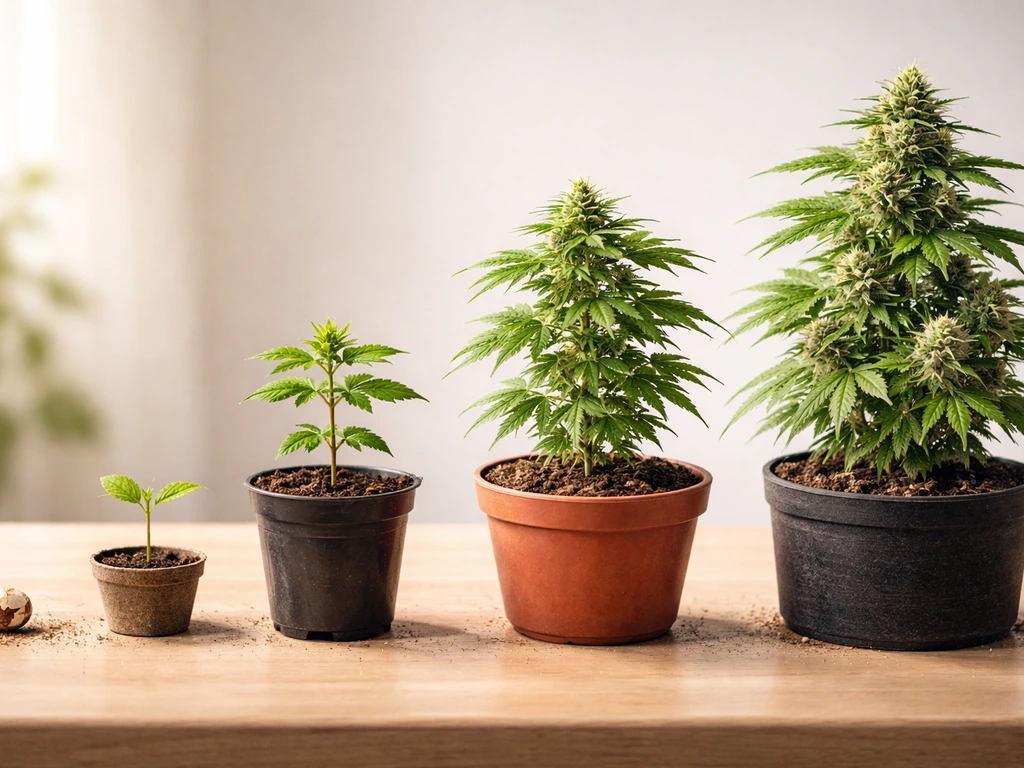
From seed to harvest indoors, most cannabis plants take somewhere between 10 and 20 weeks under typical home conditions. That wide range exists because you control one of the biggest variables: how long you let the plant grow before you flip it into flower. Autoflowering strains tighten that window considerably, finishing in about 8 to 12 weeks from seed regardless of what you do with your lights. Photoperiod strains take longer but give you more flexibility. If you want to apply this timing to how to grow weed in a greenhouse, your light setup and climate control will be the biggest factors flexibility. If you want a faster answer to plan around, here it is: budget 3 to 5 months for a solid indoor grow, then use the breakdown below to dial in your specific harvest date.
How Long Does a Weed Plant Take to Grow Indoors? Seed to Harvest

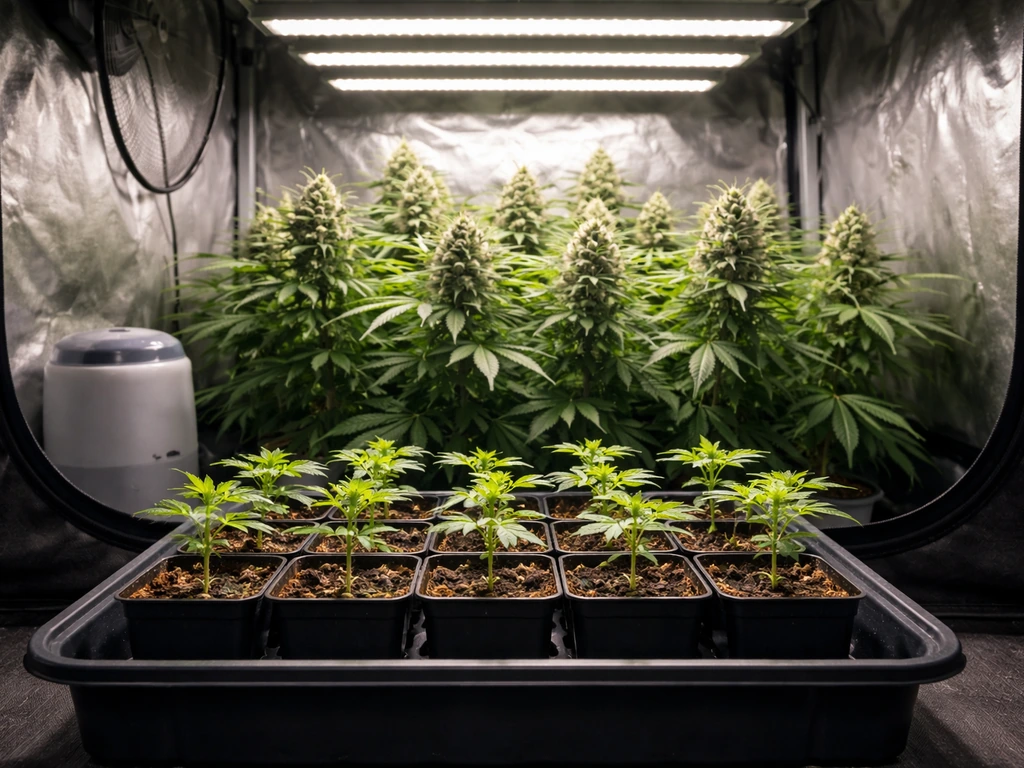
The indoor timeline from seed (or clone) to harvest
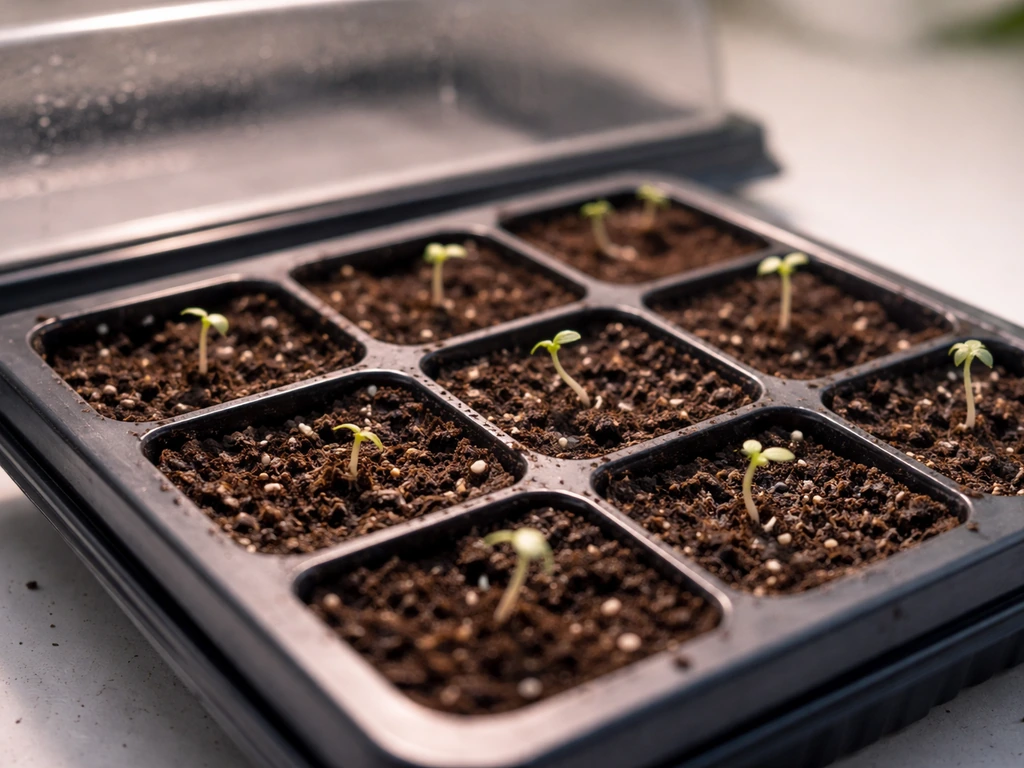
Every indoor cannabis grow moves through the same basic phases: germination and seedling, vegetative growth, flowering, and then harvest followed by drying and curing. The calendar time for each phase looks roughly like this for a photoperiod plant started from seed:
| Stage | Typical Duration | Notes |
|---|---|---|
| Germination / Early Seedling | 3–10 days | Seed cracking to first true leaves; keep warm and humid |
| Vegetative | 4–8 weeks (grower-controlled) | You decide when to flip; 4–6 weeks is most common indoors |
| Flowering | 8–10 weeks (strain-dependent) | Triggered by switching to 12/12 light schedule |
| Drying / Curing | 1–3+ weeks (post-harvest) | Not part of the grow itself but plan for this time |
| Total seed to harvest | ~13–20 weeks (~3–5 months) | Most home grows land in this range |
Starting from a rooted clone instead of seed shaves off roughly 2 to 3 weeks right away, since you skip germination and the slow early seedling phase entirely. Clones already have a developed root system and tend to grow faster in those first few weeks compared to seedlings. That alone can push your total timeline closer to 10 to 16 weeks depending on how long you veg.
Vegetative vs. flowering: what the day counts actually look like
The vegetative stage is the most flexible part of the grow. Most indoor growers run 18 hours of light and 6 hours of dark (18/6) during veg, though some run 24/0 for slightly faster growth. As long as you keep that long-light schedule, the plant stays in veg. The practical sweet spot for most home growers is 4 to 6 weeks of vegetative growth. Going shorter (3 weeks minimum before a photoperiod plant is mature enough to flower) produces smaller plants and smaller yields. Going longer builds a bigger canopy and more bud sites, but pushes your harvest date out accordingly.
Flowering begins the moment you switch to 12 hours of light and 12 hours of dark for photoperiod strains. Most strains finish flowering in 8 to 10 weeks, though some sativa-dominant varieties run 10 to 12 weeks or more. Indica-leaning strains tend to finish faster. During the first 1 to 2 weeks of flower, you'll see a stretch phase where plants can nearly double in height, so account for that in your space planning. After the stretch, growth slows and the plant puts its energy into building buds.
Photoperiod vs. autoflower: why timing is so different
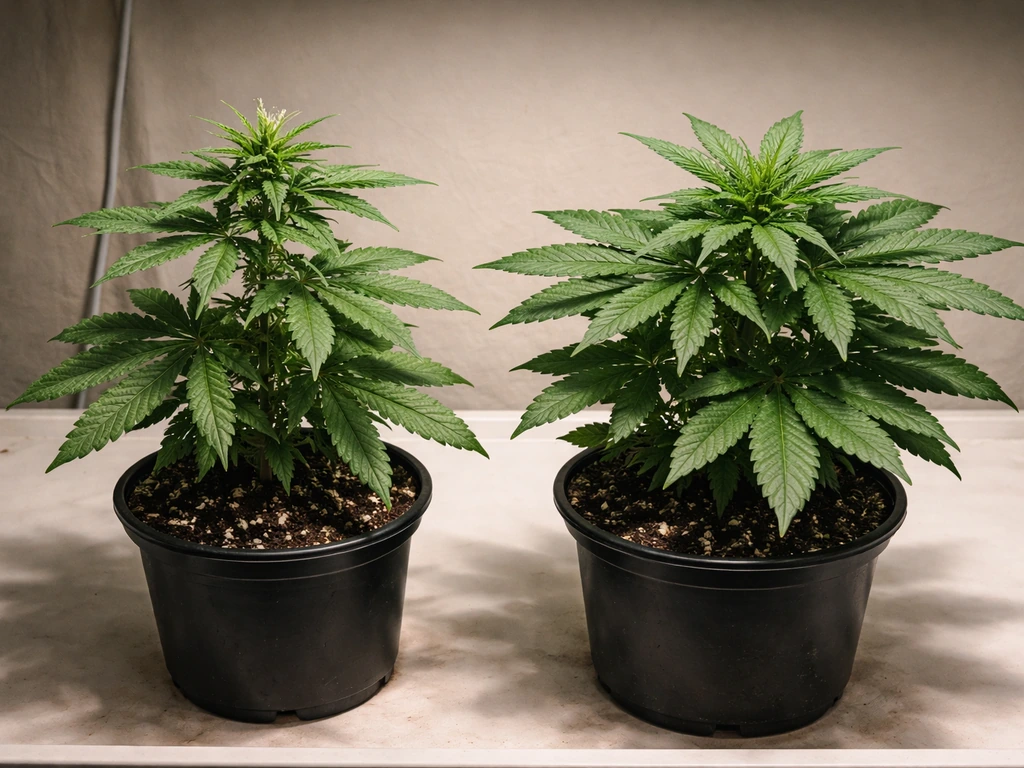
This is probably the single biggest decision that affects your total grow time. blank" rel="noopener noreferrer">Photoperiod strains need a light schedule change to trigger flowering. You control that switch, which means you control the total grow length. blank" rel="noopener noreferrer">Autoflowering strains flower automatically based on age regardless of light schedule, completing their full lifecycle in roughly 60 to 90 days (8 to 12 weeks) from seed. If you want to learn how to grow weed in 60 days, the key is choosing a true fast-finishing auto and dialing in your environment from day one. If you want the fastest possible indoor harvest, autos are hard to beat for simplicity and speed.
| Type | Seed to Harvest | Veg Control? | Best For |
|---|---|---|---|
| Autoflower | 60–90 days (~8–12 weeks) | No (time-based) | Speed, simplicity, beginners, small spaces |
| Photoperiod (Indica) | 13–18 weeks from seed | Yes (flip when ready) | Yield control, experienced growers |
| Photoperiod (Sativa) | 16–24+ weeks from seed | Yes (flip when ready) | Specific effects, longer commitment |
| Photoperiod (Hybrid) | 13–20 weeks from seed | Yes (flip when ready) | Most common home grows |
One thing worth noting: autos don't respond to training the same way photoperiods do, and any stress can eat into that already-short timeline. Photoperiods give you time to recover from mistakes during veg before you commit to flower. If you're just getting started, both are valid paths. If speed matters most and you have limited space, autos make a lot of sense. If maximizing yield and control matter more, a photoperiod hybrid is the better pick.
How to calculate your own harvest date
You don't need to guess. Once you know a few inputs, you can estimate your harvest window pretty accurately. Here's what you need:
- Your start date (germination or clone transplant date)
- Your planned or actual veg length in weeks
- Your strain's stated flowering time in weeks (check the seed bank or breeder info)
- Whether you're growing autoflower or photoperiod
For a photoperiod plant, the formula is straightforward: Start Date + Seedling Days (about 1 week) + Veg Weeks + Flowering Weeks = Estimated Harvest Date. Here's a concrete example. Say you popped seeds on May 4, 2026. You give it 1 week of seedling time, then 5 weeks of vegetative growth, and your strain has a 9-week flowering time. That puts your flip-to-flower date around June 15, and your estimated harvest around mid-August. Add 1 to 2 weeks of buffer for harvest prep, drying, and any late finishing, and you're looking at a final product sometime in late August to early September.
For autoflowers, simply count forward from germination date using the breeder's seed-to-harvest estimate (usually 60 to 90 days). Keep in mind that breeder timelines are optimistic. Build in at least a week of buffer time. Real-world grows, especially first ones, almost always run a few days longer than the package says.
Want to hit a specific harvest date? Work backwards. Subtract the strain's flowering time first, then subtract your desired veg length to find your latest acceptable germination or clone-start date. That's how you target a particular harvest window, whether you're working around a schedule, a season, or just want to plan multiple grows per year.
What actually affects how fast your plant grows indoors
The timeline above assumes reasonably dialed-in conditions. In practice, the following variables can speed things up or drag them out significantly.
Light schedule and intensity
Running 18/6 is the standard for veg. Some growers push to 20/4 or even 24/0 to get slightly faster vegetative growth. During flower, 12/12 is non-negotiable for photoperiods. Light intensity matters too: a weak light produces slow, stretchy growth. For LEDs, keep distance appropriate for your wattage class. Under 100W, you're typically looking at 10 to 14 inches from the canopy. For 300 to 600W, 18 to 36 inches is a reasonable starting range. Too close causes light stress and bleaching; too far causes stretching and slow growth, both of which push your harvest date back.
Temperature and humidity
Cannabis grows fastest at around 70 to 80°F (21 to 27°C) during the lights-on period. Temperatures outside that range slow metabolic activity and stress the plant. Humidity should trend downward through the grow: aim for around 65 to 70% RH during early veg, then drop gradually to around 40 to 50% by mid-flower, and push it down to 40% or lower in late flower to reduce mold risk. Plants in the wrong humidity range don't grow at their full rate and are more vulnerable to problems that cost you time.
Training techniques
Topping, LST (low stress training), and other canopy management techniques don't necessarily extend your grow by much, but they do require recovery time. Topping can add about 5 to 7 days of recovery during veg before the plant picks back up its pace. The payoff in bud sites and yield is usually worth it. For autoflowers, aggressive training isn't recommended because there's no veg buffer to recover from stress. If you're growing autos, stick to gentle LST only.
Nutrients and pH
Feeding consistency matters more than feeding volume. Plants in the wrong pH range can't absorb nutrients even when they're present, which shows up as deficiency symptoms and dramatically slows growth. Keep your root zone pH in the right range for your medium (roughly 6.0 to 7.0 for soil, 5.5 to 6.5 for coco or hydro) and check it every time you water. A plant locked out of nutrients for even a week adds real time to your grow or reduces your final yield.
Pot size
A plant in a pot that's too small for its root system will stall out. Roots hitting the container walls trigger stress responses that slow growth. For a standard photoperiod plant vegged for 4 to 6 weeks, a 3 to 5 gallon container is a reasonable minimum for flower. Transplanting on time keeps momentum going and prevents root-bound slowdowns that eat into your schedule.
How to tell your plant is actually ready to harvest
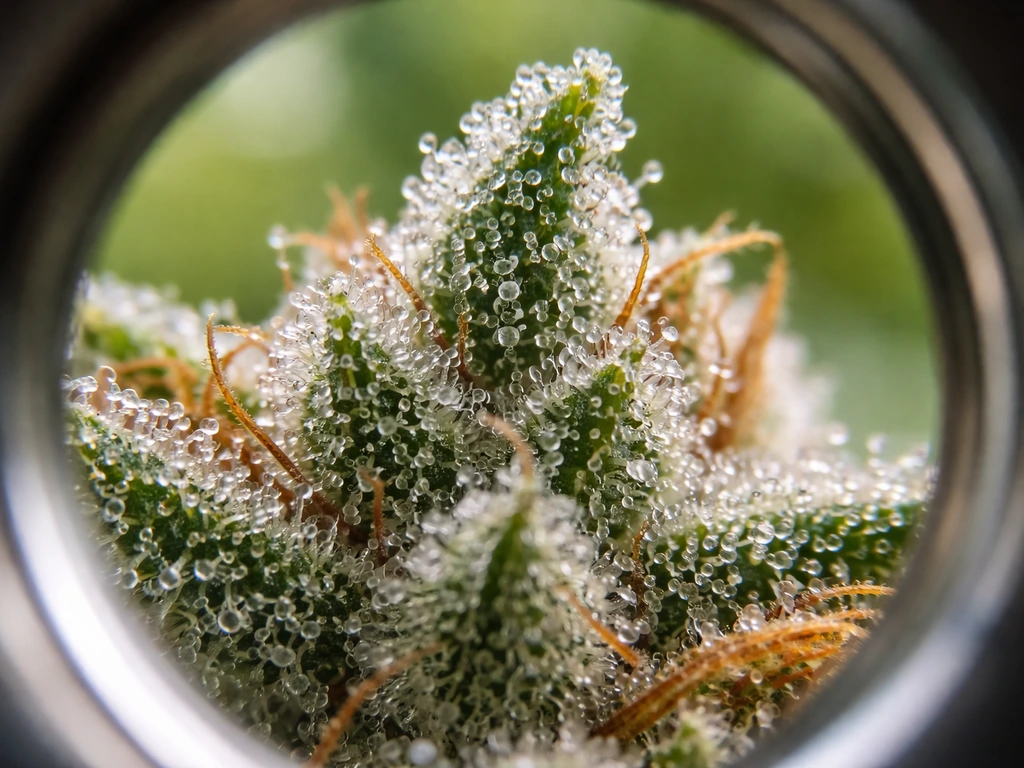
The breeder's stated flowering time is a starting estimate, not a harvest order. The only reliable way to know when your plant is truly ready is to look at the trichomes, those tiny resin glands covering the buds and nearby leaves. You'll need a jeweler's loupe (at least 30x) or a pocket microscope to see them clearly.
Trichome color tells you where you are in ripeness. Clear trichomes mean the plant isn't ready yet. Cloudy or milky-white trichomes indicate peak THC content. Amber trichomes signal that THC is converting to CBN, producing a more sedative, relaxed effect. A commonly used harvest target is roughly 70% milky trichomes, 15% still clear, and 15% amber. If you prefer more of a sedative effect, let more trichomes turn amber before cutting. If you want a more energetic result, harvest a little earlier when most are still cloudy.
A few other physical signs to check alongside trichomes: most of the white pistil hairs on the buds should have darkened and curled inward (70 to 90% is a common benchmark), the calyxes should be swollen, and the upper fan leaves may start yellowing naturally as the plant draws nutrients back toward the buds in the final weeks. These visual cues confirm what the trichomes are telling you. Never rely on just one indicator, and don't rely on the calendar alone.
When growth is slow: troubleshooting checklist
If your plant looks like it's barely growing or has stalled out, work through this list systematically before assuming the worst. Most slowdowns come from one of these sources, and most are fixable quickly.
- Check your pH first. This is the number one culprit behind slow growth and deficiency symptoms. Test your water and runoff. Even a half-point outside the correct range can lock out key nutrients.
- Look at your lights. Are they too far away (causing stretching and slow growth) or too close (causing light stress or bleaching)? Adjust distance based on your wattage and watch for improvement within a few days.
- Check for overwatering. Drooping, yellowing leaves combined with slow growth in seedlings or young plants is almost always overwatering. Let the medium dry out more between waterings.
- Evaluate your temperature and humidity. Temps below 65°F or above 85°F significantly slow plant metabolism. High humidity in flower invites mold and slows bud development.
- Inspect for root binding. If you haven't transplanted in a while and growth has stalled, the plant may be rootbound. Transplant to a larger container and give it a few days to rebound.
- Look for pests or disease. Spider mites, fungus gnats, and early-stage powdery mildew all slow growth before they're obvious. Check the undersides of leaves and the top inch of soil.
- Review your feeding schedule. Plants showing broad yellowing or stunted new growth might be underfed, overfed, or dealing with a specific deficiency. Cross-reference symptoms with a deficiency chart and correct gradually.
Most slow-growth situations are recoverable within 5 to 10 days once you identify and fix the root cause. The key is not to stack multiple corrections at once. Change one variable, wait a few days, then reassess. Doing everything at once makes it impossible to know what actually worked, and can introduce new stress on top of existing problems.
If you're trying to plan tighter, faster grows, it's also worth exploring what a focused 60-day or 3-month indoor approach looks like in practice, since those timelines require specific strain choices and dialed-in environments from day one. The fundamentals here still apply, but the margin for error gets smaller the shorter the window you're working with. For now, use the timeline framework above to build your grow calendar, trust your trichomes over the seed packet, and adjust your veg length to fit the harvest window you're working toward. If you're wondering how much to grow cannabis, your harvest window and available space will largely determine the right plant count and yield target. In a greenhouse, the timing depends on how stable your temperature and light are, so it helps to know how long to grow weed in a greenhouse for your setup.
FAQ
Can I use the same indoor timeline if I start from a clone instead of seed?
Usually yes. If you start a photoperiod plant from a clone, you can treat it as already past germination and seedling, and the schedule becomes mainly Veg Weeks plus Flowering Weeks (plus a small recovery buffer if you just performed training). If you start from seed, plan for about a week of seedling time before true veg starts impacting height and canopy setup.
What should I do if my plant is behind schedule but trichomes look close to ready?
The total grow can look “on time” but still miss your target if harvest indicators are late. Two plants with the same calendar can differ by a week or more depending on phenotype and how well you maintain light, pH, and humidity. If you need a hard date, build in buffer, and do not harvest solely off trichome color if pistils and calyx swelling are still changing.
How does starting flower too early affect how long the whole grow takes?
For most indoor photoperiod grows, flipping too early usually reduces yield because bud sites do not have enough time to develop during veg. A common decision rule is to flip when the plant has reached your intended canopy size for the flowering footprint, not just when it is “old enough.” If you flip based only on days, you may get smaller buds even if flowering duration stays the same.
Can I slow down a photoperiod grow and still keep the flowering timeline predictable?
Yes, but only for photoperiod strains, and it changes your calendar. If you extend veg beyond your plan, flowering starts later. However, once you flip to 12/12, flowering weeks generally remain similar, so the safest approach is to lock your flip date and adjust only veg timing when you need schedule flexibility.
Do autoflowers always finish within 8 to 12 weeks indoors?
Autoflowers can be slowed by stress (overwatering, nutrient lockout, big root disturbance, or harsh training), so the breeder “60 to 90 days” becomes more like 70 to 100+ days in rough real-world runs. The article’s best practice is to avoid aggressive training and treat day one conditions as critical because there is little recovery time.
How accurate are timelines if my germination takes longer than expected?
“Seedling days” estimates often assume consistent germination and early growth, but germination delays can shift everything. If seeds take longer than expected to sprout, your real clock starts later, and the formula should use the actual germination date or the day you truly have a rooted seedling, whichever you track. Keep a dated log for your flip and watering.
If I train during veg, how do I adjust the “weeks” in my harvest-date formula?
Start-by-start timing affects planning. If you top or heavily LST a photoperiod plant, plan for a recovery window so you do not accidentally flip while growth is still suppressed. After topping, wait until new growth is clearly established, then set your veg length based on the updated rate, not the original calendar.
How strictly do I need to maintain the light schedule once I start flowering?
Light timing is most important for photoperiod flowering. You should avoid changing schedules during flower because interruptions can delay or destabilize the flowering trigger, effectively extending your timeline. In veg, small variations in the light schedule matter less, but intensity and heat still influence growth rate.
Can a pH mistake make the grow last weeks longer even if I fix it?
Yes. If the root zone pH drifts out of range, nutrient uptake drops, and growth can stall for more than a few days even after you correct it, because the plant has to recover its internal nutrient status. The practical fix is to check pH every time you water and correct immediately, then wait several days before adding additional adjustments.
Will pot size issues show up as slower growth, or can they also change how long flowering takes?
Often. If you grow in too-small containers, you can hit root restriction early, especially during the stretch and early flowering when demand rises. The timeline can shift because stalled growth reduces canopy development, and it can also affect how evenly buds mature. If you notice the plant struggling, the article’s best approach is to correct the root-space issue before planning “faster” cycles.
If I target a specific day, how should I account for drying and curing timing?
A good rule is to keep harvest planning tied to maturity cues and then include time for drying and curing. Drying and curing do not change when buds are “ready to cut,” but they do change your end-to-use date. For strict scheduling, plan the cut date using trichomes and pistil/calyx cues, then reserve extra days for late finishing and prep, plus your preferred dry duration.
What’s the best way to recover from a stall without ruining a close harvest window?
You can, but keep it realistic. Each training event and each “fix” adds recovery time, and stacking changes makes results unpredictable. For tight schedules, use one change at a time, measure plant response over 5 to 10 days, then decide whether to adjust veg length, because that is your biggest lever without destabilizing flowering.
How Long to Grow Weed: Seed to Harvest Timeline
Get a seed-to-harvest timeline for weed by method, plus stage-by-stage weeks and what affects how long it takes.