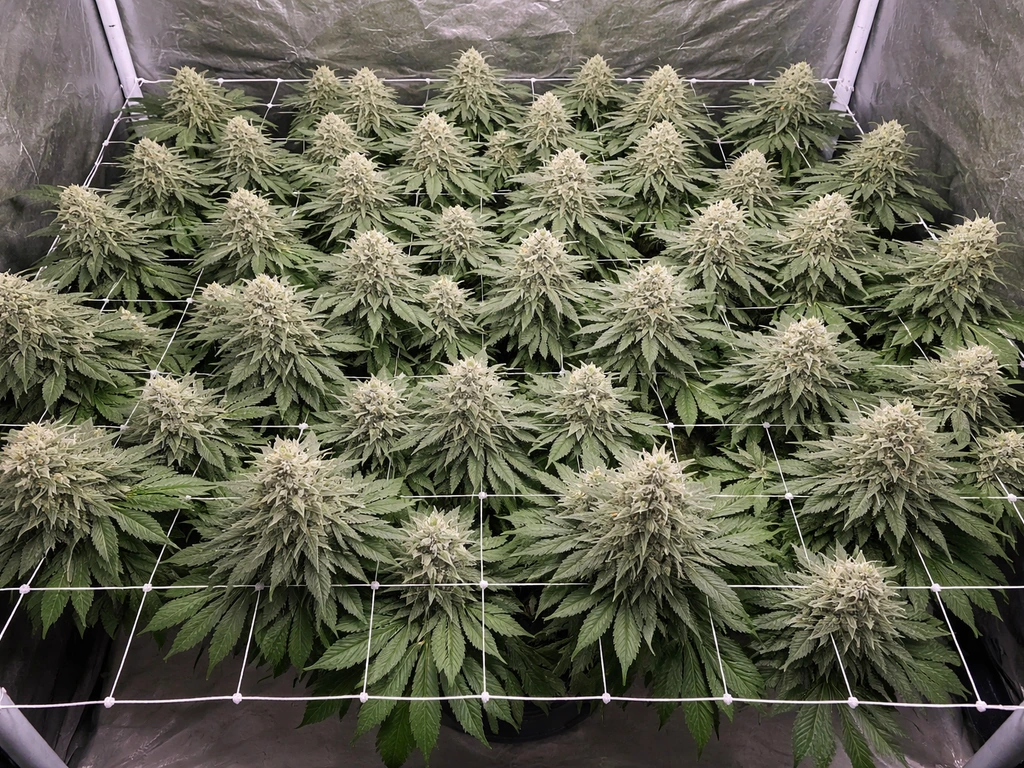
From seed to harvest, most cannabis grows take between 3 and 6 months, depending on the strain type, your setup, and how long you let plants stay in veg. Autoflowering strains are the fastest, finishing in roughly 8 to 10 weeks (around 75 days on average) from germination.
How Long to Grow Weed: Seed to Harvest Timeline

Marcus Holbrook
23 Apr 2026
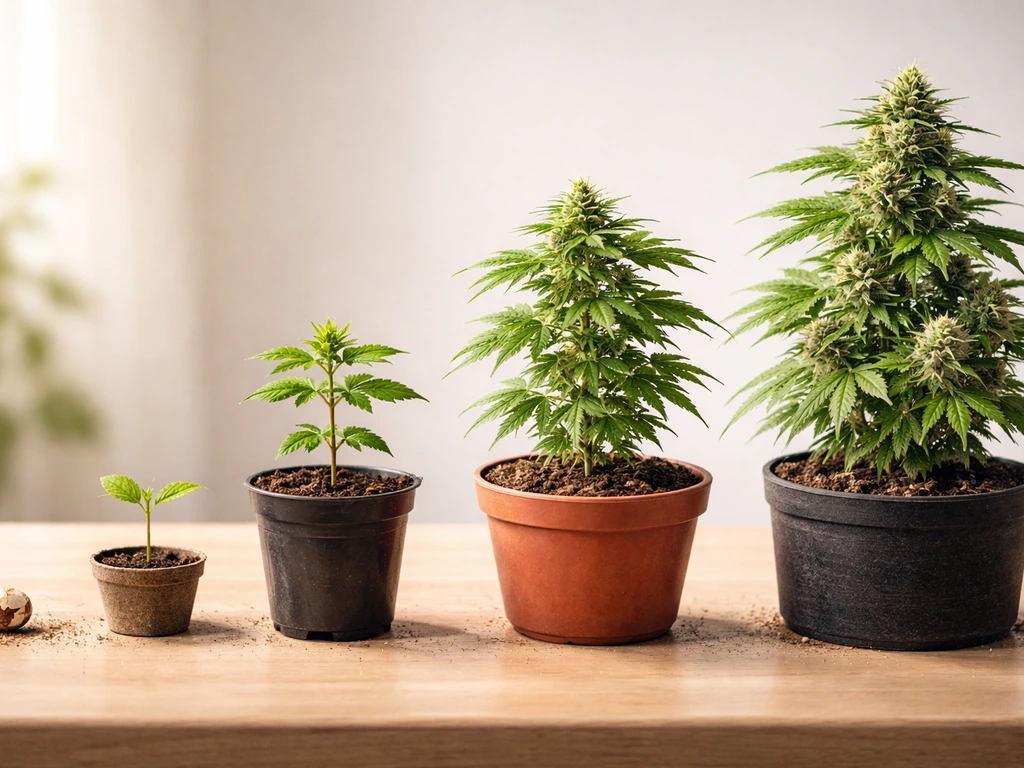
Photoperiod strains take longer: add 4 to 8 weeks of vegetative growth on top of a flowering period that runs 7 to 14 weeks depending on whether you're growing indica-leaning or sativa-leaning genetics. If you also need a cost estimate alongside the timeline, that guide on how much to grow cannabis can help you plan your budget.
Indoor growers have the most control and can tighten that range; outdoor growers work around the sun and seasons; hydroponic setups often shave a week or two off every stage. Plan for 10 to 20 weeks if this is your first photoperiod grow, or as few as 8 weeks if you choose a fast auto.
Your full seed-to-harvest timeline at a glance
Before breaking things down stage by stage, here's the big picture. These are realistic ranges, not best-case scenarios. First-time growers almost always land toward the longer end, which is completely normal.
| Grow type | Fastest realistic finish | Typical finish | Longer grows |
|---|---|---|---|
| Autoflower (any method) | 8 weeks | 10–11 weeks | 13 weeks |
| Photoperiod indoor | 12 weeks | 14–18 weeks | 20+ weeks |
| Photoperiod outdoor | 5 months | 6 months | 7 months |
| Photoperiod hydroponic | 11 weeks | 13–16 weeks | 18 weeks |
If you're planning your first grow and you want something in your hands in 60 to 90 days, an autoflower is your best bet. If you're fine waiting for a bigger yield and more control over plant size, a photoperiod strain gives you room to dial in your technique.
Stage-by-stage breakdown: what happens and how long each phase lasts
Germination (days 1 to 7)
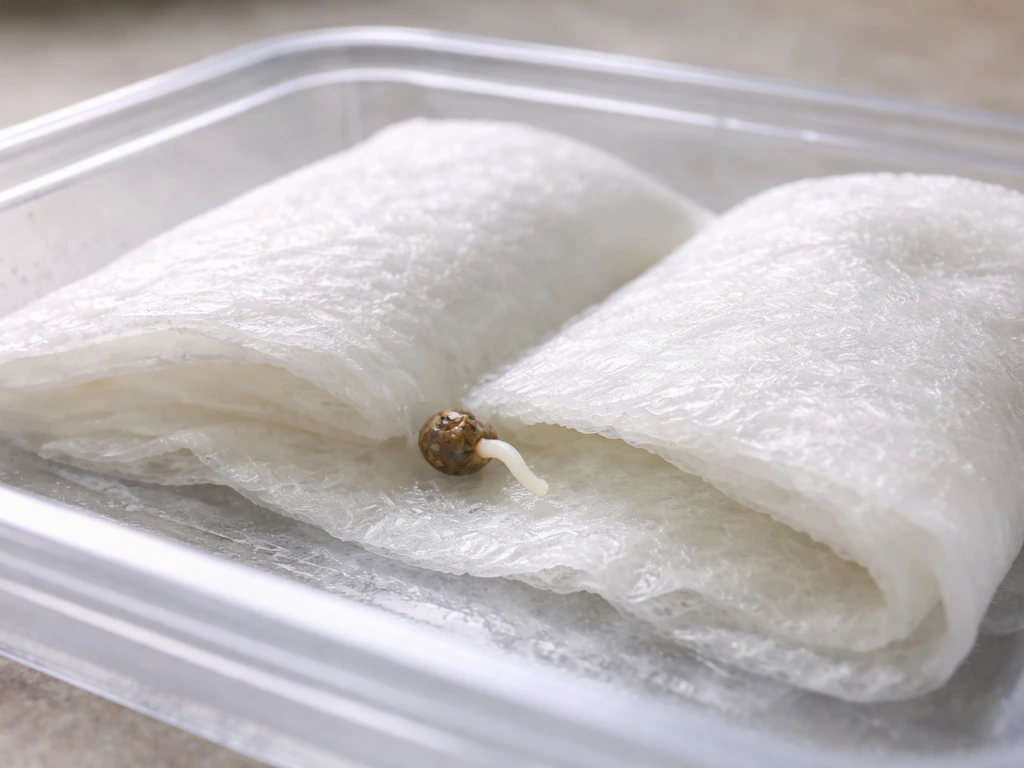
Germination is quick. Most seeds crack and show a tap root within 1 to 7 days. I use the paper towel method: dampen two paper towels, place the seed between them, fold it up, and put it in a warm dark spot around 70 to 80°F (21 to 27°C). You'll usually see the tap root emerge in 24 to 72 hours. Once the tap root is about half an inch long, it goes into your growing medium. Seeds that take longer than 7 days to germinate are usually old, stored poorly, or were planted too deep.
Seedling stage (days 7 to 21)
After the seed germinates and pops above the soil, you're in the seedling stage, which typically runs 10 to 15 days. The plant starts with a single set of round leaves called cotyledons, then grows its first true fan leaves. By the end of this stage you should have 2 to 3 sets of true leaves and a recognizable cannabis plant shape. Keep humidity high (around 65 to 70%), light gentle (an 18/6 light schedule indoors works well), and resist the urge to over-water. Seedlings don't need nutrients yet. The most common mistake here is drowning them.
Vegetative stage (weeks 3 to 8, roughly)

This is where the plant builds its structure: stems, branches, leaves, and root system. For indoor photoperiod grows, most growers veg for 4 to 8 weeks. Indica and compact hybrid strains often spend 4 to 6 weeks in veg; sativa-dominant plants might need 6 to 8 weeks or more to fill out properly. You're in full control of this stage indoors because the plant will stay vegetative as long as it receives 18 or more hours of light per day. When the plant is roughly half the height you want at harvest (it'll roughly double in size during the stretch at the start of flowering), it's time to flip to 12/12 light.
Autoflowers skip this decision entirely. They move from seedling into veg and then into flower automatically, usually transitioning around weeks 3 to 4 without any light schedule change from you.
Flowering stage (weeks 7 to 21, depending on strain)
Flowering is the longest and most critical stage. Indica and indica-dominant hybrid photoperiod strains typically flower for 7 to 10 weeks. Sativa-dominant photoperiod strains run longer: 10 to 14 weeks of flowering is common, and some pure sativas can push past that. The seed bank's listed 'days to finish' is a useful starting point, but treat it as a guideline, not a guarantee. Environmental factors (more on those below) can push you a week or two past the listed time.
Harvest window (the last 1 to 2 weeks of flower)
The harvest window is usually a 1 to 2 week range near the end of flowering where the plant is ready to cut. Harvesting at different points within that window gives different effects: earlier in the window tends toward more uplifting, cerebral effects; later in the window tends toward heavier, more sedating effects. You don't guess at this by counting days alone. You look at the trichomes.
Indoor vs outdoor vs hydroponic: how the setup changes your timeline
Indoor growing
Indoor growing gives you the most control and the most consistent timelines. You decide when to flip from veg to flower, you control temperature, light intensity, and humidity, and you're not dependent on seasons. A typical indoor photoperiod grow runs 14 to 18 weeks from seed to harvest. Because you control everything, you can also speed things up deliberately: shorter veg times, optimized light schedules, and dialed-in environments all tighten the window.
If you want a deeper look at indoor-specific timing, the topic of how long does a weed plant take to grow indoors goes into more detail. If you want the quickest answer, indoor timelines depend mostly on whether you’re running an autoflower or a photoperiod strain how long does a weed plant take to grow indoors.
Outdoor growing
Outdoors, you're working with the sun's natural light cycle, which means your calendar is tied to your latitude and the local season. In most Northern Hemisphere locations, seeds go in the ground in late spring (May or early June), plants spend the summer in veg as days are long, and then naturally transition to flower as days shorten in late summer. Harvest typically falls between September and November.
The total outdoor grow season runs around 5 to 7 months from seed. You lose the tight control of indoors, but you often gain scale: outdoor plants can get very large. Greenhouse grows fall somewhere in between, letting you extend the season and provide some environmental protection. Greenhouse cultivation can also affect your seed-to-harvest timing, since conditions are more stable than outdoors but still less controlled than indoors how long to grow weed in a greenhouse.
Hydroponic growing
Hydroponics delivers nutrients directly to the roots in a water solution, which speeds up nutrient uptake and plant metabolism. Hydroponic plants typically grow 20 to 30 percent faster than soil-grown plants in the same conditions. That can shave 1 to 3 weeks off a typical photoperiod grow and a week off an autoflower cycle. The tradeoff is a steeper learning curve and more equipment to manage. If you get your water chemistry and pH right (keep it between 5.5 and 6.5 for hydro), you'll see noticeably faster progress.
Photoperiod vs autoflower: the single biggest timing difference
This distinction matters more than almost anything else when planning your timeline, so it's worth being direct about it.
Photoperiod strains flower based on light schedule. Indoors, you trigger flowering by switching your light timer to 12 hours on, 12 hours off. Outdoors, the plant does this automatically as summer shifts to fall. Photoperiod feminized plants typically have a flowering period of 8 to 12 weeks after you trigger it, meaning total seed-to-harvest time is usually 4 to 6 months. You have full control over how long veg lasts, which is useful for training, recovering from problems, or just getting a bigger plant.
Autoflowering strains flower based on age, not light. They don't care how many hours of light they get. Most autos start flowering on their own around weeks 3 to 4 from germination and are ready to harvest around week 8 to 10. The Dutch Passion average puts it at about 75 days from seed to harvest. The tradeoff is that autos are generally smaller and you can't extend veg to recover from mistakes or training stress as easily. But for beginners, first-time growers, or anyone who wants multiple harvests per year indoors, autos are genuinely excellent.
| Factor | Photoperiod | Autoflower |
|---|---|---|
| What triggers flowering | Light schedule change (12/12) | Age (automatic, weeks 3–4) |
| Total seed-to-harvest time | 14–20+ weeks | 8–11 weeks |
| Flowering duration | 7–14 weeks | 5–7 weeks |
| Veg length control | Full control | Very limited |
| Typical plant size | Medium to large | Small to medium |
| Best for | Yield, training, control | Speed, simplicity, multiple harvests |
What actually changes how long your grow takes
People often ask why their grow took longer than the seed bank listed. Here are the real factors that move the timeline, based on what I've seen make the biggest difference.
Strain genetics
The strain is the single biggest determinant of how long flowering lasts. A fast indica like a Kush variety might finish flowering in 7 to 8 weeks. A sativa-heavy strain like a Haze or a Thai-influenced variety might take 12 to 14 weeks in flower. When you're planning a grow, read the breeder's listed flowering time carefully and add a week as a buffer. The listed time is often the optimistic end of the range.
Light intensity and spectrum
Plants grow faster when they get more usable light. A high-quality LED or HPS light dialed in at the right distance and intensity will push faster growth and tighter internodes compared to underpowered lighting. During veg, blue-spectrum light promotes compact, bushy growth. During flower, red-spectrum light drives bud development. Many modern full-spectrum LEDs handle both phases well. Inadequate light is one of the top reasons indoor grows run long.
Temperature and humidity
Cannabis grows fastest in a comfortable range: 70 to 85°F (21 to 29°C) during lights-on, with slightly cooler temps during lights-off in flower to bring out color and protect terpenes. Humidity should drop from around 65 to 70% in veg down to 40 to 50% in early flower and 35 to 45% in late flower to prevent mold. Temperature stress, heat spikes, or cold snaps all slow growth and can push your timeline out by weeks.
Training methods
Low-stress training (LST), topping, and FIMing can increase your eventual yield but also add time to your grow. Topping and FIMing require recovery time: typically 5 to 10 days before the plant resumes vigorous growth. If you're doing heavy training, build that recovery buffer into your veg timeline. Techniques like Screen of Green (ScrOG) also extend the veg phase because you're filling a screen before flipping. If speed is your goal, skip aggressive training for your first grow.
Pot size and root health
Roots need room to grow. A plant that gets root-bound early will slow down noticeably: slower growth, yellowing leaves, and a longer time to reach maturity. Start in a small pot (around a 1-gallon for seedlings) and transplant up to your final container (5 to 10 gallons for photoperiods, 1 to 3 gallons for autos) before roots start circling. Healthy roots equal faster growth throughout the entire cycle.
Nutrients and pH
Nutrient deficiencies or toxicities can set a grow back by weeks. The most common culprit is pH being out of range, which locks out nutrients even when they're present in the medium. For soil, keep pH between 6.0 and 7.0. For hydro and coco, 5.5 to 6.5. Feed nitrogen-heavy nutrients through veg, then transition to phosphorus and potassium-heavy nutrients at the flip to flower. A plant that's properly fed on a consistent schedule will hit its genetic timeline. A plant that's been stressed or misfed will always run late.
How to tell you're on track (and when to actually harvest)
Checking progress during veg
During veg, a healthy plant should be putting out new nodes and leaves every few days. If growth feels stalled, check your light distance, watering frequency, and pH. A well-fed, well-lit plant in veg should visibly change from day to day. You're ready to flip to flower when the plant has at least 4 to 6 nodes and is roughly half the height you want at harvest.
What on-track flowering looks like
In the first 2 weeks of flower (after flipping to 12/12), the plant will stretch and grow rapidly. Pistils (white hairs) will appear at bud sites. By weeks 3 to 5, bud structure is forming and you'll see the calyxes stacking. By weeks 6 to 8, buds are filling out, trichomes are developing, and the plant starts to smell strongly. If you're well past the breeder's listed flowering time and buds still look sparse and immature, something went wrong environmentally.
Harvest timing cues
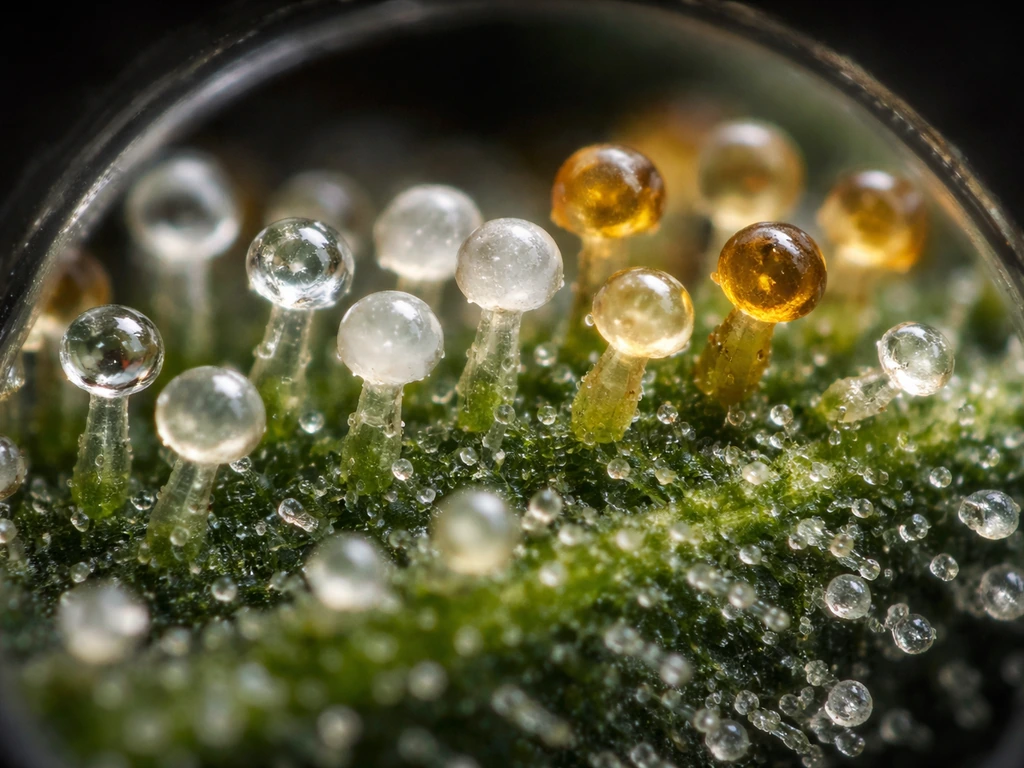
The best way to know when to harvest is to check the trichomes with a jeweler's loupe (30x to 60x) or a digital microscope. Here's what to look for:
- Clear trichomes: too early, not ready
- Milky white (cloudy) trichomes: peak THC, more energetic effect, harvest is approaching
- Amber trichomes: THC is degrading to CBN, heavier and more sedating effect
- A mix of mostly cloudy with 10 to 30% amber: the sweet spot for most growers
Also watch the pistils: when roughly 70 to 90% of the white hairs have darkened and curled inward, you're in the harvest window. Don't rely on pistils alone, but they're a useful secondary check when you don't have magnification handy.
How to plan your grow calendar from the start
The best approach is to work backwards from when you want to harvest, then pick a strain and method that fits that window. Here's how I think through it.
- Decide your target harvest date. If you're growing outdoors, your local frost date sets the deadline. If you're indoors, you have flexibility.
- Choose your strain type. Autoflower for fast turnarounds (8 to 11 weeks total). Photoperiod for larger yields and more control (14 to 20 weeks total).
- Look up the breeder's listed flowering time for the specific strain, then add 1 week as a buffer.
- Add your planned veg time (4 to 8 weeks for photoperiods; no veg control for autos).
- Add 2 to 3 weeks for germination and seedling stage.
- Count backwards from your harvest target to find your seed start date.
- Schedule a 2-week flush window at the end of flower if you're using salt-based nutrients (many growers flush the last 1 to 2 weeks before harvest).
For example: you want to harvest in late July indoors. You're growing a photoperiod indica with an 8-week flowering time. Add 1 week buffer (9 weeks of flower), plus 6 weeks of veg, plus 3 weeks for germination and seedling. That's 18 weeks total, putting your seed start date in mid-March. Adjust your veg shorter or longer based on plant size goals.
Common delays and how to avoid them
First grows almost always take longer than expected. The most common delays are: waiting too long to transplant (root-bound plants stall out), light leaks that interrupt the 12/12 cycle and cause re-vegging, nutrient problems that take weeks to diagnose and correct, and picking a long-flowering sativa strain without accounting for the full 12 to 14 week flower time. Choose a beginner-friendly indica or fast-flowering hybrid for your first grow to keep the timeline predictable.
If you're targeting a specific finish date, growing in 60 days or hitting a 3-month window are achievable goals with the right autoflowering genetics and a solid setup. Those are realistic targets for a well-planned autoflower grow, and they're worth researching specifically if timing is your biggest priority.
A quick note on legal compliance
Home cultivation laws vary widely by country, state, and province. Before you start any grow, check your local regulations on plant counts, growing area restrictions, and possession limits. Before you start any grow, check your local regulations on plant counts, growing area restrictions, and possession limits how many days to grow weed. Some jurisdictions allow a handful of personal-use plants; others prohibit home cultivation entirely. Make sure your grow stays within whatever legal framework applies to you. Growing responsibly means staying informed about the rules in your area.
FAQ
Is 8 to 10 weeks from germination the same as 8 to 10 weeks from planting the seed?
Not always. The 8 to 10 week autoflower range is from germination or seed start that already includes the early sprout, but some seeds can crack in 1 to 7 days. If you planted several days before they germinated, add that delay so your harvest expectation stays accurate.
How do I estimate harvest date for photoperiod strains if I know my flip date?
Work backward from the date you can flip to 12/12. After the flip, flowering commonly runs about 7 to 10 weeks for indica-dominant and 10 to 14 weeks for sativa-dominant, then you add a 1 to 2 week harvest window near the end. If you are not sure on flowering length, add an extra week buffer before committing to a finish date.
What if my photoperiod plant starts forming buds before I flip to 12/12?
This usually happens from light interruptions, for example a timer that is inconsistent, indoor light leaks during the dark period, or outdoor plants getting unintended artificial light at night. If you see early bud sites, reduce exposure to any light during the dark cycle, then keep your schedule consistent to prevent re-vegging delays.
Why is my indoor plant much slower than the timeline, even though I follow the schedule?
Check whether it is actually receiving enough usable light and whether the environment is drifting. Underpowered lighting, incorrect light distance, hot or cold spikes, and humidity that stays too high into flower can all push growth out by weeks, even if your calendar schedule is correct. Re-check temperature ranges during lights-on and lights-off separately.
Can I speed up flowering by forcing the light schedule changes earlier?
Only up to the point where the plant is ready. For photoperiod strains, flipping too early can reduce final plant size and yield because the plant needs enough nodes and structure before it can stretch and stack buds effectively. A safer approach is to shorten veg only after the plant reaches at least 4 to 6 nodes and is about half the height you want at harvest.
Do I count flush time as part of the flowering timeline?
Typically, no. Most growers consider the flowering timeline as the period up to when trichomes are mature and the harvest window begins. If you do any final flush or water-only period, treat it as part of the last days within the harvest window rather than something that adds extra weeks to “flowering time.”
How can I tell if I am harvesting too early or too late when trichomes are unclear?
Use trichomes as primary data, then use pistils as a secondary check. If trichomes are mostly clear, you are likely early. If most are cloudy with some amber, you are usually closer to peak readiness. If they are mostly amber and buds are very dark, you may be late, leading to a heavier, more sedating effect.
What’s the biggest reason autos don’t hit the expected 75 day finish?
Most often, it is stress during the early life stages or roots being restricted too long. Common causes include letting the medium dry out excessively, transplanting at the wrong time, and pH that locks out nutrients. Because autos have less recovery time, you should aim for stable conditions from germination and avoid major repotting once roots are established.
Should I transplant my seedlings early, and does it change how long the grow takes?
Transplanting usually adds some recovery time, and waiting too long can cause root-binding and stalling. Follow a staged pot-up approach so roots are not circling, but also avoid unnecessary extra moves. If you must transplant, plan for a short slowdown and keep your schedule flexible rather than assuming identical day counts.
Does hydroponics always reduce time by 1 to 3 weeks?
It reduces time only if nutrient uptake and pH are truly stable. Hydro can speed growth, but if pH, EC, oxygenation, or water temps drift, the plant can stall and erase the advantage. Treat hydro as “faster potential,” then verify stability with frequent checks, especially during the transition to flower.
What should I do if my buds look immature well past the breeder’s flowering time?
First confirm you are measuring from the correct flip or transition point, then inspect the environment and training stress history. Light problems, humidity too high late in flower, temperature stress, and nutrient issues that started in veg commonly extend the cycle. Also consider genetic uncertainty, some breeders list optimistic ranges, and you may need extra days within a 1 to 2 week harvest window once maturation begins.
How many plants can I grow if I’m trying to hit a specific harvest window?
If you want a predictable finish date, it helps to avoid uneven germination and uneven growth. Start with similar-age seeds, label batches by germination day, and plan for the fact that not every plant will ripen on the same day. For timing accuracy, harvest scheduling should follow the least-mature plants, not the fastest ones.
Next Article
How to Grow 1 Pound Per Plant: Yield Guide for Beginners
Step-by-step plan to grow ~1 lb per plant using strain choice, light, training, feeding, and troubleshooting for beginne