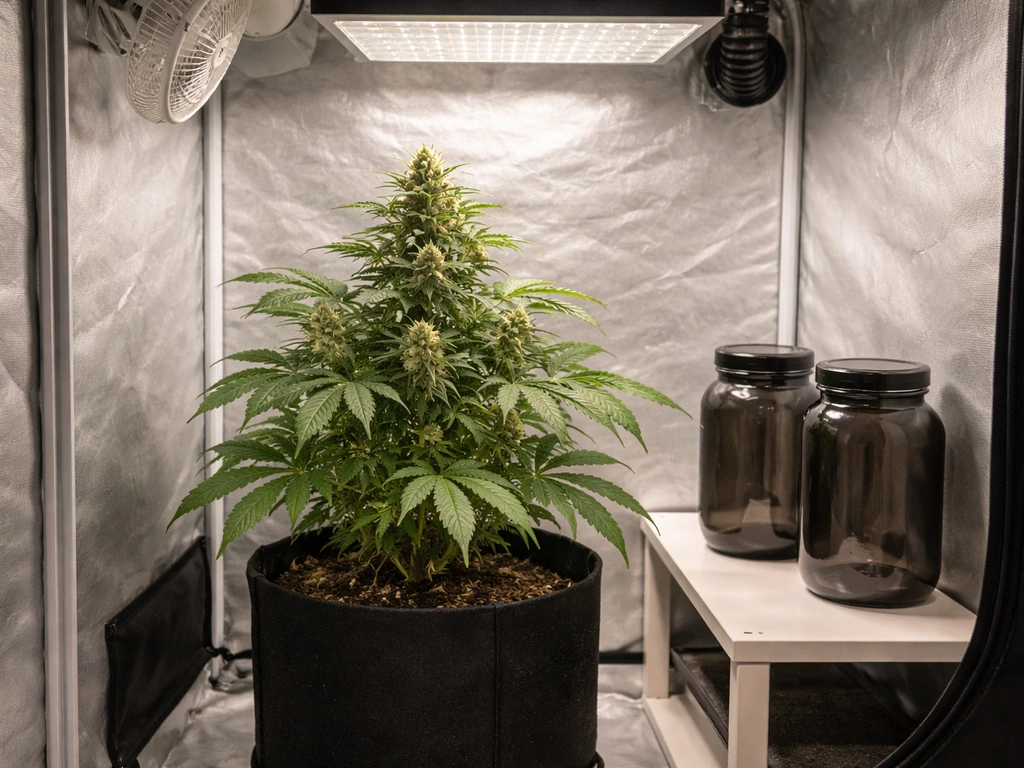
You can only grow weed from dried bud if that bud contains viable seeds inside it. The bud itself, the actual flower tissue, cannot be planted or cloned once it has been dried and cured. Cannabis is not like a potato or a bulb. There is no way to coax a dried flower back to life. But if your dried bud happens to have seeds tucked inside it, those seeds might still germinate and grow into a full plant. The key word is 'might,' because drying and curing conditions, storage time, and how the seeds were formed in the first place all affect whether those seeds are still alive.
Can You Grow Weed From Dried Bud? What to Expect
Marcus Holbrook
3 Jun 2026
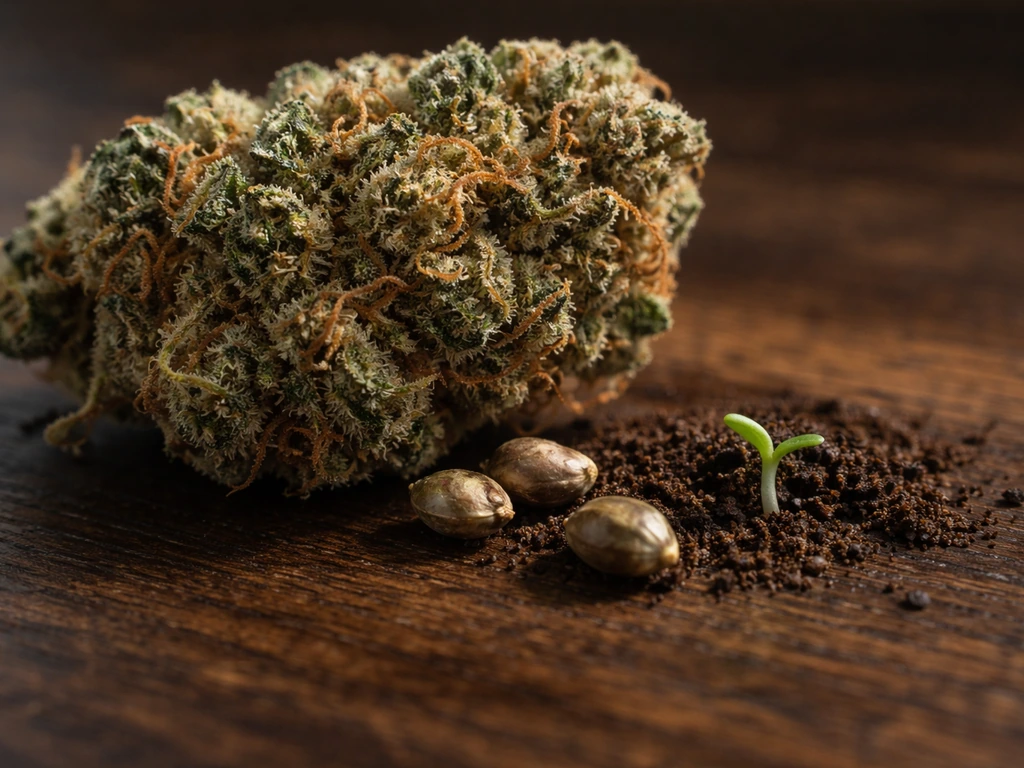
Growing from bud vs. growing from seed: the real answer
Cannabis is a dioecious plant, meaning it has separate male and female plants. Seeds only form when a male plant pollinates a female. The bud you smoke or find in a bag is the dried flower of a female plant. Once that flower is harvested, dried, and cured, the plant tissue is dead. You cannot root it, clone it, or plant it in soil and expect anything to happen. Professional cultivators maintain consistency through cloning live plants taken before harvest, not from dried material.
So the only realistic path forward from dried bud is finding seeds inside it and germinating those. Seeds are self-contained embryos with their own food supply and protective coat. Under the right conditions, a viable seed can still sprout weeks, months, or even years after it was formed. The bud itself is just packaging at that point. If you find seeds, your real project is figuring out whether they are alive and worth your time and effort.
How to check if your dried bud actually has viable seeds
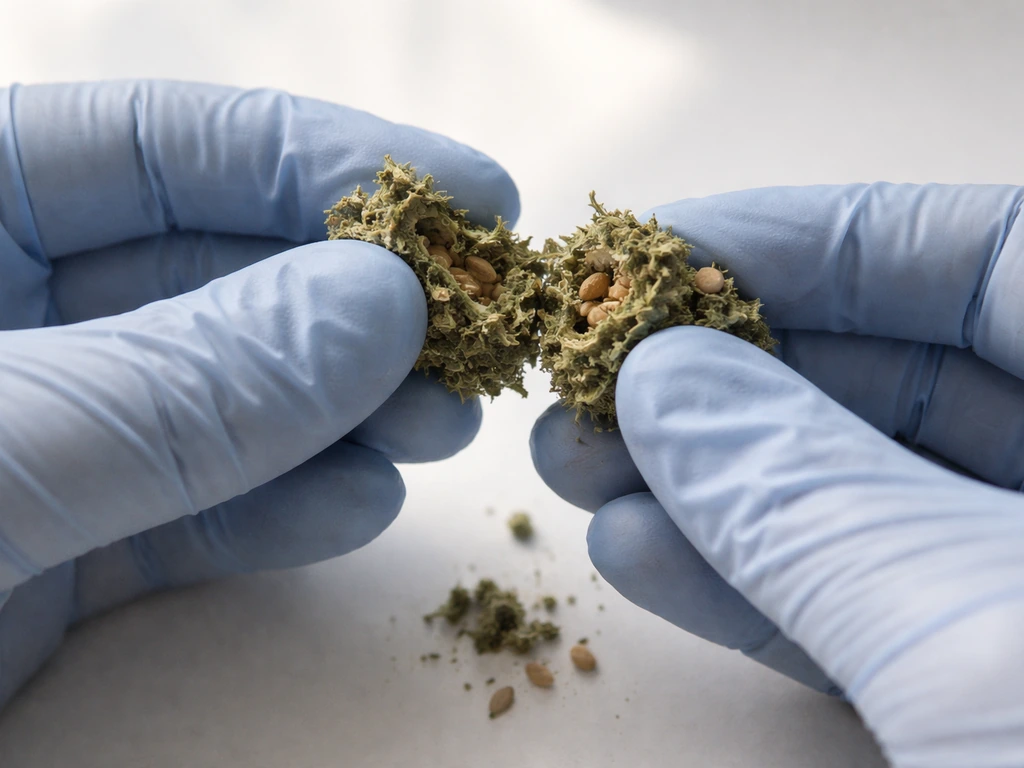
Start by breaking apart the dried bud carefully over a clean white surface. Seeds will be small, tear-drop shaped, and nestled at the base of the bract (the small leafy parts of the flower). A healthy, potentially viable seed will be dark brown, tan, or grey, often with a tiger-stripe or mottled pattern on the shell. It should feel hard and firm when you press it between your thumb and finger. If it crunches or crumbles, it is dead. Pale green or white seeds are underdeveloped and almost certainly non-viable.
A simple float test gives you a quick first read: drop the seeds into a glass of room-temperature water and wait 15 to 20 minutes. Seeds that sink are denser and more likely to be viable. Seeds that float are often hollow or dried out inside and less likely to germinate. This is not foolproof, but it costs nothing and takes two minutes. If you want certainty before committing to a full grow, the professional standard is a tetrazolium (TZ) viability test, which stains live seed tissue pink or red by reacting with active enzymes inside the embryo. University seed labs (Oregon State's seed lab, for example) offer this service. For a home grower with a handful of found seeds, the float test plus a simple paper-towel germination trial is usually enough.
Why drying and curing often kills seeds (and what that means for you)
This is where a lot of people get discouraged, and honestly, it makes sense that they do. The conditions used to properly dry and cure cannabis are not seed-friendly. A good drying room runs at around 50 to 60 percent relative humidity and 60 to 65 degrees Fahrenheit. That sounds gentle, but seeds stored under warm and humid conditions lose germination ability and vigor over time. The longer the bud has been sitting, the more likely the seeds inside have degraded.
Beyond the drying environment, commercial cannabis is increasingly grown from feminized seeds or clones specifically to avoid producing seeds in the first place. Seedless (sinsemilla) flower is the goal for most commercial and home growers. So if you bought bud from a dispensary or received it from a careful home grower, it probably has no seeds at all. If you do find seeds in purchased or gifted bud, it usually means pollination happened accidentally, and the seeds may have formed late in flower development, which often means they are underdeveloped and less viable.
How to germinate seeds you found in dried bud
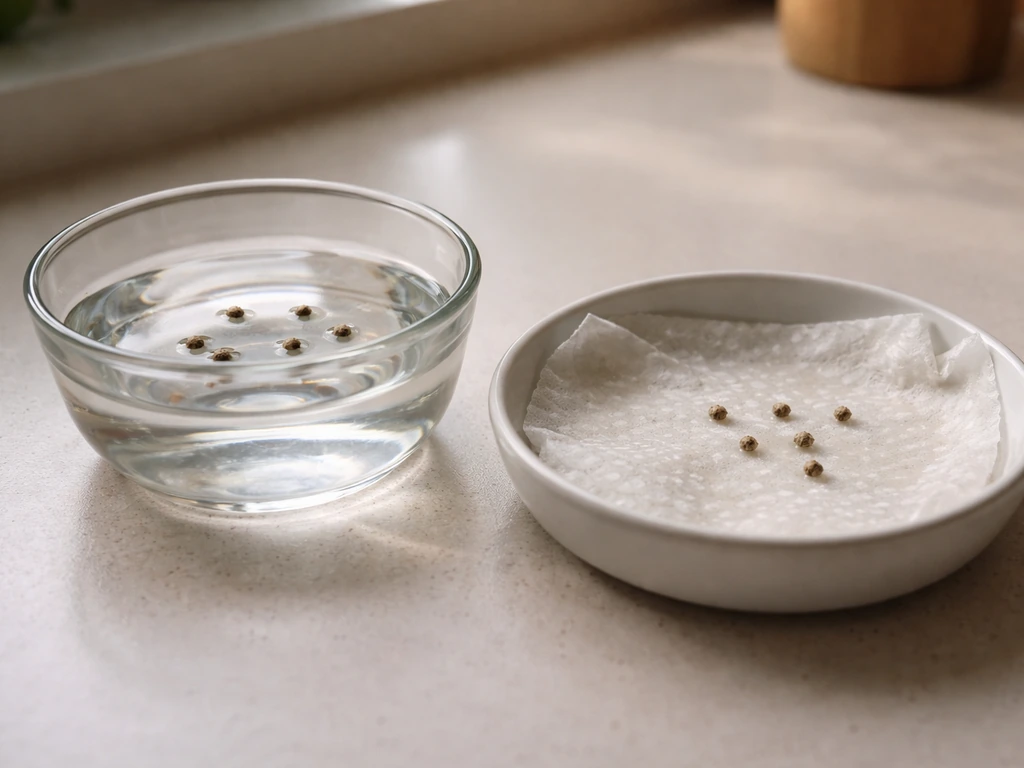
If your seeds passed the float test and look healthy, here is the most beginner-friendly way to germinate them. I have used this method dozens of times and it is hard to mess up.
- Soak the seeds in a small glass of room-temperature water (around 70 to 75 degrees Fahrenheit) for 12 to 24 hours. This softens the seed coat and starts the imbibition process, where the embryo absorbs water to wake up.
- After soaking, place the seeds between two layers of damp (not soaking wet) paper towels and put them on a plate or in a zip-lock bag. You want the paper towel moist, not dripping. Excess moisture invites mold, which can kill your seeds before they sprout.
- Keep them in a warm, dark spot at around 70 to 80 degrees Fahrenheit. A cabinet above the fridge or on top of a cable box works well. Avoid anywhere that gets above 85 degrees, as heat degrades germination.
- Check every 12 to 24 hours. Do not let the paper towel dry out, but only add a few drops of water if it feels dry. You are looking for a white taproot to emerge from the seed.
- Once the taproot is 0.25 to 0.5 inches long (about 6 to 12 mm), it is ready to transplant. Handle it gently because the taproot is fragile at this stage.
- Plant the seed taproot-down about 0.5 inches deep in a small container with a light, airy seedling mix. Water carefully with a spray bottle to avoid washing the medium away from the seed.
- Place the container under gentle light (a seedling LED or fluorescent at 18 to 24 inches away) and maintain humidity around 65 to 70 percent. A clear plastic dome or plastic bag over the container helps hold moisture while the seedling establishes.
Expect the seedling to break the soil surface in 2 to 7 days. If nothing has happened after 10 days in the paper towel, that seed is almost certainly not going to sprout. Do not waste another week hoping. Move on to your next seed or consider sourcing proper genetics from a reliable seed bank.
What to expect from seeds found in random bud
Here is the honest part. Seeds from mystery bud are a genetic unknown. You do not know the strain, the parentage, whether it was a stable breeding line, or anything about the cannabinoid profile. What you are working with is essentially a bag seed, and bag seeds have been the starting point for plenty of great home grows, but you need realistic expectations going in.
Because the seeds come from regular (non-feminized) genetics, they have roughly a 50-50 chance of being male or female. Male plants do not produce the bud you want. They produce pollen sacs, and if you miss them and they open, they will pollinate any female plants nearby and seed your entire crop. You need to check plant sex carefully once they enter the flowering stage. Females show white hairs (pistils) at the nodes; males show small round pollen sacs. Remove males immediately unless you are intentionally breeding.
Yield, potency, structure, and flowering time are all unknowns. Some bag seeds produce genuinely impressive plants. Others are runts with mediocre results. Going in expecting the best-case scenario leads to frustration. Think of it as a learning grow where the genetics are a bonus experiment, not the main event. If you want predictable outcomes, purchasing seeds from a reputable seed bank gives you known feminized, autoflowering, or regular genetics with documented characteristics.
From seedling to harvest: the basics you need to know
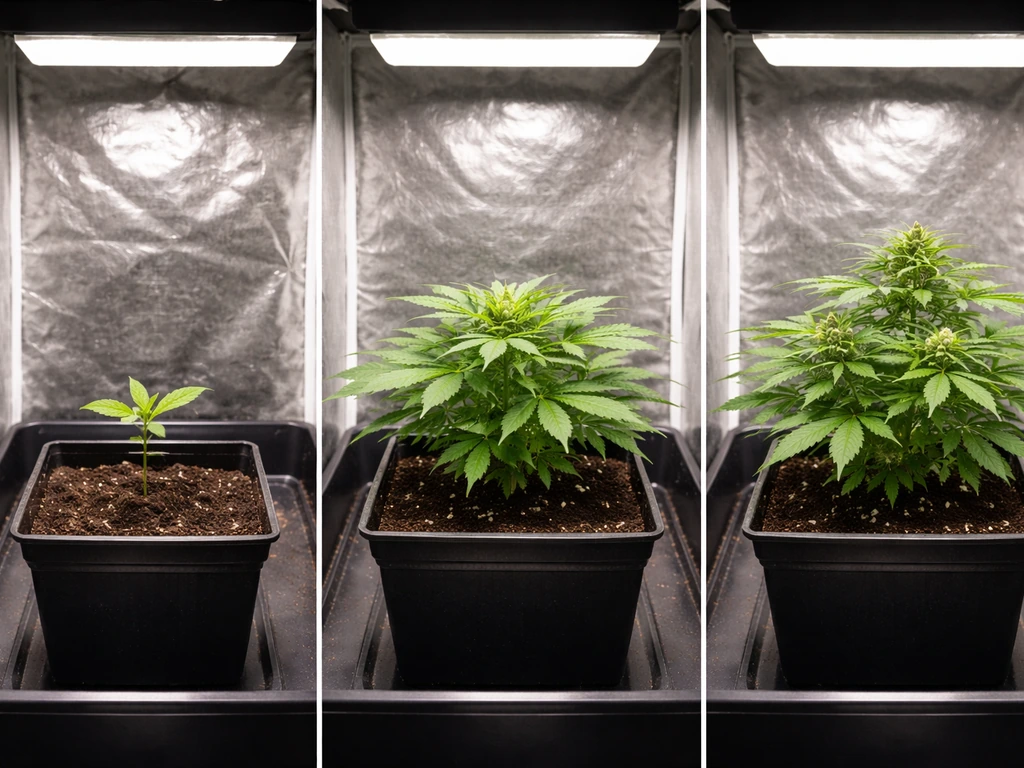
Once your seedling is up and growing, the project is the same as starting from any other seed. Next, once you have viable seeds, you can follow a basic small-plant growing routine to help the seedlings establish and stay compact how to grow small weed plant. If you need a practical, step-by-step approach to growing it from seed naturally, start by learning the basics from sprout to harvest grow from any other seed. The same fundamentals apply whether you are growing indoors under lights, outdoors in a garden bed, or in a hydroponic system. Here is a high-level roadmap.
Environment
| Stage | Temperature (°F) | Humidity (%) | Light Schedule |
|---|---|---|---|
| Seedling (weeks 1–3) | 70–80 | 65–70 | 18 hours on / 6 off |
| Vegetative (weeks 3–8+) | 70–85 | 40–60 | 18 hours on / 6 off |
| Flowering (weeks 8–16+) | 65–80 | 40–50 | 12 hours on / 12 off |
| Late flower / flush | 65–75 | 35–45 | 12 hours on / 12 off |
Autoflowering genetics (if your bag seed happens to carry that trait, which is rare but possible) will flower automatically regardless of light schedule. Regular and feminized photoperiod strains need the switch to 12/12 light to trigger flowering indoors. Outdoors, the plant will follow the natural light cycle and begin flowering when day length shortens in late summer.
Nutrients
Seedlings need almost no added nutrients for the first 2 to 3 weeks if you are using a pre-amended seedling mix. Overfeeding at this stage is one of the most common beginner mistakes and burns the roots. In the vegetative stage, plants want higher nitrogen. In flowering, they shift toward phosphorus and potassium with less nitrogen. Start at half the recommended dose on any nutrient label, watch how the plant responds, and adjust from there. Yellowing bottom leaves in early-to-mid flower is normal as the plant redirects energy upward. Yellowing spreading up the whole plant fast is a deficiency that needs attention.
Common troubleshooting
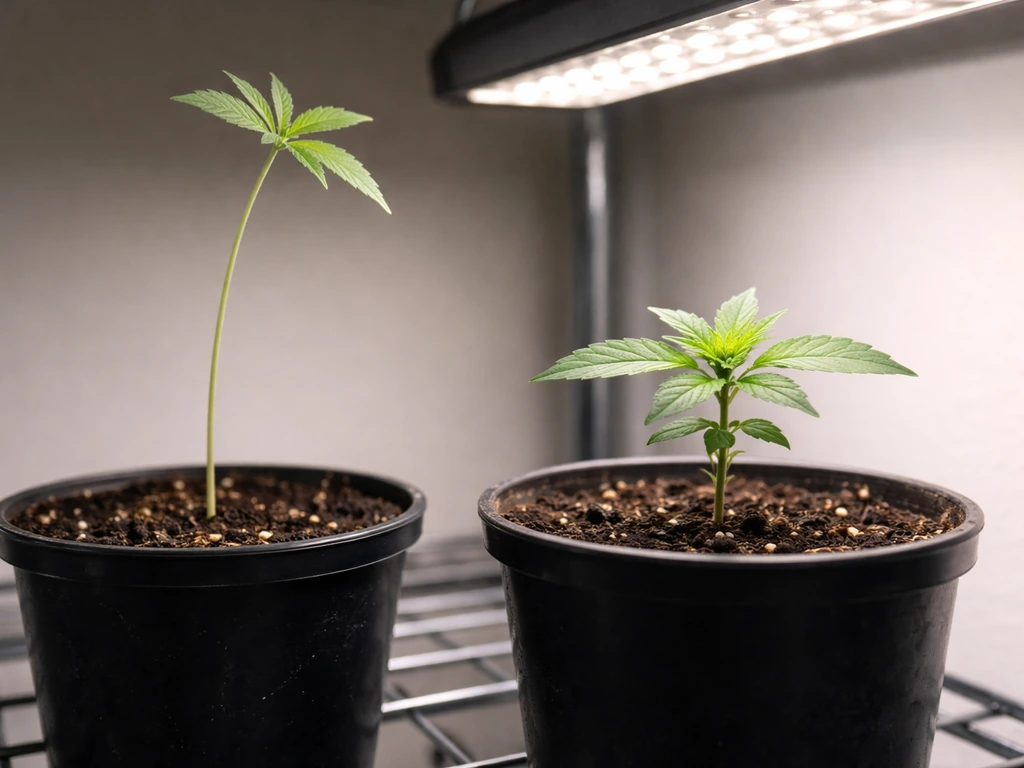
- Seedling stretching tall and thin (etiolation): the light source is too far away or too weak. Move it closer.
- Yellowing leaves with green veins (interveinal chlorosis): likely an iron or magnesium deficiency, often caused by pH being too high or too low. Check that soil pH is in the 6.0 to 7.0 range.
- Brown, crispy leaf tips: nutrient burn from overfeeding or overly concentrated salt buildup. Flush with plain water and reduce feed strength.
- Wilting despite moist soil: root rot or overwatering. Allow the top inch of soil to dry out between waterings.
- White powdery coating on leaves: powdery mildew. Increase airflow, reduce humidity, and treat with potassium bicarbonate or diluted hydrogen peroxide spray.
- No germination after 10 days in paper towel: seeds were not viable. Source new genetics.
Rough timeline to harvest
From seed sprout to harvest, a typical photoperiod cannabis plant takes 4 to 5 months indoors under controlled lighting: roughly 4 to 8 weeks of vegetative growth followed by 8 to 12 weeks of flowering. Outdoors, harvest usually falls between September and November in the Northern Hemisphere depending on your latitude and the strain. Because your bag seeds are unknown genetics, treat those timelines as rough guides. Watch the trichomes (the tiny resin glands on the buds) under a jeweler's loupe or basic microscope. Clear trichomes mean the plant needs more time. Cloudy/milky trichomes mean peak THC. Amber trichomes indicate THC is degrading to CBN for a more sedating effect. Most growers harvest when trichomes are mostly cloudy with some amber.
Legal, ethical, and safety considerations before you start
Before you germinate a single seed, you need to understand where you stand legally. If you are wondering can i grow my own weed plant, this seed-first approach from dried bud is one adjacent path to consider before you invest in a full grow setup. Cannabis cultivation laws vary significantly by country, state, and even municipality. In the United States alone, home cultivation is legal in some states for adults, restricted in others, and outright illegal in many. Penalties range from minor civil fines to serious criminal charges depending on your jurisdiction. It is your responsibility to look up your local laws before starting a grow. Growing in a state or country where it is illegal is not something to take lightly, and nothing in this article is meant to encourage illegal activity.
Even in places where home growing is legal, there are usually limits on plant count (commonly 2 to 6 plants per adult per household), rules about visibility (plants must not be visible from public spaces), and regulations about selling or sharing your harvest. Know the rules for your specific situation. If you are specifically trying to learn how to grow a weed plant, make sure you start with legal, viable seeds or seedlings in your area how grow a weed plant.
On the safety side, indoor grows require attention to electrical safety (lights, fans, and timers all draw power in a small, often humid space), fire risk from improper wiring, and mold. Cannabis grows that maintain poor airflow or high humidity can develop mold, including species that produce mycotoxins. Mold exposure in enclosed indoor spaces is a real health concern. Good ventilation, keeping relative humidity in the right ranges by stage, and regular visual inspections of your plants and growing space keep these risks manageable.
If you are new to all of this and are thinking about what you actually need to get started, understanding the full list of equipment and supplies is a practical next step before you spend any money. The same goes for deciding whether you want to go indoor, outdoor, or hydroponic as your growing method. Each path has different requirements, costs, and learning curves, and picking the right one for your space and budget upfront saves a lot of frustration down the line.
FAQ
Can I grow from dried bud without finding seeds, like by planting the flower itself?
No. Once the actual flower tissue is dried and cured, it is essentially dead and will not root or clone. Your only realistic option from dried bud is to locate viable seeds and germinate them.
How can I tell the difference between real seeds and bits of bud or debris after I break up the dried flower?
Look for small tear-drop shaped units with a hard shell, often nestled at the base of the bracts. Soft, crumbly material is usually plant debris. A seed should feel firm and not smear or collapse when lightly pressed.
If a seed floats in water, is it always dead?
Not always, but it is a strong negative sign. Some seeds that float may still fail later, so the practical approach is to keep floating seeds aside and try them in a paper-towel germination test, then discard any that do not sprout within about 10 days.
Does the float test work better with certain water temperatures or soaking times?
Room-temperature water and a short wait (around 15 to 20 minutes) are usually best as a quick screen. Avoid long soaking sessions, because extended time can further damage already-stressed seed interiors.
What germination method should I use if I want the highest chance of success with only a few seeds?
A paper-towel germination trial is the usual low-cost, high-signal approach. Keep the towels lightly moist but not soggy, maintain stable warmth, and do not let the seeds dry out between checks.
If only one of several seeds sprouts, should I keep trying the rest later?
Yes briefly, but do not drag it out. If nothing has emerged after roughly 10 days under normal conditions, treat the remaining seeds as unlikely to sprout and focus resources on the plants that are actually viable.
What should I do if I can’t confirm seeds are “hard and firm” but they look like they might be underdeveloped?
Underdeveloped seeds often look pale or feel less solid, and they frequently do not germinate. You can still run the paper-towel trial to be sure, but expect a low success rate and avoid over-investing time and nutrients into unlikely seeds.
If my seeds grow, will the plants definitely be feminized or autoflowering?
Not from mystery dried bud. Many bag seeds come from regular genetics, so plan for about a 50-50 chance of male versus female unless you confirm sex later. Autoflower traits are possible but uncommon, so assume you will need to trigger flowering for photoperiod plants.
How early should I check for sex so I do not accidentally seed my crop?
Check as soon as the plant starts forming pre-flowers, typically before and at the early flowering stage. Males show pollen sacs, females show pistils (white hairs). Remove males promptly if you are not breeding.
Is it possible to clone from dried bud after I germinate a seedling?
Dried bud itself cannot be cloned because the flower tissue is dead. Cloning becomes an option only after you have a living plant (from a viable seed or from legal seedlings), then you can take cuttings from that live growth.
Why do bag seed plants often seem weaker or slower than expected?
Dried and cured conditions are not optimized for seed longevity, so the embryos may be stressed or partially degraded. Also, bag seed genetics are unknown, so you can get underperforming plants even when germination succeeds.
How do I estimate flower timing if I do not know the strain and genetics?
Treat timelines as rough ranges and rely more on plant signals, especially trichome appearance. Watch trichomes under magnification and adjust harvest based on the cloudy-to-amber progression rather than trusting a single “weeks to harvest” guess.
What are the biggest mistakes people make after a seed sprouts?
Overfeeding early is one of the most common mistakes, especially if you start with full-strength nutrients. Seedlings also benefit from not being kept too wet or too stressed. Starting with minimal nutrients, then adjusting based on response, reduces root burn risk.
Is growing from dried bud always legal where I live?
No. Laws vary widely by country and even within regions, and legality may differ for cultivation versus possession. Check local rules before germinating anything, and be aware of limits like plant count and visibility requirements.
What if I do everything right and still get mold during the grow?
Mold usually comes from high humidity and poor airflow, often combined with warm, stagnant conditions. Improve ventilation, monitor humidity by growth stage, and inspect plants and the grow space regularly, especially around dense flowering areas.
Next Article
Can I Grow My Own Weed Plant Legal Steps to Harvest
Legality, beginner seed-to-harvest guide for growing your own weed, including timing, drying, curing, and troubleshootin