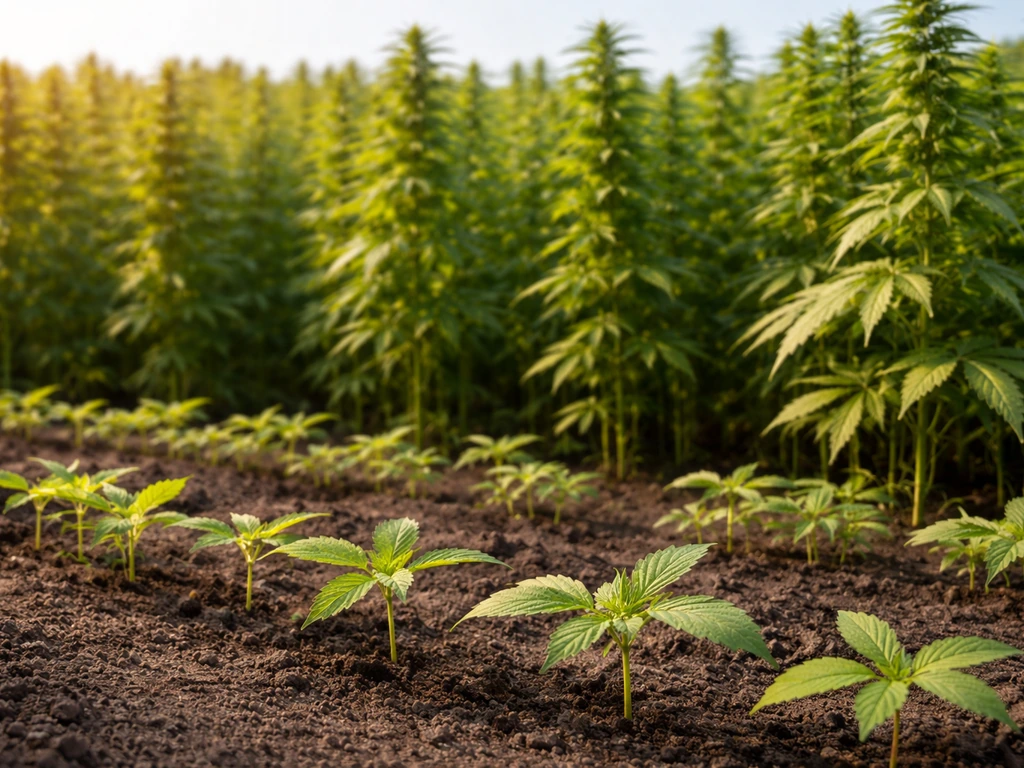
To grow hemp legally in the U.S., you need a state-issued grower license or registration (sometimes called a permit) before you plant a single seed. The exact process depends on your state, but the core steps are consistent: confirm your state has an active hemp program, check that home or small-scale cultivation is actually allowed, complete a background check, submit GPS coordinates and maps of your grow site, register your seed varieties, pay your application fee, and wait for approval before you touch the soil. Most states run their programs under a USDA-approved state plan, so you apply to your state agriculture department, not directly to the federal government.
How Do I Get a Permit to Grow Hemp: Step-by-Step Guide

Marcus Holbrook
15 Jul 2026
What this guide covers
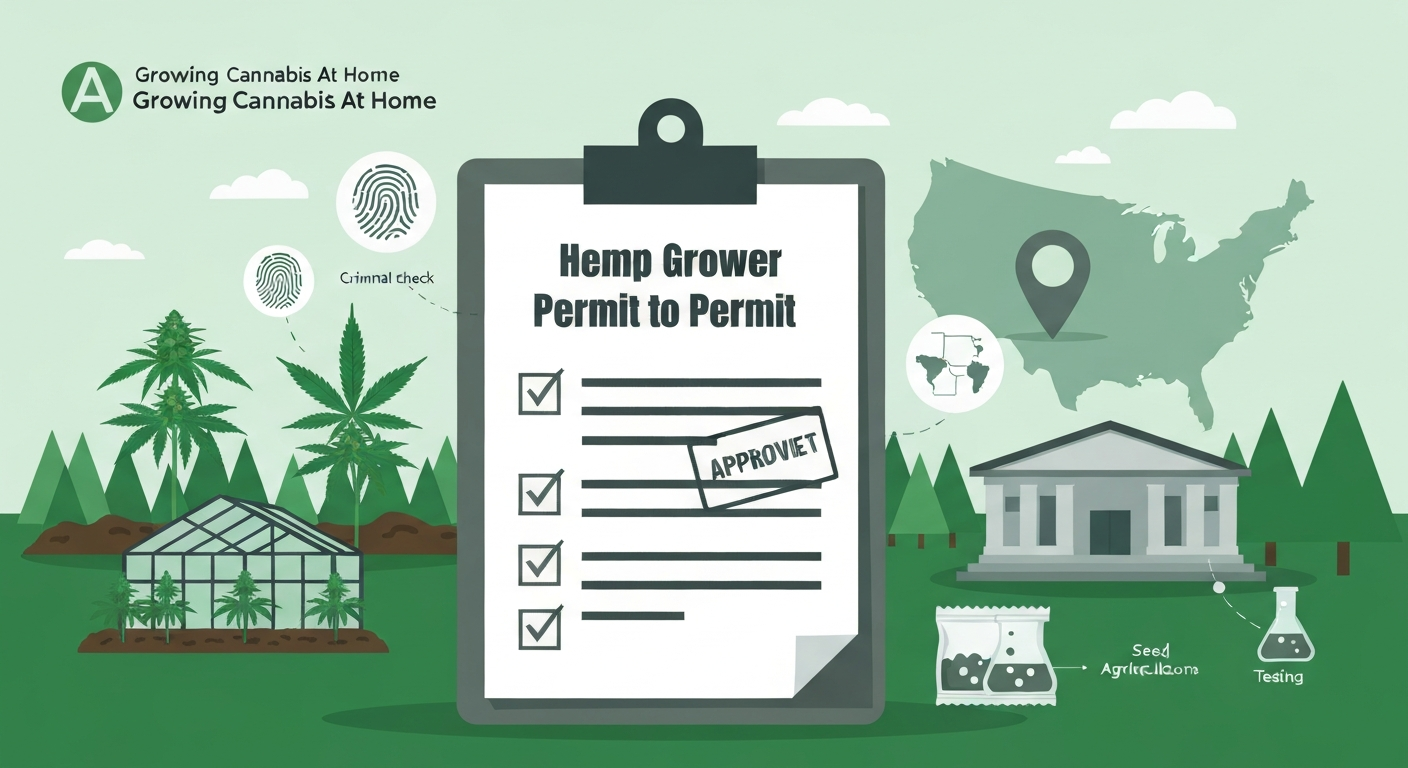
This article walks you through the entire licensing process from the beginning: what hemp actually is under federal law, how federal and state programs divide responsibility, whether home cultivation is even permitted where you live, who qualifies to apply, which type of authorization you need, the key decisions you should make before you ever fill out a form, and a chronological step-by-step application checklist. State-specific notes for Texas, Oklahoma, and Illinois are included throughout because those states generate a lot of questions from new growers. For step-by-step state guidance, see our guide on how to grow industrial hemp in Illinois. For step-by-step, state-specific instructions, see our guide on how to grow weed in Illinois. If you are also exploring industrial hemp production at a larger scale, or looking for guidance on strain selection and indoor versus outdoor setup, those topics connect closely to the decisions covered here. For a detailed walkthrough on how to grow industrial hemp, see our full guide on how to grow industrial hemp (internal link).
Hemp vs. marijuana, permit vs. license: get the definitions right first
Hemp and marijuana are both Cannabis sativa L., but U.S. federal law treats them completely differently based on one number. The 2018 Farm Bill (Agriculture Improvement Act of 2018, Pub. L. 115-334) removed hemp from the federal definition of marijuana under the Controlled Substances Act and defined hemp as cannabis with a delta-9-THC concentration of no more than 0. The Agriculture Improvement Act of 2018 removed hemp from the federal definition of marijuana and defined hemp as Cannabis sativa L. (and derivatives) with a delta‑9‑THC concentration of not more than 0.3% on a dry‑weight basis (FDA, FDA Regulation of Cannabis and Cannabis‑Derived Products, Including Cannabidiol (CBD)) FDA — FDA Regulation of Cannabis and Cannabis‑Derived Products, Including Cannabidiol (CBD). 3% on a dry-weight basis. Anything above that threshold is still federally controlled as marijuana, regardless of what your state cannabis laws say. That 0.3% line is not just a labeling detail, it is the legal boundary your crop must stay under at all times, and it shapes every testing and compliance requirement you will deal with.
The words permit, license, and registration are used interchangeably by growers, but agencies often define them differently. A license is usually the main individual authorization issued to a producer after a full review, background check, and fee payment. A registration is sometimes a lighter-touch process (common for research institutions or smaller acreage tiers). A permit, in states like Texas, refers to a secondary document you pull for each specific planting area after you already hold a license. You often need both. Read your state's exact language carefully so you know which documents you actually need before you plant.
How federal and state hemp programs divide the work
The USDA's Agricultural Marketing Service published the final rule establishing the Domestic Hemp Production Program (7 CFR Part 990), effective March 22, 2021. That rule creates two pathways: states and tribes can submit their own hemp production plans to USDA for approval and run their own programs, or producers in states without an approved plan can apply directly for a USDA license. The USDA maintains a publicly updated list of approved state and tribal plans, and the large majority of growers will deal with a state program rather than applying federally. USDA AMS, List of USDA‑approved Hemp Plans (State & Tribal Plan Review / Approved Hemp Plans) publishes and publicly updates the official table of USDA‑approved State and Tribal hemp production plans USDA AMS — List of USDA‑approved Hemp Plans (State & Tribal Plan Review / Approved Hemp Plans). USDA uses its Hemp eManagement Platform (HeMP) on the backend, and states with approved plans use it too for uploading producer reports and managing license data.
The federal rule sets the floor: mandatory pre-harvest THC testing within 30 days of anticipated harvest, reporting of total available THC (accounting for THCA via post-decarboxylation or equivalent methods), and inclusion of Measurement of Uncertainty (MU) with every test result. A crop is compliant if the reported delta-9 THC concentration plus or minus the MU produces a range that includes 0.3% or lower. States can add requirements on top of this, and many do. They cannot go below the federal minimums.
One ongoing wrinkle worth knowing: USDA's final rule originally required all compliance testing to be conducted by DEA-registered laboratories. USDA has issued enforcement discretion on that requirement, meaning the DEA-registered lab rule is currently not being enforced while implementation guidance continues to be updated. Check the USDA AMS hemp program page for the current status before you select your testing lab, because this has changed more than once.
Can you actually grow hemp at home? Check this before assuming
This is the question I see most often from beginners, and the honest answer is: it depends on your state, and many states do not allow purely personal home cultivation of hemp the way some allow home cannabis cultivation. Hemp licensing programs are generally structured for commercial or research production, not backyard hobby grows. Most state programs require a minimum acreage or square footage, a registered business entity or farm operation, a verifiable buyer or processor arrangement, and a physical address that can be inspected. If you are a home grower primarily interested in CBD-rich strains, your state's hemp program may still be the right path, but you will need to treat it more like a small farm operation than a home garden.
Before you fill out any application, check four things: (1) Does your state have an active, USDA-approved hemp production plan or a functioning USDA-licensed producer pathway? (2) Does state law or administrative rule explicitly permit small-acreage or greenhouse cultivation, and is there a minimum size threshold? (3) Does your local zoning allow agricultural hemp production on your property? (4) Does your homeowners association, landlord, or deed restriction prohibit it? State law approval does not override local zoning, and I have talked with growers who got their state license only to discover their county had effectively banned hemp grows through agricultural zoning rules.
Who qualifies to apply and what disqualifies you
Federal law and virtually every state program share a common disqualifier: a felony conviction related to a controlled substance within the prior 10 years bars you from being a licensee or a 'key participant' in a hemp operation. Key participants typically include owners, operators, partners, directors, and anyone with significant control over the business. USDA's rule requires criminal history reports for key participants, and states enforce this independently too. If you had a drug conviction more than 10 years ago, you are generally eligible, but disclose proactively and verify with your state agency directly rather than guessing.
Beyond the felony bar, standard eligibility requirements across most state programs include: being at least 18 years old, holding a valid government-issued ID, having a verifiable physical address for your grow site, and providing a farm or business entity registration in some states. Illinois requires fingerprint-based background checks for certain license categories, submitted through Illinois State Police livescan vendors, which adds a step compared to states that only require a name-based criminal history report. Texas requires background checks for all hemp license applicants and key participants. Oklahoma's state hemp plan also requires criminal history reports for employees and key participants.
Choosing the right authorization: grower license, processor registration, or both
If you want to grow hemp plants in the ground or in a greenhouse, you need a hemp producer or grower license. If you want to process hemp into CBD extracts, oils, or other products, you typically need a separate processor or handler registration. If you want to do both, you need both. Many small-scale growers assume their grower license covers everything through to the finished product, and it usually does not.
Illinois, for example, has separate IDOA grower licenses and processor registrations with distinct fee schedules. Oklahoma and Texas similarly separate the cultivation authorization from processing. If your goal is to grow hemp and sell it as raw biomass to a licensed processor, a grower license alone is typically sufficient. If you plan to extract or manufacture anything from your harvest, check your state's processor requirements before you start. This article focuses on the grower/producer license path, since that is the first step regardless of what you plan to do with the crop.
Critical decisions to make before you start your application
The application process forces several decisions that are much easier to think through before you sit down at a computer. Your answers will affect which fee tier you pay, what maps you need to submit, and whether your setup is even approvable.
Scale and site
Most state programs have tiered fees based on acreage or square footage of canopy. Decide your intended scale before applying so you land in the right fee tier and do not have to amend your application immediately. You will need to identify every grow site by GPS coordinates and physical description, so scout your locations before you start the paperwork. ODAFF in Oklahoma, for example, requires GPS coordinates in decimal degrees format (like 35.498135, -97.501787) along with a high-quality map showing the site entrance, street names, and a single address. For step-by-step instructions on how to get license to grow hemp in Oklahoma, see our Oklahoma guide. Trying to figure out your coordinates after you start the form is frustrating and slows everything down.
Indoor vs. outdoor
Both are valid paths, and your application will need to specify which you are doing. Indoor greenhouse grows are common for small-acreage CBD hemp because they give you more environmental control and can reduce the risk of your crop going hot (exceeding 0. For step-by-step cultivation advice specific to the game Rust, see how to grow hemp in Rust. 3% THC) due to stress or unintended pollination. Outdoor grows typically have lower startup costs but more exposure to uncontrolled variables. The compliance testing and sampling requirements are the same either way.
Seed vs. clones, and variety compliance
Only use seed varieties or clones from sources that have documented, compliant genetics. Many states maintain approved variety lists or require you to document seed origin and genetics before planting. Starting with uncertified or unknown genetics is one of the fastest ways to end up with a hot crop that has to be destroyed. I made the mistake early on of trusting a seed supplier's verbal assurance rather than getting documented lab results for the parent stock. Do not repeat that.
Buyer and processor arrangements
Some states require or strongly recommend that you have a buyer or processor relationship established before or at the time of application. Even where it is not required, having a clear market pathway for your harvest is essential. Hemp that tests compliant but has no processor or buyer is just biomass sitting in a barn. Line up your off-take arrangement before you commit to a specific acreage or crop type.
Step-by-step: the hemp permit application process from start to approval
The following sequence applies broadly across USDA-approved state programs. State-specific variations for Texas, Oklahoma, and Illinois are noted at each step where they differ meaningfully.
- Confirm your state has an active hemp program. Check the USDA AMS approved hemp plans list to see if your state has an approved state plan, or whether you would apply directly under the USDA federal producer pathway. If your state has its own approved plan, contact your state department of agriculture directly for current applications and rules.
- Verify local zoning and any property restrictions. Contact your county planning or zoning office and confirm that hemp cultivation is a permitted agricultural use on your specific parcel. Resolve any conflicts before spending time or money on your application.
- Gather your site information. Identify every location where you intend to grow, store, or handle hemp. Collect GPS coordinates in decimal degrees for each site, prepare a clear site map showing the address, entrance, and surrounding street names, and obtain your FSA farm number if required (Texas requires this for lot permits).
- Prepare your background check documentation. Identify all key participants in your operation (owners, operators, managers with significant control) and gather the required information for each. In Illinois, this means scheduling a fingerprint livescan appointment with an approved Illinois State Police vendor. In Texas and Oklahoma, a name-based criminal history report is submitted as part of the application. Check your state's current requirements because the process varies.
- Select and document your seed or clone source. Obtain documentation of the variety name, seed lot, and any available genetic test results showing delta-9 THC compliance for the parent stock. Some states maintain pre-approved variety lists; confirm your varieties are on the list or that your documentation will satisfy the state's review.
- Complete any required pre-application training. Texas requires applicants to watch a required orientation before submitting their application through the TDA eApply portal. Other states may have similar requirements or informational webinars that are strongly recommended even when not mandatory.
- Create your online account with your state's application portal and submit your application. Most states now use online portals. USDA-pathway producers use the USDA HeMP platform. Fill out all required fields including site descriptions, GPS data, acreage or square footage, intended variety, intended use (grain, fiber, CBD, etc.), and key participant information. Attach your maps, background check authorization forms, and any seed documentation.
- Pay your application fee. Fees vary by state and acreage tier. Illinois has published tiered grower license fees based on acreage. Texas charges application and license fees separately. Budget for these costs upfront since most fees are non-refundable even if your application is denied.
- Wait for agency review and respond to any requests for additional information. Texas operates on a 60-day review period for hemp licenses. Other states have similar review windows. Respond promptly to any agency follow-up requests to avoid delays.
- Receive your license or registration. Once approved, you will receive your grower license or registration. Keep a copy accessible at your grow site at all times.
- For lot-level or per-site permits, pull those after your main license. In Texas, after obtaining your Hemp Producer license, you must separately obtain a Lot Crop Permit for each planting area before you plant. This is a second authorization step that many new Texas growers miss.
- Register your crop and prepare for pre-harvest sampling. At least 30 days before your anticipated harvest, notify your state agency or licensed sampler so that official compliance testing can be scheduled. In Texas, samples must be taken by a TDA-licensed sampler and submitted to a TDA-registered lab. In Oklahoma, sampling procedures and lab performance standards are specified in the state plan. Do not harvest before receiving compliant test results.
- Receive your test results and harvest authorization. If your crop tests at or below 0.3% delta-9 THC (accounting for MU), you are cleared to harvest. If it tests above, you will receive disposal requirements. Do not move or harvest non-compliant hemp without following your state's disposal process.
- Maintain records and prepare for renewal. Keep all records including lot reports, sample manifests, transport documents, and test results. Most licenses are annual and must be renewed. Texas issues annual licenses. File your renewal on time to avoid a gap in authorization.
State-by-state snapshot: Texas, Oklahoma, and Illinois
| State | Administering Agency | Key Portal | Background Check Type | Lot/Site Permit Required? | License Duration | Notable Requirement |
|---|---|---|---|---|---|---|
| Texas | Texas Department of Agriculture (TDA) | TDA eApply portal | Criminal background check for all applicants and key participants | Yes, separate Lot Crop Permit per planting area after license is issued | Annual | Required orientation before application; FSA farm number needed for lot permits; TDA-licensed sampler required |
| Oklahoma | Oklahoma Dept. of Agriculture, Food & Forestry (ODAFF) | ODAFF online application | Criminal history report for key participants and employees | Site registration with GPS coordinates and maps required at application | Annual | GPS coordinates in decimal degrees required; high-quality site map with entrance and street names required |
| Illinois | Illinois Department of Agriculture (IDOA) | IDOA application portal | Fingerprint-based livescan through Illinois State Police approved vendors | Facility registration required; separate processor registration for processing | Annual | Tiered grower license fees based on acreage; separate processor registration required for any processing activity |
Application checklist: what to have ready before you submit
- Government-issued photo ID for all key participants
- Business or farm entity registration documents (if applicable in your state)
- FSA farm number (required in Texas; useful in most states)
- GPS coordinates in decimal degrees for every grow, storage, and handling site
- Site maps showing address, entrance, surrounding street names, and production boundaries
- Criminal history report or fingerprint livescan receipt for all key participants
- Seed variety name, seed lot number, and supplier documentation or genetic test results
- Acreage or square footage estimate for each site
- Intended use of crop (grain, fiber, CBD, research)
- Buyer or processor contact information (required by some states; advisable everywhere)
- Completed state application form with all fields filled
- Application fee payment method
- Proof of completed orientation or training if required by your state
After approval: compliance obligations you cannot skip
Getting your license is not the finish line, it is the starting point of an ongoing compliance relationship with your state agency. Your core ongoing obligations include: pre-harvest THC sampling within 30 days of anticipated harvest, maintaining records of all seed lots, lot reports, transport manifests, and test results, keeping your grow site accessible for agency inspections, using only licensed samplers and registered labs for official testing, and filing your renewal application on time each year. If you need to transport hemp off your property before it has been tested and cleared, you will need a transport manifest. Texas requires a TDA-issued transport manifest for official samples. Other states have similar requirements for moving raw hemp between sites.
Hot crops are the most serious compliance risk you face. If your pre-harvest sample comes back above 0.3% delta-9 THC even accounting for MU, the crop must be disposed of according to your state's disposal rules, typically by destruction. You cannot sell it, move it, or process it. Choosing well-documented compliant varieties, avoiding stress-induced THC spikes through good environmental management, and scheduling your sampling conservatively (allowing buffer time before your anticipated harvest) are the most practical ways to reduce this risk. If you are growing CBD-dominant strains, work closely with your seed supplier and run your own informal in-house tests if possible before your official sample is collected.
Fees and timelines: what to realistically expect
Application fees vary significantly by state and acreage tier. Most state programs charge somewhere between $100 and $1,000 for a small-acreage grower license, with larger acreage tiers running higher. Illinois publishes tiered fee schedules. Texas charges separate application and license fees. Budget conservatively and assume fees are non-refundable. In addition to license fees, factor in the cost of a licensed sampler visit, laboratory testing (which you as the grower typically pay for), and any background check fees.
On timing: Texas operates on a formal 60-day review period after application submission. Most other state programs have similar review windows, though processing times can stretch longer during high-volume application periods. Plan your growing season around a realistic approval timeline. If you are targeting a spring outdoor planting, submit your application by late fall or early winter at the latest. Do not assume a faster turnaround and do not plant before you have written approval in hand.
A few practical tips I wish someone had told me earlier
- Call your state agriculture department before submitting your application. A five-minute phone call can clarify whether your specific setup (home greenhouse, small acreage, shared property) is workable and save you from submitting a rejectable application.
- Document everything from day one. Keep a grow log that includes your planting date, seed lot, fertilizer applications, and any stress events. This documentation protects you during inspections and helps you troubleshoot if your crop starts trending hot.
- Do not skip variety research. Use seed varieties with publicly documented test histories showing consistent results well below 0.3% THC. The closer a variety trends to the limit under ideal conditions, the more likely it is to go hot under stress.
- Get crop insurance if it is available in your state. USDA's Risk Management Agency has offered hemp insurance products, and some state programs require proof of insurance. Even where it is not required, it is worth exploring before you invest in a full planting.
- Build your sampler relationship early. In states like Texas where you must use a state-licensed sampler, identify your sampler before you plant and confirm their availability during your anticipated harvest window. Samplers book up during peak season.
- Industrial hemp grown for grain or fiber follows the same licensing path but different agronomic practices. If you are exploring large-scale production, the guidance on industrial hemp production covers those specific considerations in more detail.
FAQ
What is the difference between hemp and marijuana under U.S. law?
Under the 2018 Farm Bill, hemp is Cannabis sativa L. (and derivatives) with a delta‑9‑THC concentration of not more than 0.3% on a dry‑weight basis. Cannabis plants/derivatives with delta‑9‑THC above 0.3% are federally considered marijuana and remain controlled substances.
Permit vs. license vs. registration — what do these terms mean for hemp growers?
Terminology varies by state. Common uses: 'license' or 'registration' typically authorize a person/business to grow hemp; 'permit' is often issued per planting/lot (e.g., lot crop permit) or for specific activities (harvest, transport). Read your state agency guidance to know which documents you need.
What federal and state programs govern legal hemp production?
Federally, USDA's Domestic Hemp Production Program (7 CFR Part 990) sets baseline rules (THC testing, background checks, reporting). States and Tribes may operate USDA‑approved hemp plans with their own application processes and additional requirements. If a state has an approved plan, you follow the state's process; otherwise you may apply under USDA directly.
Who is eligible to apply to grow hemp?
Eligibility commonly requires U.S. residency or registered business, no disqualifying controlled‑substance felony convictions within the prior 10 years for licensees/key participants, and submission of background checks for key participants. States may add age, tax, or business registration requirements.
What are the core documents and information required in most hemp license applications?
Typical required items: applicant identity and business info; criminal background/fingerprint info for key participants; field/greenhouse/storage maps and GPS coordinates; seed/variety certification or supplier info; anticipated planting/harvest dates; sampling and testing plan; FSA farm number (in some states); application fee; proof of insurance or bond (if required).
What is the step‑by‑step process to get authorized to grow hemp?
1) Confirm whether your state has an USDA‑approved plan and follow that state portal. 2) Review state rules and fees. 3) Complete required orientation (if any). 4) Gather documents: ID, business records, background information, maps/GPS, seed/variety info, insurance. 5) Submit application and pay fee via state portal (or USDA HeMP if applicable). 6) Provide fingerprints/background checks for key participants. 7) Receive license/registration and, when ready to plant, obtain any per‑lot permits. 8) Comply with official sampling/testing prior to harvest and all post‑approval obligations.
Next Article
How to Grow Industrial Hemp: Seed to Harvest Guide
Seed-to-harvest guide for legal industrial hemp with compliance, setup, feeding, pest control, and drying for fiber or C