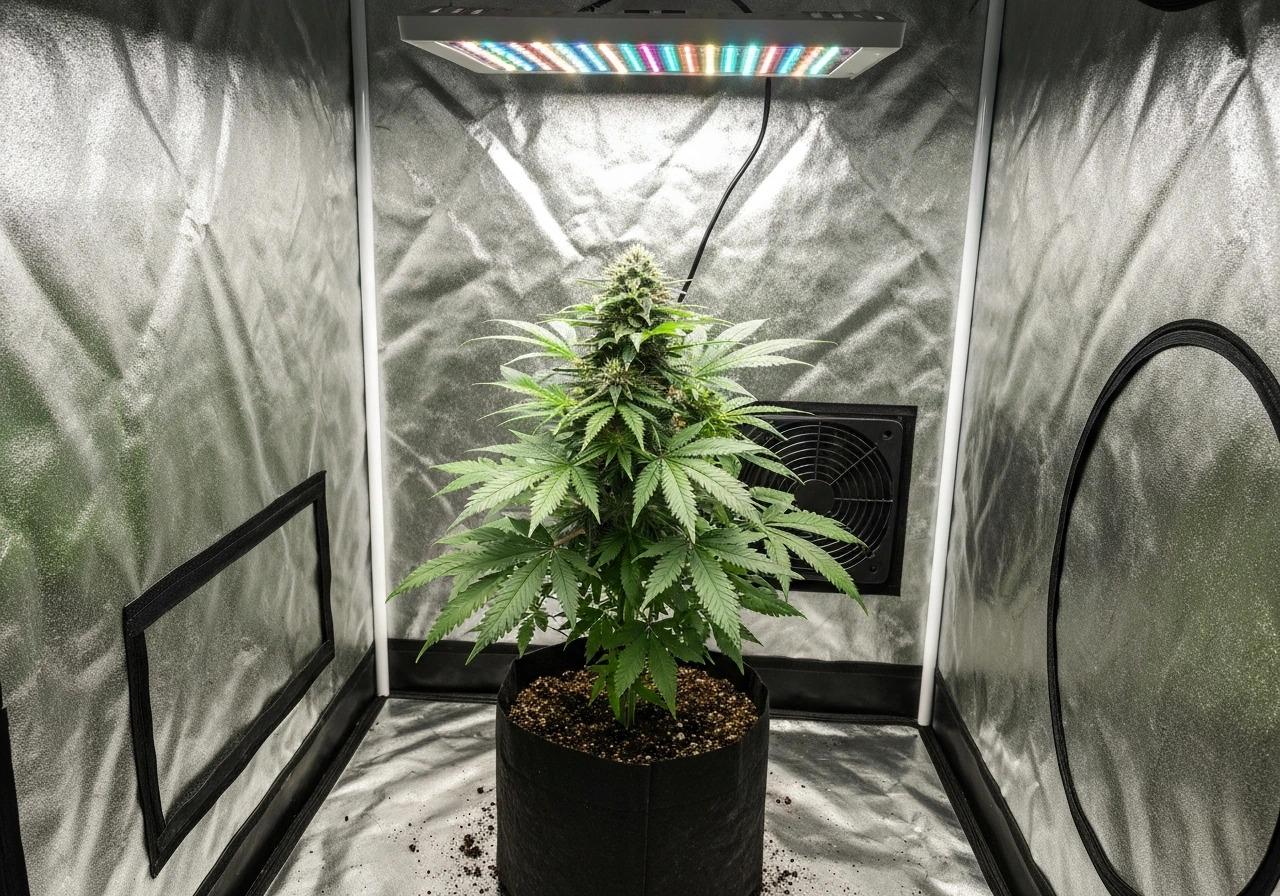
Growing cannabis at home in Australia is legal for most people in exactly one place: the Australian Capital Territory. Outside the ACT, unlicensed home cultivation is a criminal offence under state and territory law, and Commonwealth law adds another layer on top. That is not a scare tactic, it is the starting point every Australian grower needs to understand before they buy a seed, set up a tent, or dig a garden bed. This guide covers the legal picture by state and territory, how to choose strains and source genetics, and a practical seed-to-harvest walkthrough for anyone working within a permitted scheme or preparing for a future where the rules change.
How to Grow Weed Australia: Complete Seed-to-Harvest Guide
Marcus Holbrook
16 Jul 2026
Who this guide is for and what it covers
This article is written for Australian adults who want accurate, grounded information about home cannabis cultivation: the legal framework, the practical methods, and the responsible-use principles that should sit underneath all of it. Whether you are an ACT resident exercising your current rights, a medicinal cannabis patient navigating the TGA access pathways, or someone researching cultivation methods for a future legal context, the information here is designed to be useful and honest. It is not written for anyone seeking to circumvent Australian law, and it does not cover game-based growing mechanics or any fictional context.
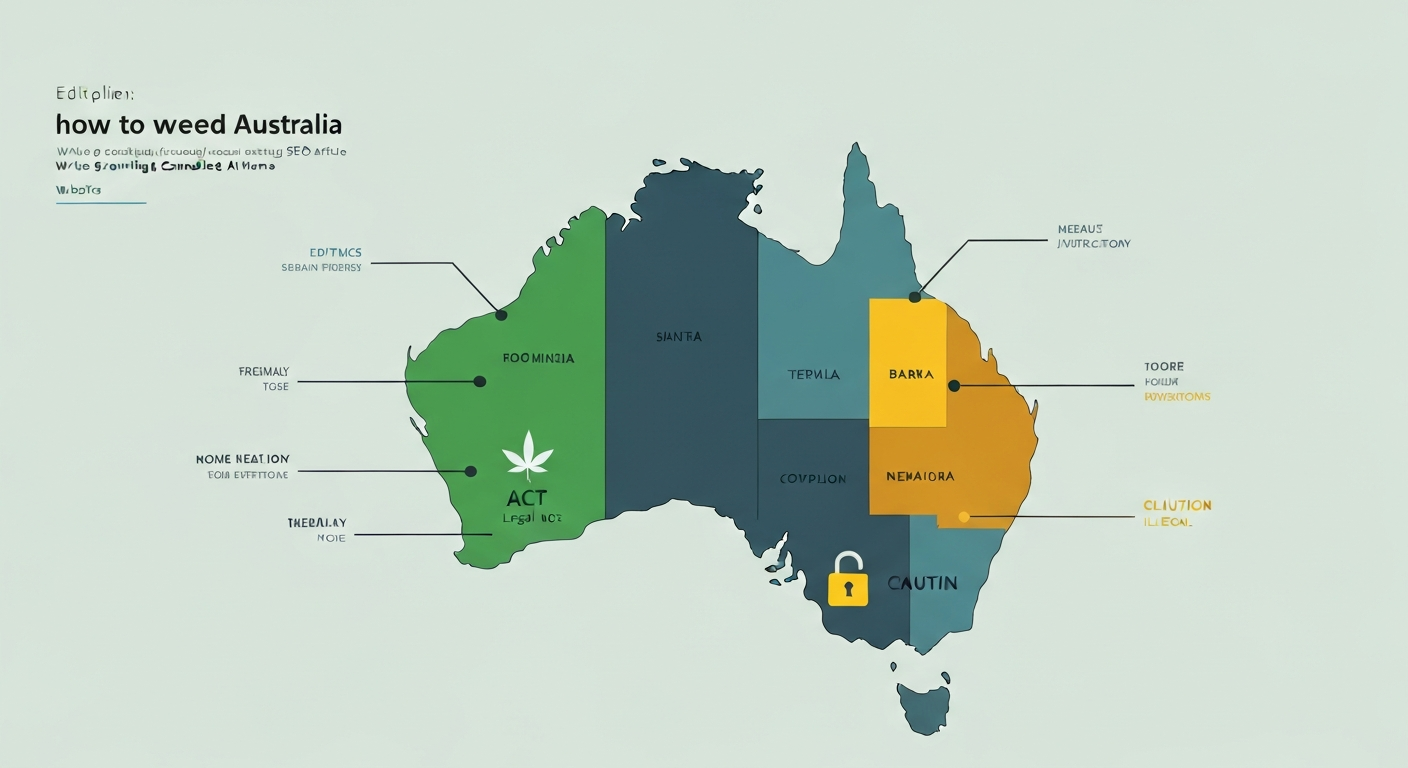
Australian legal landscape: what is and is not allowed by state and territory
Australia has no uniform national home-cultivation right. The Commonwealth's Narcotic Drugs Act 1967 is the principal federal statute regulating cannabis cultivation and restricts it to licensed medicinal and scientific purposes under the Office of Drug Control (ODC). States and territories layer their own criminal laws over the top. The result is a patchwork where your postcode genuinely determines your legal exposure.
The ACT is the single jurisdiction that has decriminalised small-scale personal cultivation. Under the ACT's post-2020 framework, adults may possess up to 50 g of dried cannabis (or 150 g fresh) and grow up to two plants per person, with a household maximum of four plants. Crucially, the ACT scheme explicitly prohibits hydroponic or artificially enhanced indoor cultivation and bans public use. It is also worth knowing that Commonwealth offences can still technically interact with ACT territory law, so the ACT right is not absolute in every scenario.
In every other state and territory, unlicensed cultivation of cannabis is a criminal offence. New South Wales, for example, makes cultivation, possession and supply of prohibited plants, including cannabis, an offence under the Drug Misuse and Trafficking Act 1985, with heavy maximum penalties that scale to commercial quantities. Similar legislation exists across Queensland, Victoria, Western Australia, South Australia, Tasmania, and the Northern Territory. Penalties differ but the principle is the same: without a licence or a specific decriminalisation provision, home cultivation is illegal.
Industrial hemp is a separate category. Hemp is generally defined as cannabis containing 1% THC or less (some states set lower thresholds), and each state regulates it under its own industrial hemp legislation, for example WA's Industrial Hemp Act 2004 and SA's Industrial Hemp Act 2017. The ODC notes that state hemp schemes are distinct from Commonwealth medicinal cannabis licences and that mixed crops, meaning co-cultivation of low-THC hemp and higher-THC cannabis on the same site, are not permitted under Commonwealth arrangements. Growing industrial hemp also requires a state licence and meets strict varietal and THC-testing requirements.
Medicinal cannabis patients access products through TGA pathways, primarily the Special Access Scheme (SAS) or the Authorised Prescriber (AP) scheme. These pathways provide access to manufactured, approved products; they do not authorise patients to cultivate at home. If you are a medicinal cannabis patient, your legal supply comes from a licensed producer, not your own garden.
| State/Territory | Home Cultivation Status | Key Legislation | Notes |
|---|---|---|---|
| ACT | Decriminalised (up to 2 plants/person, 4/household) | Drugs of Dependence Act 1989 (amended) | No hydroponic/artificial enhancement; Commonwealth offences may still apply |
| NSW | Illegal | Drug Misuse and Trafficking Act 1985 | Heavy penalties for cultivation |
| VIC | Illegal | Drugs, Poisons and Controlled Substances Act 1981 | Industrial hemp regulated separately under DPCS regulations |
| QLD | Illegal | Drugs Misuse Act 1986 | Police drug diversion expanded from May 2024 but does not legalise cultivation |
| WA | Illegal | Misuse of Drugs Act 1981 | Industrial hemp licensed under Industrial Hemp Act 2004 |
| SA | Illegal | Controlled Substances Act 1984 | Industrial hemp under Industrial Hemp Act 2017 |
| TAS | Illegal | Misuse of Drugs Act 2001 | Industrial hemp licensed separately |
| NT | Illegal | Misuse of Drugs Act 1990 | No decriminalisation scheme for cultivation |
Laws change. Before doing anything, verify your current state or territory law directly through official government sources. The ODC website (odc.gov.au), your state health department, and the relevant state legislation database are the right starting points. Do not rely solely on online forums or third-party summaries, including this article, for a final legal determination.
What this guide does not cover: excluding game-based instructions and illegal advice
This article does not contain instructions for growing cannabis in video games, simulations, or fictional environments. References you may encounter online to growing cannabis in DayZ or similar survival games are entirely unrelated to real-world horticulture, Australian law, or responsible cultivation practice. If you arrived here looking for in-game mechanics, this is not the resource for you. Nothing in this guide is intended to encourage, facilitate, or advise on cultivation that falls outside legally permitted Australian schemes. All practical guidance is written assuming the reader is operating within a lawful framework.
Responsible use, health, and keeping your household safe
Cannabis is a controlled substance with real health implications, and home cultivation adds the responsibility of secure storage on top of the consumption question. In Australia, cannabis is legal for medicinal use only through TGA-approved pathways, and recreational use remains illegal in all jurisdictions except the limited ACT decriminalisation scheme. Adults in the ACT who cultivate under the permitted rules still have an obligation to keep plants and any harvested product away from children and teenagers.
Cannabis use carries documented risks for people under 25, whose brain development is still in progress, and for individuals with a personal or family history of psychosis, schizophrenia, or other mental health conditions. High-THC products in particular carry higher risk profiles in these groups. If you are a medicinal patient, discuss cannabis-drug interactions with your prescribing doctor, particularly if you are taking anticoagulants, antidepressants, or sedatives, as cannabinoids interact with the cytochrome P450 enzyme system.
- Store all cannabis, harvested product, and seeds in a locked container out of reach of children and pets
- Cannabis can be toxic to dogs and cats even at relatively low doses; keep dried flower and extracts completely inaccessible to animals
- Never drive or operate machinery after consuming cannabis
- Do not consume cannabis if you are pregnant or breastfeeding
- Keep plants in a space that visitors and children cannot access, even during the growing phase
- If you are a patient on prescribed medications, always consult your doctor before starting or changing cannabis use
Picking the right strain for your goals and grow environment
Strain selection is one of the most consequential decisions you make as a home grower, and it is also one of the most enjoyable to research. The core variables are: what effect you want, how much THC or CBD you need, and what growing conditions you can realistically provide. Getting all three aligned from the start will save you months of frustration.
THC versus CBD: matching chemistry to your purpose
THC-dominant strains produce the well-known psychoactive effects and are what most recreational discussions focus on. CBD-dominant strains produce minimal psychoactivity and are often chosen by medicinal users targeting anxiety, inflammation, and certain neurological conditions. Balanced strains with roughly equal THC and CBD ratios occupy a middle ground that many medicinal patients find useful. For ACT home growers, the decriminalisation scheme does not specify a THC limit for the plants themselves, but it does restrict the quantity of harvested product you can possess.
Strain examples worth knowing: Cheese and Zaza
Cheese is a classic indica-dominant hybrid, originating from a Skunk No. 1 phenotype that developed in the UK in the late 1980s. It carries a distinctive sharp, tangy, aged-cheese aroma produced by a specific terpene profile rich in myrcene, caryophyllene, and linalool. Cheese strains typically flower in around 8 to 9 weeks indoors, yield well under moderate light, and handle cooler temperatures reasonably well, making them a solid choice for Australian climates in the southern states. The effects are relaxing and body-heavy with a moderate THC range, generally 17 to 20%. Growers interested in Cheese genetics will find specific cultivation notes in the dedicated Cheese strain guide on this site.
Zaza is a more recent term applied to premium, exotic, or ultra-high-THC cultivars, often crosses like Runtz, Gelato, or Biscotti-derived genetics. The term is slang as much as it is a specific strain name, but serious Zaza genetics tend to involve complex terpene profiles (caryophyllene, limonene, myrcene), THC levels often above 25%, and a reputation for dense, resinous buds. These strains can be finicky, demanding tight environmental control and a precise nutrient regimen. They are better suited to experienced indoor growers than beginners. More detail on cultivating Zaza-type genetics is covered in the dedicated Zaza guide on this site.
Indoor versus outdoor suitability across Australian climates
Australia's climate range is extraordinary. Darwin has a wet-dry tropical cycle with high humidity and temperatures regularly above 30°C year-round. Brisbane and Sydney offer warm, humid summers and mild winters. Melbourne and Hobart have four distinct seasons with cooler autumn conditions that suit some strains but challenge others. Perth has a Mediterranean pattern: hot dry summers and wet winters. The Bureau of Meteorology publishes detailed monthly climate statistics for all of these locations and cross-referencing a strain's stated flowering window and temperature tolerance against local BoM data for your postcode is genuinely useful practical research. The Bureau of Meteorology publishes climate station pages such as blank" rel="noopener noreferrer">Darwin Airport monthly climate statistics that list long‑term mean maximum/minimum temperatures and monthly rainfall.
For outdoor growing, indica-dominant and autoflowering strains generally handle temperature swings and shorter days better than long-flowering sativas. In tropical northern regions, mould-resistant genetics and strains with shorter flowering windows help you harvest before the wet season's humidity peaks. In cooler southern climates, starting seeds indoors in September and transplanting in October gives photoperiod strains enough of the warm season to complete a full flower cycle before April. Autoflowering strains, which flower based on age rather than light cycle, can be run almost year-round in temperate zones with two or three successive harvests.
Sourcing seeds and genetics in Australia
This is where Australian growers face a real practical constraint. Importing Cannabis spp. seeds, nursery stock, cuttings, or tissue culture into Australia requires a Department of Agriculture, Fisheries and Forestry (DAFF) import permit under Australia's biosecurity import conditions (BICON). The import conditions for Cannabis spp. specify phytosanitary certification requirements, and nursery stock and propagation material can trigger mandatory post-entry quarantine in government-approved facilities. Importing cannabis seeds without the correct permits is illegal and DAFF enforcement is real.
For ACT residents operating under the decriminalisation scheme, obtaining seeds locally from another person who grew within the permitted rules is the most legally defensible option, though the legal status of seed transfer itself is not without ambiguity. Collectors sometimes acquire souvenir or novelty seeds through the grey market, but importing seeds without a DAFF permit breaches biosecurity law regardless of what state law says about the end use.
Seed types: feminized, autoflowering, and regular
Feminized seeds are bred to produce only female plants, which are the ones that produce the cannabinoid-rich flowers you are growing for. For home growers with a plant count limit (which is exactly the situation in the ACT), feminized seeds mean none of your two or four plant allowance is wasted on a male. Regular seeds produce roughly 50% males and 50% females, which are useful for breeders but inefficient for limited home cultivation. Autoflowering strains, which contain Cannabis ruderalis genetics, switch from vegetative growth to flowering based on age (typically around 3 to 5 weeks) rather than light cycle. This makes them faster (seed to harvest in 70 to 90 days) and forgiving for beginners who cannot control photoperiod precisely. Autoflowering feminized seeds combine both advantages and are one of the most sensible choices for a first grow.
When evaluating seed banks or breeders, prioritise those with verifiable genetics, consistent quality documentation, and transparent communication about seed origin. Online communities, including cannabis-specific subreddits, carry substantial grower-tested reviews of breeders. The seed sourcing discussion on Reddit forums can surface useful community intelligence, and that community dimension is explored further in the community resources section below.
Indoor, outdoor, greenhouse, or hydroponic: choosing your method
I have grown in all four environments, and I will tell you honestly: none of them is categorically better than the others. They involve different trade-offs across cost, control, yield, and practicality. The right choice depends on your situation, not on what produces the most grams on paper.
| Method | Setup Cost | Ongoing Cost | Yield Potential | Environmental Control | Security/Stealth | Best For |
|---|---|---|---|---|---|---|
| Indoor (soil/coco) | Medium ($300-$1,500 for a 1.2m tent setup) | Medium (electricity, nutrients) | High (400-600 g/m² possible with experience) | Full control over light, temp, humidity | Good if odour is managed | Year-round growing, precise control, beginners with budget |
| Outdoor (soil) | Low ($50-$200 for pots/soil/nutrients) | Very low (sunlight is free) | Very high in ideal climates (500g+ per plant) | Climate-dependent, no control over rain/wind | Lower, plants can be visible | Warm-climate growers, experienced cultivators, low-cost harvests |
| Greenhouse | Medium-High ($500-$3,000+) | Low-Medium (some supplemental light/heat) | High, extends season significantly | Partial (temperature buffering, rain protection) | Moderate (screened from above) | Southern states extending the season, privacy with some natural light |
| Hydroponic (indoor) | High ($1,000-$5,000+ for a proper DWC or NFT system) | High (nutrients, pH management, electricity) | Very high (up to 30-40% more than soil in same space) | Full control required | Good if in a locked space | Experienced growers, faster growth cycles, higher yields per plant |
Note that the ACT decriminalisation scheme specifically prohibits hydroponic or artificially enhanced indoor cultivation. If you are an ACT resident, your legally permitted growing methods are outdoor or natural-light-based only. Everywhere else, the method question is moot until your jurisdiction changes its laws.
A note on electrical safety for indoor grows
Indoor growing involves high-wattage lighting, water, nutrients, and heat, a combination that creates real electrical safety risks. Safe Work Australia's Model Code of Practice on managing electrical risks is explicit: electrical work must be carried out by a licensed, competent person. Australian installations must comply with AS/NZS 3000 (the Wiring Rules), and state electrical safety regulations adopt this standard as a legal baseline. Do not run grow lights off overloaded extension boards, do not DIY fixed electrical installations, and always use waterproof or splash-resistant power boards in grow spaces. A fire or electrocution in an unlicensed grow space compounds the legal exposure significantly.
Setting up your grow space
For indoor grows, a 1.2m x 1.2m grow tent is the standard starting point for most home growers. It fits two to four medium-sized plants comfortably, accepts a 400W HID or equivalent LED, and gives you room to work. Tents this size are widely available from Australian hydroponic retailers and include the ducting ports and reflective lining you need. For a single-plant setup, a 60cm x 60cm or 80cm x 80cm tent cuts costs further.
Odour control is non-negotiable even if you are legally growing. A carbon filter rated to your tent's airflow (measured in cubic metres per hour) paired with an inline extraction fan is the standard solution. Size the fan to exchange the tent's air volume every one to three minutes. For a 1.2m x 1.2m x 2m tent (volume: approximately 2.88 m³), a 150mm fan rated at 400-500 m³/h with a matching carbon filter handles odour effectively. Passive intake (unfiltered holes at the bottom of the tent) balances the negative pressure created by extraction.
- Grow tent or dedicated room with reflective walls (mylar or white paint)
- Inline extraction fan and matched carbon filter (sized to tent volume)
- Oscillating internal fan for air circulation and stem strengthening
- Temperature and humidity monitor (digital, with min/max memory)
- Waterproof tray or flood table beneath pots to catch runoff
- Lockable access to prevent entry by children or housemates
- Ducting routed to exhaust outside or through a secondary carbon filter if odour is a concern at the exit point
Seed to harvest: the complete cultivation walkthrough
Germination (Days 1 to 7)
The paper towel method is reliable and simple. Dampen two paper towels with pH-adjusted water (6.0 to 6.5), place your seeds between them, put them on a plate, and cover with an inverted plate to retain moisture. Keep the setup somewhere warm (22 to 26°C). Most viable seeds will show a taproot within 24 to 72 hours. Once the taproot is 0.5 to 1 cm long, plant it taproot-down in a small seedling plug or container of lightly moistened coco or seedling mix, no deeper than 1 cm. I have also germinated directly in the medium with good results. The paper towel method just lets you see what is happening.
Seedling stage (Days 7 to 21)
Seedlings need gentle light (a 6500K CFL or LED panel at 50 to 60 cm distance works well), high humidity (70%), and very little nutrient input. At this stage the seed's cotyledons are feeding the plant. Water lightly around the seedling rather than directly on it to encourage root outreach. Temperatures should stay between 22 and 26°C. Overwatering is the most common beginner mistake here: the medium should be moist, not saturated. Lift the pot. If it feels heavy, wait. If it feels light, water.
Vegetative stage (Weeks 3 to 8, or longer for photoperiod strains)
Photoperiod strains stay in vegetative growth as long as they receive 18 or more hours of light per day. You decide when to flip to flower. Most indoor growers veg for 4 to 8 weeks depending on the final size they want, remembering that plants roughly double in height during the first two weeks of flower. Keep temperatures at 22 to 28°C during lights-on, 18 to 22°C lights-off, and relative humidity at 50 to 70%. Increase nutrient strength gradually. Nitrogen is the primary demand during veg; a good N-P-K ratio in this phase is roughly 3-1-2. Autoflowering strains do not need a light flip; they will start flowering on their own schedule. Run autos under 18 to 20 hours of light from seed to harvest.
Flowering stage (Weeks 8 to 16+, strain-dependent)
For photoperiod strains, switch your light timer to 12 hours on and 12 hours off to trigger flowering. Within 1 to 2 weeks you will see the first pistils (white hairs) emerging at the node sites. This is the stretch phase: plants can grow 50 to 100% taller in the first two weeks. Reduce humidity to 40 to 50% during mid-to-late flower to reduce mould risk. Shift nutrient ratios toward phosphorus and potassium and begin reducing nitrogen: a rough P-K-heavy ratio such as 1-3-2 serves most strains well in peak flower. Temperatures can drop slightly in lights-off during late flower (16 to 18°C) to help terpene development.
Lighting: spectrums, wattage, and schedules
LED technology has largely replaced HID lighting for home growers in the last five years due to lower heat output and better energy efficiency. A quality quantum board LED delivering around 200 to 300W of actual draw is sufficient for a 1.2m x 1.2m tent through both veg and flower. HPS (high pressure sodium) lights still produce excellent results in flower and are cheaper upfront, but they run hot and require better ventilation. CMH/LEC lights offer a full-spectrum option that sits between HPS and LED in cost and performance. For seedlings and veg, blue-spectrum light (5000 to 6500K) supports compact, healthy growth. For flower, red-spectrum (2700 to 3000K) or full-spectrum white LED with high red component drives bud development.
| Growth Stage | Light Schedule | Temperature (°C) | Relative Humidity (%) | Key Nutrient Focus |
|---|---|---|---|---|
| Germination | Not required (dark or very low light) | 22-26 | 80-90 | None |
| Seedling | 18 hrs on / 6 hrs off | 22-26 | 65-75 | Very low / starter nutrients only |
| Vegetative | 18 hrs on / 6 hrs off | 22-28 (lights on), 18-22 (lights off) | 50-70 | High Nitrogen, moderate P and K |
| Early Flower (Weeks 1-3) | 12 hrs on / 12 hrs off | 22-26 | 45-55 | Reducing N, increasing P and K |
| Mid-Late Flower (Weeks 4-8+) | 12 hrs on / 12 hrs off | 20-26 | 40-50 | High P and K, low N, add Cal-Mag |
| Flush / Final Week | 12 hrs on / 12 hrs off | 18-24 | 40-45 | Plain pH-adjusted water (soil grows) |
Nutrient protocols and a sample feeding schedule
Cannabis in soil with a quality pre-amended potting mix often needs very little added nutrition for the first three to four weeks. Coco coir and hydroponic systems require nutrients from day one because the medium itself provides nothing. Regardless of medium, pH is the single most important number in your nutrient program. Cannabis roots absorb nutrients most efficiently within a specific pH window: 6.0 to 7.0 for soil, 5.5 to 6.5 for coco and hydro. Getting the pH wrong is the most common reason for nutrient deficiencies, and I have seen growers spend weeks adding more nutrients to a plant that simply needed its water pH corrected.
Electrical conductivity (EC) measures the total dissolved nutrient strength in your feed solution. Start seedlings at EC 0.4 to 0.6. Build through veg to EC 1.0 to 1.6. Peak flower typically runs EC 1.6 to 2.2. Reduce EC in the final two weeks. A quality pH meter (calibrated regularly with buffer solution) and a basic EC/TDS pen are the two most important instruments a home grower can own. Digital meters from reputable brands cost $30 to $80 and pay for themselves in the first grow.
| Week | Stage | EC Target (mS/cm) | pH Target | Key Nutrients |
|---|---|---|---|---|
| 1-2 | Seedling | 0.4-0.6 | 6.0-6.5 (soil) | Starter mix or half-strength seedling formula |
| 3-4 | Early Veg | 0.8-1.2 | 6.0-6.5 | Balanced grow formula, start Cal-Mag if using RO water |
| 5-6 | Mid Veg | 1.2-1.6 | 6.0-6.5 | High N grow formula, Cal-Mag, trace elements |
| 7-8 | Late Veg / Pre-flower | 1.4-1.8 | 6.2-6.8 | Transition to bloom base, reduce N |
| 9-10 | Early Flower | 1.6-2.0 | 6.2-6.8 | Bloom base, PK booster, Cal-Mag |
| 11-13 | Peak Flower | 1.8-2.2 | 6.2-6.8 | High PK, bloom booster, carbohydrate/terpene supplement |
| 14+ | Late Flower / Flush | 0.0-0.5 (plain water) | 6.2-6.8 | Plain pH water (soil); light feed maintained in hydro |
Calcium and magnesium deficiencies are extremely common in Australian home grows, partly because many areas use rainwater or filtered water with low mineral content, and partly because coco coir has a high affinity for calcium. A dedicated Cal-Mag supplement (calcium at 150-200 ppm, magnesium at 50-75 ppm) added to every feed prevents a large percentage of the mid-grow yellowing and spotting issues beginners encounter.
Diagnosing and fixing pests, diseases, and deficiencies
Common nutrient deficiencies
| Deficiency | Symptoms | Likely Cause | Fix |
|---|---|---|---|
| Nitrogen (N) | Lower leaves yellowing from tip inward, general paleness | Underfeeding, pH too high (>7.0) | Increase N in feed, correct pH to 6.0-6.5 |
| Calcium (Ca) | Brown spots on mid-leaves, curled edges, slow growth | Low Ca in water, pH out of range, coco-specific | Add Cal-Mag, check and correct pH |
| Magnesium (Mg) | Interveinal yellowing (leaf veins green, tissue yellow) | Low Mg, pH too low (<5.5) | Cal-Mag supplement, pH correction |
| Iron (Fe) | New growth yellowing between veins, while older growth stays green | pH too high (>7.0) locking out Fe | Lower pH to 5.8-6.2, check root health |
| Phosphorus (P) | Dark green or purple discolouration, especially on stems and undersides | Low temps, pH too low, underfeeding | Increase P in feed, raise temps above 18°C, correct pH |
| Potassium (K) | Brown leaf edges and tips on upper canopy, leaf curl | Underfeeding, salt buildup, pH too low | Flush medium, pH correct, increase K in feed |
Common pests
Fungus gnats are the most common indoor pest in Australia, particularly in soil grows. The larvae live in the top layer of growing medium and damage roots. Allow the top 2 to 3 cm of soil to dry completely between waterings (the larvae need moisture to survive), use yellow sticky traps to monitor adult populations, and apply Bacillus thuringiensis var. israelensis (Bti) as a soil drench to kill larvae. Neem oil or a diatomaceous earth top-dress can also reduce adult populations. Spider mites thrive in hot, dry indoor conditions (above 28°C with low humidity). Look for fine webbing and tiny moving dots on the undersides of leaves. Maintain humidity above 40% and temperatures below 28°C as prevention. Insecticidal soap or diluted neem oil applied to leaf undersides at 3-day intervals for two to three weeks breaks the mite life cycle.
Common diseases
Botrytis (grey mould) is the grower's nightmare in late flower. It appears as grey-brown fuzzy patches on dense buds, usually where airflow is poor or humidity is high. Prevention is almost entirely environmental: keep late-flower humidity below 50%, ensure strong airflow through the canopy with oscillating fans, and remove any dying leaves or plant material immediately. Once Botrytis establishes in a bud site, that site must be removed entirely and the surrounding area monitored closely. Powdery mildew appears as white powdery patches on leaf surfaces and thrives in conditions with poor airflow and moderate humidity (50 to 80%). Potassium bicarbonate spray (1 teaspoon per litre of water) applied to affected surfaces is an effective organic treatment; improving airflow prevents recurrence.
Harvesting, drying, curing, and storing your cannabis
Knowing when to harvest
The most reliable harvest indicator is trichome colour viewed under a 60x jeweller's loupe or digital microscope. Trichomes (the tiny resin glands on buds) progress from clear (immature, low potency) to milky white (peak THC, more energetic effect) to amber (THC degrading to CBN, heavier, more sedative effect). Most growers harvest at the transition point: mostly milky with 10 to 30% amber for a balanced effect. For a more energetic result, harvest when trichomes are mostly milky. For a heavier, more sedative result, let amber development reach 30 to 50%. Check trichomes on the buds themselves, not the sugar leaves, which amber earlier.
Secondary indicators include pistil colour (white pistils turning orange or red) and bud swelling. These are useful rough guides but less precise than trichome inspection. The strain's stated flowering time is a starting point, not a fixed rule; environmental conditions mean actual harvest time can vary by one to two weeks either way.
Drying
Cut whole branches or whole plants and hang them upside down in a dark, well-ventilated space. Target 15 to 21°C and 45 to 55% relative humidity. At these conditions drying takes 7 to 14 days, which is the range that preserves terpenes and prevents mould. Faster drying (too much airflow or heat) degrades terpenes and produces a harsh smoke. Slower drying in humid conditions increases Botrytis risk. The branches are ready to move to curing jars when the smaller stems snap rather than bend and the outer surface of buds feels dry to the touch, but the interior still feels slightly springy.
Curing
Curing is where the final quality of your harvest is made or lost. Trim your dried buds (hand-trimming preserves trichomes better than machine trimming), place them loosely in wide-mouth glass jars filled to about 75% capacity, and store in a dark, cool location at 18 to 22°C. For the first two weeks, open the jars twice daily for 15 minutes (this is called 'burping') to release moisture and CO2 and allow fresh air in. After two weeks, burp once daily. After four weeks, burp every few days. A properly cured flower develops noticeably better aroma, smoother smoke, and better potency expression compared to uncured bud. Most experienced growers consider a minimum 4 to 6 week cure the baseline, and 8 to 12 weeks produces notably better results with most strains.
Long-term storage
For storage beyond two to three months, keep cured flower in glass jars with humidity packs (Boveda 58% or 62% packs maintain ideal moisture content), in a cool dark location. Avoid plastic bags for long-term storage as they generate static that pulls trichomes off the flower and allow moisture to fluctuate. UV light degrades THC; store away from direct sunlight or in opaque containers. Properly stored cannabis retains potency and flavour for 12 months or more.
Your grow equipment checklist
- Grow tent (1.2m x 1.2m x 2m for a standard 2-4 plant setup)
- LED grow light or HPS/CMH fixture with appropriate wattage for tent size
- Inline extraction fan (150mm or 200mm depending on tent volume)
- Carbon filter matched to fan (same diameter and compatible CFM/m³/h rating)
- Ducting and clamps (100-150mm diameter)
- Oscillating internal circulation fan (6-inch clip fan minimum)
- Digital temperature and humidity monitor with min/max display
- pH meter (digital, with calibration buffer solution 4.0 and 7.0)
- EC/TDS meter
- Growing medium (quality potting mix, coco coir, or hydroponic setup)
- Pots or containers (3-15L depending on desired plant size)
- Waterproof catch trays
- Nutrients: base grow and bloom formula, Cal-Mag supplement, PK booster
- pH up and pH down solutions
- Watering can or pump with measured output
- 60x jeweller's loupe or digital microscope for trichome inspection
- Yellow sticky traps for pest monitoring
- Thermometer hygrometer (additional probe for monitoring canopy level)
- Timer for lights (digital with battery backup)
- Wide-mouth glass mason jars for curing and storage
- Boveda or Integra humidity packs (58% or 62%)
- Pruning scissors (clean, sharp)
Community resources and further reading
The online cannabis growing community is large, active, and genuinely useful. Reddit hosts several relevant communities: r/ausents and r/AUents provide Australia-specific discussion including legal updates, local strain availability, and grower experiences. The broader r/microgrowery community is one of the most active and knowledgeable growing forums on the internet, with a comprehensive wiki covering almost every aspect of cultivation. When researching seed genetics and breeder reputation, Reddit community reviews are often more candid and current than commercial review sites. The dedicated seed-sourcing discussion available in the Reddit growing community is worth exploring specifically when evaluating genetics, and the site's seed-starting guide covers germination and Reddit-sourced community wisdom in more detail. For practical, community-tested seed germination tips, consult Reddit threads and guides under the search term "how to grow weed seed reddit".
For Australian legal information, the ODC website (odc.gov.au) is the authoritative source for Commonwealth medicinal cannabis licensing and regulation. The TGA's access pathways page covers SAS and AP applications for medicinal patients. Each state and territory's health department website and legislation database are the correct sources for state-level law. For biosecurity and seed import, DAFF's BICON database is the definitive reference. Do not rely on commercial seed bank websites for legal information; they have a vested interest that does not align with giving you accurate Australian compliance advice.
Local hydroponic stores in Australian capital cities are often an underrated resource. Staff at good hydro shops have hands-on experience with local climate, common regional pests, and locally available products. They are not a substitute for legal advice, but they are valuable for practical growing questions. Australian cultivators have developed strong regional knowledge particularly around dealing with high summer temperatures in Queensland and Western Australia, and humidity management in the tropical north.
A final word on doing this right
Cannabis cultivation in Australia is genuinely complex from a legal standpoint, and the honest message is that most Australians cannot currently grow cannabis at home without breaking the law. The ACT is the exception. Laws change, and there is active policy debate across several jurisdictions about decriminalisation and regulated access. Staying informed about those changes through official government sources is as important as learning to manage your pH or identify a calcium deficiency. Growing well and growing responsibly are not in conflict. The practical skills you build on this site are designed for the moment your jurisdiction permits you to use them.
FAQ
What primary federal laws and agencies must an Australia‑focused cultivation guide cite for legal accuracy?
Cite the Narcotic Drugs Act 1967 as the principal Commonwealth statute regulating medicinal cannabis cultivation and production; reference the Office of Drug Control (ODC, Department of Health) for licensing, security guidelines and hemp vs medicinal definitions; and the Therapeutic Goods Administration (TGA) for medicinal‑cannabis access pathways (SAS/AP) and reporting obligations. These documents define licensing, security tiers, and access/reporting rules essential to legal compliance.
How should the guide treat state and territory law differences?
Provide a state/territory legal overview that summarises each jurisdiction’s penalties, permitted hemp schemes, and any decriminalisation or personal‑use exceptions (e.g., ACT’s limited personal possession/cultivation regime). Explicitly state that state laws criminalising unlawful cultivation remain in force in most jurisdictions and that Commonwealth medicinal licences and ODC security rules interact with state hemp/industrial schemes. Use the relevant state Acts (e.g., NSW Drug Misuse and Trafficking Act) and ODC Annex B as sources.
What biosecurity and plant import rules must be explained when discussing seeds, clones or nursery stock?
Reference Australia’s Biosecurity Import Conditions (BICON, Department of Agriculture, Fisheries and Forestry) which list import permit requirements, post‑entry quarantine, phytosanitary certification and restrictions for Cannabis spp. nursery stock, tissue culture, cuttings and seeds. Make clear many plant materials require DAFF import permits and quarantine; sourcing must comply with BICON to avoid illegal importation or biosecurity breaches.
How should the guide distinguish hemp, medicinal cannabis and legality thresholds?
Use ODC and Commonwealth guidance: hemp is generally defined as Cannabis spp. with ≤1% THC under Commonwealth security guidance (some states may set different thresholds). ODC treats cannabis >1% THC as high‑security medicinal crop requiring appropriate licences. Explain that industrial hemp schemes are regulated by states while medicinal cannabis is regulated under Commonwealth licensing—cross‑crop interactions and mixed cropping are not permitted under medicinal licences.
What safety and electrical standards must be referenced for indoor cultivation equipment and installations?
Reference Safe Work Australia model WHS guidance and the Model Code of Practice 'Managing electrical risks in the workplace' and require compliance with AS/NZS 3000 (Australian/New Zealand Wiring Rules) for fixed electrical installations. Advise licensed electricians for permanent wiring and that growers follow local electrical regulator rules to reduce fire and electrocution risks.
What climate and regional data sources are authoritative for outdoor‑growing schedules and strain selection?
Use Bureau of Meteorology (BoM) long‑term climate station statistics (monthly mean temperatures, rainfall, humidity proxies) for site‑level planning and strain‑region matching. BoM station pages and monthly climate statistics provide the data needed to align strain flowering windows and outdoor planting/harvest calendars to local seasons.
Next Article
How to Grow Weed Cheese: Beginner Step-by-Step Guide
Legality-first step-by-step guide to grow weed cheese, with lighting, nutrients, targets, troubleshooting, and cure for