You can grow cannabis outdoors in Virginia, and with the right strain, timing, and setup you can pull a solid harvest before the first frost rolls in. Virginia gives you a workable outdoor season, roughly late May through October, but the state's humid summers and wet falls mean mold and pests are your biggest threats, not just the cold. Get your timing right, pick a mold-resistant strain, and stay on top of airflow and drainage, and you're in a genuinely good position for a beginner's first outdoor run.
How to Grow Weed Outside in VA: Step-by-Step Guide
Marcus Holbrook
13 Jun 2026
Virginia's outdoor climate and what it means for your grow
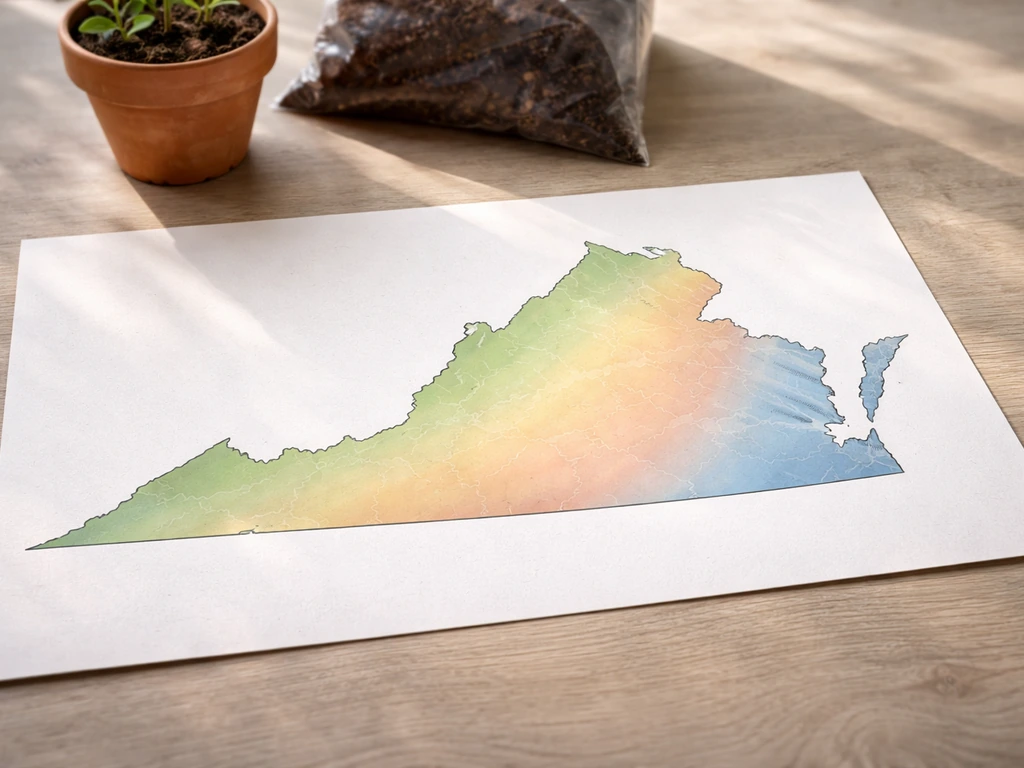
Virginia spans multiple climate zones, from the coastal Tidewater region all the way up to the Appalachian highlands in the west. That's a meaningful difference. The Piedmont and coastal areas (think Richmond, Northern Virginia, Hampton Roads) sit in USDA zones 7a to 8a, with long, warm summers and relatively mild falls. The Shenandoah Valley and western mountain regions run cooler, with shorter effective growing seasons and higher frost risk. Wherever you are, expect hot and humid summers with late-summer humidity that can tip into the 70–85% relative humidity range, exactly the conditions Botrytis (bud rot) loves.
Your effective outdoor cannabis season in most of Virginia runs from around mid-May to mid-to-late October. In the Piedmont, the average first killing frost typically lands between October 19 and October 29, so you need your plants fully harvested by then. In the mountains, that window can close two to three weeks earlier. The flip side is that Virginia gets plenty of summer sun and warmth to push plants through a healthy vegetative phase, so photoperiod strains with 60–70 day flowering windows are absolutely achievable if you time things well.
Virginia legal basics: what you need to know before you plant
Virginia allows home cultivation for adults 21 and older. Under Virginia law and the Cannabis Control Authority (CCA), you can grow up to four plants per household for personal use. There are two hard rules you absolutely cannot skip: first, every single plant must have a legible tag attached to it that includes your full name, your driver's license or state ID number, and a notation that the plant is being grown for personal use as authorized by law. Second, your plants must not be visible from a public way without the use of aircraft, binoculars, or other optical aids. That means no plants on a front porch or near a sidewalk-facing fence line. The CCA provides a plant tag template on their home cultivation guidance page, print it, laminate it if you can, and zip-tie it to every plant before it goes in the ground. Growing outside of these rules carries real legal risk, so treat compliance as step one, not an afterthought.
Local ordinances can add restrictions on top of state law, so it's worth a quick check with your county or city before you set up. HOA rules can also restrict outdoor cultivation even where state law permits it. Get the legal side locked in first, then start planning your grow.
Choosing the right strain for Virginia's outdoor season

Strain selection is probably the single most important decision you'll make for an outdoor Virginia grow. You need something that finishes before your first frost and holds up against late-summer and fall humidity. Here's what to look for when you're shopping seeds.
- Flowering time of 60–70 days (from flip/initiation) so you finish before mid-to-late October
- Explicit mold or Botrytis resistance from the breeder — look for 'mold-resistant' or 'medium-high mould/pest resistance' in the strain description
- Indica-dominant or indica-leaning hybrids tend to finish faster than pure sativas
- Auto-flowering strains are worth serious consideration for beginners: they flower based on age, not light cycle, so you sidestep photoperiod timing complexity and can harvest earlier
- For photoperiod strains, look for outdoor-recommended versions — some breeders publish outdoor yield figures (700–1000g/plant for some hybrids) and hardiness ratings specifically for outdoor grows
If you're growing in western Virginia or anywhere with an early first frost, auto-flowering strains are probably your safest bet for a first outdoor grow. You can start them later in the season and still finish in time. For Piedmont and coastal growers, photoperiod indicas and indica-heavy hybrids with 63–70 day flowering times give you more yield potential while still fitting the season comfortably.
When to start seeds and when to transplant outside
Timing your transplant around Virginia's last spring frost is non-negotiable. Frost will kill a young cannabis plant outright. In most of Virginia's Piedmont and coastal areas, the average last spring frost falls somewhere in early-to-mid April, but individual locations vary. Check your specific area using NOAA's climate data or PlantMaps' Virginia first/last frost map, both will give you a location-specific average date to anchor your planning. NOAA’s National Centers for Environmental Information (NCEI) provides “Climate Normals,” which are long-term station averages for things like last spring frost that you can use for planning your timeline NOAA’s climate data.
A safe rule of thumb: do not transplant outdoors until at least two weeks after your area's average last frost date, and watch the 10-day forecast before you move plants out. Nights consistently above 50°F (10°C) are your green light. Here's a practical timeline that works for most Virginia locations in the Piedmont and coastal zones.
| Phase | Timing (Piedmont/Coastal VA) | Notes |
|---|---|---|
| Start seeds indoors | Late March to early April | Germinate and grow seedlings under lights; 4–6 weeks before planned transplant |
| Harden off seedlings | Late April | Move plants outside for a few hours daily over 7–10 days to acclimate |
| Transplant outdoors | Mid-to-late May (after last frost risk) | Nights consistently above 50°F; check 10-day forecast before moving out |
| Vegetative growth outdoors | Late May through July | Plants respond to long summer days with vigorous growth |
| Flowering begins (photoperiod) | Late July to mid-August | Days shorten past the 12/12 threshold; plants shift automatically |
| Harvest window | Late September to mid-October | Finish by first frost; Piedmont average first frost: Oct 19–29 |
For auto-flowering strains, you can start seeds directly outdoors in containers as early as mid-to-late May, or start them indoors in April and transplant in May. Autos will complete their lifecycle in 70–90 days from germination regardless of light schedule, which gives you more flexibility. Just remember that autos don't love being transplanted once their roots are established, so start them in their final container if possible.
Setting up your outdoor grow site

Sun exposure
Cannabis is a full-sun plant. You want a minimum of 6 hours of direct sunlight per day, but 8 to 10 hours is ideal and will dramatically improve yield and potency. In practice, scout your yard at different times of day in May to see where shadows fall. South-facing spots almost always win. Avoid spots that get shaded by trees, fences, or structures during the peak sun hours of 10am to 4pm.
Soil and pH
Cannabis wants loose, well-drained soil with a pH of about 6.0 to 6.8. This overlaps almost perfectly with VCE's general horticulture pH target range of 6.2 to 6.8. If you're growing in native Virginia soil, get a soil test first, many Virginia soils are naturally acidic and may need lime added to bring the pH up. Virginia Cooperative Extension recommends lime applications to target a pH around 6.5 for most garden crops, and that's a perfectly safe target for cannabis too. A bag of garden lime worked into the top 7 inches of soil a few weeks before planting is usually enough. Pick up a basic soil test kit at a hardware store or send a sample through VCE's soil testing lab.
Containers, raised beds, and in-ground options
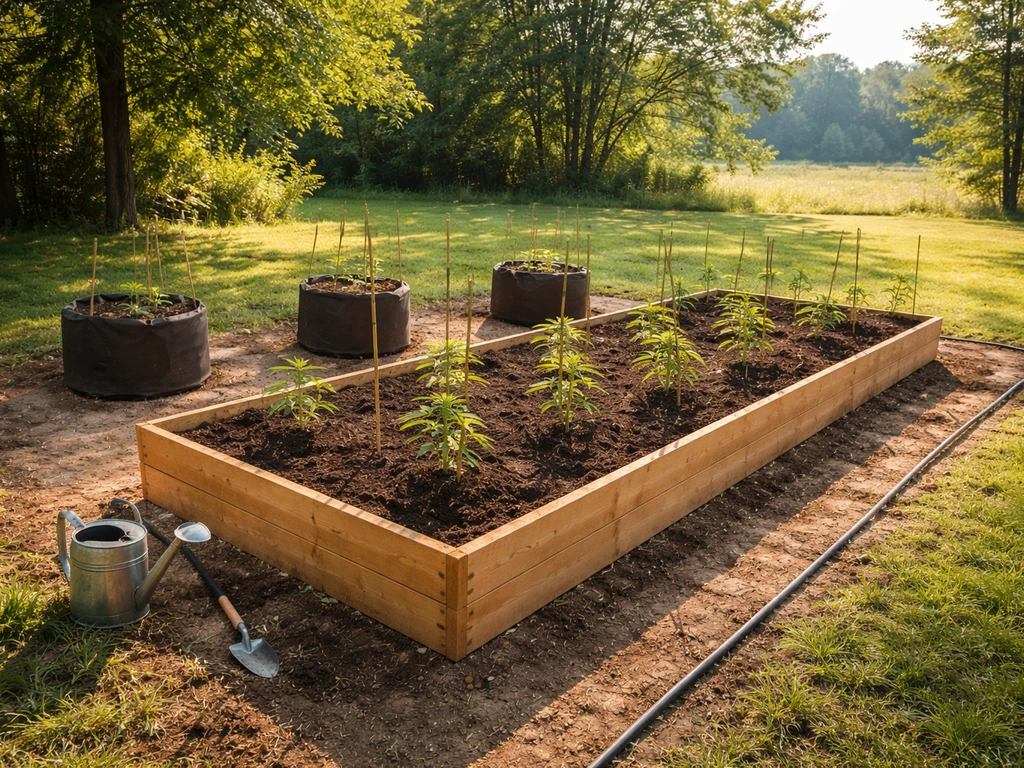
For a beginner, containers or raised beds are often the better call over planting directly in the ground. They give you control over soil quality, drainage, and mobility (you can move containers under a roof during hard rain). For containers, use at least 5-gallon pots for autos and 10 to 25-gallon pots for photoperiod plants that will get large. Fill them with a high-quality cannabis-friendly potting mix rather than native soil. If drainage in your yard is poor, if a hole dug 12 inches deep takes more than 10 hours to drain after filling with water, a raised bed is a smart move to prevent root rot. Raised beds also warm up faster in spring and give you better root zone management through Virginia's humid late summer.
Privacy and airflow
You need privacy screens that block public view, but be careful about creating a completely sealed enclosure. Good airflow around your plants is one of the most important Botrytis prevention tools you have. A lattice fence or privacy screen with some gaps is better than solid walls that trap humid air. Space your plants at least 3 to 5 feet apart and keep them from crowding each other as they grow.
Outdoor grow schedule: watering, nutrients, and training
Watering
VCE's general garden irrigation guideline is about 1 to 2 inches of moisture per week during dry periods, applied in one thorough session. For cannabis in containers, the rule is simpler: water thoroughly, then let the top inch or two of soil dry out before watering again. Stick your finger in the soil, if it's still damp an inch or two down, wait. This dry-wet cycle matters a lot in Virginia's humid summers, where it's easy to let containers stay too wet and trigger root rot. During Virginia's hot July and August, you may need to water containers every 1 to 2 days. During the cooler, wetter fall, back off significantly.
Nutrients
Follow a lifecycle-based nutrient approach. During the vegetative phase (late May through July), your plants need nitrogen-heavy feeding to drive leaf and stem growth. As they shift into flowering (August onward), taper nitrogen down and increase phosphorus and potassium, these support bud development, root health, and the plant's natural disease resistance. If you're using a pre-amended potting mix, you may not need to add much during early veg at all. Watch your plants: yellowing lower leaves during veg usually signal nitrogen deficiency; purple-tinged leaves and stems can indicate phosphorus deficiency; and if you're seeing magnesium deficiency symptoms (interveinal yellowing), it's sometimes caused by excess potassium or calcium competing for uptake, not a lack of magnesium itself. Don't over-correct one thing and create another problem.
Training and trellising
Outdoor plants in Virginia's long summer can get big, some photoperiod strains will easily reach 5 to 8 feet or more without any training. Low-stress training (LST), topping, or a simple trellis net (SCROG) during vegetative growth will open up the canopy, improve airflow, and make buds more accessible for monitoring and harvesting. Better canopy airflow directly reduces your Botrytis risk during the humid fall. Set up your trellis or support stakes early, before the plants need them, so you're not struggling to work around established growth later.
| Growth Phase | Key Tasks | Watering Frequency | Nutrient Focus |
|---|---|---|---|
| Seedling (weeks 1–3) | Transplant after hardening off; stake loosely if needed | Every 2–3 days (light) | Minimal; starter mix usually sufficient |
| Early veg (weeks 4–7) | Begin LST or topping; set up trellis support | Every 1–2 days in heat | High nitrogen |
| Late veg (weeks 8–10) | Continue training; monitor canopy airflow | Every 1–2 days | High nitrogen tapering off |
| Early flower (weeks 11–14) | Begin removing lower fan leaves for airflow | Every 1–2 days | Reduce N, increase P and K |
| Late flower (weeks 15–18) | Monitor buds closely for mold; reduce watering slightly | Every 2–3 days | Low N, high P and K, then flush |
| Harvest | Check trichomes; harvest by first frost | Minimal | None (flush or plain water) |
Troubleshooting mold, pests, and Virginia's weather

Botrytis (bud rot), your biggest outdoor threat in VA
Botrytis cinerea (gray mold / bud rot) is a humidity-driven fungal pathogen found virtually everywhere plants are grown, and Virginia's late summer and fall create near-perfect conditions for it: cool nights, heavy dew, and frequent rain during bud maturation. It gets inside dense buds and can destroy them from the inside out in days. Prevention is everything here because once Botrytis is established in a bud, that bud is lost. Prevention strategies include: choosing mold-resistant strains, maximizing airflow through canopy management and spacing, removing damaged or dying leaves that become entry points, and avoiding wetting buds when watering late in the day. If you see any signs of gray fuzzy growth or a bud that suddenly feels mushy or looks discolored, cut it out immediately with clean scissors and remove it from the grow area entirely.
Powdery mildew
Powdery mildew shows up as a white dusty coating on leaf surfaces and is most problematic during periods of fluctuating humidity. Keep your canopy open, avoid overhead watering, and if you catch it early, spraying leaves with water during the day (when humidity is lower) can help slow its spread. Penn State Extension also notes that powdery mildew fungi are obligate parasites, and that managing conditions such as syringing leaves during the day at times of low humidity can help inhibit infection and reduce powdery mildew pressure. There are also organic-approved treatments like potassium bicarbonate sprays. The key is catching it before it spreads, check the undersides of leaves regularly.
Aphids and caterpillars
Aphids are common on outdoor cannabis in Virginia. Light infestations won't do serious damage, but high populations cause leaf curl, yellowing, wilting, and reduced vigor. Check under leaves regularly, especially on new growth. Natural enemies like ladybugs, lacewings, and parasitic wasps often keep aphid populations in check on their own if you're not using broad-spectrum pesticides that kill the beneficials. For heavier infestations, a strong water spray to dislodge aphids or insecticidal soap applied to affected areas works well. Caterpillars will chew through leaves and buds, look for the damage (ragged holes, frass) and remove caterpillars by hand. Virginia Tech's IPM framework is a solid guide here: start with prevention and monitoring, use the least toxic control option that works, and escalate only if needed.
Heat spikes and cold snaps
Virginia summers can throw brief heat spikes above 95°F (35°C), which stress cannabis plants and can slow growth. If you're growing in containers, you have the advantage of being able to move plants to a shadier spot during extreme heat events. In-ground plants need extra water during heat spikes. On the other end, keep an eye on nighttime temperatures in September and October. Once nights start dipping into the 45–50°F range, your plants are under stress, and Botrytis risk goes up as humidity rises with cooler air. If frost is in the forecast before your plants are ready, use row cover fabric overnight as a short-term buffer, it can buy you a few extra days without damaging your crop. Local microclimates matter too: proximity to bodies of water, pavement, or structures can shift your actual frost risk by several degrees from the published average.
Wind damage
Virginia gets some gusty periods, especially during storm fronts. Tall outdoor plants with heavy buds are vulnerable to branch snapping or root loosening. Stake plants early, before they're top-heavy, and consider trellising as a wind buffer as well as a training tool. If a branch does snap partially, splint it with tape immediately, it'll often heal.
Harvest planning and what happens after
Knowing when to harvest
The most reliable way to judge harvest timing is by looking at trichomes under a jeweler's loupe or a cheap digital microscope. Clear trichomes mean the plant isn't ready. Cloudy (milky white) trichomes indicate peak THC. When you start seeing amber trichomes mixed in with cloudy ones, the plant is at or slightly past peak, many growers aim for around 10–20% amber for a more relaxing effect, while harvesting at mostly cloudy gives a cleaner, more energetic result. Check the pistils too: when 70–90% of the white hairs have turned orange-red and curled in, you're in the harvest window. Watch for these signs from late September through mid-October for most Virginia photoperiod grows.
Harvesting and drying
Cut plants at the base or harvest branch by branch. Trim large fan leaves immediately (wet trimming), then hang branches or whole plants upside down in a dark, ventilated space at about 60–70°F and 45–55% relative humidity. Proper drying usually takes 7 to 14 days. If you rush this step in Virginia's often-humid October air, you risk Botrytis taking hold even after harvest. A small fan to keep air circulating (not blowing directly on buds) and a dehumidifier in your drying space are well worth it. When small stems snap rather than bend, the drying is complete.
Curing
After drying, trim the buds, place them in glass mason jars (about 75% full), and store in a dark, cool spot. Open the jars once or twice a day for the first two weeks to let moisture escape, this is called 'burping.' A properly cured harvest (2–4 weeks minimum, 8 weeks for best results) develops dramatically better flavor and smoothness compared to dried-only cannabis. Don't skip curing just because you're eager to try it.
Your Virginia outdoor grow checklist: what to do right now
It's mid-June as of today, which means if you haven't started yet, you're behind the ideal timeline but not out of the game. Auto-flowering strains started now in containers will still finish before first frost in most of Virginia. For photoperiod grows, you can still transplant in June and get plants through a solid vegetative stretch before they flower in August, just expect somewhat smaller plants and yields than an earlier start. For photoperiod grows, you can still transplant in June and get plants through a solid vegetative stretch before they flower in August, just expect somewhat smaller plants and yields than an earlier start, and if you want the timing for a different climate, see how to grow weed outside in oklahoma. Here's what to do today.
- Check Virginia's CCA home cultivation rules and confirm you understand the tagging and visibility requirements before anything else
- Look up your area's average first frost date (use PlantMaps or NOAA's frost data for your specific county or zip code) to confirm your harvest deadline
- Choose a mold-resistant strain with a 60–70 day flowering time; if starting in mid-June, prioritize auto-flowering strains for the most reliable finish
- Get your seeds or seedlings sourced from a licensed Virginia retailer or online seed bank
- Scout your yard for the full-sun spot (8–10 hours of direct sun) that's not visible from the street; confirm it has good airflow and drainage
- Get a soil test if you're using native Virginia soil or pick up a quality cannabis-suitable potting mix for containers
- Prepare containers (10+ gallons for photoperiod, 5+ gallons for autos) or a raised bed with well-draining soil amended to pH 6.0–6.8
- Pick up plant tags (or print the CCA template), stakes, trellis netting, and basic supplies like pH test strips, organic fertilizer, and insecticidal soap
- Start seeds now and transplant seedlings outdoors as soon as they're 4–6 inches tall and temperatures are consistently above 50°F at night
- Set a calendar reminder to check trichomes and pistil color starting in late September
Growing cannabis outdoors in Virginia is genuinely doable for a first-timer, the season is long enough, the sun is strong enough, and the main threats (Botrytis, aphids, humidity) are all manageable with a bit of preparation. The biggest mistakes I see beginners make are starting too late, skipping strain research, and ignoring airflow until there's a mold problem. Get ahead of those three things and you're already ahead of most first grows. If you're curious how Virginia's season compares to neighboring states, the approaches for growing outdoors in New York or California follow similar principles but with different frost windows and humidity profiles to account for. If you're specifically looking for how to grow weed outdoors in New York, focus on the state’s frost window and humidity management from day one. If you want more specific guidance on outdoor germination and early seedling care, see our guide on how to grow weed seeds outside. If you’re specifically wondering how to grow weed outside in California, you’ll still want to match your strain to the local frost window and manage humidity and airflow grow outdoors in New York or California. If you’re specifically trying to figure out how to grow weed in Ohio, the same high-level steps apply, but you’ll need to adjust for Ohio’s frost dates and its typical late-season humidity.
FAQ
What should I do if my yard only gets a few hours of direct sun?
If your site gets less than 6 hours of direct sun, yields usually drop fast and plants stay more “open” and mold-prone later. The best workaround is to change locations (ideally south-facing) rather than relying on more watering or nutrients. If you cannot, consider autos with shorter flowering and keep spacing tighter for better airflow, but expect lower results.
How do I tell if my soil drainage will be good enough to prevent root rot?
Start by choosing a spot that stays well-drained after rain, then verify drainage by timing how long water takes to sink away (not how quickly the surface dries). In containers, use a potting mix with real drainage and never let runoff sit in a saucer. In-ground, raised beds are often the easiest fix for Virginia’s wet falls because they reduce soggy root zones during bud maturation.
Can I use a solid privacy fence to hide my plants completely?
Yes, and it often backfires if the screen is too dense. For humidity and botrytis prevention, aim for privacy that blocks line-of-sight but still allows cross-breeze. Use lattice, spacing, and staggered placement rather than fully sealed walls, and avoid creating a “humid pocket” right around the buds.
How far from the street or sidewalk do my plants need to be?
The legal visibility rule is based on public view without optical aids, so anything near a sidewalk-facing side, front yard, or open fence line can be a problem even if you feel it is “mostly hidden.” A practical approach is to do a walkthrough at eye level from the street and then again from a neighbor’s likely vantage points, and choose the most screened location you can.
What’s the best way to handle an unexpected cold snap after I transplant?
If you start seeds and the weather flips cold suddenly, protect seedlings but do it temporarily. Row cover overnight can work when nights are near the stress threshold, but remove or vent during daylight so you do not trap moisture around young plants. Avoid covering plants for long stretches in humid conditions.
My plants look greener than expected, but growth seems slow, what nutrients should I adjust first?
For beginners, too much nitrogen is a common issue because it looks like “more growth” at first, then plants become leafy and dense, which increases mold risk. Follow the feeding shift you described, and correct problems based on leaf symptoms and timing rather than adding more nutrients automatically. If plants are still small late in veg, increasing N usually is not the fix.
How can I tell bud rot early, and what should I do if I spot it?
Early bud rot can be mistaken for normal swelling, but botrytis typically looks wrong fast, turning parts of buds gray-brown and feeling mushy. If you see any suspicious tissue, cut it out immediately with clean scissors and remove the material away from the grow area. Afterward, increase airflow and avoid watering in the late day to reduce new wetness inside the canopy.
What are the first signs of powdery mildew, and how quickly should I respond?
Powdery mildew is easiest to control when you act before it spreads across many leaves. Check undersides of leaves more often than the top surface, and avoid overhead watering. If you use any treatment, apply when humidity is lower and give it time to dry, and focus on stopping spread rather than expecting perfect eradication in one shot.
If I see aphids, should I spray right away or try natural predators first?
For aphids, the goal is to reduce them before they explode on new growth. Ladybugs and lacewings help most when you avoid broad-spectrum sprays, and a strong water spray can dislodge small colonies quickly. If leaves start curling and numbers surge, insecticidal soap is often more effective than waiting, but always test on a small area first.
How do I decide between harvesting for ripeness versus harvesting early to avoid wet fall conditions?
A good rule is to harvest early enough that buds dry within 7 to 14 days without sitting in very humid air. If you are late due to weather, the risk rises even if the plant looks ready, and you may need to upgrade drying conditions (dehumidifier, more gentle airflow, colder, darker space). Relying only on the calendar without checking trichomes usually causes the biggest timing mistakes.
What drying setup prevents mold after I cut the plants?
When plants are in the harvest window, cooler nights and high humidity can increase the chance of post-harvest issues if drying is slow. Use a drying space you can control to about 60 to 70°F and 45 to 55% relative humidity, and make sure air moves through the room but not directly blasted onto buds. If small stems do not snap, it is still too wet.
Next Article
How to Grow Weed in Ohio Outdoors: Step by Step Guide
Beginner step-by-step guide to growing outdoor cannabis in Ohio, from legal basics to harvest, drying, curing, and troub
