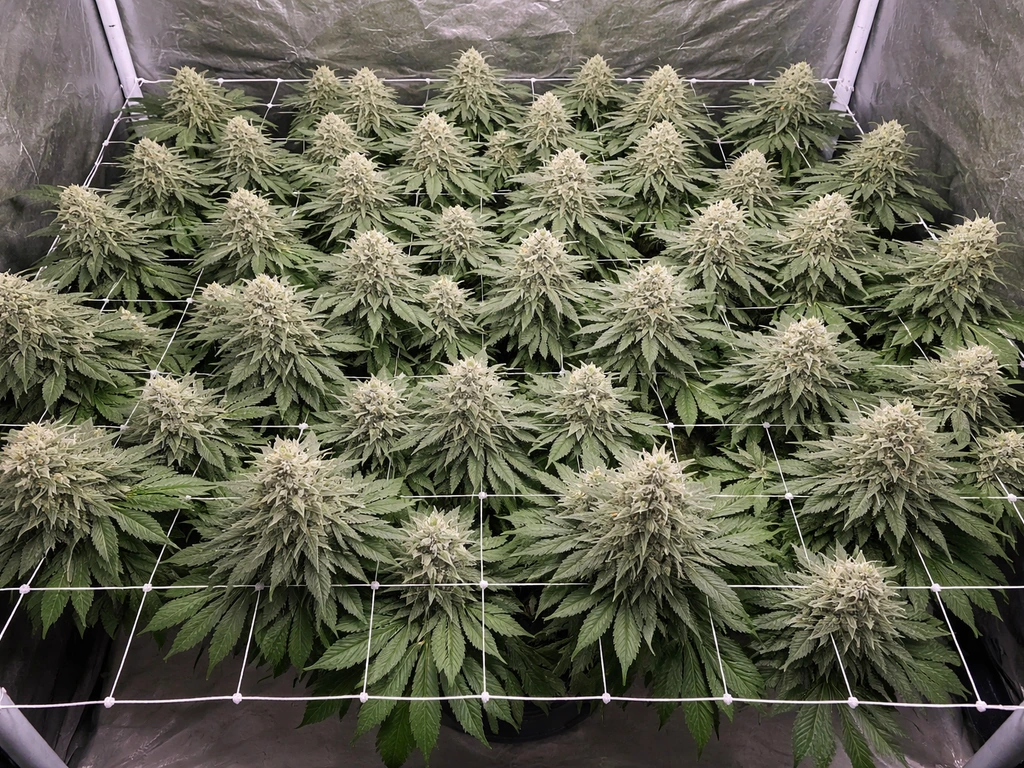
Yes, you can legally grow cannabis outdoors in Ohio if you're 21 or older at your primary residence. Adults are allowed blank" rel="noopener noreferrer">up to six plants per person, with a maximum of twelve plants per household if two or more adults live there. The catch is that your plants must be in a secured, enclosed area that isn't visible from a public space with the naked eye. Do that right, and you can run a fully legal outdoor grow from seed to harvest right in your backyard. Here's exactly how to do it. If you already have seeds, the next step is learning how to grow weed seeds outside so you get them germinated, hardened off, and into the right outdoor timing.
How to Grow Weed in Ohio Outdoors: Step by Step Guide

Marcus Holbrook
23 May 2026

Ohio legality and what you actually need to know to stay compliant
Ohio's adult-use home grow rules come from Ohio Revised Code § 3780.29 (enacted December 7, 2023). The core rules are simple: you must be 21 or older, growing at your primary residence, and staying at or under six plants per adult. Two adults in the same household can grow up to twelve plants combined, but one person cannot exceed six regardless of household size. The plants must be kept in a secured closet, room, greenhouse, or other enclosed area that prevents access by anyone under 21. Critically, they must not be visible by normal unaided vision from a public space.
For an outdoor grow, that last rule is what trips people up. A fenced backyard with a privacy screen or a covered greenhouse structure is typically the right approach. A plant clearly visible over a standard fence from the sidewalk is a problem. Before you put anything in the ground, walk out to your street and look back at your yard. If you can see your growing area, add a fence, trellis screen, or shade cloth barrier before you plant. Cannabis laws can and do change, so check the current text of Ohio law or consult a local attorney if anything is unclear. Rules may have been updated since this was written.
Picking the right strains for Ohio's outdoor conditions
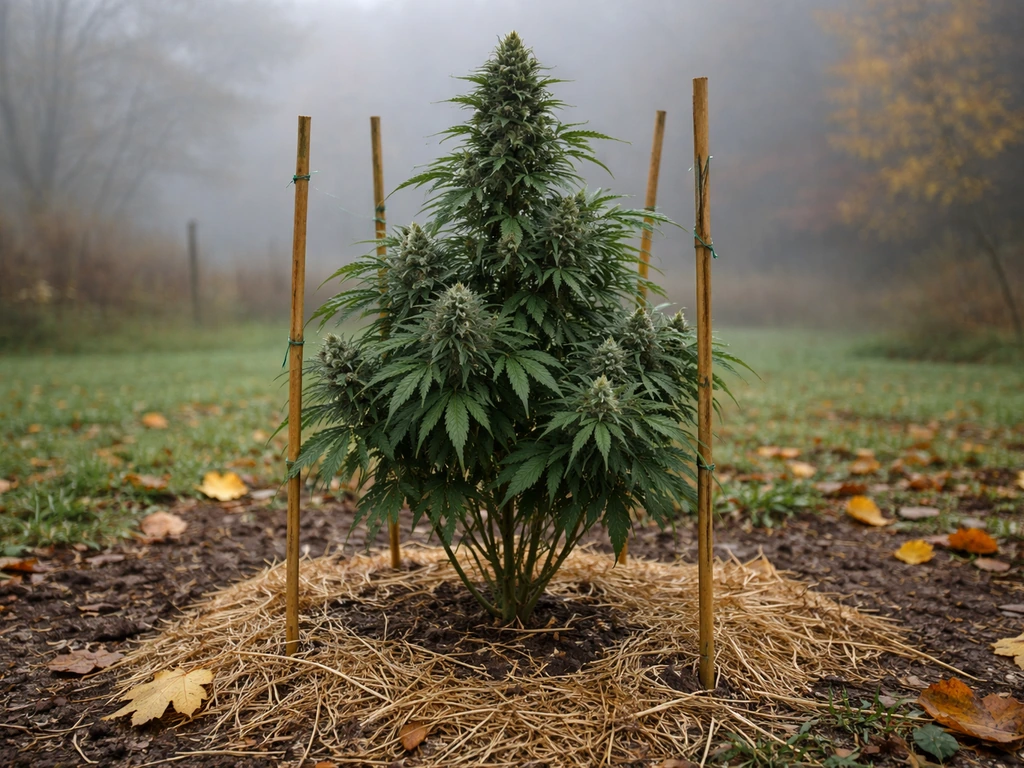
Ohio sits in USDA Hardiness Zones 5b through 6b depending on where you are in the state. Summers are warm and humid, springs can be cold and wet, and fall arrives fast. The first fall frost in most of Ohio typically hits between late September and mid-October. That means you need strains that finish by late September to be safe, especially in Cleveland, Columbus, or anywhere north of I-70.
Look for strains with a flowering time of 8 to 9 weeks that are labeled mold-resistant or suited to temperate climates. Auto-flowering varieties are especially beginner-friendly outdoors in Ohio because they flower based on age rather than light cycle, letting you time harvest more predictably. Some solid options for Ohio outdoor grows include:
- Auto-flowering strains (any): finish in 70 to 90 days from seed regardless of light schedule, great for planting in late May and harvesting in late August before any humidity or frost risk
- Early-finishing indica-dominant hybrids: strains like Northern Lights, Critical, or any 'early' or 'fast' version of popular photoperiod strains that finish in 8 weeks of flower
- Mold-resistant genetics: look for strains bred for humid environments, often labeled 'mold resistant' or with genetics from Durban Poison, which handles humidity well
- Ruderalis-heavy autos: extremely forgiving for beginners, tolerant of temperature swings and lower-light cloudy days Ohio is known for
For seeds versus clones: seeds are easier to start outdoors because they develop a taproot that anchors them directly into your soil or container, making them more drought-tolerant than clones. Clones are great if you trust the source and want a genetic copy of a known plant, but they're harder to source legally and need a week or two longer to establish outdoors. Buy seeds from a reputable seed bank that clearly labels feminized or auto-flowering genetics. Feminized seeds eliminate the risk of male plants, which is a real concern for beginners.
Setting up your outdoor grow site
Location and sun exposure
Cannabis is greedy for sunlight. You want a spot that gets at least 6 hours of direct sun per day, and ideally 8 or more. South-facing spots are best in the northern hemisphere. Avoid spots near large trees that shade the area in the afternoon. If your only option is partial shade, auto-flowering strains handle lower light better than photoperiod plants. Airflow matters too: avoid corners of the yard where air stagnates, because stagnant humid air in Ohio summers is a recipe for powdery mildew and botrytis.
Soil versus containers
Both work well in Ohio. In-ground planting gives plants room to develop large root systems and reduces how often you need to water, which matters during Ohio's July heat waves. The downside is that you're working with native soil that may need significant amendment. Containers give you full control over soil quality, let you move plants if needed (helpful for autos or younger plants during a surprise late frost), and drain more consistently. For beginners, I'd lean toward containers: use 5-gallon pots for auto-flowering plants and 10 to 15-gallon containers for photoperiod strains that will grow larger.
| Factor | In-Ground | Containers |
|---|---|---|
| Root space | Unlimited, promotes large plants | Limited by pot size, manageable |
| Watering frequency | Less frequent once established | More frequent, especially in heat |
| Soil control | Requires amending native soil | Full control with purchased mix |
| Mobility | None | Can move plants to avoid frost or weather |
| Beginner-friendliness | Moderate | High |
| Cost | Low (amend existing soil) | Moderate (pots and soil bags) |
Soil preparation and drainage
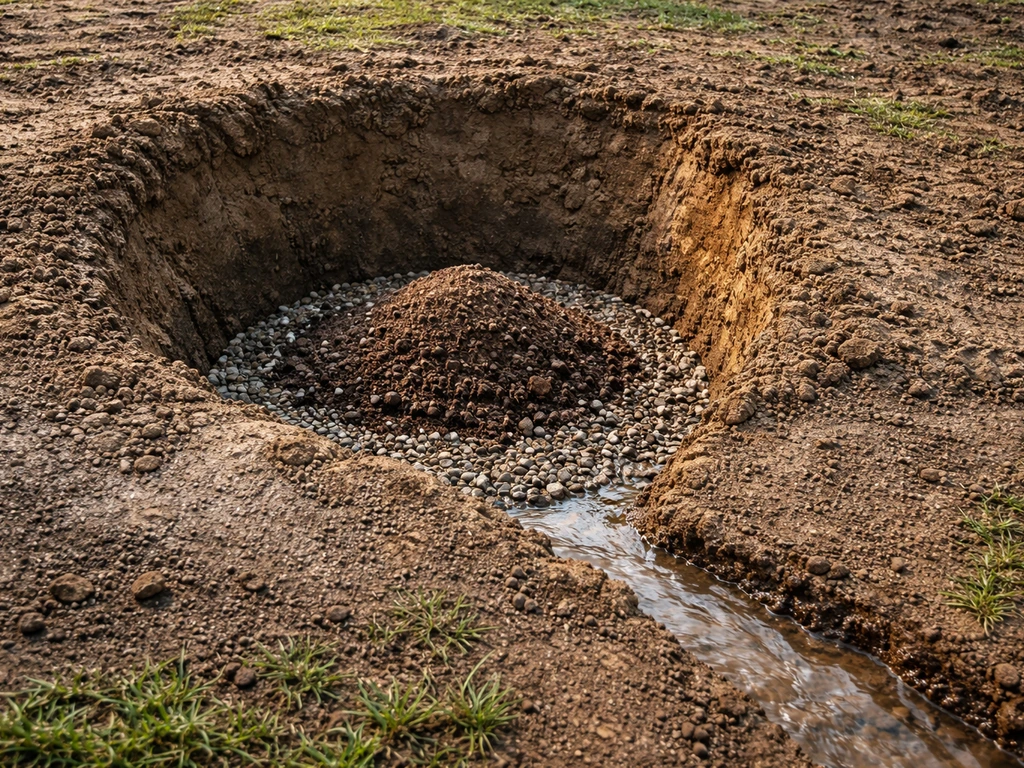
Cannabis roots hate sitting in water. If you're planting in-ground and your soil is heavy clay (common in central and northwest Ohio), dig out a 2-foot-deep hole per plant and fill it with a mix of quality compost, perlite, and native soil in roughly a 1:1:1 ratio. For containers, use a high-quality cannabis-specific potting mix or build your own with coco coir, perlite (about 30%), and compost. Make sure every container has drainage holes and that the container sits elevated slightly so water can drain freely underneath. Target a soil pH between 6.0 and 7.0: cannabis uptakes nutrients best in that range. Get an inexpensive soil pH meter and check before you plant.
Ohio planting timeline and weather planning
Ohio's last average spring frost date ranges from mid-April in southern Ohio (Cincinnati area) to mid-May in northern Ohio (Cleveland area). Do not put young seedlings outside until after your local last frost date. Here's a practical calendar to work from:
| Task | Southern Ohio (Zone 6b) | Northern Ohio (Zone 5b/6a) |
|---|---|---|
| Start seeds indoors | Early to mid-April | Late April to early May |
| Last expected frost | Mid-April | Mid-May |
| Transplant outdoors (photoperiod) | Late April to early May | Mid to late May |
| Transplant outdoors (autos) | Early to mid-May | Late May |
| Vegetative growth peak | June through July | June through July |
| Flowering begins (photoperiod) | Late July to early August | Late July to early August |
| Target harvest window | Late September | Mid to late September |
| First fall frost risk | Mid-October | Late September to early October |
Ohio summers bring occasional heat spikes above 95°F. Cannabis handles heat up to about 85°F comfortably; above that, growth slows and plants may show heat stress (curling leaves, bleaching near the top). During heat waves, water in the early morning, add a shade cloth over container plants, and make sure plants are never sitting in dry soil. Ohio also gets significant summer rainfall, sometimes several inches in a single week. That's usually fine for in-ground plants but can oversaturate containers: monitor drainage and don't water during or right after heavy rain.
Germination, seedling care, and transplanting
Germinating your seeds
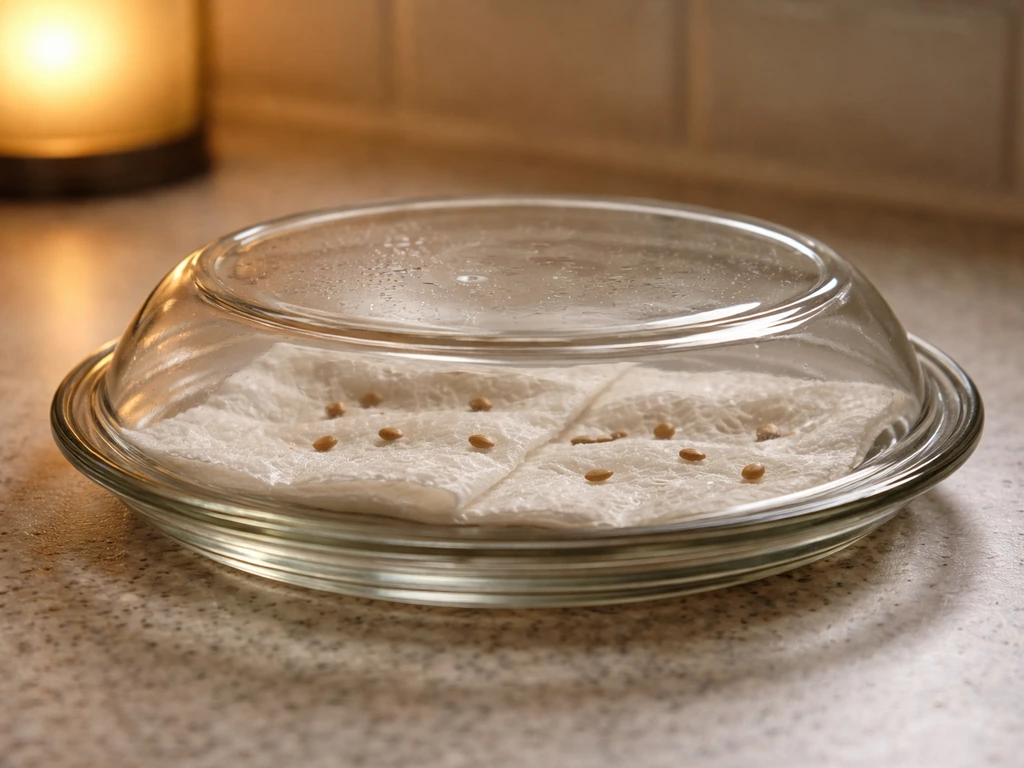
The paper towel method works reliably: place seeds between two moist paper towels, put them on a plate, cover with another plate to hold moisture, and keep them somewhere warm (around 75 to 80°F). Check every 12 hours. Most seeds will show a taproot within 24 to 72 hours. Once the taproot is about a quarter inch long, plant it taproot-down in a small starter pot (a 4-inch or Solo cup works fine) filled with a light seedling mix, about a quarter inch deep. Water gently and cover loosely with plastic wrap to hold humidity until the sprout breaks the surface.
Seedling stage indoors (weeks 1 to 3)
Keep seedlings indoors under a basic LED or fluorescent light for 18 hours per day, or on a sunny south-facing windowsill, for the first two to three weeks. Seedlings are fragile: don't overwater, don't feed nutrients yet, and keep temperatures between 70 and 80°F. The seedling is ready for outdoor hardening when it has developed 3 to 4 sets of true leaves and looks stocky rather than stretched.
Hardening off before transplanting
Don't just throw indoor seedlings directly into full outdoor sun. Give them 5 to 7 days to adjust. Start by putting them outside in a shaded, sheltered spot for 2 to 3 hours on day one. Gradually increase sun exposure and time outside each day. By day 7, they should be spending the full day outdoors in their final location. Skipping this step is one of the most common beginner mistakes, and I made it myself the first time: seedlings that go straight into full sun will sunburn and stall for weeks.
Transplanting into final containers or ground
Transplant in the early morning or on a cloudy day to minimize stress. Water the seedling in its starter pot first so the root ball holds together. Dig a hole slightly larger than the root ball in your container or ground spot, place the plant, and backfill gently. Water thoroughly after transplanting. For the next few days, keep an eye out for transplant shock: drooping that doesn't recover after a few hours usually means the roots were disturbed. If that happens, give it some shade and keep the soil evenly moist until it perks up.
Watering and feeding your outdoor plants
Watering schedule
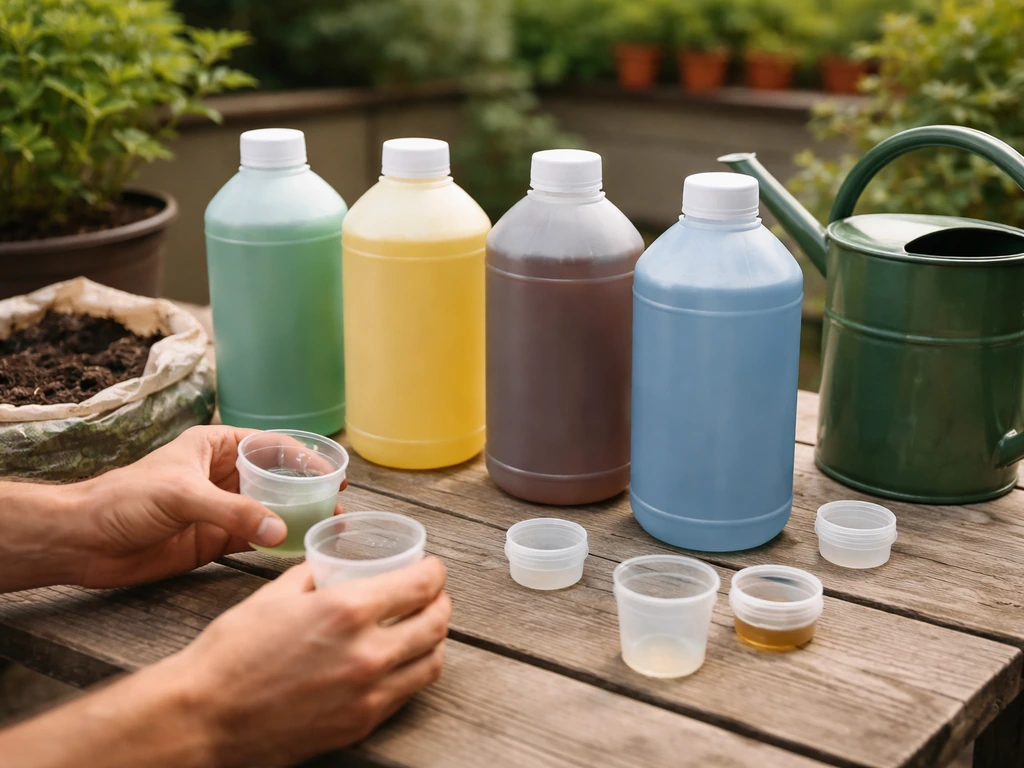
Outdoor plants need watering based on conditions, not a fixed schedule. The simplest method: stick your finger 2 inches into the soil. If it's dry at that depth, water thoroughly until runoff comes out the drainage holes. In cooler, cloudier Ohio weather (common in May and June), container plants may only need water every 2 to 3 days. During a July heat wave, daily watering is normal. In-ground plants water themselves from rain to a greater extent, but check soil moisture during dry spells. Always water at the base of the plant, not over the leaves, to reduce disease risk.
Nutrient schedule for outdoor grows
If you planted in quality amended soil or a cannabis-specific potting mix, you likely don't need to add nutrients for the first 4 to 6 weeks. After that, a simple three-phase approach works well for outdoor beginners:
- Vegetative phase (weeks 4 to 8 from transplant): Use a nitrogen-heavy fertilizer at half the recommended dose. Liquid nutrients diluted in water are easiest. Feed once a week, plain water the other waterings.
- Pre-flower and early flower (weeks 8 to 12): Switch to a bloom formula lower in nitrogen and higher in phosphorus and potassium. Reduce nitrogen gradually to avoid nutrient burn during the flowering transition.
- Mid to late flower (final 4 to 6 weeks): Continue bloom nutrients but reduce dose by about 25%. In the final 1 to 2 weeks before harvest, flush with plain pH-corrected water to clear residual nutrients from the medium.
Keep your water pH between 6.0 and 7.0 when feeding (6.2 to 6.8 is ideal). Nutrient lockout from incorrect pH is one of the most common reasons outdoor plants show deficiencies even when you're feeding regularly. An inexpensive digital pH meter and pH up/down solution costs about $15 to $25 and is worth every penny.
Training, pest prevention, and fixing problems
Training techniques for outdoor plants
Training increases yield by exposing more bud sites to direct sunlight and improving airflow through the canopy. For outdoor beginners in Ohio, two low-stress techniques work especially well. Low-stress training (LST) involves gently bending branches outward and tying them down with soft plant ties or twist ties to create a wider, flatter canopy. Start LST during the vegetative stage when stems are still flexible, typically 3 to 5 weeks after transplanting outdoors. Topping is another option: cut the main growing tip above the 4th or 5th node to create two main colas instead of one. Do this only during vigorous vegetative growth and at least 3 weeks before you expect flowering to begin. Don't top auto-flowering plants: their short life cycle means they rarely have time to recover before flowering starts.
Ohio-specific pests and diseases to watch for
Ohio's humid summers make outdoor cannabis susceptible to a few specific threats. Powdery mildew shows up as white powdery spots on leaves, usually during humid nights in late summer. Spider mites are tiny and fast-moving and love dry, hot spells in July. Caterpillars (corn borers and budworms specifically) can devastate buds in late summer. Botrytis (gray mold) is the most serious late-season threat in Ohio, especially during wet Septembers when buds are dense and humidity is high.
Prevention is far easier than treatment. Maximize airflow by trimming lower fan leaves during vegetative growth, spacing plants at least 3 to 4 feet apart, and avoiding overhead watering. Inspect plants at least twice a week, especially the undersides of leaves. If you catch something early, act immediately.
| Problem | Signs | Treatment |
|---|---|---|
| Powdery mildew | White powder on leaf surfaces | Spray with diluted potassium bicarbonate or neem oil, improve airflow |
| Spider mites | Tiny dots on leaves, fine webbing underneath | Neem oil or insecticidal soap spray, repeat every 3 days for 2 weeks |
| Caterpillars/budworms | Chewed leaves, frass (dark droppings) on buds | Spinosad-based spray, manual removal, BT (Bacillus thuringiensis) |
| Botrytis/gray mold | Gray fuzzy mold inside dense buds | Remove affected material immediately, improve airflow, avoid wet foliage |
| Nitrogen deficiency | Yellowing lower leaves from bottom up | Feed with nitrogen-heavy fertilizer, check soil pH |
| Overwatering | Drooping leaves, soggy soil, slow growth | Let soil dry out fully before next watering, check drainage |
Dealing with Ohio's late-season humidity
Late August and September in Ohio can bring extended stretches of cool, humid weather that are ideal conditions for botrytis in dense flower clusters. If rain is forecast for several days in a row during late flowering, consider using a temporary rain shelter: a simple hoop house frame with clear plastic sheeting over the top (but open on the sides for airflow) can protect buds from direct moisture. Remove it on dry, sunny days to let the plants breathe. This is a game-changer for finishing high-quality buds in Ohio.
Knowing when to harvest, then drying and curing right
Reading harvest timing
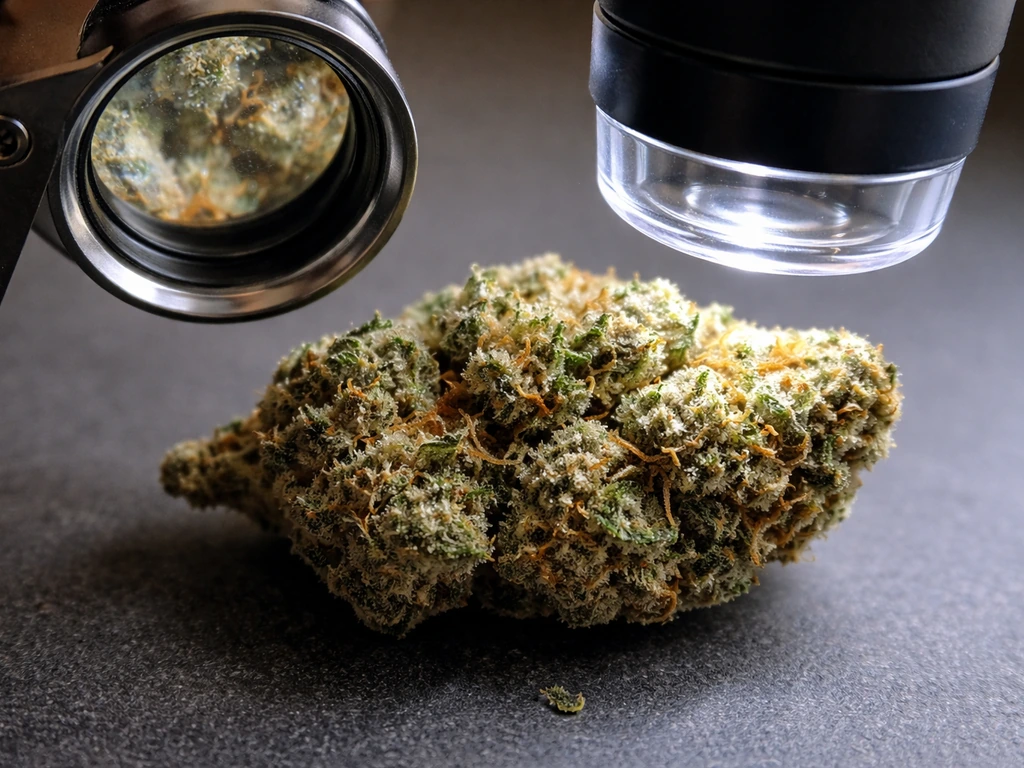
The most reliable way to know your plants are ready is to look at the trichomes with a jeweler's loupe (30x to 60x) or a cheap digital microscope. Trichomes are the tiny crystal-like structures on the buds and sugar leaves. Clear trichomes mean the plant isn't ready. Cloudy white trichomes signal peak THC. Amber trichomes mean THC is converting to CBN, producing a more relaxing, sedative effect. For most people, harvesting when 70 to 90% of trichomes are cloudy with just a hint of amber is the sweet spot. If you don't have a loupe yet, look at the pistils (the hair-like strands on buds): when about 70 to 80% have darkened from white to orange or brown, you're close.
In Ohio, aim to have photoperiod plants harvested by the last week of September at the latest. If an early frost is forecast and your plants aren't quite ready, a light frost won't immediately kill them, but repeated frosts will damage trichomes and promote mold. At that point, harvest early rather than risk the whole crop.
Harvesting and drying
Harvest in the early morning after a dry night. Cut branches rather than pulling the whole plant at once, which lets you dry in manageable sections. Trim away large fan leaves immediately (wet trim), or leave them on and trim after drying (dry trim). Hang branches upside down in a dark room with good airflow, a temperature of 60 to 70°F, and humidity around 45 to 55%. Drying too fast (low humidity, high heat) produces harsh, grassy-smelling weed. Drying too slow (high humidity, poor airflow) invites mold. Buds are ready for curing when the small stems snap rather than bend, usually after 7 to 14 days.
Curing for quality
Curing is what turns decent weed into great weed, and it's the step most beginners skip or rush. Place dried buds loosely in wide-mouth glass mason jars, filling them about 70 to 75% full. Store jars in a cool, dark place. For the first week, open the jars once or twice a day for about 15 minutes to release moisture and exchange air (this is called 'burping'). If buds smell like ammonia or fresh-cut grass when you open the jar, leave the lid off longer. After the first week, burp once a day. After two weeks, every few days. A proper cure takes 4 to 8 weeks minimum. The flavor, smoothness, and potency all improve noticeably with time. Humidity packs (62% Boveda or Integra packs) placed inside the jars help maintain ideal moisture during long cures.
After harvest: planning your next outdoor run
Once your first harvest is jarred up, take notes on what worked and what didn't. Which strains finished before Ohio's early frost? Which spots in your yard got the most sun? Did pests show up and when? These notes are worth more than any guide for your second grow. If you're in southern Ohio, you may have enough growing season to run a fast auto-flowering strain twice in one season: start seeds in May and again in late June or early July. Northern Ohio is tighter on time but one auto run or one photoperiod run is very doable every year.
Ohio's outdoor growing conditions are different from states like California or Virginia, where longer seasons give growers more flexibility. If you’re asking how to grow weed outside in VA, the biggest differences are the length of the growing season and how humidity affects mold risk. If you're curious how Ohio's constraints compare to other states, growers in New York face similar short-season challenges, while those in Virginia and Oklahoma deal with different soil and humidity profiles. If you’re specifically looking for how to grow weed in Virginia, the main factors to compare are your planting dates, rainfall, and how you’ll handle humidity and late-season mold risk. If you want, you can apply the same outdoor timing and weather planning to understand how to grow weed outdoors in NY growers in New York. Each state shapes what strains and techniques work best. For Ohio, the winning formula is simple: fast strains, good drainage, excellent airflow, and a close eye on the forecast in September.
FAQ
Do Ohio home grow rules mean I can plant anywhere in my yard as long as I’m under the plant limits?
No. You also need the grow area in a secured, enclosed spot that is not visible from a public place with normal unaided sight. A tall fence alone may not be enough if plants can still be seen over it, so do the “look back from the street” test before planting.
How strict is the “primary residence” requirement, what if I have a second home or stay away for weeks?
Your grow has to be at your primary residence. If you regularly live elsewhere, or you cannot access and supervise the plants, it can create legal risk even if the plant count matches. If your situation is borderline, confirm with the current Ohio statute text or a local attorney.
Can I start seeds indoors and then move plants outdoors later, and does that affect the legal setup?
Yes, starting indoors is fine as long as the legal requirements for a secured, enclosed grow area are still met. Plan ahead for the outdoor move, because the “not visible from public spaces” rule applies once plants are large enough to show above the enclosure.
What should I do if my seedlings sprout but I miss my local last-frost window?
Don’t rush them outside if nights are still cold for your area. Keep them indoors or under protection (like a cold frame) until after your local last frost date, then harden them off gradually. For delayed timing, auto-flowering strains are generally more forgiving, because you cannot easily “buy time” with photoperiod plants.
Are autoflowering plants always better for Ohio, or are photoperiod plants still a good option?
Autos are often easier because they do not require you to manage flowering timing with the light cycle. Photoperiod plants can work too, but your strain must reliably finish early enough for Ohio’s late September to mid-October frost window, and late-season mold pressure is usually higher with slower finishing phenotypes.
Can I grow in containers on a balcony or small patio in Ohio?
It can work if you can meet airflow and light needs, and if the setup stays fully enclosed and not visible from public spaces. Also, balconies can trap humidity around leaves, increasing mildew risk, so choose containers with excellent drainage and ensure air movement around the canopy.
How much rain can container grows tolerate in Ohio before I need to intervene?
Containers are more vulnerable to oversaturation. If heavy rain is forecast, check your drainage immediately, then wait to water based on soil moisture at 2 inches down. If water is pooling or the container drains too slowly, consider improving drainage media or using larger containers.
What’s the best way to prevent botrytis if I can’t control the weather?
You can reduce risk with dense-bud management: keep spacing at least 3 to 4 feet, maintain good airflow by trimming lower leaves during vegetative growth, and monitor closely in late August and September. If multiple rainy days hit during late flowering, a side-vented rain shelter over the top can keep buds from staying wet while still allowing airflow.
If I see a mold or mildew spot, can I just remove the affected leaves and keep going?
Often you should act fast, remove infected material, and improve airflow immediately, but do not assume one spot is harmless. Check surrounding buds, undersides, and lower canopy for spread. If you see expanding gray mold in flowers, the safest move is to harvest affected sections early to protect the rest.
How do I avoid nutrient lockout when feeding outdoors in humid Ohio weather?
The practical lever is pH control. Use a soil or runoff check and keep your water pH in the 6.0 to 7.0 range (with about 6.2 to 6.8 as a target). Also avoid heavy late-season feeding, because stressed plants can become more susceptible to deficiencies and disease.
Should I water at the base every time, and does it matter if leaves get wet from rain?
You should always water at the base to reduce leaf wetness from watering. Rain is harder to control, but you can still manage the risk by avoiding overhead irrigation and improving airflow, then using a temporary rain shelter during extended wet spells in late flowering.
What are common signs that I should harvest earlier than planned in Ohio?
Harvest early when repeated frosts are forecast or when trichomes and pistils are near peak but you see increasing mold risk in dense clusters. A light frost usually does not instantly ruin everything, but repeated cold plus humidity can damage trichomes and accelerate botrytis, so prioritize crop health over perfect timing.
Is “burping” jars once or twice daily during the first week always necessary?
It depends on how wet the buds still are after drying. The first-week goal is to vent out excess moisture safely, typically once or twice per day for about 15 minutes, then adjust. If jars stay very humid and buds smell ammoniac or like fresh grass, extend venting time or frequency until odor improves.
Do humidity packs replace burping during curing?
Humidity packs help stabilize moisture inside jars, but they usually do not eliminate the need to manage airflow in the early stage. You can reduce burping frequency once things stabilize, but keep an eye on smell and jar conditions, and continue burping if buds still seem too damp or the cure smells off.
Next Article
How to Grow 1 Pound Per Plant: Yield Guide for Beginners
Step-by-step plan to grow ~1 lb per plant using strain choice, light, training, feeding, and troubleshooting for beginne