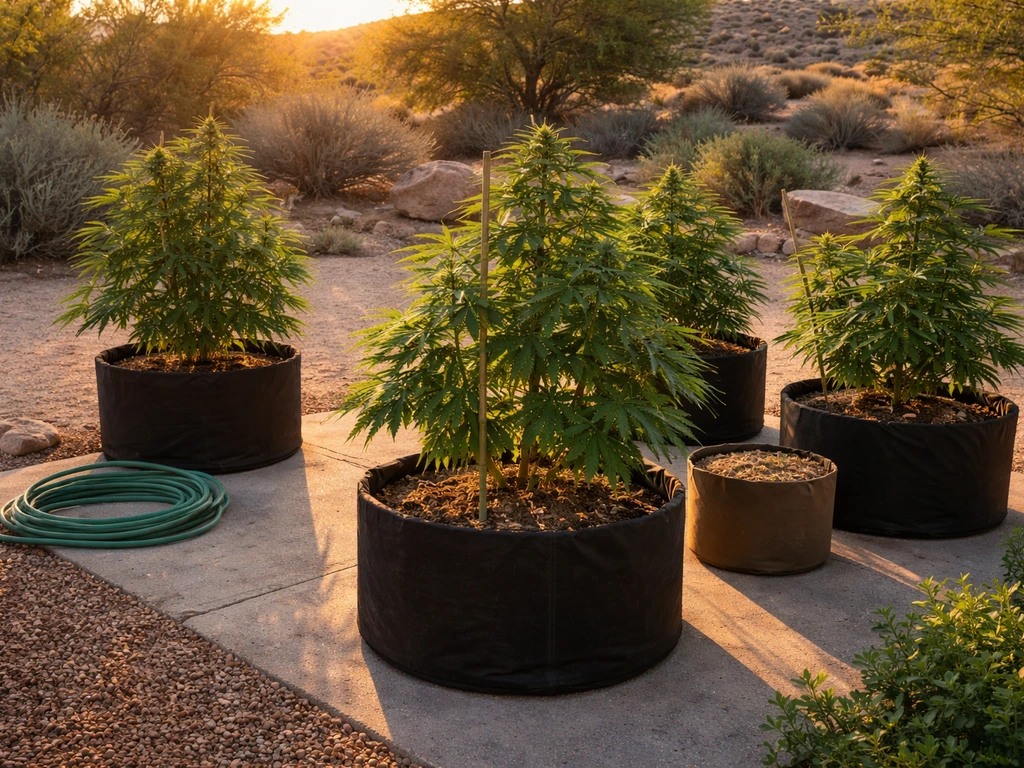
Growing cannabis outdoors in Pennsylvania is genuinely possible, and the state's long summers and fertile soil can produce impressive harvests. But there is one hard truth you need to know before you buy a single seed: as of mid-2026, home cultivation of cannabis is still illegal under Pennsylvania law, regardless of whether you hold a medical marijuana card. Governor Shapiro has pushed for adult-use legalization in his budget proposals, and Philadelphia City Council has formally urged the General Assembly to act, but no home-grow bill has passed into law. That means everything in this guide is written so you are completely prepared the moment the law changes, and so you understand exactly what compliance will require when it does.
How to Grow Weed Outside in PA: Step-by-Step Outdoor Guide

Marcus Holbrook
14 Jul 2026
Legal and Compliance Checklist for Growing Cannabis in Pennsylvania
Pennsylvania's Medical Marijuana Program was established by Act 16 of 2016 and is administered by the PA Department of Health. That program authorizes registered patients to purchase from licensed dispensaries. It does not grant any home-cultivation right. Non-medical recreational adult use has not been enacted at the state level as of July 2026. Before you grow a single plant outdoors, work through every item on this checklist.
- Verify current Pennsylvania state law: check the PA Department of Health website and PA General Assembly bill tracker for any newly enacted home-grow provisions before starting.
- Check your municipality: cities and counties can layer their own restrictions on top of state law. Philadelphia, Pittsburgh, and other municipalities have their own ordinances, so search your local Legistar or municipal code portal.
- Confirm property rights: if you rent, your lease may prohibit cultivation. Get explicit written permission from your landlord if applicable.
- Review HOA rules: homeowners associations can ban outdoor cultivation even where state law permits it.
- Understand plant count limits: any future PA home-grow law will likely cap plants per household. Track the current bill language so you know the exact number allowed.
- Maintain all receipts and documentation: seeds, clones, soil, and nutrients. Good records demonstrate intent to comply if questioned.
- Never grow in plain public view: responsible growing means keeping plants away from school zones, public parks, and visible street-level sightlines.
- Secure plants from minors: any future legal framework will require that plants be inaccessible to people under 21. Plan your site and fencing accordingly now.
- Know your neighbors: a conversation before your plants reach six feet tall is far better than a complaint after.
- Revisit this checklist every growing season: Pennsylvania's legal landscape is actively shifting, and what is true in 2026 may change by spring 2027.
Planning Worksheet: Goals, Scale, Timeline, Budget, and Stealth
Before anything touches dirt, spend thirty minutes with a notebook answering these planning questions. I cannot count how many first-time growers I have talked to who skipped this step and ended up with six plants they could not manage, or a harvest they had no place to dry. This worksheet doubles as a printable checklist you can keep in your grow journal.
| Planning Category | Questions to Answer | Your Notes |
|---|---|---|
| Goals | Personal use, gifting, or medicine? Desired effect (relaxing, energizing)? | |
| Plant Count | How many plants will you legally be allowed? How many can you realistically manage? | |
| Space Available | Square footage of grow site, sun hours per day, fence or screen height? | |
| Seed or Clone | Will you start from seed or source clones? Where will you get them legally? | |
| Strain Choice | Photoperiod or autoflower? Mold-resistant? Finish time vs. PA first fall frost? | |
| Harvest Target | Wet weight goal? Dry space needed? Cure jars on hand? | |
| Timeline | Last frost date for your county? Target transplant date? Expected harvest window? | |
| Budget | Seeds/clones, containers, soil, amendments, nutrients, tools, security — total estimate? | |
| Stealth Level | Privacy fence needed? Trellis height? Odor management plan for late flower? | |
| Fallback Plan | If outdoor season fails, do you have an indoor space to finish plants? |
Quick-Start Materials List and Tools
You do not need a lot of gear to start an outdoor grow in Pennsylvania, but you do need the right gear. The list below covers everything to get seeds or clones into the ground and through harvest without scrambling at a critical moment.
- Containers: 5-gallon fabric pots minimum for autos, 15- to 25-gallon fabric pots for large photoperiod plants; in-ground beds require no containers but benefit from raised-bed borders
- Potting mix: a quality peat- or coco-based outdoor mix with perlite at 20-30% by volume for drainage
- Soil amendments: worm castings (10-20% by volume), dolomite lime (pH buffer), kelp meal, and bat guano or bone meal for phosphorus
- pH meter (digital): calibrate weekly; target 6.0-7.0 for soil, 5.8-6.5 for amended coco blends
- EC/TDS meter: measures nutrient concentration in your feed water
- Watering can or hose with a gentle breaker head for seedlings; a drip irrigation kit or soaker hose for established plants
- Nutrient line: a basic three-part (grow, bloom, micro) or an all-in-one outdoor organic line
- Pruning shears (sterilized): for LST, topping, and defoliation
- Soft plant ties or low-stress training wire
- SCROG net or bamboo stakes for support in late flower
- pH-up and pH-down solutions
- Spray bottle for foliar applications and IPM sprays
- Moisture meter: prevents both overwatering and underwatering
- Magnifying loupe (60-100x): for checking trichomes at harvest
- PPE: gloves, safety glasses for mixing nutrients and spraying IPM products
- Drying rack or hung lines in a dark, ventilated space (for post-harvest)
- Glass mason jars and hygrometer packs (62% Boveda recommended) for curing and storage
Pennsylvania Growing Overview: Climate, Frost Dates, and Your Season Window
Pennsylvania spans USDA hardiness zones 5b through 7a, and the state's geography creates meaningful regional differences. Southeastern PA (Philadelphia suburbs, Chester County) enjoys the warmest conditions and the longest frost-free window. The central ridge-and-valley region runs cooler, with more dramatic temperature swings. The northern tier and Pocono plateau are the coldest and most challenging, with shorter seasons and higher mold pressure in late summer from fog and morning dew.
Using NOAA NCEI 1991-2020 Climate Normals and PRISM gridded data, here are representative frost windows across PA's major growing regions. The 50% probability date is the standard 'average last frost' number; the 10% column means there is only a 10% chance of frost that late (safer to transplant after this date).
| Region | Last Spring Frost (50%) | Last Spring Frost (10% — safer) | First Fall Frost (50%) | Frost-Free Days (avg) |
|---|---|---|---|---|
| Southeast PA (Philadelphia area) | Apr 1-10 | Apr 20 | Oct 25-Nov 1 | 195-210 |
| South-Central PA (Lancaster, York) | Apr 10-20 | Apr 28 | Oct 15-25 | 175-195 |
| Pittsburgh / Western PA | Apr 15-25 | May 1 | Oct 10-20 | 165-185 |
| Central PA (State College area) | Apr 20-May 1 | May 10 | Oct 5-15 | 155-170 |
| Northern Tier / Poconos | May 1-15 | May 20 | Sep 25-Oct 5 | 130-145 |
Your exact frost dates depend on your specific county and elevation. The most reliable way to find them is to look up the nearest NOAA weather station data through the NCEI Climate Data Online portal, or use the Penn State Extension frost-date lookup tools tied to local stations. A south-facing hillside in Lancaster County can run 10 to 15 days warmer than a low-lying frost pocket just two miles away, so microclimates matter enormously. Cannabis does not tolerate a hard freeze (below 28°F for more than a few hours), and it performs best when nighttime temperatures stay above 50°F, so plan your transplant and harvest windows around those anchors.
Photoperiod vs Autoflower: Which Works Better in PA
This is one of the most common questions I get from PA growers, and the honest answer is: both can work, but they suit different situations. Photoperiod strains flower in response to the natural reduction in daylight hours as summer shifts to fall (typically when daylight drops below 12-13 hours, which in PA falls around late July to early August). Autoflowering strains carry genetics from Cannabis ruderalis and trigger flowering based on age rather than light cycle. Research into the molecular basis of this difference has identified a flowering locus T ortholog as the key gene associated with photoperiod-insensitive (autoflower) behavior in cannabis. Comparative genomics of flowering behavior in Cannabis sativa, peer‑reviewed (PMC) maps flowering‑time loci and explains the genetic basis distinguishing autoflower and photoperiod behavior, supporting strain timing recommendations and outdoor-season risk assessments Comparative genomics of flowering behavior in Cannabis sativa — peer‑reviewed (PMC).
| Factor | Photoperiod in PA | Autoflower in PA |
|---|---|---|
| Veg period | Long — you control it with transplant timing | Fixed at 3-5 weeks from sprout |
| Flower trigger | Automatic around late July/early August outdoors | Age-based, no light manipulation needed |
| Harvest window | Late September to late October depending on strain | 70-90 days from seed — can do 2 runs |
| Yield potential | Very high — plants can reach 6+ feet and yield 3-6+ oz per plant | Moderate — typically 1-2 oz per plant |
| Mold risk | Higher — large canopy, dense buds in humid PA September | Lower — smaller plants finish before peak mold season |
| Season flexibility | Tight — must finish before first fall frost | High — plant in late May for July harvest, or June for August |
| Strain options | Wide — most classic and new cultivars are photoperiod | Growing selection — fast-finishing autos are widely available |
| Best for | Experienced growers with good site drainage and air flow | Beginners, short-season northern PA, or second-run growers |
For most of Pennsylvania, I lean toward fast-finishing photoperiod strains (under 9 weeks of flower) or early-finishing autoflowers as the safest bets. In the northern tier and Pocono region specifically, autoflowers or very early-finishing photoperiods are practically mandatory given the 130 to 145 frost-free days available. If you are growing in southeastern PA with its longer season, a full-season photoperiod strain finishing in October is totally viable, provided your site has good airflow to fight Botrytis (bud rot) in the humid late-summer conditions PA is famous for. Growers in similarly humid climates, like those following guides for outdoor growing in Washington or Michigan, face the same September mold pressure and solve it the same way: airflow, defoliation, and mold-resistant strain selection.
Recommended Strains for Pennsylvania Outdoor Growing
The most important traits to select for in PA are early finish time (before mid-October for most of the state), mold and Botrytis resistance, and reasonable height for site discretion. Humid subtropical or tropical strains that want 12+ weeks of flower are risky here. Pennsylvania summers are warm enough to grow most strains in terms of heat, but the humidity from July through September creates persistent mold pressure, which punishes dense, late-finishing cultivars hard.
| Strain Type | Flowering Time | Key PA-Friendly Traits | Notes |
|---|---|---|---|
| Early Skunk / Skunk #1 types | 7-8 weeks | Dense but manageable structure, classic hardiness | Widely available; good for South-Central PA |
| Northern Lights (and crosses) | 7-9 weeks | Compact, resinous, handles cool nights well | Reliable finisher across most PA regions |
| Early-finishing OG Kush crosses | 8-9 weeks | High resin; look for phenotypes finishing by Oct 1-10 | Watch for mold in dense colas; defoliate in week 5-6 of flower |
| Frisian Dew / Dutch Passion early types | 7-8 weeks | Bred specifically for temperate/northern outdoor climates, mold-resistant | One of the classic Northeast outdoor choices |
| Early Amnesia / Amnesia Haze early phenos | 9-10 weeks | High-yielding sativa leaning; needs SE PA's longer window | Too risky for Northern Tier; works well near Philadelphia |
| Fast-version photoperiods (e.g., Fast Buds, RQS Quick versions) | 6-7 weeks of flower | Regular photoperiod genetics crossed with auto for speed | Good compromise for Central PA growers |
| Autoflower: Zkittlez Auto, Gorilla Glue Auto | 70-85 days from seed | Compact, resinous, quick finish, lower mold risk | Perfect for Northern Tier or second runs in SE PA |
| CBD-dominant outdoor strains (e.g., hemp-derived early types) | 8-9 weeks | Useful for medical patients; extremely cold and mold hardy | Also relevant where cultivation legality is in flux |
When reading breeder descriptions, always convert their 'days from seed' or 'weeks of flowering' claims to actual calendar dates using your local frost window. A strain listed as '9 weeks of flowering' that you flip (trigger flower) on August 1 will finish around October 3, which is cutting it close for central and northern PA. Give yourself at least a two-week buffer before your average first fall frost date. Strain reviews on sites like Leafly and grow diaries from temperate Northeast growers are your best real-world check on breeder timing claims.
Seed vs Clone: Pros, Cons, and Sourcing in PA
Since home cultivation is currently prohibited in Pennsylvania, there are no licensed dispensaries or nurseries legally selling clones to home growers, and recommending specific in-state clone sources is not something I can do responsibly. Seeds sold as 'novelty' or 'collector' items by international seedbanks occupy a legal gray area. Here is the practical breakdown of both options so you are ready when the law allows it.
| Factor | Seeds | Clones |
|---|---|---|
| Genetic vigor | Strong taproot, high germination vigor in healthy seeds | No taproot; rooted cuts can be variable in vigor |
| Disease risk | Lower — seeds are generally pathogen-free | Higher — clones can carry root aphids, spider mites, powdery mildew, or viruses from source plant |
| Phenotype consistency | Variable — even feminized seeds can show pheno variation | Identical genetic copy of mother plant — fully consistent |
| Season timing | Add 2-3 weeks for germination and seedling stage | Can transplant directly once rooted — saves 3-4 weeks |
| Legality in PA (current) | Gray area — sold as novelty/collectible by international banks | No legal home-grow clone market exists in PA currently |
| Availability when legal | Wide online selection, ship discreetly | Will require licensed dispensary or nursery clone program |
| Best for | Beginners, first-time growers, anyone starting fresh | Experienced growers who have verified clean source material |
My honest advice: when PA legalizes home grows, start with quality feminized seeds from a reputable breeder for your first run. You avoid the disease risk that comes with clones, and feminized seeds virtually eliminate the chance of accidental male plants wasting space in your garden. If a licensed dispensary clone program becomes available, inspect clones carefully under a loupe before they ever touch your garden soil. Root aphids in particular are almost impossible to eliminate once established in an outdoor bed, and they commonly hitchhike on dispensary clones in other states. The Pennsylvania Department of Agriculture and the PA DOH will be the key agencies to watch for any updated sourcing guidance as the legal framework develops.
Frost-Date-Based Transplant and Flower Calendar
This calendar is built around the two anchors that control every outdoor grow in PA: your last spring frost and your first fall frost. I have built out three regional templates. Find the one closest to your location, then adjust the dates based on your actual local station data from NOAA or Penn State Extension tools.
| Stage | Southeast PA (Phila. area) | South-Central / Western PA | Central / Northern PA |
|---|---|---|---|
| Germinate seeds indoors | Apr 1-10 | Apr 10-20 | Apr 20-May 1 |
| Seedling stage indoors (under light) | Apr 1-25 | Apr 10 - May 5 | Apr 20 - May 15 |
| Harden off plants outdoors (partial sun) | Apr 20-30 | May 1-10 | May 15-25 |
| Safe outdoor transplant (after last frost 10%) | Late Apr - May 1 | May 1-10 | May 15-25 |
| Vegetative growth outdoors | May - late July | May - late July | Late May - late July |
| Flower trigger (natural light drop outdoors) | Late July - Aug 1 | Late July - Aug 1 | Late July - Aug 1 |
| Flower stage (photoperiod — 8-week strain example) | Aug 1 - Sep 26 | Aug 1 - Sep 26 | Aug 1 - Sep 26 |
| Harvest window (photoperiod) | Late Sep - late Oct | Late Sep - mid Oct | Late Sep - early Oct |
| Autoflower: plant outdoors | May 10 - Jun 15 for 1st run; Jun 15 - Jul 1 for 2nd run | May 15 - Jun 15 | May 20 - Jun 10 |
| Autoflower: harvest | ~80 days from seed transplant (Jul-Aug 1st run) | ~80 days from seed | ~80 days from seed |
| First fall frost (50%) | Oct 25 - Nov 1 | Oct 10-20 | Sep 25 - Oct 5 |
| Hard deadline: all plants harvested by | Oct 25 | Oct 10 | Sep 25 |
These dates assume you are in a typical valley-floor or flatland site. Elevations above 1,500 feet in the central Appalachians or Pocono plateau can push the last spring frost two to three weeks later and pull the first fall frost two to three weeks earlier, squeezing your effective window to 90 to 110 days. At that point you are really in autoflower or fast-version territory. If you are curious how growers handle even tighter windows, the approaches used in outdoor growing guides for Michigan are directly applicable, since the Upper Midwest shares PA's northern-tier timing challenges. For specific tactics for tight-season northern climates, see our guide on how to grow weed outdoors in Michigan.
Site Selection: Sun, Drainage, and Microclimates
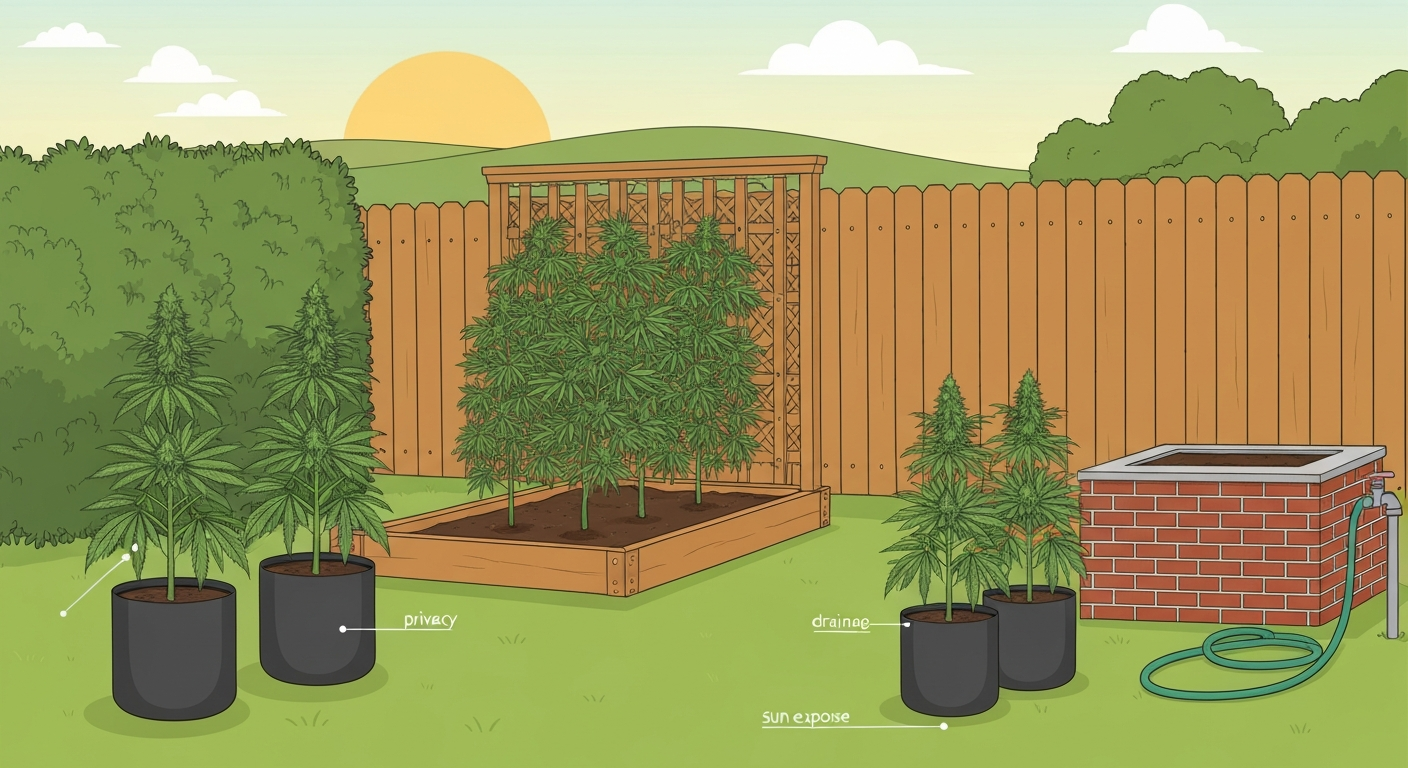
Cannabis needs a minimum of 6 hours of direct sun per day, but 8 to 10 hours is where you get the yields and resin production that make outdoor growing worth it. In Pennsylvania, south- and southeast-facing slopes and walls capture the most sun hours. Avoid north-facing slopes and low-lying areas that collect cold air (frost pockets) or hold moisture, both of which dramatically increase disease pressure.
- Sun exposure: track your site with a sun tracker app over a full day in late May; look for 8+ hours of unobstructed direct light
- Drainage: water should drain from your site within 30-60 minutes of heavy rain; standing water invites root rot and fungal disease
- Air circulation: good breeze reduces humidity in the canopy and helps prevent Botrytis and powdery mildew, which are PA's most common late-season threats
- Microclimate warmth: south-facing brick or stone walls act as thermal mass, radiating heat at night and extending your effective season by one to two weeks
- Privacy and sight lines: map your site from every neighbor sightline, the street, and any elevated positions; position plants behind existing structures, fences, or tall hedges
- Water access: plan your irrigation source before you plant — hauling water in buckets to a remote site is exhausting once plants are in late veg
- Soil quality: request a soil test from Penn State Agricultural Analytical Services Laboratory (AASL) before amending; the standard panel should include pH, phosphorus, potassium, calcium, magnesium, organic matter percentage, and CEC
Containers vs In-Ground: Which to Choose
In-ground growing allows plant roots to explore a much larger soil volume and typically produces the largest plants and yields. However, it requires good native soil (or full raised-bed installation), and plants cannot be moved if a pest outbreak, extreme weather, or a nosy situation demands relocation. Container growing in 15- to 25-gallon fabric pots gives you flexibility, better drainage control, and the ability to move plants under cover during heavy storms or early cold snaps. For a first-time PA outdoor grow, containers are my recommendation: they let you optimize your soil recipe completely and give you an indoor fallback option if the season turns against you.
Soil Recipe and Amendments for PA Conditions
Pennsylvania's native soils vary widely, from the rich limestone-based soils of the Lancaster Plain to the acidic, clay-heavy soils of the Piedmont and the thin, rocky soils of the Ridge and Valley province. Cannabis prefers a loamy, well-draining medium with a pH of 6.0 to 7.0 and good organic matter content. A soil test from Penn State AASL will tell you exactly what your native soil needs and saves you money on amendments you do not actually need.
For container growing, here is a reliable base mix recipe that works consistently well in PA's conditions:
- 50% high-quality peat-based or coco-based potting mix
- 25-30% perlite (coarse, not fine) for drainage and aeration
- 10-15% worm castings for slow-release biology and nutrients
- 5% composted bark fines or aged wood chips for structure and mycorrhizal support
- Per cubic foot: 1 tablespoon dolomite lime (pH buffer and calcium/magnesium source)
- Per cubic foot: 1 tablespoon kelp meal (micronutrients and cytokinins for root development)
- Per cubic foot: 1-2 tablespoons bone meal or bat guano (phosphorus for flower sites)
- Optional: mycorrhizal inoculant added directly to the root zone at transplant
If you are amending native PA soil for in-ground growing, have your Penn State AASL test in hand first. Many PA soils are naturally acidic (pH 5.5 to 6.2), which means adding agricultural lime to bring pH up to 6.5 to 6.8 is often necessary. Heavy clay soils benefit from gypsum additions and deep tilling with compost to break the hardpan. Sandy soils in some southeastern PA areas will need organic matter additions to hold moisture and nutrients.
Nutrient and Feed Schedule: Veg Through Flower
If you build a good amended soil, you may need very little additional feeding during vegetative growth. The real nutrient demands ramp up in weeks two through six of flower, when the plant is building bud mass rapidly. The table below is a general weekly framework; always adjust up or down based on how your plants look. Pale yellowing leaves in veg usually mean nitrogen deficiency. Burnt leaf tips in flower often mean you are feeding too much. I got the tip-burn thing badly wrong on my first outdoor run. Less is always a better starting point.
| Growth Stage | Weeks | N-P-K Focus | Example Feed Frequency | EC Target (soil) | Key Additives |
|---|---|---|---|---|---|
| Seedling | Weeks 1-2 | Very low — soil nutrients sufficient | Plain pH-adjusted water only | 0.4-0.8 | None; root disturbance risk |
| Early Veg | Weeks 3-5 | High N, moderate P and K | Feed every 2-3 waterings | 1.0-1.4 | Mycorrhizal root drench, kelp |
| Late Veg | Weeks 6-8 | High N, increasing P | Feed every other watering | 1.4-1.8 | Cal-Mag if using RO or soft water |
| Early Flower (weeks 1-3) | Flower wks 1-3 | Reduce N, increase P and K | Feed every watering | 1.6-2.0 | Bloom booster, silica |
| Peak Flower (weeks 4-6) | Flower wks 4-6 | Low N, high P and K | Feed every watering | 1.8-2.2 | PK booster (use conservatively) |
| Late Flower (weeks 7+) | Flower wks 7-harvest | Very low N and P, low K | Taper to plain water | 1.0-1.4 tapering | Molasses/carbohydrate supplement optional |
| Flush (last 1-2 weeks) | Pre-harvest | None | Plain pH-adjusted water only | < 0.5 | Nothing; flush residual salts |
Organic growers using the amended soil recipe above can often skip synthetic feeds entirely through veg and early flower, topping up with compost teas or worm casting teas instead. In PA's humid conditions, organic growing has an added benefit: you avoid the salt buildup in soil that can stress roots and make plants more vulnerable to disease during the wet late-summer months.
Watering Guidelines and Simple Irrigation for PA
Pennsylvania averages 40 to 50 inches of rainfall annually, reasonably distributed through the growing season, so outdoor plants in the ground often need less supplemental watering than you might expect. The biggest watering mistakes I see are overwatering in containers and underwatering during the July heat peak. The single best tool for knowing when to water is a moisture meter: stick it to the 4-inch depth level in your container, and water when it reads 3 to 4 on a standard 1-10 scale.
- Seedlings: water lightly every 1-2 days; never let them sit in soggy soil
- Established veg plants in containers: water when the top 1-2 inches of soil feel dry; typically every 2-3 days in summer heat
- In-ground plants with good rainfall: supplement only during dry stretches of 5+ days without meaningful rain
- Flower stage: plants drink heavily; containers may need water daily in August heat; check moisture daily
- Always water in the morning, not evening: wet foliage overnight dramatically increases mold and mildew risk in PA's humid climate
- Use a soaker hose or drip emitters at soil level rather than overhead sprinklers, especially in flower
- pH-adjust all feed water to 6.0-7.0 for soil; use a digital pH meter, not strips
- Collect rainwater if possible: PA's rainfall is naturally soft and slightly acidic, making it excellent for cannabis after a minor pH adjustment
Training and Pruning: LST, Topping, and SCROG
Training your plants serves two purposes in a PA outdoor grow: it maximizes yield by exposing more bud sites to direct sun, and it manages plant height for discretion. A six-foot, untrained plant is visible over most privacy fences. A low-stress trained plant spread laterally in a large container might stay under four feet while producing the same yield.
Low-Stress Training (LST)
LST involves gently bending the main stem and tying it down horizontally during vegetative growth. This breaks apical dominance and encourages the lower lateral branches to grow upward and become main colas. Start LST when the plant has 4 to 6 nodes. Use soft plant ties or flexible wire; never use string or wire that can cut into the stem. Bend gradually over several days, not all at once. This is the safest training technique for beginners because it causes no plant trauma.
Topping
Topping means cutting the main growing tip off cleanly at a node, forcing the plant to develop two new main colas instead of one. Top once the plant has at least 5 to 6 nodes developed. Give the plant 5 to 7 days to recover before any further stress. You can top two to three times during veg to create a bush-like structure with many equal-height colas. Stop all topping at least 2 weeks before you expect the plant to flip into flower.
SCROG (Screen of Green)
SCROG uses a horizontal net or trellis installed 18 to 24 inches above the soil. As the plant grows into the screen during veg, you weave branches through the openings to create a flat, even canopy. When the screen is 70 to 80% full, you stop tucking and allow the plant to flip into flower, sending shoots upward through the screen. SCROG is excellent for maximizing yield per plant and keeping large photoperiod plants manageable in height. In PA outdoor conditions, use a durable nylon or wire trellis netting that can handle rain and wind without sagging.
Defoliation in Flower
In Pennsylvania's humid late-summer conditions, strategic defoliation in weeks 3 to 4 and again in weeks 6 to 7 of flower is important disease management, not just yield optimization. Removing large fan leaves that block airflow inside the canopy reduces the humid microclimate where Botrytis spores germinate. Do not strip the plant bare, remove only leaves that are blocking airflow or shading bud sites. This is one area where PA outdoor grows differ significantly from drier climates like Arizona or desert growing conditions, where humidity is rarely the limiting factor. For readers interested in contrasting techniques for arid climates, see our guide on how to grow weed in Arizona for desert-specific strategies.
Integrated Pest Management for PA Outdoor Grows
Pennsylvania's humid temperate climate creates a pest and disease environment that is meaningfully different from drier western states. The combination of warm, humid summers and the natural forest and agricultural surroundings of most PA sites means you will face a different mix of threats than, say, a desert grow in Arizona or a high-altitude desert grow, where low humidity suppresses fungal disease but spider mites and heat stress dominate. For a direct contrast, see the guide on how to grow weed in the desert for techniques tailored to arid, low-humidity conditions. In PA, your biggest threats are fungal diseases first, then insect pests.
| Pest / Disease | When It Appears | PA-Specific Risk Level | Prevention | Treatment |
|---|---|---|---|---|
| Botrytis (bud rot / gray mold) | Late flower, Aug-Oct | Very High — PA humidity is ideal for it | Airflow, defoliation, mold-resistant strains | Remove affected material immediately; apply diluted hydrogen peroxide to cut site |
| Powdery Mildew (PM) | Mid-veg through early flower | High — humid nights favor PM | Airflow, low-humidity site, resistant strains | Potassium bicarbonate spray (1 tsp/qt water), neem oil in veg only |
| Spider Mites | Hot dry spells in July-Aug | Moderate | Inspect undersides of leaves weekly | Spinosad, predatory mites, insecticidal soap |
| Fungus Gnats | Overwatered containers, all season | Moderate | Let containers dry between waterings; yellow sticky traps | Beneficial nematodes (Steinernema feltiae), BTi (Bacillus thuringiensis israelensis) |
| Aphids | Early-mid veg | Moderate | Inspect weekly; encourage beneficial insects (ladybugs) | Neem oil spray, insecticidal soap, strong water blast |
| Caterpillars / Budworms | Flower stage, Aug-Sep | Moderate-High in rural PA | Inspect daily in flower; look for frass (droppings) | BT (Bacillus thuringiensis kurstaki) spray; hand-pick |
| Root Aphids | All season, hard to detect | Moderate (higher with clones) | Start from seed; inspect clone roots carefully | Beneficial nematodes; drench with spinosad if confirmed |
| Deer and Rabbits | All season | High in suburban/rural PA | Fencing, chicken wire around base of plants | Physical barriers only |
| Slugs and Snails | Cool wet nights, spring and fall | Moderate | Remove mulch close to stem; diatomaceous earth around base | Iron phosphate bait (Sluggo) — safe around wildlife |
The cardinal rule of IPM in Pennsylvania is scouting, not spraying. Spend five minutes three times a week looking at the undersides of leaves, inside bud sites in flower, and at the base of your containers. Most pest problems caught early can be controlled with low-toxicity options. Problems caught late in flower are much harder to manage without damaging the harvest. Also note: do not apply any oil-based spray (neem, horticultural oil) during flower, oils can trap moisture in buds and promote Botrytis, and they leave residue you do not want to smoke.
Harvest Timing: When and How to Cut
Harvest timing is the most impactful decision you will make on quality. There are two reliable methods to gauge readiness: trichome inspection under a 60-100x loupe or jeweler's loupe, and pistil color assessment. Trichome inspection is the gold standard. Clear trichomes mean the plant is not ready. Cloudy (milky white) trichomes indicate peak THC. Amber trichomes indicate THC degrading to CBN, which produces a heavier, more sedative effect. Most growers target 10 to 30% amber for a balanced effect, while medical users seeking sedation may wait for 40 to 50% amber.
- Begin checking trichomes daily in the last two weeks of expected flower time
- Harvest in the early morning before full sun — this is when terpene content is highest
- Flush with plain pH-adjusted water for 1 to 2 weeks before harvest if using synthetic nutrients
- Look for red/orange pistils covering 70-90% of the bud surface as a secondary indicator
- Harvest bud-by-bud if upper colas ripen first and lower sites need more time
- In PA, if an unexpected frost is forecast before your planned harvest, bring containerized plants indoors overnight
Drying, Curing, and Storage
A good harvest ruined by a bad dry and cure is one of the most discouraging things in cannabis growing. Pennsylvania's humid fall climate can actually work in your favor here if you manage it correctly, a slow dry at 60 to 65% relative humidity and 60 to 68°F produces smoother smoke and better terpene retention than a quick dry in a hot, dry room.
- Trim: wet-trim large fan leaves immediately after cutting, then hang whole branches or lay individual buds on drying racks
- Dry: hang in a dark room with good airflow and a fan (not blowing directly on buds) at 60-65% RH and 60-68°F; target a 10-14 day drying period — faster than 7 days degrades terpenes significantly
- Check for doneness: small stems should snap (not bend) and the outside of buds should feel dry to the touch but still slightly springy inside
- Jar: place dried buds loosely into glass mason jars, filling them about 75% full; add a 62% Boveda humidity pack to each jar
- Burp: open jars for 15-20 minutes twice daily for the first two weeks to release moisture and CO2; reduce to once daily for weeks 3-4
- Cure: minimum 2-4 weeks for good results; 4-8 weeks produces noticeably better flavor and effect
- Store: cured jars in a cool (60-65°F), dark location; UV light degrades cannabinoids over time; properly cured and stored cannabis maintains quality for 12+ months
Security and Discreet Growing Practices
Security planning is not paranoia, it is responsible growing. Even in jurisdictions where home cultivation is legal, discretion protects your plants from theft, minimizes neighbor friction, and keeps growing a private, personal activity. In PA specifically, where legal status is still in transition, discretion takes on additional practical importance.
- Height management: use LST, topping, and SCROG to keep plants below fence line; a 6-foot privacy fence with no gaps is the most effective single security measure
- Odor control: cannabis in late flower produces significant scent; plant position downwind from neighbors and consider dense aromatic companion plantings (lavender, basil, mint) around the perimeter
- No social media: do not post photos of your grow on any platform linked to your real identity
- Restrict access: tell only people who genuinely need to know; the fewer people who know about your grow, the lower your risk of theft or complaint
- Lighting at night: a motion-sensor light in your grow area deters theft at the vulnerable late-flower stage
- Harvest before announcement: the smell of a maturing canopy intensifies dramatically in the last two weeks; plan to harvest promptly once ready
- Know who to call: if your grow is ever questioned by authorities, know the current legal status in PA and have consulted with a cannabis-aware attorney before you start
If discretion is a primary concern for your growing situation, the techniques covered in guides specifically focused on growing weed outside discreetly go into much greater depth on strategic plant placement, companion planting screens, and container mobility strategies.
Troubleshooting Quick-Reference
Here are the most common problems PA outdoor growers encounter, with fast diagnosis cues and practical fixes. I have made most of these mistakes myself at some point.
| Symptom | Most Likely Cause | Quick Fix |
|---|---|---|
| Yellowing lower leaves in veg | Nitrogen deficiency or pH lockout | Check pH first (target 6.0-7.0); if correct, add a nitrogen-rich feed |
| Burnt leaf tips and edges in flower | Nutrient excess (salt buildup) | Flush with plain water; reduce EC of next feed by 25% |
| Purple leaf stems without other symptoms | Phosphorus deficiency OR cool nights | Check temperature (below 60°F triggers purpling); if temps OK, add P source |
| Spots with yellow halos on fan leaves | Calcium or magnesium deficiency | Add Cal-Mag supplement; check pH is not too high (above 7.0 locks out Ca/Mg) |
| White powdery coating on leaves | Powdery mildew | Apply potassium bicarbonate spray; improve airflow; remove badly affected leaves |
| Brown mushy bud sites appearing rapidly | Botrytis (bud rot) | Cut out all affected material 2 inches beyond visible mold; improve airflow immediately; consider early harvest of affected colas |
| Slow growth, wilting despite moist soil | Overwatering / root rot | Allow to dry out fully; check for brown slimy roots; add beneficial bacteria drench (Hydroguard/similar) |
| Stretchy, weak stems in early veg | Insufficient light or too much N | Move to stronger sun exposure; reduce nitrogen |
| No flowering after August 10 outdoors | Light pollution from street lights or porch lights interrupting dark cycle | Move container to a fully dark location overnight; eliminate any artificial light source near plants |
| Small, airy, loose buds at harvest | Insufficient light, low potassium, or harvested too early | For future grows: improve sun exposure, check K levels in flower; harvest only when trichomes confirm readiness |
How PA Growing Compares to Other Climates
Pennsylvania sits in a humid temperate climate zone that creates a very different challenge profile from other states where cannabis grows well outdoors. Compared to desert or southwestern climates like Arizona, PA's main threats are humidity and mold rather than heat and aridity. You will not be fighting 110°F soil temps or extreme evapotranspiration rates. Instead, your enemy in late summer is the combination of warm nights, morning dew, and residual moisture in dense canopies, exactly the conditions Botrytis loves.
Compared to outdoor growing in Washington state, PA shares the late-summer mold pressure but enjoys a warmer, more continental summer that allows heat-loving strains to ripen fully in southeastern PA that would struggle on the cooler, marine-influenced Washington coast. The northern tier of PA is actually closer in climate to outdoor growing in Michigan: both face tight season windows, potential early fall frosts in late September, and heavy morning dew pressure in August and September. The core adaptations, early-finishing strains, strong airflow, aggressive defoliation in flower, and close harvest-timing attention, apply equally across all of these humid northern climates. Growers in Georgia and North Carolina face the opposite challenge in some respects: a long, warm season that easily finishes late-flowering strains, but with intense heat and thunderstorm cycles earlier in the grow that PA does not typically experience. For growers in warmer climates, consult our regional guide titled 'how to grow weed outside in GA' for specific strain, heat-management, and storm-preparedness techniques tailored to the Southeastern growing season.
Final Notes Before You Start
Pennsylvania's outdoor growing conditions are genuinely excellent for cannabis when you match your strain choice to your specific regional season window, manage humidity through site selection and training, and stay on top of pest scouting from the first week of transplant. The legal landscape is the biggest variable right now, and it is worth checking for any updates to the PA General Assembly's home-grow legislation before every new growing season. When home cultivation does become legal in PA, growers who have done this planning work will be ready to hit the ground running in their first legal season.
FAQ
What primary legal sources must be consulted to ensure the guide is legally compliant for Pennsylvania readers?
State statutes and official agency guidance: Pennsylvania Medical Marijuana Act (Act 16 of 2016) and any amendments; Pennsylvania Department of Health medical marijuana program pages; Pennsylvania Department of Agriculture / PDA guidance on hemp and related plant regulations; current Governor and General Assembly legislative updates (for adult‑use proposals). Also check municipal codes and council resolutions (e.g., Philadelphia Legistar) for local restrictions. Use tier‑1 government sources and date‑stamp all legal statements; include a clear, prominent disclaimer to re‑check laws before acting.
Which authoritative climate and frost‑date datasets are required to create accurate transplant/flower calendars tied to PA frost dates?
NOAA NCEI U.S. Climate Normals (1991–2020) and station/gridded daily normals for last spring / first fall frost probabilities; PRISM Climate Group gridded temperature/precipitation and GDD datasets for subcounty microclimate mapping; USDA/NRCS Agricultural Handbook methods for calculating frost‑free intervals and GDD quantiles; and local Penn State Extension GDD/phenology station outputs (NEWA/extension station data). Present 10/50/90% frost‑date quantiles and county/ZIP examples.
What regional agricultural extension and lab resources are needed for soil, nutrient and IPM recommendations?
Penn State Extension publications for soil management, GDD, IPM scouting reports, and region‑specific pest/disease notes; Penn State Agricultural Analytical Services Laboratory (or other state‑listed labs) for soil testing protocols and interpretation (pH, N‑P‑K, CEC, OM); USDA/NRCS soil surveys and local county conservation district resources for drainage and erosion guidance. Cite extension factsheets and lab submission pages (tier‑1 sources).
Which peer‑reviewed plant science and cannabis genetics studies should be cited for photoperiod vs autoflower guidance?
Recent peer‑reviewed work on Cannabis flowering genetics (e.g., studies on FLOWERING LOCUS T orthologs and flowering‑time QTLs) that explain photoperiod sensitivity and autoflower loci (such as Dowling et al. 2024 and comparative genomics PMC articles). Use these to justify differences in strain selection and flowering triggers in temperate climates.
What breeder/phenotype data sources are appropriate for strain recommendations and days‑to‑flower claims?
Primary breeder/seedbank product pages (e.g., Royal Queen Seeds, breeder catalogs) for manufacturer flowering‑time, height and traits; regional review and trial platforms like Leafly, SeedFinder, GrowDiaries, and Phenohunters for real‑world grower reports (mold/cold tolerance, harvest dates in Northeastern climates). Always link to breeder pages and label grower reports as anecdotal; cross‑validate with multiple sources.
What pest and disease data are needed to build a PA‑specific IPM section, and where to get them?
Penn State Extension IPM scouting guides and regional disease reports; USDA/APHIS and state crop protection bulletins; regional trap and monitoring networks (NEWA/National Pest Alerts) for insect phenology. Compile a PA pest list (e.g., cutworms, aphids, bud rot/Botrytis, powdery mildew) with local incidence rates and seasonal windows. Contrast humidity/heat differences with desert and Pacific Northwest pests using PRISM/NOAA climate inputs.
Next Article
How to Grow Weed in Arizona Outdoors: Beginner Guide
Step-by-step outdoor Arizona guide: strains, site setup, watering, nutrients, training, pests, and harvest timing for be