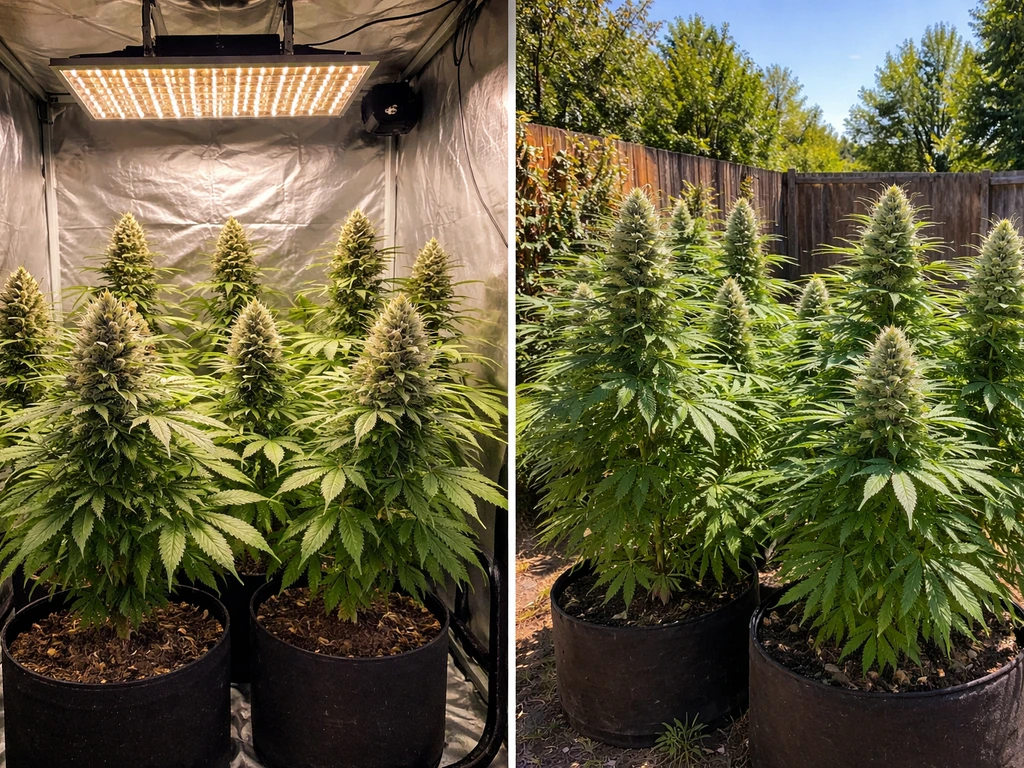
Amnesia Haze is absolutely worth growing indoors, but it rewards growers who plan ahead. Expect a taller plant than most (100–140 cm indoors), a long flowering window of 10–11 weeks, and a stretch during early flower that can catch you off guard in a small tent. Get those three things dialed in from the start and you're set up for a genuinely rewarding harvest. This guide walks you through every stage, from picking your seeds to sealing your first curing jar, with specific numbers and honest advice at each step. If you are specifically trying to learn how to grow purple haze indoors, you can use the same indoor setup targets, training approach, and harvesting checks as you go.
How to Grow Amnesia Haze Indoors: Step-by-Step Guide

Marcus Holbrook
30 Jun 2026
Before anything else, a quick note: always check your local laws before growing cannabis at home. If you're also wondering how to grow Super Silver Haze specifically, the key steps are choosing the right genetics, setting up proper lighting and airflow, and dialing in humidity through flower. Rules around home cultivation, plant counts, and possession limits vary widely by country, state, and province. Grow responsibly and legally wherever you are.
Choosing Amnesia Haze genetics and starting material
Your grow lives or dies by your starting genetics, so this is worth spending five minutes thinking about. Amnesia Haze is a sativa-dominant strain with a well-documented phenotype, but there are real differences between breeders. Royal Queen Seeds' version runs 10–11 weeks of flower with indoor heights around 140 cm. Dutch Passion's Amsterdam Amnesia Haze can finish closer to 9–10 weeks and is known to stretch hard after the flip. Barney's Farm offers their own take with similarly vigorous growth. All of them are legitimate choices; just know what you're buying before you pop the pack.
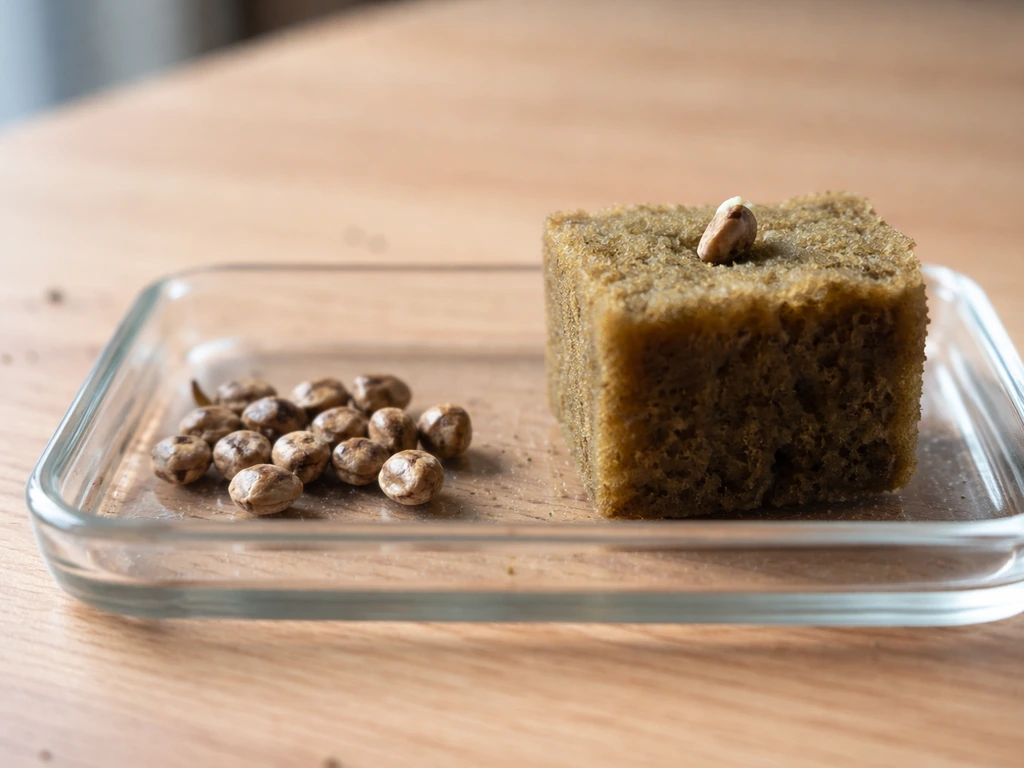
For beginners, feminized seeds are the practical choice. You don't have to sex plants, you don't risk males pollinating your whole tent, and you get a predictable grow every time. Autoflowering versions of Amnesia Haze do exist and they dramatically shorten the cycle, but they sacrifice some of the signature high and terpene profile that makes this strain worth growing. If you want the real experience, go with a photoperiod feminized seed from a reputable breeder.
Clones are another valid starting point if you can get them from a trusted source. A healthy clone from a proven Amnesia Haze mother guarantees you know what phenotype you're working with. The downside is that clones can bring pests or pathogens into your space, so inspect them carefully before introducing them to your tent. For most home growers starting fresh, seeds are safer and more accessible.
Indoor grow setup: tent, lighting, airflow, and odor control
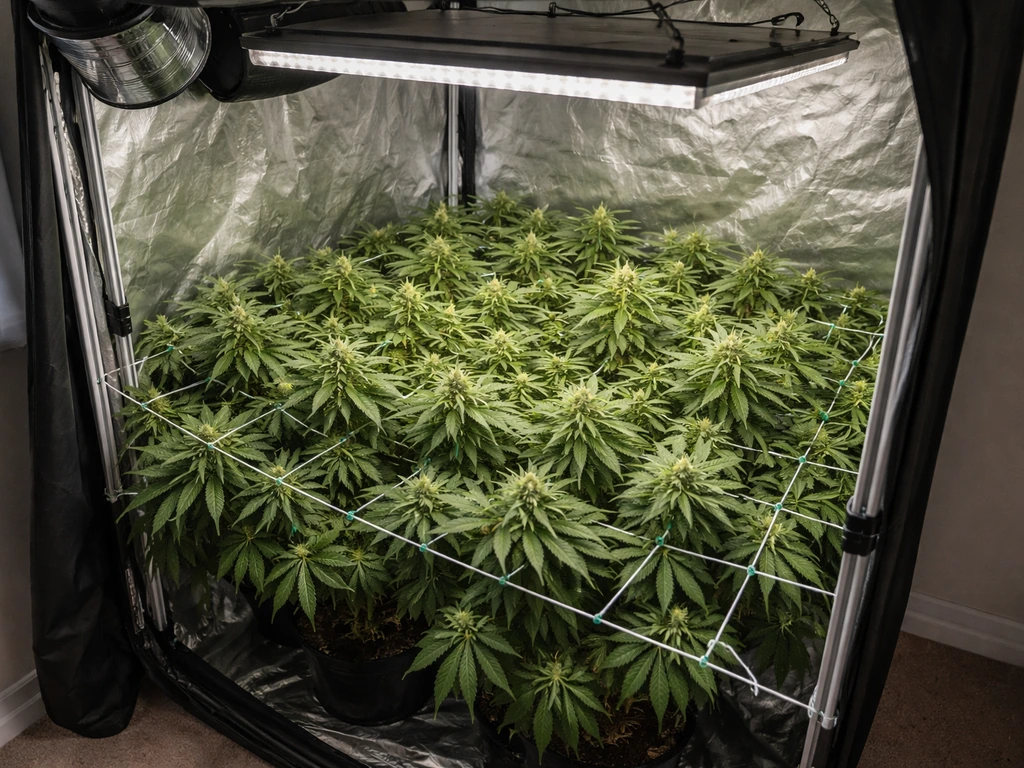
A 4x4 foot tent (roughly 120x120 cm) is the sweet spot for growing 2–4 Amnesia Haze plants at home. It gives you enough room to train the canopy, fits standard lighting and ventilation hardware, and keeps things manageable. A 5x5 is great if you have the space, but a 4x4 is where most home grows live. The critical thing with Amnesia Haze specifically is tent height: this plant stretches. An 80-inch (roughly 200 cm) tent height gives you room to hang lights with adequate clearance and still manage a plant that can push toward 140 cm in flower. Don't squeeze it into a 60-inch tent unless you're committed to aggressive training.
Lighting
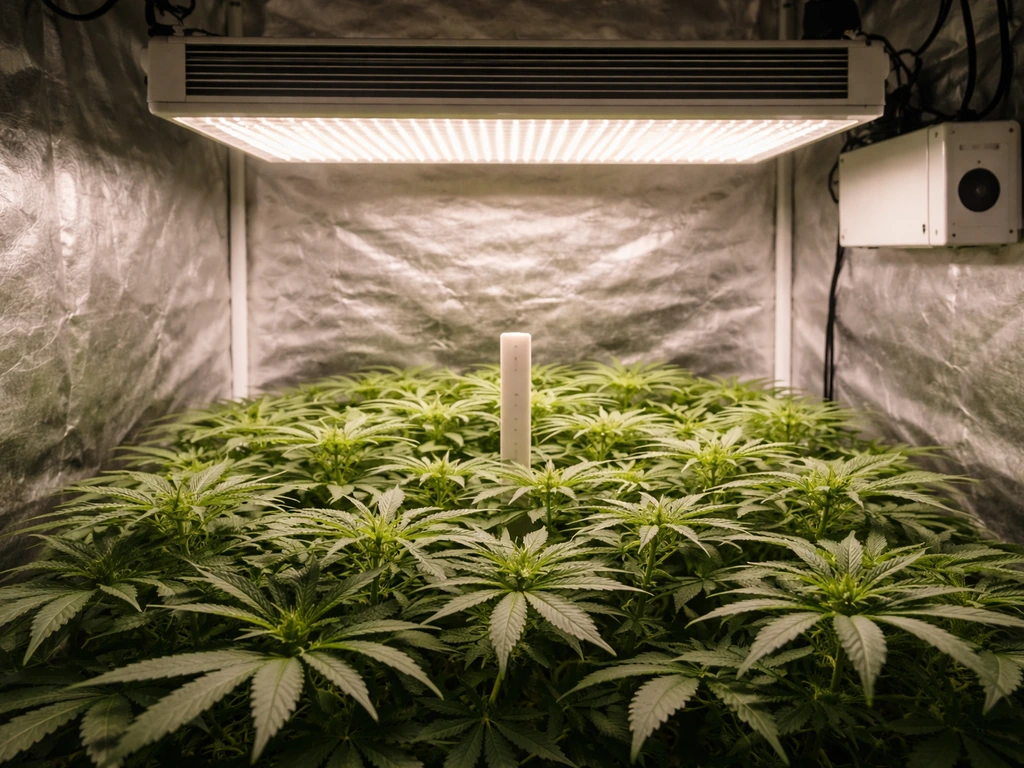
For a 4x4 flowering footprint, you want to hit around 700–1,000 µmol/m²/s of PPFD (photosynthetic photon flux density) at canopy level during flower. A quality 600–700W LED from a reputable brand will get you there. During veg, you can run the same fixture dimmed down to around 400–600 µmol/m²/s. The big mistake beginners make is hanging the light too close and burning the tops, or too far away and getting stretchy, airy growth. Follow the manufacturer's hang height recommendations and dial in from there. During the Amnesia Haze flower stretch (weeks 1–3 after the flip), check your light-to-canopy distance every few days.
Airflow and odor control
Amnesia Haze is a pungent strain. In flower, the smell becomes significant, so a properly sized carbon filter and inline fan are non-negotiable if you care about discretion. For a 4x4 tent, a 6-inch inline fan paired with a 6-inch carbon filter is the standard setup. The carbon filter's CFM rating should exceed your fan's maximum draw by about 15–20% to maintain effective odor scrubbing. A 6-inch fan running around 400–424 CFM pairs well with a carbon filter rated at 450–520 CFM. Run the exhaust fan continuously during lights-on and at reduced speed during lights-off to maintain negative pressure in the tent (walls should suck slightly inward). Add an oscillating clip fan inside the tent at canopy level to keep air moving over the leaves and prevent hot spots and moisture buildup.
Environment targets through veg and flower
Amnesia Haze is a sativa-dominant plant that likes it warm and on the drier side, especially in flower. Here are the targets I aim for at each stage.
| Stage | Temperature (°F / °C) | Relative Humidity | VPD Target |
|---|---|---|---|
| Seedling (days 1–14) | 70–77°F / 21–25°C | 65–75% | 0.4–0.8 kPa |
| Vegetative | 72–82°F / 22–28°C | 50–65% | 0.8–1.2 kPa |
| Early Flower (weeks 1–5) | 68–78°F / 20–26°C | 45–55% | 1.0–1.5 kPa |
| Late Flower (weeks 6–11) | 65–75°F / 18–24°C | 35–45% | 1.2–1.6 kPa |
The late-flower humidity target (35–45% RH) is especially important for Amnesia Haze because it produces dense, resinous buds that trap moisture. Botrytis (bud rot) loves the combination of dense flowers and high humidity, so keeping RH below 45% in the final two to three weeks is genuinely protective, not just a preference. DSS Genetics similarly recommends late veg to pre-flower humidity around 45, 55%, then stepping RH down toward flowering targets to help prevent mold while supporting plant performance late veg / pre-flower RH around 45–55%. If your space runs humid, prioritize your exhaust capacity and consider a small dehumidifier.
VPD (vapor pressure deficit) is a way of measuring how hard your plant is working to transpire based on the combination of temperature and humidity. You don't need to obsess over it as a beginner, but keeping VPD above 0.8 kPa in veg and above 1.0 kPa in flower gives you a practical framework. If your temperature and humidity are both in the ranges above, your VPD will naturally land where it needs to be.
Nutrients and pH: feeding plan for Amnesia Haze indoors
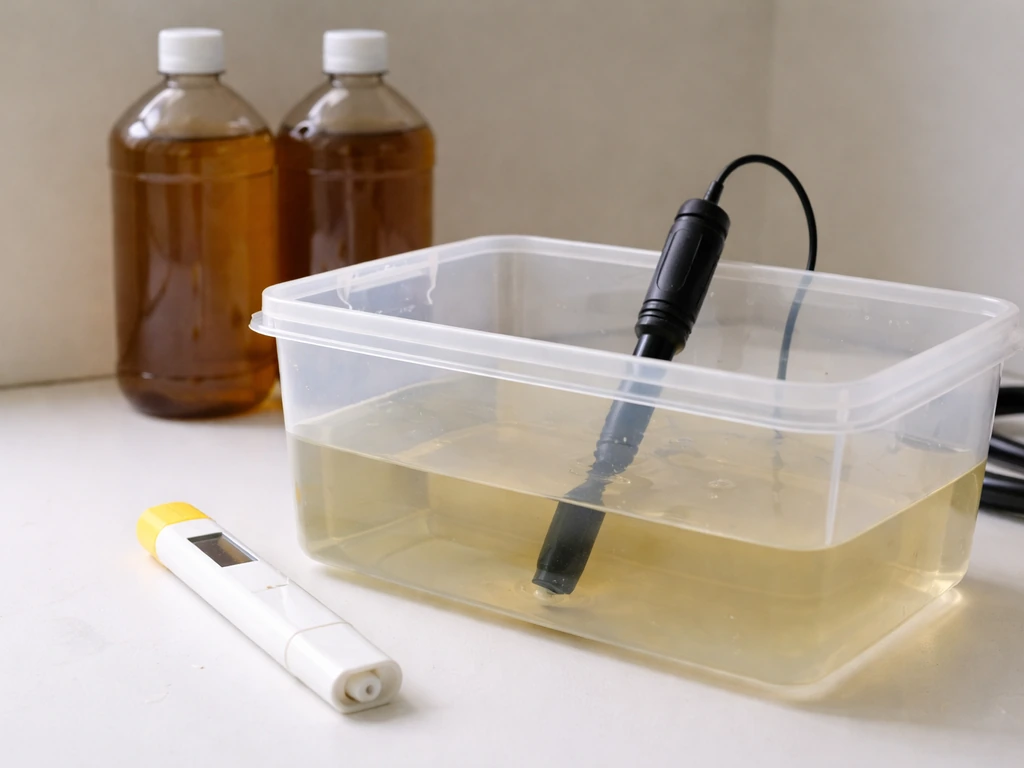
Growing medium and pH
Soil and coco coir are the two most common mediums for home growers, and both work well for Amnesia Haze. The key difference is pH target range. In soil, you want your feed water and runoff to sit between 6.2 and 6.8, with 6.5 being a reliable center point. In coco, target 5.8–6.2, with 6.0 as the sweet spot. These ranges exist because different nutrients become available at different pH levels. Drift outside the window and you'll see deficiencies even if you're feeding correctly. Get a digital pH pen, calibrate it regularly, and check every watering. This is the single most impactful habit you can build as a new grower.
EC and feeding by stage
EC (electrical conductivity) measures the total dissolved salts in your nutrient solution, which is a proxy for feed strength. Here's a practical EC guide for Amnesia Haze across the grow.
| Stage | EC Range (mS/cm) | Notes |
|---|---|---|
| Seedling | 0.4–0.8 | Very light feed or plain water; don't overfeed |
| Vegetative | 1.3–1.7 | Nitrogen-forward feed; ramp up gradually |
| Early Flower (weeks 1–5) | 1.4–2.0 | Shift to PK-forward bloom formula; reduce nitrogen |
| Late Flower (weeks 6–11) | 1.5–2.0 | Maintain, then taper to 1.2–1.5 in final 2 weeks |
| Flush (last 1–2 weeks) | Flush with plain pH'd water | Especially in soil; flush lightly in coco |
The transition from veg to flower is about more than just flipping lights to 12/12. You also shift your nutrient profile. In veg, nitrogen drives leaf and stem growth. In flower, you back off nitrogen and increase phosphorus and potassium (the P and K in PK boosters) to support bud development. Most quality cannabis nutrient lines make this straightforward with a dedicated bloom formula.
CalMag: don't skip it in coco
If you're growing in coco, especially with RO (reverse osmosis) or soft water, calcium and magnesium deficiencies are almost guaranteed without supplementation. Coco naturally holds calcium and magnesium poorly, so add a CalMag supplement to every watering from seedling stage onward. A typical rate is 1–2 ml/L, but follow your product's guidance. Even in soil, watch for interveinal yellowing (magnesium deficiency) or brown leaf-edge spots (calcium) in fast-growing Haze plants and dose accordingly.
Training and canopy management for Haze growth
Amnesia Haze will try to grow like a tree. Left untrained in a 4x4 tent, you'll end up with one dominant central cola that outgrows your light canopy and several underdeveloped lower branches shaded into obscurity. Training solves this, and it doesn't need to be complicated.
Topping
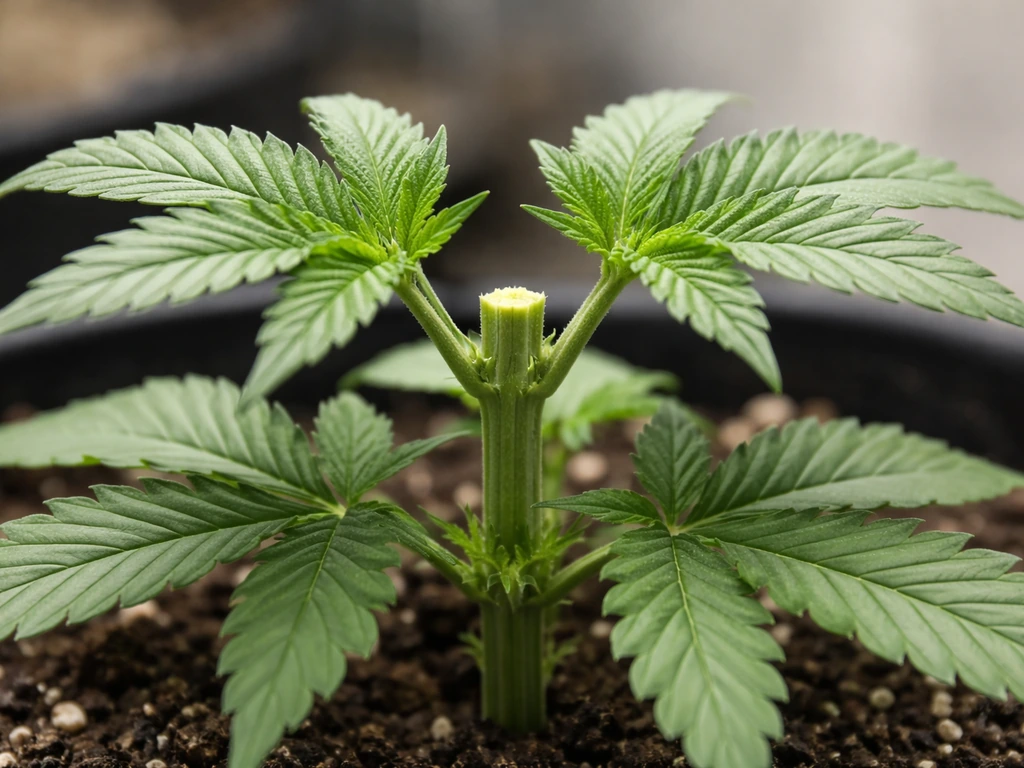
Topping means cutting the main growing tip to split the plant into two main branches instead of one. Do it once the plant has 4–6 nodes (leaf pairs) in veg, and give her 5–7 days to recover before any additional stress. This single cut dramatically improves your final canopy shape by encouraging more lateral growth and setting you up for a flatter, more even finish. It's a simple technique, and I'd encourage any beginner to do it. Just use clean scissors and make a clean cut above a node.
LST (low stress training)
LST is the beginner-friendliest training method available. You bend stems horizontally and tie them down using soft ties or plant stakes, training the canopy outward rather than upward. No cutting required, which means lower risk of stress or infection. Start LST after topping, bending branches outward as they grow to fill the tent floor evenly. The goal is a flat, even canopy where every cola gets equal light. Amnesia Haze responds really well to this because of its vigorous branching.
The stretch in early flower (roughly weeks 1–3 after the flip to 12/12) is when Amnesia Haze puts on a lot of height fast. Keep bending and tying down during this window. Once the stretch settles (usually by day 14–21 after flip), you can stop active training and let the plant focus its energy on bud development. Trying to do heavy LST after week 3 of flower risks stressing the plant at the wrong time.
Lollipopping and defoliation
Lollipopping means removing the small, underdeveloped bud sites from the bottom third of the plant that won't receive enough light to produce quality buds anyway. Done at the flip to 12/12, it redirects the plant's energy upward. Light defoliation of large fan leaves blocking bud sites is also worth doing in early flower. Don't go overboard. Remove what's blocking light, leave the rest. Amnesia Haze is a vigorous plant and handles reasonable defoliation well, but stripping too many leaves under stress can set you back.
Common problems and troubleshooting (indoor-specific)
Most indoor grow problems fall into a handful of categories. Here's how to spot and fix them.
pH and EC issues
If your plant suddenly develops patchy yellowing, mottled leaves, or odd discolorations mid-grow, check your pH before assuming it's a nutrient deficiency. A pH that's drifted outside your target range locks out specific nutrients even when they're present in the feed. Recalibrate your pH pen, flush with correctly pH'd water, and then resume feeding at the right range. For EC issues, overfeeding shows up as brown, crispy leaf tips (nutrient burn), while underfeeding shows as general paleness and slow growth. Adjust in small increments.
Watering mistakes
Overwatering is the most common beginner mistake, and it looks almost identical to underwatering at first glance (droopy leaves). The difference: overwatered leaves droop downward and feel stiff, while underwatered leaves are soft and limp. In soil, water when the top inch or two is dry and the pot feels noticeably lighter. In coco, daily watering or watering to runoff every 1–2 days is usually appropriate. Always water until you get 10–20% runoff to flush any salt buildup.
Humidity swings and bud rot
Amnesia Haze's dense late-flower buds are a prime target for Botrytis (bud rot) if you let humidity climb above 50% in the final weeks. The first sign is usually a single bud or section of bud that looks grey, brown, or fluffy on the inside when you pull it apart. Remove any affected material immediately with clean scissors and don't let it spread. Prevention is far easier than treatment: keep late-flower RH at 35–45%, run your exhaust fan constantly, and make sure there's airflow through and around the canopy, not just over the top of it.
Pests: fungus gnats and spider mites
Fungus gnats are tiny flies whose larvae live in the top inch of soil and damage roots. The adults are mostly an annoyance, but a heavy larvae infestation can stress or kill seedlings. Yellow sticky traps hung near the soil surface will catch the adults and help you monitor population levels. For larvae, Bacillus thuringiensis israelensis (Bti), sold as mosquito dunks or soil drench products, is a safe and effective biological control. Let the soil surface dry out between waterings to reduce the habitat the larvae love.
Spider mites show up as tiny white or yellow stippling dots on the tops of leaves, and in a heavier infestation you'll see fine webbing between branches. They love hot, dry conditions. Treat with insecticidal soap or neem oil, applying every 2–3 days for at least three cycles to break the egg-to-adult lifecycle. Remove heavily affected leaves before spraying. Avoid foliar sprays in flower if you can, as residue on buds is difficult to remove.
Light stress
Light burn (bleached or whitened leaf tips and small bleached upper buds) happens when your fixture is too close to the canopy. During the Amnesia Haze stretch, this can creep up on you fast. Check your canopy-to-light distance every few days in early flower. Light stress can also cause bleached calyxes at bud tops, which are sometimes mistaken for mold. The distinction is easy: bleached buds are dry and crispy, mold is grey/fluffy/damp.
Harvest timing plus drying and curing next steps
When to harvest
Amnesia Haze runs 10–11 weeks of flower in most versions (some Dutch Passion cuts can finish closer to 9 weeks). Use the breeder's timeline as a starting estimate, but harvest by trichome inspection, not the calendar. You'll need a jeweler's loupe (30–60x) or a digital microscope to see clearly. Trichomes (the tiny crystalline structures on buds and sugar leaves) progress from clear to cloudy/milky to amber. Harvest when the majority are cloudy/milky with roughly 10–20% amber for the classic Amnesia Haze effect. There's typically a 5–10 day window between predominantly cloudy and predominantly amber, so you have some flexibility. The pistil hairs (tiny orange and red hairs on buds) are a secondary indicator: most strains are ready when 70–90% have darkened and curled in.
Drying
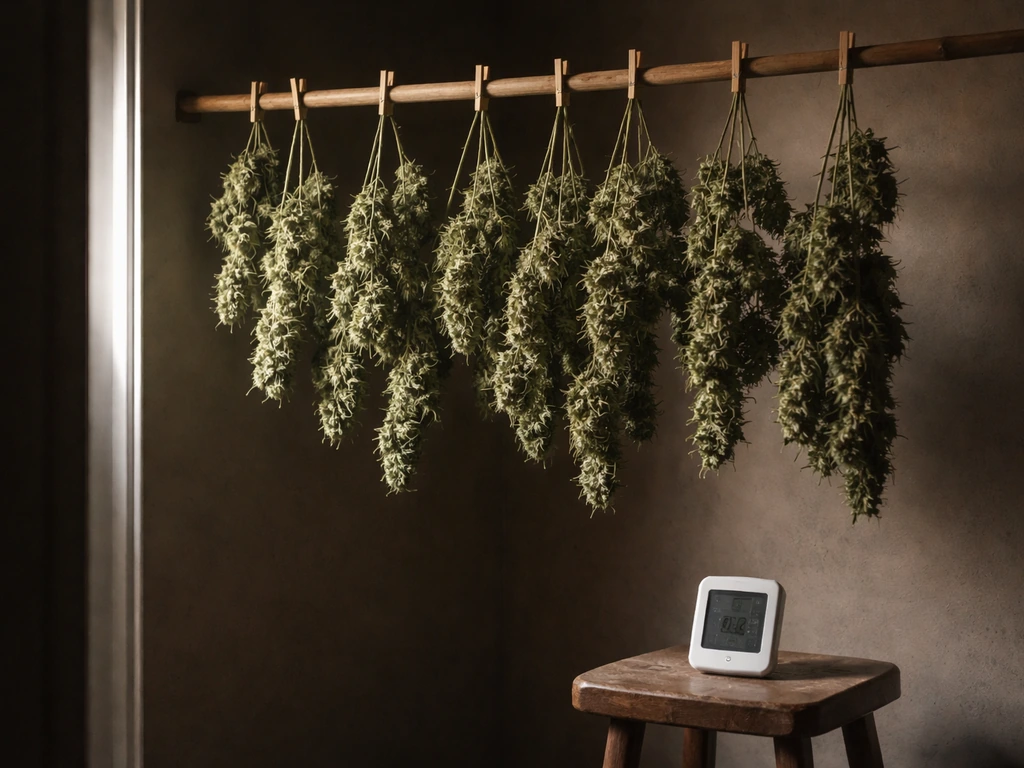
After harvest, dry whole branches (or the whole plant if your space allows) in a dark room with good airflow. Target 55–65°F (13–18°C) and 45–55% RH. At these conditions, you're aiming for a slow dry of around 7–14 days. Slow drying preserves terpenes and makes for a smoother final product. The branches are ready to trim and move to curing when the smaller stems snap cleanly rather than bending. If you follow a clear, step-by-step approach, you can dial in the full process for growing Liberty Haze indoors.
Curing
Curing is where the real quality development happens, and it's the step most beginners skip or rush. After trimming, place dried buds loosely in clean glass mason jars, filling them about 75% full. For the first week, open the jars once or twice daily for 10–15 minutes (burping) to let moisture and gases escape. Wikipedia’s cannabis cultivation overview notes that curing is typically done in sealed containers with a target moisture or relative-humidity window, and that terpenes volatilize at higher temperatures blank" rel="noopener noreferrer">For the first week, open the jars once or twice daily for 10–15 minutes (burping). After the first week, once RH inside the jars stabilizes at 58–65%, you can drop to burping every few days and then once a week. A minimum cure of 2–3 weeks noticeably improves smoothness and flavor. Four to six weeks is even better for Amnesia Haze, which develops its characteristic citrus and earthy terp profile with time. Store cured jars in a cool, dark space and keep temperatures low to protect terpene integrity.
If you enjoy growing Haze-type strains, Amnesia Haze sits alongside Super Silver Haze and Purple Haze as a rewarding but demanding category that gives back proportionally to the care you put in. Northern Lights is a useful contrast if you want something shorter, faster, and more forgiving for your next grow after this one. If you want something shorter and faster, these same indoor fundamentals also translate well to learning how to grow Northern Lights strain. Whatever strain you choose next, the pH, environment, and training fundamentals you build on this grow transfer directly.
FAQ
How can I tell if Amnesia Haze is stretching too much for my tent height?
Start planning from your worst-case height, not the average. If your tent gives you about 200 cm of usable headroom, aim to finish veg with training already started (topping plus LST) so the canopy is lower before you flip. Then measure light-to-canopy distance every 2 to 3 days during the first two weeks of flower, and be ready to adjust ties or switch to more conservative training once buds start setting.
Should I use topping, LST, or both for a 4x4 grow of Amnesia Haze?
For most 4x4 indoor setups, topping plus LST is the best combination. Topping creates more main tops, then LST spreads them so the canopy stays even and avoids one dominant central cola. If you skip topping, you can still do LST, but you usually end up with fewer equally lit colas and more shading underneath.
What runoff targets should I use, and do I always need runoff in coco versus soil?
In both coco and soil, watering to runoff helps flush salts and confirms your medium is hydrated, but coco generally benefits more from consistent runoff because it can accumulate nutrient residue quickly. A practical approach is to water until you get roughly 10 to 20% runoff every feeding, then record EC and pH of the runoff occasionally to spot salt buildup before it shows up as leaf issues.
How do I manage late-flower humidity if my exhaust alone cannot keep RH under 45%?
If RH keeps climbing above target, add a dehumidifier rather than just increasing fan speed. Dehumidifiers remove moisture without over-drying the air in a way that can reduce transpiration. Also confirm your airflow reaches the lower canopy, not just the top, because stagnant pockets inside dense buds are what lead to bud rot.
Is VPD really necessary, or can I just use temperature and RH?
You can run successfully using only temperature and RH if you stay within the same humidity targets. VPD becomes useful when your environment changes quickly (for example, lights-off temperature drops). If you notice slow growth in veg or recurring late-flower humidity spikes, VPD is a good diagnostic tool, but it is not required if your RH targets are consistent.
When should I stop active training in Amnesia Haze, and what counts as “too late”?
Stop major bending, tying, or defoliation around day 14 to 21 after flipping, when the stretch is mostly done and new growth has started to commit to bud formation. After that window, further stress can redirect energy away from bud development, and the risk increases if humidity is already high or if the plant looks sensitive.
How can I prevent nutrient lockout when my pH pen readings drift?
Calibrate the pen regularly and verify it with fresh calibration solution, not just tap water. If your readings seem inconsistent, do a quick cross-check against another calibrated device if you have one. Then, follow a habit of checking pH every watering until you see stable medium behavior, especially in coco where small pH shifts can show as deficiencies quickly.
What should I do if my leaves are yellowing, but pH and EC look “fine”?
Don’t assume it is nutrients only. First, confirm whether the yellowing is starting on older or newer leaves, then inspect for pests and check canopy airflow. Also look at watering timing and medium saturation, since overwatering can mimic deficiency symptoms by limiting root oxygen uptake even when the feed numbers are correct.
How do I distinguish bud rot from a normal Amnesia Haze bud structure or bleaching?
Bud rot usually appears grey, brown, or fluffy and often feels damp or collapses when you open it. Bleaching from light stress looks dry and crispy, typically on the topmost exposed areas. If you see any questionable inside-bud discoloration, pull the affected part out immediately and improve RH and airflow around that zone.
Why do my buds smell strong early, and does that mean something is wrong?
Amnesia Haze can develop a noticeable aroma as flowers mature, even before late-flower. What matters more is whether smell is accompanied by visible mold-like growth, musty areas, or RH above target. If the environment is controlled (especially final weeks RH under about 45%), strong scent alone is usually normal.
What microscope setup is best for harvesting by trichomes?
A 30 to 60x jeweler’s loupe works if you can view multiple bud sites clearly, but a digital microscope is easier for consistent comparison across days. Harvest decisions should be based on the overall distribution, not a single top cola, because trichomes can mature at different rates within the same plant.
How do I know when to start curing and whether my buds are dry enough?
Use the small-stem snap test before jarring. If thinner branches snap cleanly but you still see some flexibility in the largest parts, you are usually close. If stems still bend, you should extend drying, because jarring overly wet buds is a common cause of harsh smoke and unwanted fermentation flavors during curing.
How often should I burp jars, and what RH inside the jar means I should change frequency?
During the first week, burp once or twice daily for 10 to 15 minutes to avoid moisture buildup. After that, if jar RH settles around the mid range of about 58 to 65%, you can reduce to every few days, then weekly. If RH stays higher than target, increase burping or extend drying slightly next time, because frequent high RH inside jars often leads to muted flavor and potential mold risk.
Next Article
How to Grow Northern Lights Strain: Indoor vs Outdoor
Step-by-step guide to grow Northern Lights, comparing indoor vs outdoor setup, environment, feeding, and harvest curing